

I remember the exact moment my stomach dropped into my shoes. I was standing at a train ticket kiosk in Rome, trying to buy a pass to Florence, when my card was spat back out with a cold, digital ‘Transaction Declined’ message. I figured it was just an international glitch. Then, I opened my banking app and saw alerts for three luxury watch purchases in a city I wasn’t even visiting. My heart hammered. I had spent six months planning this trip, only to spend my first three days on hold with fraud departments. It was a nightmare. I want to make sure you never have to feel that particular brand of helplessness while you should be sipping espresso in a piazza.
Stop Handing Your Data to Strangers
It was my own fault, really. I had made the classic rookie mistake of logging into my primary bank account using the free airport Wi-Fi without a VPN or any secondary authentication. I thought I was being efficient by checking my balance before boarding. Instead, I was essentially handing my credentials to a hacker on a silver platter. If you’ve ever had to dispute errors effectively after a hack, you know that the paperwork is enough to ruin anyone’s mood. Today, I am going to show you how to lock down your finances so you can actually enjoy your vacation. We are going to build a fortress around your data using the same expert tips for 2025 that the pros use to stay anonymous. According to the Federal Trade Commission, identity theft reports have remained at staggering levels, with travelers being prime targets because we are often distracted and vulnerable in unfamiliar environments. You don’t have to be a statistic.
Does a simple travel alert really keep you safe?
Many of my neighbors ask me if just ‘telling the bank’ is enough. Honestly? No, it’s not. It is a start, but it’s the bare minimum. In fact, relying solely on a travel alert is like locking your front door but leaving all the windows wide open. You need a multi-layered approach. When things go wrong and a fraudster manages to slip through, you might even need to use the certified mail hack that forces bureau responses just to get your credit file back in order. It’s much easier to prevent the fire than to sift through the ashes. Have you ever had your card declined in a foreign country and felt that sudden, icy wave of panic? It is a wake-up call we all hope to avoid. Let’s look at the actual tools you need to carry in your digital wallet before you head to the airport.
Turn Your Phone Into a Security Guard
Your first line of defense is real-time monitoring. Think of your credit report like a smart home security system. You wouldn’t wait until Monday morning to find out someone broke into your house on Friday night. You want the alarm to go off the second the window shatters. Before you even pack your suitcase, you need to set up push notifications for every single transaction over $1.00 on your cards. I once had a small 50-cent charge from a random vending machine in London appear on my statement. Because I had alerts on, I caught it instantly. That ‘micro-charge’ is a common tactic hackers use to see if a card is active before they go for the big kill. By reacting in seconds, I blocked the card before they could buy a first-class ticket to Dubai on my dime. To truly stay ahead, you must learn how to read your credit report like a professional auditor so you can spot these anomalies before they become permanent scars on your history.
Why You Should Never Use the Dispute Button
When you do find a mistake or a fraudulent charge, your instinct is to hit the ‘Dispute’ button on your banking app or a free credit monitoring site. Don’t do it. You need to stop using the dispute button on Credit Karma right now because those digital portals often force you to waive your right to a manual reinvestigation. It’s the equivalent of pleading ‘no contest’ in a court of law without talking to a lawyer first. These automated systems are designed to protect the bureaus’ bottom lines, not your score.  When I was dealing with a nightmare situation where my file got tangled with my father’s, I learned that digital disputes are the fastest way to get a ‘verified’ stamp that stays for seven years. I had to master how to fix your credit when you share a name with your father by sending physical documents that a human had to actually look at. If you want results, you have to bypass the bots.
The Paper Trail That Actually Wins
If you aren’t using a printer and a stamp, you aren’t really disputing. To win against the credit bureaus, you need a physical evidence locker. This starts with the document checklist for a successful credit dispute. This includes your police report (if identity theft occurred), copies of your government ID, and utility bills to prove your residency. I remember a specific instance where a collection agency tried to claim I owed for a gym membership in a state I hadn’t lived in for five years. I didn’t just tell them they were wrong; I sent them the specific proof needed to erase a late payment mark including my old lease termination and new employment contract. I sent everything via the certified mail hack that forces bureau responses. When that green return receipt comes back to your house with a signature, the 30-day clock officially starts ticking for the bureau. If they don’t respond in time, they have to remove the item. It’s the closest thing to a ‘get out of jail free’ card in the financial world.
Building a fortress around your data is only half the battle; the other half is surviving the ‘help’ you find along the way. Most people assume that if a company has a ‘non-profit’ status, they are automatically a safe haven for your financial health. I’ve seen too many well-meaning travelers get burned because they didn’t realize that many of these agencies are actually funded by the very creditors you are trying to manage. It is one of those how to avoid common pitfalls in credit counseling programs that rarely gets mentioned in the glossy brochures. If a counselor suggests closing all your credit lines to join a debt management plan, be extremely cautious. The reality is that why nonprofit credit counselors might be hurting your score often comes down to the sudden loss of credit age and a massive spike in your utilization ratio. You need to know the one question to ask before signing: ‘How will this plan impact my total available credit and the age of my accounts?’ If they can’t give you a straight answer, keep your cards and keep walking.
Is Your Debt Being Secretly ‘Re-Aged’ Behind Your Back?
This is the advanced-level trickery that keeps debt collectors in business while you are busy trying to fix your history. You might think a collection is six years old and about to drop off your report, but the second you make a tiny ‘good faith’ payment or even acknowledge the debt’s validity over a recorded line, some unscrupulous collectors will ‘re-age’ the account. This essentially resets the seven-year reporting clock, making an old mistake look like a brand-new default. It is absolutely vital that you learn how to identify re-aged debt before you pay a cent. A report from the National Consumer Law Center has highlighted how ‘zombie debt’ collectors thrive on this specific type of consumer confusion, dragging people back into financial cycles they thought they had escaped years ago. 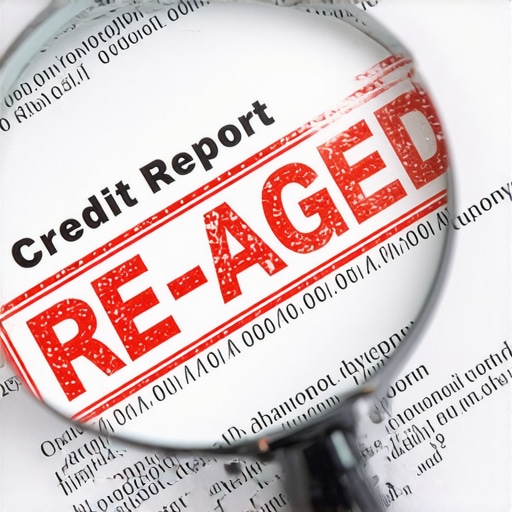 Mastering the the science of credit repair means understanding that the law provides you with timing protections that you unknowingly waive the moment you engage with a collector without a pre-set strategy.
Demand the Receipts Behind Every Verification
When you challenge a reporting error, the credit bureau often shoots back a generic letter stating the item has been ‘verified.’ Most consumers see that and give up, thinking the battle is lost. That is exactly what they want you to do. You have to stop settling for verified and demand these specific records like the original signed application or the full, unedited ledger of charges. The biggest nuance most people miss is the problem with method of verification requests; the bureaus frequently use automated ‘e-OSCAR’ systems that don’t actually look at physical evidence. If you don’t force them to describe exactly how they verified the data and who they spoke to, you are letting them off the hook for their legal obligations. Have you ever fallen into this trap where you thought you were doing the right thing but your score went down anyway? Let me know in the comments.
After years of fighting the bureaus, I realized that my most powerful tool wasn’t a fancy app, but a physical ‘Credit War Room’—a simple three-ring binder and a high-quality physical stamp. While most people are refreshing their free apps every morning, I am looking at my actual FICO 8 and FICO 9 scores through my dedicated monitoring dashboard. This is crucial because key credit score factors every borrower must know aren’t always represented accurately in those ‘educational’ scores you see on free platforms. If you are serious about this, you need to see exactly what the mortgage officer or the auto lender sees. Anything else is just a guess.
The Only Dashboard That Actually Matters
I personally use a paid monitoring service that provides all 28 versions of my FICO score. Why? because a ‘good’ score on a free app might still get you a ‘denied’ on a car loan if your FICO Auto Score 8 is lagging. The Consumer Financial Protection Bureau (CFPB) recently noted in their research on credit reporting accuracy that a significant percentage of automated disputes fail simply because the data doesn’t fit the rigid e-OSCAR format used by the bureaus. This is why I double-down on the physical paper trail. In the ultimate blueprint for effective credit repair, physical evidence is the only currency that matters. You aren’t just a number to these companies; you are a case file that needs to be organized with military precision.

How do I keep my score from dipping while I’m actually using my credit?
This is the question I get most often from people who have finally reached the 700s. The answer lies in the ‘AZEO’ (All Zero Except One) method. I personally maintain the strategy for keeping your credit score high while carrying debt by ensuring that only one of my credit cards shows a balance of less than 1% of its limit on the statement closing date. To do this perfectly, you have to master the best time of month to pay your credit card bill. It is almost never the actual ‘due date’ listed on your statement. Instead, it is typically three days before the statement closing date. This ensures your ‘official’ utilization is razor-thin when the bureaus pull their monthly snapshot of your life.
The Future of Your Score is Trended Data
I predict that by late 2025, FICO 10T—which focuses on trended data—will become the mandatory industry standard for all major lending. This means the bureaus won’t just look at what you owe today; they will analyze your trajectory over the last 24 months. If you’ve been paying down debt consistently, your score will soar. If you’ve been shuffling balances around to avoid interest, the new models will catch it. This is the science of credit repair in the modern age. To stay ahead of these AI-driven shifts, you must also understand why you need to freeze your sagestream report today. These secondary data brokers are the secret source for ‘alternative’ data that can hurt your score before you even apply for a loan. One advanced tip I swear by: Go to LexisNexis and request your full consumer disclosure. It is often over 100 pages of data you didn’t even know existed. Fix the errors there first, and you’ll find that the Big Three bureaus often fall into line much faster.
Lessons I Learned the Hard Way While Reclaiming My Identity
After months of fighting automated systems and feeling like a number in a machine, I realized that the credit system isn’t actually designed to be fair; it’s designed to be efficient for the banks. To win, you have to break their efficiency. First, I learned that digital convenience is often the enemy of accuracy. While it’s tempting to click a button, the real victories happen when you dispute errors effectively by using physical mail that forces a human eyes-on review. Second, I discovered that ‘non-profit’ doesn’t always mean ‘pro-consumer.’ If you decide to master credit counseling, you must ensure the agency isn’t just a front for the creditors you’re trying to settle with. Finally, I realized that key credit score factors every borrower must know are often hidden in secondary reports like LexisNexis. If you don’t clean the source data, the errors will keep reappearing on your main reports like a bad penny.
My Personal Arsenal for Beating the Credit Bureau Bots
You don’t need a high-priced lawyer to fix your history, but you do need the right tools. My first recommendation is a dedicated FICO monitoring service. Most free apps use VantageScore, which is almost never what a lender actually looks at. I trust the official MyFICO dashboard because it shows me the difference between FICO 8 and FICO 9 scores across all three bureaus, giving me the same view as the loan officer. #IMAGE_PLACEHOLDER_E# Second, I always keep a physical ‘dispute binder’ with every piece of correspondence. This paper trail is your only leverage when a bureau claims an item is ‘verified’ without proof. Third, I highly recommend the book ‘Section 609 Credit Repair Solution’ for anyone who wants to understand the deep legal technicalities of the Fair Credit Reporting Act. These resources, combined with the ultimate blueprint for effective credit repair, turn a confusing process into a predictable science.
Take Back Control of Your Financial Narrative
At the end of the day, your credit score is just a story told by people who have never met you. It’s up to you to make sure that story is accurate. Whether you are recovering from a vacation identity theft nightmare or just trying to qualify for a better mortgage rate, the power is in your hands. Consistency is the only thing the bureaus can’t ignore. Keep sending your letters, keep monitoring your micro-transactions, and never accept a ‘verified’ response without demanding the receipts. You have the tools, you have the strategy, and now you have the momentum. It’s time to start your own journey of credit repair and build the financial fortress you deserve. Which credit bureau has been your biggest headache so far? Let’s swap stories and solutions in the comments below.