

I sat at my cluttered kitchen table with a cold cup of coffee, staring at a rejection letter for a car loan I thought was a sure thing. I’d been working with a nonprofit agency for months, thinking I was being the ‘responsible adult.’ Instead, my score was a mess. It felt like I’d been sold a map that led me straight into a swamp. I realized then that ‘nonprofit’ doesn’t always mean ‘your best interest.’ Today, I want to show you exactly how these agencies can accidentally—or systematically—trash your hard-earned points, and what you can do to reclaim your financial freedom.
The Nonprofit Label is a Sneaky Distraction
Listen, I made the mistake of thinking that because an agency had that ‘501(c)(3)’ badge, they were basically financial saints. I dove headfirst into a plan without looking at the truth about most non-profit credit counselors. What I didn’t know was that many of these organizations are actually funded by the very credit card companies you owe money to. It’s a ‘fox guarding the henhouse’ situation. When they set you up on a Debt Management Plan (DMP), they often require you to close all your accounts. For me, that meant my ‘credit age’ took a massive hit, and my utilization ratios went haywire. I learned the hard way that why most debt management plans ruin your future credit isn’t just a scary headline—it’s a mathematical reality for your FICO score.
Are these charitable agencies actually worth your trust?
You might be skeptical. After all, they have commercials and fancy brochures. But here is the kicker: according to a report by the Consumer Financial Protection Bureau (CFPB), while counseling can help manage debt, the notations placed on your report can signal to future lenders that you’re unable to handle your obligations independently. Have you ever felt like you were doing everything right, only to see your score drop for no apparent reason? It’s incredibly frustrating. Before you sign another document, you need to know how to choose between credit counseling and debt settlement or other options that won’t leave your score in the gutter.
Grab Your Raw Data and Audit the Mess
I remember the exact moment I opened my actual FICO reports—not the watered-down versions you see on free apps. It was a Saturday morning, and I had three different colored highlighters ready. I saw my accounts from the nonprofit agency marked with comments that screamed ‘Financial Distress’ to any lender looking at my file. This is the first real step: you have to look at the raw data. Don’t just glance at the score; look at the narrative the bureaus are writing about you. You need to identify key credit score factors every borrower must know to see which ones are currently dragging your average into the dirt. For me, it was ‘account age’ because the counseling agency had forced me to close my oldest credit cards, effectively cutting my credit history in half overnight.
Kill the Automated Rejection with Paper Letters
Most people make the mistake of clicking the ‘dispute’ button on a website. I did it too, and my request was rejected in seconds. Why? Because those portals are designed to funnel your concerns into pre-set categories that favor the bureaus. To win, you have to go old school. I started using the certified mail hack that forces bureau responses. By sending physical letters, you force a human—or at least a more sophisticated process—to actually look at your documentation. When you dispute errors effectively a guide to correct your credit report becomes your weapon. I sent a letter demanding proof for a ‘verified’ collection that the nonprofit told me was ‘unfixable.’ Guess what? The debt collector couldn’t produce the original contract, and the item was deleted in thirty days. 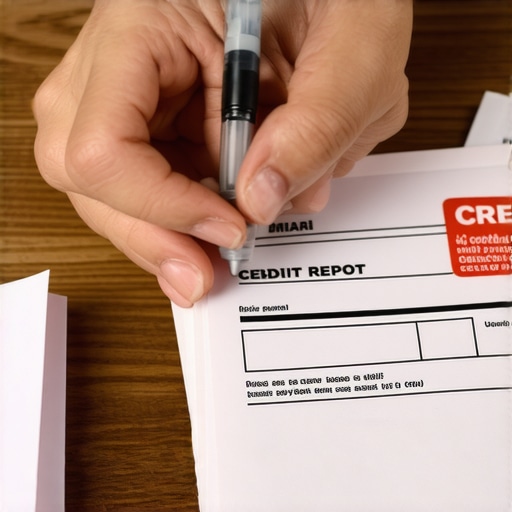
Play the Utilization Game Like a Pro
Utilization is like your credit score’s thermostat. If it gets too hot (over 30%), the whole system shuts down. The nonprofit agency had me maxing out one card while paying off others, which made my score look like a rollercoaster. I learned that there is a 2-point rule for lowering credit utilization that can stabilize your score almost instantly. I stopped blindly following the agency’s ‘one-size-fits-all’ payment plan and started strategically moving small amounts of money to keep every single card under 10% of its limit.
Watch Out for the Re-Aging Trap
One of the messiest parts of my journey was dealing with old debts. The credit counselor suggested I make ‘good faith’ payments on a six-year-old medical bill. I almost did it, until I realized that one tiny payment would reset the statute of limitations. You must know how to identify re-aged debt before you pay a cent. If a debt is close to falling off your report, paying a dollar can keep it there for another seven years. I caught a ‘junk debt buyer’ trying to change the date of my last payment on my TransUnion file. Because I knew mastering credit disputes a step-by-step guide to success required keeping my own records, I was able to prove the debt was too old to be reported and got it scrubbed for good.I used to think that throwing money at every collection on my report was the ultimate act of financial redemption. I mean, common sense says if you pay what you owe, your score should go up, right? Wrong. In reality, the ‘paid collection’ is often a ghost that haunts your report just as much as an unpaid one. This is where the science of credit repair expert advice to elevate your score differs from the advice you get at the water cooler. A study by the Fair Isaac Corporation (FICO) reveals that for many older scoring models still in use by mortgage lenders, a ‘paid’ collection is weighted exactly the same as an ‘unpaid’ one. If you don’t know how to negotiate a pay for delete that actually works, you’re just handing over cash for a zero-point gain.
Stop assuming every paid collection helps you
It’s a bitter pill to swallow, but simply ‘doing the right thing’ by paying off a debt collector can actually drop your score in the short term. Why? Because it updates the ‘date of last activity.’ To an algorithm, a collection from 2018 that was quiet looks better than a collection that was ‘active’ yesterday because you made a partial payment. Before you write a check, you must dispute errors like a pro improve your credit with ease by demanding full validation. I once had a medical bill that I almost paid, only to find out that the collector didn’t even have the legal right to collect in my state. Verification is your first line of defense, not your wallet.
The consolidation loan trap no one warns you about
Another massive ‘oops’ moment I see people stumble into is the siren song of debt consolidation. It sounds perfect: one low payment, lower interest. But here’s the nuance: the hidden dangers of consolidating your credit card debt often manifest as a sudden score drop. Why? Because the moment you pay off those revolving credit cards with a personal loan, the bureaus might see those accounts as inactive, or worse, you might be tempted to close them. I’ve seen scores plummet 50 points because someone ‘cleaned up’ their cards but accidentally destroyed their credit mix and age. Have you ever fallen into this trap? Let me know in the comments. 
How can you reach an 800 score without a major card?
Many people believe you need a high-limit Visa or Amex to join the elite score club. The truth is more nuanced. While the secret to hitting 800 without a major credit card exists, it requires a surgical approach to your ‘credit mix.’ Lenders look for a balance of installment loans and revolving lines. If you’re missing one, your score hits a ceiling regardless of your payment history. Also, stop falling for the truth about fast credit repair firms making big promises. Real repair is a marathon of data verification, not a sprint of ‘hacks.’ If you’ve been wondering why your score won’t budge despite paying down debt, it’s usually because you’re fighting the algorithm with the wrong tools. You need to stop using the easy-to-hit ‘dispute’ buttons on those free apps and realize the risks of using a bureau portal for complex disputes are real—they often waive your right to a full manual investigation. You have to demand the specific data fields that prove accuracy, or the bureaus will just hit you with an automated ‘verified’ response.
Put the Shiny Apps Down and Pick Up a Binder
I know, everyone wants a one-click solution. But after years of fighting the bureaus, I realized that the truth about credit repair software vs professional services is that a digital dashboard doesn’t scare a multibillion-dollar corporation. What scares them is a paper trail. I keep a physical ‘Credit Vault’—a simple three-ring binder where every single letter I’ve ever sent or received is logged and dated. This isn’t just about being organized; it’s about legal leverage. If you aren’t documenting, you aren’t truly repairing. When you eventually need to show a lender that a mistake was never corrected, handing over a neat stack of correspondence is far more powerful than showing them a screenshot of an app.
The One Tool That Actually Wins in Court
If there is one piece of ‘equipment’ I recommend over any fancy software, it’s a stack of USPS Form 3800s. I’ve become a regular at my local post office because I use the certified mail hack that forces bureau responses for every single interaction. When you have a signed green card showing that a bureau employee received your letter at 10:14 AM on a Tuesday, they can’t claim your dispute was ‘lost’ or ‘never received.’ This is how you dispute credit errors swiftly and securely in 2025. It turns the tide from ‘he-said-she-said’ into a verifiable legal timeline. 
How do I maintain my credit health for the long haul?
Maintenance is a rhythmic habit, not a panic-induced sprint. I set a calendar alert for the first Saturday of every quarter to perform a ‘deep dive’ into my reports. I don’t just look at the number; I use the easiest way to track your FICO score for free to spot micro-trends while verifying the actual data fields. The National Consumer Law Center (NCLC) has highlighted in their reports on automated injustice how the ‘e-OSCAR’ system—the automated software bureaus use—can accidentally re-insert previously deleted errors. By checking quarterly, I can use credit score boosters essential tips for rapid improvement to squash those bugs before they impact a future loan application.
Why AI-Driven Scoring is Your Next Big Hurdle
Looking ahead, the trend is clear: lenders are moving toward ‘Trended Data’ like FICO 10T and VantageScore 4.0. This means they won’t just see your balance today; they’ll see if you’ve been ‘paying down’ or ‘loading up’ over the last 24 months. You need the ultimate blueprint for effective credit repair to ensure your historical data is as clean as your current snapshot. AI algorithms are going to make it much harder to ‘game’ the system with temporary fixes, so your long-term habits and consistent documentation are becoming your most valuable financial assets. My best advice? Go to the post office and start the certified mail process for your oldest pending dispute today—stop waiting for a website portal to fix itself for you.
Three Hard Truths the Bureaus Hope You Never Discover
Reflecting on my own journey from a rejected car loan to a prime score, I realized that the credit system isn’t broken—it is working exactly as intended for the banks, not for you. The first big lesson was that accuracy is more important than the balance; a $10 error can hurt you just as much as a $1,000 one. Second, I learned that ‘no’ is just the bureaus’ automated opening move in a high-stakes chess match. Finally, I discovered that time doesn’t heal all wounds on a credit report; active, persistent intervention is the only cure. I found that using improve your credit score with proven repair techniques in 2025 was the only way to stay ahead of the curve as the algorithms get smarter.
The Survival Kit I Carry Into Every Credit Dispute
When I’m helping friends or auditing my own file, I rely on a very specific set of tools. First, I always keep a copy of the Fair Credit Reporting Act (FCRA) nearby—it is the only document that actually scares a debt collector. Second, I trust my ‘Credit Binder’ more than any app. If you are struggling, checking out the ultimate guide to credit counseling take control of your financial future can help you see the pitfalls before you step in them. Third, I only use official FICO reports because they are the versions lenders actually use. Mastering credit repair secrets proven steps to boost your credit score fast requires looking at the same data the banks see, not the ‘estimated’ scores provided by free marketing websites. #IMAGE_PLACEHOLDER_E#
Don’t Let an Algorithm Decide Your Family’s Future
You have the power to change your financial trajectory, but it starts with a single step that doesn’t involve clicking a ‘dispute’ button on an app. It starts with a letter, a stamp, and the refusal to let a corporation’s mistake dictate where you live or what car you drive. When you how to dispute errors on your credit report and improve score, you are taking back the pen to write your own story. Your future self will thank you for the thirty minutes of paperwork you do today. Have you ever felt like a credit bureau was intentionally ignoring your evidence? Let me know your experience in the comments below.