

I remember staring at my laptop screen back in 2018, completely baffled. I’d just paid off my entire credit card balance—every single penny—right on the due date. I felt like a financial rockstar. Then, two days later, I checked my score and it had plummeted fifteen points. I felt betrayed. How could doing the “right thing” hurt me? It turns out, I was a victim of bad timing. Most of us are taught to pay by the due date, but if you really want to boost your credit score in 2025, that date is actually the least important one on your statement. The banks aren’t going to sit you down and explain this because they don’t really care about your FICO score as much as they care about their interest payments. Today, I’m going to show you exactly how to align your bank account with the credit bureau’s schedule so you never get penalized for a balance you’ve already intended to pay.
Beat the Banks at Their Own Reporting Game
The biggest mistake I made early on was treating my credit card like a utility bill. I figured as long as the check cleared by the 15th, I was golden. But credit cards have a hidden heartbeat called the Statement Closing Date. This is the day the bank takes a snapshot of your account and sends it to Experian, Equifax, and TransUnion. If you have a $2,000 balance on that day, the bureaus think you are $2,000 in debt, even if you pay it to zero five minutes later. This is one of those key credit score factors every borrower must know. According to data from the Consumer Financial Protection Bureau (CFPB), credit card companies are only required to report accurate information, but they aren’t required to wait for your payment to do it. If the snapshot happens while your balance is high, your utilization ratio spikes, and your score tanking is the inevitable result. To combat this, you need to understand the 2-point rule for lowering credit utilization, which focuses on the timing of your money moves rather than just the amount. Have you ever felt like you were doing everything right only to see your score stay stagnant? It’s incredibly frustrating, and I’d love to hear your story in the comments.
Does the calendar really hold that much power?
Many people are skeptical that a few days can make a difference, fearing that “micro-managing” their bills is a waste of time. I used to be a skeptic too, until I realized that the reporting cycle is the engine behind your entire financial reputation. If you don’t master the timing, you might find why your score won’t budge despite paying down debt. It isn’t about working harder; it’s about working smarter with the dates you’re already given. By shifting your payment just three or four days earlier, you can ensure the credit bureaus see a zero balance instead of a maxed-out card. [image placeholder] Setting the stage for a perfect score requires a bit of detective work on your monthly statement, but once you find that “Statement Close” date, you hold the keys to the kingdom.
Find the Date That Actually Matters
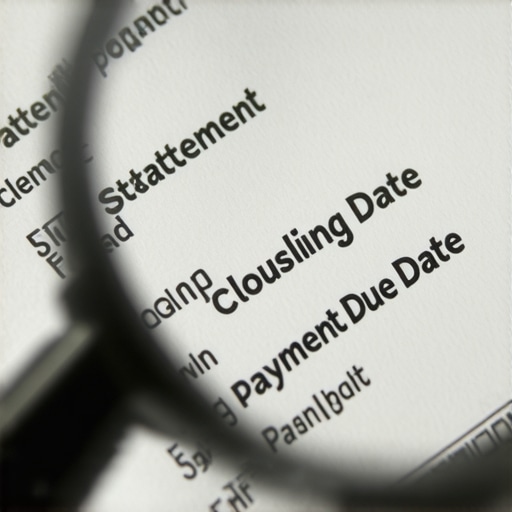
First, log into your online banking portal and download your most recent PDF statement. You aren’t looking for the big, bold “Amount Due” or the “Due Date.” Instead, scan the fine print or the top corner for the “Statement Closing Date.” Think of your credit report like a school yearbook. The “Due Date” is graduation day—it’s when you need to have your act together—but the “Statement Closing Date” is picture day. If you show up with messy hair on picture day, that’s what everyone sees for the rest of the year, even if you look perfect by graduation. Once you find this date, mark it in red on your calendar. This is the finish line. To implement top credit repair strategies to boost your score faster, you need to ensure your balance is as close to zero as possible forty-eight hours before this date.
How I Fooled the Bureau with a $5 Balance
I used to think that carrying a zero balance was the ultimate goal, but I learned the hard way that the FICO algorithm sometimes views a $0 balance across all cards as “inactive,” which can actually stall your progress. A few years ago, I was trying to buy a car and needed every point I could get. I decided to try the “All Zero Except One” (AZEO) method. I paid off every single card three days before their respective statement closing dates, except for one small retail card. On that card, I left exactly $5. When the report hit, it showed 1% utilization. My score shot up because it proved I was using credit responsibly without being dependent on it. This is one of the most effective credit score boosters essential tips for rapid improvement. If you find yourself overwhelmed by multiple balances, looking into ultimate guide to credit counseling take control of your financial future can provide a structured path to getting those numbers down before you even worry about the timing.
Stop Playing Defense Against Reporting Errors
Even if your timing is perfect, your score will still suffer if the data being sent to the bureaus is flat-out wrong. Think of the credit bureaus as giant, automated filing cabinets. They don’t verify the truth of what’s sent to them; they just file it. I once discovered a late payment on my report from a card I had closed three years prior. It was a ghost in the machine. To fix this, you have to dispute errors effectively a guide to correct your credit report rather than just hoping they disappear. You need to gather your “proof of life”—bank statements, cancelled checks, or closure letters. When you how to dispute errors on your credit report and improve score, you aren’t just asking nicely; you are demanding accuracy as required by federal law. When sending these disputes, forget the online portals. They are designed for the bank’s convenience, not yours. You need a paper trail. I started using certified mail because it provides a date-stamped receipt that the bureau can’t ignore. It’s the difference between sending a text into the void and serving someone with legal papers. After you mail that letter, the bureau has a strict 30-day window to investigate. If they don’t respond, the item must be deleted. I remember waiting for the mail every day, feeling like I was waiting for a college acceptance letter. When that updated report finally arrived showing the late payment was gone, my score jumped another 35 points instantly.
The “Non-Profit” Label Is Often a Marketing Gimmick
Here is a pill that’s hard to swallow: just because a credit counseling agency is a 501(c)(3) doesn’t mean they have your back. Most people assume “non-profit” implies they are working for the greater good, but the truth about most non-profit credit counselors is that they are often funded by the very banks you owe money to. It’s a conflict of interest hidden in plain sight. They might push you into a Debt Management Plan (DMP) that benefits the lender’s recovery department more than your FICO score. Before you sign anything, you need to read the ultimate guide to credit counseling take control of your financial future and ask who is actually paying their bills. I’ve seen people enter these programs only to realize later that they’ve effectively surrendered their ability to open new credit for years. Have you ever felt pressured by a “counselor” to close your accounts? Let me know in the comments because that’s a red flag I see way too often.
Stop Hitting the Dispute Button on Your Phone
We live in an “easy button” culture, and credit apps know it. They offer a one-click “dispute” feature that feels like magic. But here is the “oops” factor: when you use those buttons, you are often waiving your rights to a full investigation under the Fair Credit Reporting Act (FCRA). You should stop using the dispute button on credit karma right now if you want real results. These automated systems are designed to categorize your dispute into a generic code that a computer can reject in milliseconds. A study by the National Consumer Law Center (NCLC) found that automated dispute systems often fail to catch even the most obvious lender errors because they prioritize speed over accuracy. To truly win, you need to follow mastering credit disputes a step-by-step guide to success techniques that involve physical documentation and a paper trail.  Using the wrong method doesn’t just fail; it can get your future legitimate disputes flagged as “frivolous,” making it nearly impossible to dispute errors effectively a guide to correct your credit report later on. One specific trap to avoid? Never dispute an account you currently use. If you understand why you should never dispute an account you still use daily, you know that the creditor might just close the account entirely to avoid the legal headache, tanking your score instantly.
Why did my score drop after I paid off my car?
This is the ultimate nuance that drives people crazy. You work hard, you make that final payment on your auto loan, and you expect a reward. Instead, your score drops 20 points. Why? Because the FICO algorithm prizes “credit mix” and “active accounts.” When that loan closes, you lose an active installment account. It’s one of the why your score dropped after you paid off your auto loan scenarios that most beginners don’t understand. If you don’t have other installment loans—like a mortgage or a personal loan—the algorithm thinks your profile is less diverse. To counter this, you need to focus on how to improve your credit score with proven repair techniques in 2025 that build long-term stability rather than just chasing short-term wins. It’s about the big picture, mastering the science of credit repair expert advice to elevate your score, and recognizing that credit is a marathon, not a sprint.
Once you’ve done the heavy lifting of cleaning up your reports, the real challenge is keeping that number high without it becoming a second job. I don’t spend hours every week checking my apps; instead, I use a specific set of tools and a ‘set it and forget it’ philosophy. My absolute go-to is the MyFICO app. While free services are great for a quick glance, they often use the VantageScore model, which most lenders ignore. To truly master the science of credit repair expert advice to elevate your score, you need to see the exact FICO 8, 9, and industry-specific scores for auto and mortgage lending that the banks are looking at. I also keep a simple spreadsheet that tracks my ‘Statement Closing Dates’ for every card I own, ensuring I never miss that window for a zero-balance report.
How do I maintain my credit progress over the long haul?
Maintenance is about building a perimeter around your data. Every six months, I perform a ‘soft audit’ of my own file. I’m not just looking for new accounts; I’m looking for small errors in my personal data, like a misspelled former employer or an old address. These tiny discrepancies can sometimes link your file to a relative’s bad debt, especially if you need to how to fix a mixed file when you have a junior or senior in your family. I also keep my files frozen at the big three bureaus and LexisNexis by default. It takes thirty seconds to ‘thaw’ them when I need a loan, but it prevents 99% of identity theft issues before they even start. If you want to unlock your credit score potential expert tips for 2025, treat your credit report like a high-security vault, not a public library card.
What the AI Revolution Means for Your Future FICO Score
The landscape is shifting toward ‘Trended Data.’ Traditional scoring looked at a snapshot of today, but the newer models, specifically the FICO Score 10T, look at your payment behavior over the last 24 months. According to FICO’s technical documentation, this trended data helps lenders distinguish between someone who pays their balance in full every month and someone who is just ‘cycling’ their limit. This means your habits today are actually ‘pre-loading’ your score for two years from now. This is why improve your credit score with proven repair techniques in 2025 requires a long-term mindset. We are moving toward a world where why your rent history is your biggest credit opportunity will be a standard feature, not an optional add-on. If you aren’t already using a rent-reporting service, you are leaving free points on the table.
The Digital Paper Trail That Protects Your Growth
Even as I scale my credit limits, I never stop using the most powerful tool in my arsenal: the paper trail. Whenever I have a dispute or even a simple inquiry about a fee, I bypass the phone and use the certified mail hack that forces bureau responses. It creates a legal record that digital buttons simply can’t match. If you’re serious about long-term results, you should mastering credit disputes a step-by-step guide to success by keeping a physical folder of every piece of correspondence. My advanced tip for today? Go into your calendar right now and set a recurring alert for every 90 days to check the easiest way to track your fico score for free. Consistency beats intensity every single time.
What I Finally Realized After Years of Chasing the Perfect FICO Score
Looking back, my biggest ‘lightbulb moment’ wasn’t discovering a secret hack, but realizing that the credit bureaus are essentially giant data processors, not moral judges. They don’t care if you’re a ‘good’ person; they only care if your data patterns align with their predictability models. I spent years assuming my income would eventually boost my status, but I soon discovered why a high salary doesn’t guarantee a top tier credit score. It’s all about the technicalities. If you learn to dispute errors effectively a guide to correct your credit report and master the timing of your reporting cycle, the numbers will follow your lead. The most important lesson? Don’t take it personally. When a bureau rejects a dispute, they aren’t saying you’re wrong; they are saying your evidence didn’t fit their current bucket. Stay persistent and focus on the data.
My Personal War Chest for Credit Stability
I don’t believe in cluttering my life with dozens of financial apps. Instead, I rely on a few ‘heavy hitters’ that provide actual leverage. First, I always keep a physical or digital copy of the paper trail that kills collection accounts for good—this is your primary weapon against ghost debt. Second, I recommend everyone familiarize themselves with how to use the fair debt collection practices act to win; it’s the ultimate rulebook for keeping collectors in check. Finally, I trust the MyFICO platform because it gives you the same vantage point as the lenders themselves. These tools have been my lifeline because they focus on the law and raw data rather than the marketing fluff found in most free credit apps. [image placeholder]
Take Back Control of Your Financial Narrative
You don’t need to be a financial genius to achieve an elite credit score. You just need to be more disciplined than the automated systems designed to track you. Whether you are recovering from a rough patch or looking to unlock your credit score potential expert tips for 2025, remember that every positive action is a vote for your future self. The reporting game is rigged in favor of those who know the rules—now that you know them, it’s time to play to win. Have you ever noticed your score move for a reason you couldn’t quite explain? Let me know your experience in the comments below!