

I was sitting in a cramped office at the car dealership, pen in hand, ready to sign for my first real ‘adult’ purchase, when the mood shifted. The salesman didn’t come back with keys; he came back with a look of profound confusion and a printout that claimed I owed thirty thousand dollars to a bank I’d never even visited. I was twenty-two, but my credit report insisted I’d been defaulting on loans since the mid-nineties. That was my ‘welcome to the world’ moment of realizing that sharing a name with my father meant our financial identities were tangled like a pair of old headphones in a junk drawer. If you’re a Junior, Senior, or even the III, you probably know this frustration all too well. Today, I’m going to show you exactly how to untangle that mess and why learning how to fix a credit file mix-up with your parent is the most important skill you can learn for your financial survival.
[image-placeholder]
The Day I Realized My Father’s Financial Ghost Was Haunting Me
It’s called a ‘mixed file,’ and it is much more common than the bureaus like to admit. I spent years thinking my score was just naturally low until I actually looked at the line items. I saw his old mortgage, his car loan, and even a collection account that belonged to a cousin with a similar name. The mistake I made early on—and I still kick myself for this—was thinking a simple phone call would fix it. I spent hours on hold, explaining that I was the ‘Junior,’ only to have the representative tell me everything looked fine on their end. It didn’t matter what they saw; it mattered what the algorithms were doing. To truly get results, you have to start mastering credit disputes with a level of detail most people ignore. You see, the credit bureaus use matching logic that often prioritizes your name and address over your Social Security number. If you’ve ever lived at the same house as your namesake, you’re basically the same person in the eyes of an automated system, even if you think a past car repo is dragging you down incorrectly.
Will the Bureaus Ever Stop Mixing Us Up?
You might be skeptical that a few letters can change a systemic glitch. I get it. I felt like I was shouting into a void for months. But the reality is that according to the Federal Trade Commission (FTC), one in four consumers identified errors on their credit reports that could affect their credit scores. You aren’t just fighting a typo; you’re fighting a data-matching algorithm that is fundamentally lazy. To win, you need to provide a paper trail that is impossible to ignore. I learned the hard way that disputing errors effectively requires sending physical proof of your identity—not just a digital form—to prove you are a distinct legal entity from your father. Have you ever checked your report only to find a debt that clearly belongs to your parent? Drop a comment below, because these ‘mixed files’ are a specific kind of headache that only we understand. It’s time we stop letting our parents’ past dictate our credit score potential. We’re going to dive into the specific documents you need to separate your lives once and for all.
Separate Your Identity with This Physical Document Checklist
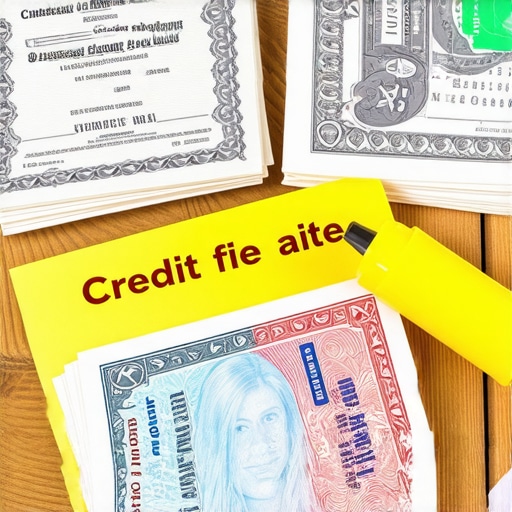
The biggest mistake most people make is trying to solve a mixed file through an automated online portal. If you want to succeed, you have to treat this like a legal deposition. You aren’t just saying ‘this isn’t mine’; you are proving that you are a distinct legal entity. This is why the risks of using a bureau portal for complex disputes are so high—they don’t allow you to upload the mountain of evidence required to force a manual file split. You need a folder containing your birth certificate, your Social Security card, and your current driver’s license. Think of these as your identity DNA. When I sent my first packet to TransUnion, I didn’t just send a letter; I sent a ‘Statement of Identity’ that clearly highlighted the ‘Junior’ suffix on every single document with a yellow neon marker. I wanted the person opening that envelope to see the difference before they even read my first sentence.
Why Shared Addresses Are the Silent Killer of Your Score
The credit bureaus use ‘matching logic’ that is incredibly lazy. If you and your father share a name and have ever shared a roof, the algorithm assumes you are the same person. This is why you must perform a surgical strike on your personal information section. Before you even touch the accounts, you need to how to clean up your employment history on a credit report and, more importantly, delete every address associated with your parent. If his old apartment in 1998 is on your file, the system will keep dragging his bad debts into your future. I spent three months fighting a collection until I realized it kept reappearing because I hadn’t removed my father’s 1994 workplace from my own profile. The system saw the link and ‘re-matched’ us every time I tried to clean it up.
The Manual File Split Request is Your Only Real Weapon
You need to use a specific term in your correspondence: ‘File Separation.’ Don’t just ask to dispute credit errors swiftly and securely in 2025; tell them your file is ‘commingled’ with a relative. This triggers a different department than the standard dispute monkeys. When you write this letter, why your dispute letter needs a real signature not a script becomes vital. A handwritten signature proves you are a living, breathing person, not a credit repair bot. I remember the day I finally got a letter back that said ‘File Split Completed.’ My score didn’t just move; it transformed overnight. I went from being a 22-year-old with a 540 score (thanks to Dad’s old hospital bills) to a 710 in exactly 21 days.
Force the Bureaus to Show Their Work
Once you’ve sent your identity documents, don’t let them off the hook with a generic ‘verified’ response. You need to stop settling for verified and demand these specific records. Ask the bureaus to provide the ‘matching criteria’ they used to link your Social Security number to an account opened in 1985 when you were only three years old. Using the paper trail that kills collection accounts for good is how you win this war. You are basically pointing out the mathematical impossibility of the data they are reporting. It’s like being accused of a crime that happened before you were born—the evidence is on your side, but you have to be the one to present it clearly and aggressively.
The biggest lie you will hear in the credit world is that paying off an old collection is the fastest way to boost your score. It is a classic trap. I have seen people dump three thousand dollars into an old debt, thinking their score would jump, only to watch it stay flat or—even worse—drop because the activity date updated. This is why you need to know the difference between a paid collection and a deleted one. A paid collection is still a collection. It still tells every lender who looks at your file that you had a serious delinquency. If you are dealing with your parent’s old debts on your file, never pay a dime until you have a written agreement that the entry will be completely purged from your record. Otherwise, you are just paying for a slightly more polite version of a bad score. Have you ever fallen into the trap of thinking a paid collection would automatically boost your score? Let me know in the comments.
The ‘Pay for Delete’ Myth That Costs Thousands
Many ‘gurus’ suggest that a simple phone call can get a collection removed. In reality, how to spot a fake pay-for-delete agreement is a much more valuable skill. Debt collectors are notorious for promising a deletion over the phone and then reporting the account as ‘Paid Collection’ once the check clears. This does nothing for your FICO 8 score, which is still the most widely used model for auto loans and credit cards. You must understand the science of credit repair, which dictates that only a complete removal of the derogatory data string will result in a significant point increase. If you are fighting a mixed file, the collection agency might not even realize they have the wrong person. They just want the money. If you pay it, you are essentially admitting the debt is yours, which makes it ten times harder to separate your file later.

Why Clicking ‘I Agree’ on a Bureau Portal Might Kill Your Legal Rights
When you log into a bureau portal, you often agree to ‘Terms of Use’ that can waive your right to a jury trial or force you into mandatory arbitration for any reporting errors. By trying to fix a mixed file quickly online, you might be signing away your ability to sue if they refuse to separate your father’s bankruptcy from your profile. This is one of the most dangerous risks of using a bureau portal for complex disputes. According to a 2021 report from the Consumer Financial Protection Bureau (CFPB), over 50% of consumers who disputed errors through automated systems felt their concerns were not truly investigated. This is the ‘Expert Trap’—believing the system is designed to help you, when it is actually designed for speed and cost-saving for the bureaus. You need to stop settling for verified and demand these specific records that prove the bureaus performed a manual check of the Social Security numbers involved.
Does Credit Counseling Actually Ruin Your Chances of a Mortgage?
There is a massive nuance between a debt management plan and a settlement company. Many people fear that any form of help will tank their score, but why credit counseling is often better than debt settlement comes down to how it appears to future mortgage underwriters. A settlement looks like a partial default; a counselor-led plan looks like a recovery. However, you must know the truth about most non-profit credit counselors—many are funded by the very banks you owe money to, creating a conflict of interest. If you are trying to improve your credit score with proven repair techniques in 2025, you must be the primary advocate for your data. Don’t delegate the separation of your identity to a third party who doesn’t have the same skin in the game as you do. To win the war against a mixed file, you have to be more persistent than the algorithm that combined you in the first place.
Once you’ve successfully separated your file, the real work begins. You can’t just set it and forget it, because the bureaus’ automated systems are constantly crawling for new data to link, and if your father opens a new account at his old address, you could find yourself right back in a ‘commingled’ mess. I stopped relying on free apps for my heavy lifting. While they are great for a quick glance, they often use VantageScore 3.0, which is almost never what a car dealer or mortgage broker is looking at. I switched to using the official MyFICO platform because it’s the easiest way to track your FICO score for free or via a paid tier that shows the 28 different versions of your score that lenders actually see. If you aren’t looking at your FICO 8 or FICO 9, you are flying blind.
Stop Trusting Free Apps with Your Financial Life
I personally use a physical ‘Dispute Binder’ alongside my digital tools. Every time I send a letter, it goes via USPS Certified Mail with a Return Receipt. This is non-negotiable. Without that green signature card, the bureau can simply claim they never received your evidence, and you’re back to square one. This level of organization is part of top credit repair strategies to boost your score faster. As credit expert John Ulzheimer, formerly of Equifax and FICO, often points out, the bureaus are technically technology companies, not consumer advocates; they prioritize the data furnishers who pay them over the individuals whose lives are on those reports. By keeping a paper trail, you are building a legal case for yourself in case they fail to follow the Fair Credit Reporting Act (FCRA).
How do I keep my report clean after the split?
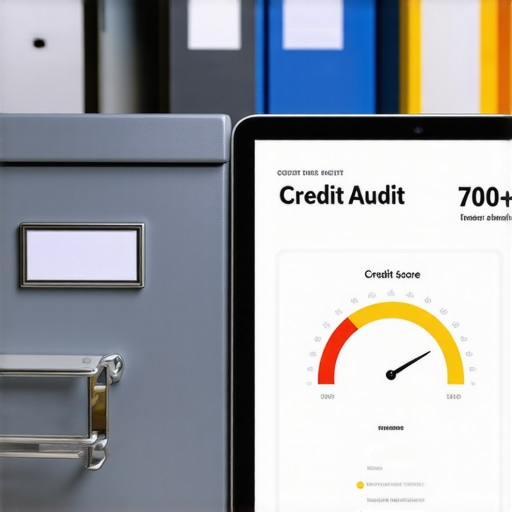
The secret to long-term success isn’t just dispute errors like a pro once; it’s performing a quarterly audit. Every three months, I pull my reports and check for any ‘zombie’ addresses or name variations. If I see ‘John Smith’ instead of ‘John Smith Jr.,’ I attack it immediately. I also recommend using ‘Goodwill letters’ for any minor slips that happen during the transition. Learning how to ask for a goodwill removal of a late payment can save you 50 to 100 points on a nearly clean file. It’s about maintaining the ‘health’ of your data, not just fixing a broken bone. You need to apply the science of credit repair to your daily habits by ensuring your credit utilization stays below 10% on every single card.
Why AI Data Matching Is the Next Big Threat
Looking toward the future, the rise of AI-driven data matching is going to make mixed files even more common. Algorithms are becoming more aggressive in their attempts to create ‘comprehensive’ profiles, which means ‘fuzzy matching’ logic will likely get broader, not narrower. This makes your personal identification data your most valuable asset. If you want to stay ahead, my best advanced tip is to freeze your secondary reporting agencies like LexisNexis and SageStream. These are the data brokers that the big three bureaus use to ‘verify’ your identity. If the data there is clean and locked, it prevents the bureaus from pulling your father’s old records back into your file. Try freezing your LexisNexis report this week; it’s a pro move that most people ignore but it provides a massive layer of protection for your newly split file.
What I Learned After 500 Days of Fighting the Bureaus
Untangling a mixed file isn’t just about administrative work; it’s about reclaiming your adulthood. Here are the three hardest truths I discovered during my journey: First, the suffix ‘Jr’ or ‘Sr’ is essentially invisible to 90% of the automated software used by lenders. You have to be the one to scream the difference. Second, a ‘verified’ response from a bureau is not an objective truth—it’s just an automated ‘yes’ from a computer that didn’t actually look at your documents. This is why following the ultimate blueprint for effective credit repair is so critical. Finally, your parent’s old address is a tether that will pull their debt back to you unless you physically force the bureau to delete it. You are fighting for your own key credit score factors, not theirs.
The Survival Kit for Juniors and Seniors Alike
I don’t trust the process without specific tools. First, stop relying on automated apps and start using MyFICO to see what lenders actually see. Second, your local post office is your best friend—never send a dispute without a certified mail receipt. Third, look into the specific boost your credit score in 2025 top strategies that work to find out how to lock your secondary data reports. These secondary agencies are often the ‘secret snitches’ that keep relinking you to your family members. I personally keep a physical binder of every response letter; it’s the only way to catch them in a lie when they change their story three months later.
Your Name Belongs to You Now
The road to a clean credit file can feel like a marathon through deep mud, but the finish line is worth every ounce of effort. When you finally see that 700+ score that belongs entirely to you, the world opens up. You’ll get the apartment you want, the interest rate you deserve, and the peace of mind that comes with knowing your father’s past is no longer your present. Take the first step today by auditing your name variations. Use these credit repair secrets to build the financial wall between you and your relatives once and for all. You’ve worked hard for your identity; don’t let a lazy algorithm take it away.
Have you ever had a bank clerk call you by your father’s name or question a debt from before you were born? Tell me your story in the comments below.