

I’ll never forget the sinking feeling in my stomach three years ago when I got my fourth ‘Verified’ notification from Equifax. I had spent hours obsessing over my report, spotting a blatant error on a closed account that was dragging my score into the gutter. I did what every ‘expert’ told me to do: I clicked the dispute button on the bureau’s website. Big mistake. Within forty-eight hours, the system spat back a rejection. It felt like I was fighting a ghost, a faceless machine that didn’t care about my financial future. That was my lightbulb moment. I realized that why your online dispute was rejected in seconds is usually because you’re playing by their rules, not the law. Today, I’m going to show you the ‘Certified Mail Hack’—the exact process I used to stop the automated rejections and force a real human being to look at my evidence.
My $4.50 Investment That Fixed a $5,000 Mistake
Early on, I thought I was being smart by using those free, downloadable templates you find on Reddit. I didn’t even sign them by hand; I just typed my name and hit print. I didn’t realize why your dispute letter needs a real signature to be taken seriously. The bureaus saw a generic script and flagged it as ‘frivolous’ immediately. It wasn’t until I walked into a post office and spent a few bucks on a green Return Receipt card that things changed. When you send mail this way, you create a legal paper trail that they cannot ignore without violating the Fair Credit Reporting Act.
Is sending physical mail really better than a 30-second online click?
It sounds like a massive hassle, right? Why go to the post office when you can just click a button? The truth is that online portals often force you to waive certain rights, and they categorize your dispute into a simple code that an AI handles. According to the Consumer Financial Protection Bureau (CFPB), credit bureaus have historically struggled with the automated nature of their dispute handling, often failing to conduct a meaningful investigation. By using the ‘Certified Mail Hack,’ you’re demanding that meaningful investigation. If you’ve been trying to master credit disputes without success, this is the missing link. Have you ever felt like you were just shouting into the wind when trying to fix your credit? I want to hear about your most frustrating ‘verified’ moment in the comments.
Stop Playing the Bureaus’ Game
When you dispute errors effectively, you aren’t just asking for a favor; you’re exercising a legal right. The reason this ‘hack’ works isn’t magic; it’s accountability. When a human has to sign for your letter, the clock starts ticking. They have 30 days to respond, or that negative item has to go. In the next section, I’m going to break down the exact ‘envelope stack’ I use to make sure my letters land on the right desk and get the attention they deserve.To start, you need to assemble what I call the ‘Evidence Stack.’ Think of this as your legal shield. If you show up to a legal battle with a butter knife, you are going to lose. The bureaus are looking for any excuse to throw your letter in the frivolous bin before a human ever sees it. I learned this the hard way back in 2021 when I sent a dispute for an old medical bill but forgot to include a copy of my utility bill to prove my address. They didn’t even look at the error; they just sent a canned response saying they could not verify my identity. I wasted three weeks and five dollars because I was lazy. Now, I include a clear photocopy of my driver’s license, a recent bank statement, and the specific page of my credit report with the error circled in bright red ink. This is the first step to dispute errors like a pro and leave them zero room to wiggle out on technicalities. 
Assemble Your Evidence Stack Before Writing a Word
When you are fighting for your financial reputation, you need to be over-prepared. Think of the credit bureau as a giant, automated sorting machine. If your paperwork is incomplete, the machine just spits it out. Along with your proof of identity, you need a clear explanation of why the entry is wrong. Is the balance incorrect? Is the date of last activity wrong? You must be specific. This meticulous approach is what separates those who get results from those who just get frustrated. If you find the process overwhelming, understanding credit counseling can sometimes provide a broader perspective on managing your overall debt profile while you fight these specific errors.
Why Your Ink Signature Changes Everything
Let’s talk about the letter itself. You aren’t writing a novel; you’re writing a formal demand. State exactly what is wrong and what the law requires them to do. But here is the kicker: you must sign it with a blue or black ink pen. If you use a digital signature or a printed script font, their scanning software is programmed to flag it as a template from a credit repair organization. They want to believe you paid someone else to do this because it gives them a legal loophole to ignore you. By signing by hand, you are asserting that you are a real person exercising your individual rights. This personal touch is a core part of the ultimate blueprint for effective credit repair and signals that you are ready to escalate if they don’t comply.
Turn the Post Office into Your Legal Ally
When you finally get to the post office counter, ask for ‘Certified Mail with Return Receipt Requested.’ This is the famous ‘green card.’ When that card comes back to your mailbox with a messy signature from a bureau employee, that is your golden ticket. It is the legal proof that they received your documents on a specific date. The moment they sign that card, a 30-day countdown begins. If they don’t respond within that window, you have the leverage you need to stop settling for verified and demand these specific records. This physical paper trail creates a level of accountability that an online portal simply cannot match. It’s about taking the power back from the algorithm and putting it back into your hands.Everyone tells you that paying off an old debt is the fastest way to fix your credit. In my experience, that is one of the most expensive lies in the financial world. If you pay a collection that is five years old without a written agreement to delete it, you might actually see your score drop significantly. Why? Because you just ‘reactivated’ a dormant account. The credit bureau sees new activity and moves that negative mark from the back of your file to the very front. This is one reason why most people fail when challenging credit bureau errors; they don’t understand how the ‘Date of Last Activity’ (DLA) trap works. According to research from the National Consumer Law Center (NCLC), the way creditors report ‘status updates’ can inadvertently re-age debt in the eyes of scoring algorithms, keeping consumers trapped in low-score cycles. You need to understand the difference between a paid collection and a deleted one before you write a single check to a collector.
Can Credit Counseling Actually Hurt Your Mortgage Odds?
You might think joining a debt management plan shows financial responsibility to a lender. However, many of these programs require you to close your credit card accounts as a condition of the service. This often destroys your ‘length of credit history’ and your ‘available credit’ ratio overnight. While why credit counseling plans can sometimes help your mortgage odds by lowering your debt-to-income ratio, a manual mortgage underwriter might see a ‘managed by third party’ notation and flag you as a high-risk borrower. It is a delicate balance that requires more than just a surface-level look at your monthly payments. If you’ve ever wondered why your score won’t budge despite paying down debt, it’s often because these structural score factors are outweighing your recent progress.
The ‘Re-aging’ Trap You Never Saw Coming
Here is the ‘Oops’ factor that catches even the most diligent people off guard: the phantom update. When you attempt to how to dispute a debt you already paid two years ago, a lazy or aggressive collector might simply update the account status to ‘Paid’ and refresh the reporting date to the current month. Suddenly, an error that was years old and losing its impact becomes ‘fresh’ negative data. This is why I always preach strategy over speed. Even the phenomenon of why your score dropped after you paid off your auto loan usually comes down to the loss of an active, ‘mix of credit’ account that was boosting your score. You have to look at your report as a living ecosystem, not just a checklist of debts to be cleared. 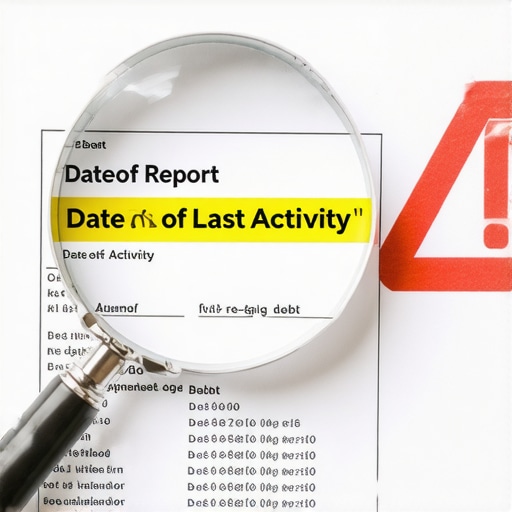 I’ve seen too many well-meaning people lose out on a dream home because they ‘cleaned up’ their credit the wrong way at the last minute. Have you ever fallen into this trap or seen your score drop after doing what you thought was the right thing? Let me know in the comments below.Once you’ve successfully removed those stubborn marks, the real work begins: defending your territory. I don’t just leave my financial future to chance; I maintain what I call a ‘Dispute Bible.’ This is a physical accordion folder where I keep every single certified mail receipt, every ‘green card’ signature, and every response from the bureaus. If a deleted item ever tries to ‘re-pollute’ my report, I have the evidence ready to go. Following the ultimate blueprint for effective credit repair means being as organized as a law firm. I’ve found that the bureaus count on you being messy. When you can produce a scan of a letter they signed six months ago, their automated defenses crumble because you have proof of their previous agreement to delete.
Stop trusting free educational scores
I stopped looking at those free ‘VantageScore’ apps years ago. Why? Because 90% of lenders don’t use them. I personally pay for a premium subscription to myFICO because I want to see exactly what a mortgage lender or an auto dealer sees. Using the easiest way to track your fico score for free might give you a general idea, but when you are preparing for a major purchase, you need the granularity of FICO 8, 9, and even the older mortgage-specific versions. High-resolution data is the only way to unlock your credit score potential. If you aren’t looking at the right data, you’re flying blind. 
How do I keep my score in the 800s for the long haul?
Maintenance is about more than just paying on time; it’s about managing your ‘data footprint.’ I recommend doing a ‘Secondary Bureau Sweep’ every twelve months. This involves freezing your reports at smaller data aggregators like LexisNexis and SageStream. According to the Consumer Data Industry Association (CDIA), the technical Metro 2 format used for reporting ensures data consistency across platforms, but these secondary bureaus often house the ‘junk’ data that creditors use to verify old debts. When you realize why you need to freeze your sagestream report today, you essentially cut off the ‘background noise’ that makes it easy for old errors to reappear.
The next frontier is data suppression
Looking ahead to 2025 and beyond, the trend is moving toward AI-driven credit analysis. The bureaus are getting better at spotting automated dispute patterns, which is why the ‘Certified Mail Hack’ I mentioned earlier is becoming even more vital. To stay ahead, you need to dispute credit errors swiftly and securely in 2025 by focusing on factual inaccuracies rather than just ‘not mine’ claims. My advanced tip for you today: Request your ‘Full File’ from LexisNexis. It’s usually 50+ pages of every address, phone number, and professional license you’ve ever held. Cleaning up that file is the ‘secret sauce’ to making sure your improve your credit score with proven repair techniques in 2025 strategy actually sticks. If you haven’t looked at your secondary reports yet, that is your next mission.
The Hardest Lesson I Learned While Fighting the Bureaus
If there is one thing I want you to take away from my journey, it is that silence from a credit bureau is often a test of your resolve. I used to think that if I didn’t get a response in two weeks, I had lost. In reality, the bureaus are often just waiting to see if you are serious enough to follow up. You have to be more annoying to them than the error itself. Another ‘lightbulb’ moment for me was realizing that the bureaus don’t actually care if the debt is yours; they only care if it is verifiable according to their strict internal standards. This shift in mindset changed everything for me. Instead of arguing about the ‘fairness’ of a bill, I started arguing about the accuracy of the data. When you focus on the science of credit repair, you remove the emotion and start using the law as a surgical tool. Don’t let the first rejection letter discourage you—it is usually just an automated gatekeeper designed to thin the herd.
My Tested Toolkit for Winning the Paper War
You don’t need expensive software to fix your credit, but you do need the right sources of truth. Here is what I keep in my desk at all times:
- The CFPB Complaint Portal: This is your ‘big brother’ option. If a bureau ignores your certified mail for more than 30 days, filing a formal complaint here often forces a senior manual reviewer to look at your file.
- myFICO Premium: I trust this because it provides the actual scores lenders use, not the ‘estimated’ scores you see on free apps. It is the best way to see how top credit repair strategies to boost your score faster are actually affecting your real-world lending power.
- A Dedicated ‘Dispute Binder’: Never rely on your memory. Keep every green card and every letter in a physical binder organized by date. #IMAGE_PLACEHOLDER_E# This paper trail is your insurance policy if an error ever returns.
Stop Letting an Algorithm Define Your Worth
At the end of the day, your credit score is just a three-digit number, but it represents your freedom to live the life you want. Whether you are aiming for a new home or just want the peace of mind that comes with financial stability, you have the power to change your trajectory. By using the ‘Certified Mail Hack’ and refusing to take the easy way out, you are already ahead of 90% of consumers. It takes courage to look at your debt and take action, but the results are worth every $4.50 trip to the post office. You can improve your credit score with proven repair techniques in 2025 if you stay consistent and keep the bureaus accountable. You’ve got this. Have you ever had a bureau ‘verify’ a debt that you knew for a fact was incorrect? Let’s talk about it in the comments below.