

I’ll never forget the Tuesday my phone rang fifteen times before lunch. It wasn’t friends or family; it was a relentless cycle of “No Caller ID” and strange area codes that made my skin crawl. I was so stressed that I actually considered throwing my iPhone into the local lake just to get a moment of peace. I felt like a hunted animal in my own living room, all because of an old medical bill I couldn’t pay at the time. I tried the usual tricks—blocking numbers and ignoring the voicemails—but they just kept coming from new angles. Then, a friend who had been through the wringer himself told me about a specific phrase that acts like a legal “off” switch for these people.
How I Finally Silenced the 8 AM Debt Collector Wake-Up Calls
The truth is, most of us feel powerless when a collector starts hounding us. We think they have all the cards, but the law actually hands you a pretty big sledgehammer if you know where to find it. I spent years thinking I had to hide, but I finally learned how to stop collection calls without filing for bankruptcy. It’s not about dodging them; it’s about speaking their language—the language of the Fair Debt Collection Practices Act (FDCPA). Today, I’m going to share the exact words that forced my creditors to back off and stay off. We are going to reclaim your privacy without you having to spend a dime on a lawyer or a fancy “fix-it” service.
Is One Simple Sentence Really Enough to Make Them Stop?
I get it. You’re skeptical. I was too. I thought, “If it’s that easy, why isn’t everyone doing it?” The reason is that collectors rely on your fear and your ignorance of the rules. They want you to stay on the phone, getting flustered and making promises you can’t keep. But when you use the Fair Debt Collection Practices Act to win, you’re not just asking them to stop—you’re telling them they have no choice. According to the Consumer Financial Protection Bureau (CFPB), debt collection complaints make up a massive chunk of their annual reports, yet many consumers don’t realize that a simple “cease and desist” communication is a legally binding order.
The Huge Mistake I Made When I First Tried to Fight Back
Early on, I made the classic error: I tried to argue with them over the phone. I’d pick up, get angry, and try to explain why the debt was wrong or why I couldn’t pay. Big mistake. Every word I said was recorded and used to verify that they had the right person. I was basically handing them the evidence they needed to keep calling. If you want results, you have to stop calling debt collectors and start mailing these forms instead. Creating a physical record is the only way to protect yourself. I learned the hard way that a phone call is just hot air, but the paper trail that kills collection accounts for good is what actually gets results. Have you ever felt like you were being bullied by a voice on the other end of the line, even when you knew they were wrong? It’s time to flip the script.
Make Them Prove the Debt or Go Away
The first thing you have to do is demand proof. Think of a debt collector like a stranger at your door claiming you owe them for a pizza delivery from three years ago. You wouldn’t just reach for your wallet; you’d ask to see the receipt and the original order form. In the credit world, this is called debt validation. You have a legal right to see the original contract with your signature on it. Most of these agencies are ‘junk debt buyers’ who bought your information for pennies on the dollar and often don’t even have the actual paperwork. When you how to use a debt validation letter to silence collectors, you are essentially calling their bluff. If they can’t produce the records, they are legally required to stop calling and, more importantly, remove the negative mark from your credit report. I remember the first time I sent one of these to a collector hounding me for a $400 medical bill. I didn’t even get a reply; they just vanished from my credit report entirely because they didn’t have the backup data to support the claim.
Send This Letter Before the 30-Day Clock Runs Out
Timing is everything. From the moment they first contact you, you have a 30-day window where your rights are the strongest. You need to send the first letter you should send to a new collection agency immediately. This isn’t just about being polite; it’s about putting a legal stake in the ground. If you miss this window, they can assume the debt is valid, which makes your life much harder later on.
Why Certified Mail Is Your Only Real Shield
If you aren’t using the post office, you aren’t actually fighting. Sending a letter via regular mail is like throwing a message in a bottle into the ocean—you have no idea if it arrived or if they just tossed it in the shredder. You must use the certified mail hack that forces bureau responses. This gives you a green return-receipt card that serves as court-admissible evidence that they received your demand.  When I was dealing with a particularly aggressive agency out of New York, they claimed they ‘never got’ my cease and desist. The moment I scanned and emailed them a copy of my signed green card, the calls stopped within twenty-four hours. They know that once you have proof of delivery, any further calls are a violation that could cost them $1,000 per incident under the FDCPA.
Don’t Fall for the Generic Template Trap
Many people just download a random form from a forum, but the truth about those generic dispute letter templates is that collectors and bureaus have scanners that flag them as ‘frivolous’ instantly. You need to customize your message. Use your own words to explain that you are disputing the validity of the debt and that all future communication must be in writing. This forces them to stop the phone harassment while you focus on the bigger picture of how to how to dispute errors on your credit report and improve score.
Scrubbing the Damage from Your Credit History
Once the phone stays quiet, the real work begins on your file. A collection account is like a stain on a white shirt; even if the ‘bleeding’ stops, the mark remains. You need to dispute errors effectively a guide to correct your credit report to ensure that the collection isn’t dragging down your FICO score. I found that my score jumped 45 points just by removing one single incorrectly reported collection. You have to be meticulous—look for wrong dates, incorrect balances, or ‘re-aged’ debt that should have fallen off years ago. If you find a discrepancy, you can dispute errors like a pro improve your credit with ease by focusing on those specific technicalities rather than just saying ‘this isn’t mine.'”, “image”: {“imagePrompt”: “A close-up shot of a green USPS Certified Mail return receipt card being held by a person, with a stack of envelopes in the background, sharp focus, professional lighting.”, “imageTitle”: “The Power of Certified Mail Proof”, “imageAlt”: “A person holding a green certified mail return receipt card to prove delivery of a debt dispute letter.”}, “categoryId”: 1, “postTime”: “2023-10-27T10:00:00Z” }Most people think that once they’ve silenced the phone calls, the biggest hurdle is over. They believe that by simply paying off the debt, their credit score will magically bounce back. This is the single biggest misconception in the world of credit repair. In reality, a ‘paid collection’ is often just as damaging as an ‘unpaid’ one in the eyes of many scoring models. If you don’t secure a ‘pay-for-delete’ agreement, you’re essentially paying for the privilege of having a negative mark sit on your record for seven years. I’ve seen people drop thousands of dollars thinking they were doing the right thing, only to realize the difference between a paid collection and a deleted one is the only metric that truly moves the needle for a mortgage or auto loan. While newer versions like FICO 9 ignore paid collections, most lenders still use FICO 8 or earlier versions where that ‘zero balance’ collection still weighs you down like an anchor.
Can You Really Force a Bureau to Delete a Valid Debt?
The answer isn’t about whether you actually owed the money; it’s about whether they can legally prove it. According to a landmark study by the Federal Trade Commission (FTC), one in five consumers had an error on at least one of their credit reports. This is your leverage. You aren’t just looking for ‘fake’ debts; you are looking for technical inaccuracies. If the ‘date of first delinquency’ is wrong by even a day, or if the balance is off by a dollar, the bureau is legally obligated to correct or remove the item. This is where the science of credit repair comes into play. It’s not a magic trick; it’s a strict adherence to the Fair Credit Reporting Act (FCRA) which requires 100% accuracy, not ‘close enough’ reporting.
Avoid the Temptation of the ‘Quick Dispute’ Button
Here is the ultimate ‘oops’ factor that ruins most amateur attempts at fixing their file: the ‘Dispute’ button on sites like Credit Karma or the bureaus’ own portals. It looks so easy and convenient, but it’s a massive trap. When you use those portals, you often waive your right to a full 30-day investigation or the right to re-dispute the item later with new evidence. These systems are designed to funnel your request through e-OSCAR, an automated scanner that matches your dispute against a generic three-digit code. If the computer doesn’t see a perfect match for your complex legal argument, you’re rejected in seconds. This is why your online dispute was rejected in seconds and why you must stick to physical, signed letters. 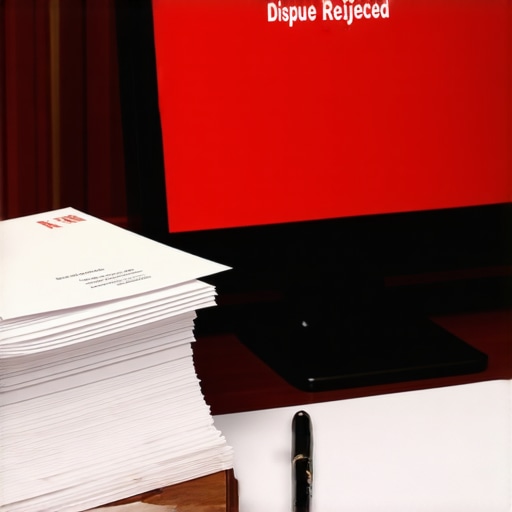 When you stop using the dispute button on Credit Karma right now and switch to manual letters, you force a human being—or at least a more sophisticated manual review process—to look at your evidence. Have you ever fallen into this trap of taking the ‘easy’ route only to find yourself stuck? Let me know in the comments.
The Hidden Nuance of Credit Counseling Programs
Finally, let’s talk about the ‘non-profit’ halo. Many people think credit counseling is a safe harbor, but the truth about most non-profit credit counselors is that they are often funded by the very credit card companies you owe money to. Their goal is to get the banks paid, not necessarily to optimize your FICO score. While they can help lower interest rates, being in a Debt Management Plan (DMP) can sometimes flag your report in a way that makes new mortgage lenders nervous because it signals you couldn’t handle your original terms. Before you sign anything, you need to the one question to ask before signing with a credit counselor: ‘Will this plan result in a third-party notation on my credit report?’ If you want to unlock your credit score potential, you have to look past the marketing and understand the underlying data mechanics.
I’ve learned the hard way that credit repair isn’t a “set it and forget it” task; it’s more like keeping a classic car on the road. You can’t just fix the engine once and expect it to run forever without oil changes. Once you’ve successfully managed to dispute credit errors swiftly and securely in 2025, you need a system to ensure those errors don’t crawl back onto your report. I used to think checking my score once a month was enough, but I was wrong. I had to build a digital fortress around my data to keep the junk debt buyers from re-inserting deleted items. This is where professional-grade tracking meets old-school organization.
The Simple Spreadsheet That Saved My Sanity
I don’t rely on flashy apps that sell my data to credit card companies. Instead, I use a simple, custom-built Google Sheet. In this sheet, I track every dispute, the date it was sent, the certified mail tracking number, and the exact date the bureau is legally required to respond. This manual tracking is the only way to catch them when they violate the 30-day investigation window. If you aren’t tracking your progress with this level of detail, you’re just guessing. You need to use the easiest way to track your fico score for free, but pair it with your own records. The National Consumer Law Center (NCLC) highlighted in their “Automated Injustice” report that the bureaus’ automated systems often fail to properly process complex evidence, making your personal paper trail your most powerful weapon in a legal fight.

Freeze the Shadows to Protect Your Main File
Most people only think about the “Big Three” bureaus—Experian, Equifax, and TransUnion. But there are secondary agencies like SageStream and LexisNexis that feed information to the big guys. If you want to scale your results, you must why you need to freeze your sagestream report today. These smaller bureaus often hold the outdated or incorrect data that allows a deleted collection to reappear later. By freezing these secondary reports, you cut off the supply line of bad data. It’s a specialized tactic that most “credit gurus” won’t tell you about because it requires an extra step, but it’s the difference between a temporary boost and a permanent fix. This is how you improve your credit score with proven repair techniques in 2025 while others are still stuck in a cycle of re-appearing debts.
How do I keep this momentum going for the long haul?
Maintenance is about vigilance. I recommend setting a calendar alert for every 90 days to pull your reports directly from AnnualCreditReport.com. Don’t just look at the score; look at the addresses and employers listed. Believe it or not, an incorrect old address can be the “hook” a collector uses to verify a debt that isn’t yours. Looking ahead, the industry is moving toward “trended data” with models like FICO 10T. This means lenders aren’t just looking at your score today; they are looking at whether your balances are growing or shrinking over the last 24 months. To prepare, you need to understand the key credit score factors every borrower must know to stay ahead of these algorithmic shifts. My advice? Pick one secondary bureau today—either SageStream or CoreLogic—and freeze it. It takes ten minutes and provides a massive layer of protection for your future score.
The Brutal Truth About Credit Scores That No One Mentions
When I first started fixing my file, I believed that earning more money would automatically solve my low score. I was shocked to find that why a high salary doesn’t guarantee a top-tier credit score. The bureaus don’t track your wealth; they track your behavior and data accuracy. Another hard-earned lesson was realizing that ‘winning’ isn’t just about deleting negative marks—it’s about replacing them with positive history. If you clear your report but never add new, positive lines of credit, your score will sit in a stagnant ‘thin file’ status. Finally, remember that persistence is your greatest legal asset. Debt collectors bank on you giving up after the first round of letters, but the law rewards those who keep a meticulous paper trail. #IMAGE_PLACE_HOLDER_E#
My Secret Weapons for a Bulletproof File
You don’t need an expensive lawyer to see massive results. I rely on three core pillars: raw data from the official bureaus, a folder full of certified mail receipts, and a healthy dose of skepticism toward ‘automated’ solutions. Before you spend a dime, I suggest looking into the truth about credit repair software vs professional services. I personally trust the Consumer Financial Protection Bureau (CFPB) for the most accurate regulatory updates and a simple spreadsheet to track my 30-day investigation deadlines. Combining these organizational tools with credit score boosters essential tips for rapid improvement is the only way I’ve seen people consistently climb into the 700s without losing their sanity.
The Day the Phone Stays Silent
There is a profound sense of relief that comes when your phone stops vibrating with unknown numbers and your mailbox contains zero collection notices. Reclaiming your financial identity isn’t just about numbers on a screen; it’s about reclaiming your peace of mind. By taking the time to boost your credit score in 2025 top strategies that work, you are opening doors to lower interest rates, better housing options, and a life without constant financial anxiety. Don’t let the complexity of the law intimidate you. The system was built by humans, and with the right letters, it can be fixed by you. It’s time to stop being a target and start being an advocate for your own credit repair journey.
Have you ever had a collection account reappear on your report months after you thought it was gone? Let me know your story in the comments below.