

I sat at my kitchen table three years ago, staring at a phone that would not stop buzzing. It was 8:14 PM on a Tuesday. Every time it vibrated, my stomach did a somersault. I knew it was a collector who had spent the last week making me feel like a total failure over a small medical bill I did not even recognize. I was so green back then that I actually tried to argue with him. That was my first big mistake. I spent forty minutes on the phone pleading my case, giving him my employer’s name and basically handing him a roadmap to harass me even more. I did not realize that by engaging him verbally, I was playing his game on his turf. I felt like a deer in headlights, unaware that a powerful tool called the Fair Debt Collection Practices Act (FDCPA) was already sitting in my corner, waiting for me to use it.
Put the Law in Your Corner and Take Back Control
The truth is, debt collectors count on you being scared and uninformed. They thrive in the shadows of uncertainty and fear. But here is the good news: the FDCPA is your legal shield. Today, I am going to show you exactly how to flip the script so you can stop calling debt collectors and start mailing these forms instead. We are going to move from a place of panic to a place of power. Whether you are dealing with aggressive calls or trying to figure out how to dispute errors on your credit report and improve score numbers that seem stuck, the law provides a clear path out. According to the Federal Trade Commission, debt collection is consistently one of the top categories of consumer complaints, with over 100,000 reports annually regarding illegal tactics. If you feel harassed, you are not alone, and you certainly are not helpless.
Can a simple piece of paper really stop a billion-dollar agency?
I get the skepticism. When I first heard about validation letters, I thought it sounded like a legal fairy tale. I wondered if these collectors would just laugh at my letters and keep calling anyway. But here is the reality: when you know how to use a debt validation letter to silence collectors, you are demanding they follow federal law. If they cannot prove you owe that specific amount to that specific person, they have to back off. Have you ever felt like a debt collector was crossing the line, maybe even wondering how to handle a debt collector who threatens your job or calls you at work? That is not just annoying; it is often illegal. We are going to walk through the exact steps to shut that down and win your life back.
Find Every Crack in Their Story Before You Speak
To win this game, you have to know exactly what is being reported about you. Think of your credit report as a crime scene; you are the lead investigator looking for DNA evidence that does not belong. Most people jump straight into panic mode, but the first thing you should do is pull your reports from all three bureaus. This is where how to dispute errors on your credit report and improve score starts to make sense. You are looking for dates that do not match, amounts that seem inflated, or accounts you simply do not recognize. I once found a collection account for a utility company in a state I had never even lived in. It stayed there for years because I was too afraid to look at the data. Once I looked, I realized the ‘monster’ under my bed was actually just a clerical error.
Kill the Collection Calls with a Paper Trail
The most important rule in this process is to stop talking and start typing. When you speak to a collector on the phone, they are recording you, but you usually are not recording them. They can ‘forget’ promises or misinterpret your words. By switching to mail, you create a legal timeline that they cannot ignore. This is exactly why you need the paper trail that kills collection accounts for good. Use certified mail with a return receipt requested. This receipt is your golden ticket; it is the physical proof that they received your demands. 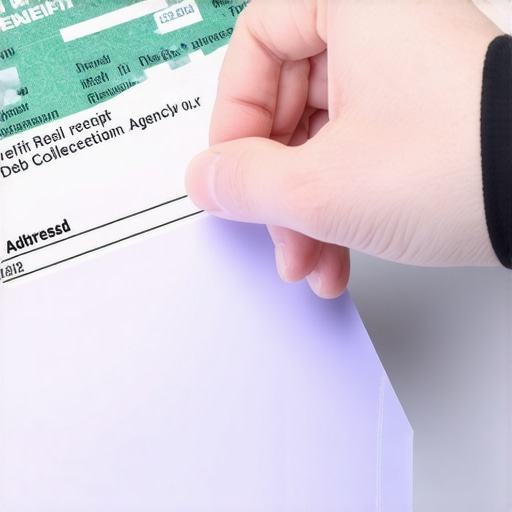
Demand the Evidence They Probably Do Not Have
Most debt collectors buy ‘junk debt’ for pennies on the dollar. They often receive nothing more than a spreadsheet with your name and a dollar amount. They do not have the original contract you signed or a line-by-line breakdown of the fees. When you send a validation letter, you are legally asking them to prove they have the right to collect. I remember the first time I challenged a debt collector to prove the debt was legal. I was terrified they would send back a mountain of paperwork. Instead, I got a letter two weeks later stating they were closing the account and removing it from my report. They simply did not have the records. You must how to challenge a debt collector to prove the debt is legal because the law is on your side, not theirs.
Never Pay a Dime Without a Written Agreement
If they actually do prove the debt is yours, do not reach for your wallet just yet. Paying even five dollars can restart the statute of limitations on an old debt. More importantly, why you should never pay a collection agency over the phone is because you lose all leverage the moment they have your banking info. If you decide to settle, you need a ‘Pay for Delete’ agreement in writing. This ensures that in exchange for your money, they completely wipe the account from your credit history. Without that paper, a paid collection can still haunt your score for years. If you find the process overwhelming, looking into master credit counseling unlock your path to financial freedom can provide the roadmap you need to navigate these negotiations without getting burned.But even when you have the legal tools in hand, there are nuances that most ‘experts’ on social media conveniently forget to mention. For starters, let’s talk about the biggest ‘convenience’ trap in the entire industry: the online dispute portal.
Stop Using the Bureau’s Own Website
It is incredibly tempting to just log into Equifax or TransUnion and click a few buttons to flag an error. It is fast, free, and feels efficient. However, the risks of using a bureau portal for complex disputes are massive. When you use their system, you are often forced to choose from a pre-set list of reasons for your dispute. You cannot provide nuanced evidence, and worse, some portals include fine print that can waive your right to a follow-up investigation or your right to sue under the FCRA if they fail to correct the data. According to a report by the National Consumer Law Center, the bureaus use an automated system called e-OSCAR that boils your detailed dispute down to a mere two-digit code, often ignoring the evidence you attached. If you want to dispute errors effectively a guide to correct your credit report properly should emphasize that paper and ink are your only real allies. 
Why Verified Does Not Actually Mean Proved
Here is a contrarian view: just because a bureau tells you a debt is ‘verified’ does not mean it is accurate. Most people see that word and give up. In reality, ‘verified’ usually just means the bureau sent a digital ping to the collector, and the collector’s computer pinged back saying ‘Yep, that’s him.’ That is not an investigation; it is a computer handshake. You need to stop settling for verified and demand these specific records like the original signed contract or a full payment history. If you do not push back on the method of verification, you are letting them win by doing the bare minimum.
Why did your score plummet after that final car payment?
I see this all the time. A reader finally pays off a four-year auto loan, expects a massive boost, and instead watches their score drop 30 points. It feels like a slap in the face. This happens because you just closed one of your oldest ‘installment’ accounts, which affects your credit mix and the average age of your accounts. Understanding why your score dropped after you paid off your auto loan is the first step toward advanced credit management. It is a harsh reminder that the FICO system rewards active, managed debt more than it rewards being debt-free.
Not All Counselors Are On Your Side
Finally, be wary of anyone claiming to be a ‘non-profit’ counselor without doing your homework. While some are legitimate, the truth about most non-profit credit counselors is that many receive their funding directly from the credit card companies they are ‘negotiating’ with. They might lower your interest rate, but they often do so by closing your accounts, which can tank your score instantly. If you are struggling, why credit counseling is often better than debt settlement only holds true if the agency is truly independent. Have you ever fallen into this trap or seen your score drop for a reason that made no sense? Let me know in the comments.Once the collectors stop calling and the dust settles, the real work of maintenance begins. I used to rely on those free ‘score’ apps that refresh every week, but I quickly realized they were mostly just trying to sell me high-interest credit cards. Now, I use a dedicated ‘Credit Audit’ spreadsheet. I track the specific date of first delinquency for every old account I’ve ever had. This is vital because collectors love to ‘re-age’ debt to keep it on your report longer than the legal seven-year limit. By having my own data, I can spot exactly when they try to move the goalposts. This is a key part of the ultimate blueprint for effective credit repair—it is about data ownership, not just ‘fixing’ things on the fly.
Ditch the Apps and Audit the Raw Data Yourself
When you are in the scaling phase, you need to look beyond the three-digit number. You need to know how to read the data fields collectors use to track you. Most people do not realize that there are hidden codes in your credit file that indicate whether an account is being disputed or if it was settled for less than the full balance. I personally check my raw reports once a month using the easiest way to track your fico score for free, looking specifically at the ‘balance’ vs. ‘high credit’ fields to ensure my utilization is reported correctly. According to the Consumer Financial Protection Bureau’s 2023 report on medical debt, nearly 58% of all third-party collections on credit reports are for medical bills, which are notoriously prone to coding errors. If you are not auditing the raw data, you are missing these invisible score-killers. 
How do I make sure these errors do not crawl back onto my report?
Maintenance is a game of persistence. Every time I get a dispute success, I keep the physical confirmation letter in a fireproof folder. If that same error reappears—a common tactic known as ‘re-insertion’—the bureaus are legally required to notify you within five business days. If they do not, and you have your previous proof, you have them dead to rights for an FCRA violation. This is why you should improve your credit score with proven repair techniques in 2025 by focusing on the legal paper trail rather than digital shortcuts.
The Shift Toward AI-Driven Lending is Coming Faster Than You Think
I predict that within the next few years, the credit bureaus will transition almost entirely to AI-based dispute resolution, making it even harder to get a human to read your letters. We are already seeing this with the e-OSCAR system. To stay ahead, you need to how to dispute errors on your credit report and improve score metrics by sending highly specific, non-templated letters that ‘break’ the AI’s ability to categorize them as frivolous. My advanced tip for you today: stop using the word ‘dispute’ in your first sentence. Instead, use the phrase ‘formal notice of inaccurate data reporting.’ It forces a different processing path in their internal systems. Try this right now: Check your ‘date of last activity’ on your oldest collection and compare it to your own bank records. If they do not match, you have just found your next winning dispute.
What No One Tells You About the Credit Bureau’s Logic
After years of digging through federal law and my own messed-up reports, I realized that the credit system isn’t a test of how “good” you are with money; it’s a test of how well you manage data. One major lightbulb moment was discovering that persistence usually beats perfection. You don’t need a JD to win; you just need a better filing system than the collector. I also learned that the bureaus are not your friends—they are data brokers, and your accuracy is their liability. If you want to improve your credit score with proven repair techniques in 2025, you have to stop treating your report like a permanent record and start treating it like a negotiable document.
- The Myth of the ‘Fair’ Bureaucracy: Don’t expect them to fix things just because it’s the ‘right’ thing to do. They only fix things when the cost of ignoring you (legal risk) outweighs the cost of investigating.
- Verification is a Low Bar: Simply asking for verification isn’t enough; you must stop settling for verified and demand these specific records to actually force a deletion.
- Silence is Golden: The less you say to a collector on the phone, the more power you retain in the paper trail.
My Personal Survival Kit for Fighting Inaccurate Data
If I had to start over tomorrow with a 400 score, these are the only tools I would use. First, I’d ditch the flashy apps and go straight to the source for the easiest way to track your fico score for free without the marketing fluff. Second, I’d invest in a box of 9×12 envelopes and a stack of Certified Mail receipts. Finally, I’d use a comprehensive guide like the ultimate blueprint for effective credit repair to ensure I wasn’t missing the tiny details that the AI systems use to flag disputes as frivolous. I trust these because they put the power back in your hands rather than relying on a third party to ‘maybe’ help you.
Your Journey Toward Financial Peace Starts with One Letter
Fixing your credit isn’t about finding a magic trick; it’s about reclaiming your narrative. It can feel like an uphill battle, especially when you are trying to how to dispute errors on your credit report and improve score metrics that feel rigged. But remember: every single error you remove and every collection you silence brings you one step closer to the life you actually want to live. You have the laws, you have the forms, and now you have the strategy. Go take back what is yours. Have you ever successfully had a collection removed using a paper trail? Let me know your biggest win in the comments below!