

I remember sitting at my kitchen table, the blue light of my laptop screen highlighting the sheer panic on my face. My credit score was a mess, and I felt like I was drowning in high-interest debt. When I saw the words “non-profit credit counseling,” I felt a wave of relief. I thought, “Finally, someone who isn’t out to get my money.” I jumped in headfirst, signed the papers, and felt like I had finally taken a win. Boy, was I wrong. A few weeks later, I checked my report and saw my score had actually dropped. I had made a massive mistake by assuming that ‘non-profit’ meant ‘risk-free.’
The Non-Profit Label Is a Clever Marketing Shield
The biggest mistake I made early on was trusting the label over the fine print. We have been conditioned to think non-profits are charitable organizations, but in the world of debt, it is often just a tax status. Many of these agencies receive “fair share” payments from the very creditors you owe money to. It is a conflict of interest that nobody mentions during the initial phone call. If you have been considering this route, you need to know about the hidden fees inside debt management plans that can eat away at your progress before you even start.
Are these agencies actually looking out for you?
It is the question that kept me up at night after my score tanked. According to reports from the Consumer Federation of America, while credit counseling can help some, the structural reality is that the creditors often dictate the terms of the repayment. This means the agency is essentially acting as a polite debt collector for the bank. Before you sign anything, you must know the one question to ask before signing with a credit counselor to ensure they are not leading you into a trap.
Why Doing the Right Thing Often Results in a Lower Score
When I joined a Debt Management Plan, the agency told me to close my credit cards. I did it, thinking I was being a responsible adult. What they did not mention was that closing those accounts destroyed my credit age and spiked my utilization ratio. My score did not just dip; it fell off a cliff. This is one of the primary reasons your score might be hurting because of these programs. You are trying to fix your life, but the mechanics of the FICO system punish you for following the agency’s rules. We are going to solve this today. I am going to show you how to navigate these waters without sinking your ship. Have you ever felt like you were being punished for trying to pay back what you owe? It is a frustrating cycle, but you can break it. You might find that taking control of your financial future requires a much more tactical approach than just handing over the keys to a counselor. Stick with me, and we will look at how to avoid the pitfalls that almost ruined my financial recovery.The first thing you have to realize is that credit repair is not about asking for favors; it is about demanding accuracy. Think of your credit report as a legal testimony against you. If the testimony is flawed, the case should be dismissed. When I finally stopped crying over my low score and started looking at the data, I realized I had to learn how to read your credit report like a professional auditor to spot the discrepancies. I once found a medical collection for $400 from a hospital in a state I had not visited in ten years. This was a classic case of identity overlap, and I needed to find the specific proof needed to dispute a ghost debt on your file before I could move forward. 
Stop Clicking Buttons and Start Sending Mail
You might be tempted to use the easy dispute button on apps like Credit Karma. Do not do it. That button is a trap designed to waive your rights under the Fair Credit Reporting Act. You must understand why you should never use an online portal to dispute errors because those systems are programmed to automatically reject anything that does not fit a pre-set template. I once spent three months in a verified loop because I used an online portal; the bureau’s computer just kept saying the information was correct without ever checking a real document. To break that cycle, you need the certified mail hack that forces bureau responses. Physical mail creates a paper trail that they cannot ignore. It forces a human to actually look at your documentation needed to fix a wrong birthdate on your file or whatever else is dragging you down.
Force the Bureaus to Prove Every Penny
If a debt collector says you owe money, they need to prove it. Most people just take their word for it. When I was dealing with a collector who bought my old gym membership debt, I used a specific tactic: I told them to stop settling for verified and demand these specific records. They could not produce the original signed contract, so they had to delete the entry. This is how you dispute errors like a pro. You are not just saying you do not owe the money; you are stating that they have not proven you owe it. If the debt has changed hands multiple times, it is even easier to challenge a debt that has been sold three times because the documentation usually gets lost in the shuffle. By mastering these fast credit repair tips navigating dispute errors with confidence, you take the power back from the bureaus. You are no longer just a number; you are an auditor demanding the truth.One of the biggest lies in the financial world is that ‘paying what you owe’ automatically makes your credit score go up. If only it were that simple. In my early days of trying to fix my own mess, I paid off a three-year-old utility bill thinking I was doing the right thing. To my horror, my score dropped 30 points the next day. This happens because of a phenomenon known as ‘re-aging.’ When you make a payment on a dormant account, the algorithm sees ‘new’ activity on a negative item, effectively bringing it back to the top of your profile as if the default happened yesterday. This is exactly why your score won’t budge despite paying down debt in many cases.
Why paying off old debt is often a trap
Many ‘experts’ tell you to clear your collections, but they fail to mention that a paid collection is still a collection. It stays on your report for seven years regardless of whether the balance is zero or five hundred dollars. By sending money to a collection agency, you might be unintentionally giving them the ammunition they need to keep that negative mark on your file for even longer. This is one of the 5 dirty tactics debt collectors use to restart the clock on your statute of limitations. If you reset that clock, you also reset their legal right to sue you for the balance. Before you send a single penny, you must learn how to identify re-aged debt before you pay a cent. 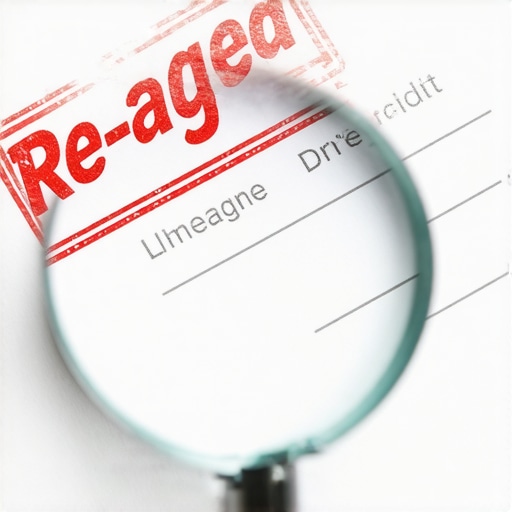
Why does my score drop right after I finally clear a balance?
This is the advanced reader’s most common frustration. A 2022 report from the Consumer Financial Protection Bureau (CFPB) revealed that nearly 50% of complaints regarding credit reports involved incorrect information, proving that the bureaus’ automated systems are far from infallible. When an old debt is updated because of a payment, it resets the ‘Date of Last Activity.’ To the FICO model, a negative event that was recently active is much more damaging than one that has been sitting quiet for four years. You need to apply the science of credit repair expert advice to elevate your score by focusing on deletion rather than just repayment.
Stop the zombie debt cycle before it starts
The ‘Oops’ factor here is huge. The trap is called the ‘Acknowledgement of Debt.’ In many states, even a phone call where you admit the debt is yours can restart the clock for a lawsuit. You think you are being an honest, responsible citizen, but you are actually waving your legal defenses. The only time I advocate for paying a collection is if you have a written, signed agreement for a ‘pay-for-delete.’ Without that, you are just throwing money into a void. You have to know how to negotiate a pay for delete that actually works, or else you are just left with a ‘Paid Collection’ mark which lenders still view as a massive red flag. Always verify the age of the debt first; often, you can how to prove a debt is too old to be reported and get it wiped out entirely without paying a dime. Have you ever fallen into this trap? Let me know in the comments. It is time to stop playing by their rules and start using the law to your advantage.Once you have managed to scrub the errors and fight off the zombies, the real work begins: the maintenance phase. I used to think that credit repair was a one-and-done event, like fixing a leaky faucet. It is not. It is more like maintaining a garden; if you stop pulling the weeds, they will eventually take over again. To stay on top of things, I personally use a combination of raw data and strategic automation. I do not rely on the free, watered-down scores provided by banking apps because they usually offer a VantageScore 3.0, which almost no mortgage lender actually uses. Instead, I pay for the full myFICO report quarterly to see the exact FICO 8 and FICO 9 versions that banks are looking at. You need to unlock your credit score potential with expert tips for 2025 if you want to stay ahead of the curve.
The Digital Toolkit I Use to Guard My Score
My personal routine involves a monthly ‘Statement Date’ check. Most people focus on the due date, but the statement date is when the bank reports your balance to the bureaus. If you have a $5,000 limit and spend $4,000, even if you pay it off by the due date, your report might show 80% utilization if the statement closes before your payment hits. I use a simple spreadsheet to track these dates for every card I own. This is a key part of the strategy for keeping your credit score high while carrying debt. If you find a mistake during your monthly audit, do not panic, but do not wait either. You must know how to fight a negative item that keeps reappearing every month because the bureaus’ systems are notorious for ‘re-inserting’ deleted data during software updates. 
How do I maintain a high score over the long haul?
Maintenance is about consistency and knowing when to ask for more. Once my score hit 700, I stopped fearing the banks and started making them work for me. Every six months, I call my card issuers to request a limit increase. This lowers my utilization ratio automatically without me having to spend less. I always make sure to ask how to get a credit limit increase without a hard credit pull so I do not ding my score in the process. Consistency is the only way to ensure your efforts do not go to waste.
The Future of FICO is Watching Your Every Move
We are moving into an era of ‘Trended Data.’ According to FICO’s technical whitepaper on the 10T model, the algorithm is moving away from a simple snapshot of your debt. Instead, it looks at the last 24 months of your trajectory. Are you slowly paying down debt, or are you slowly accumulating it? This makes the best time of month to pay your credit card bill more important than ever because your habits are being recorded in a narrative format, not just a numerical one. If you want to really win, try this one advanced tip: move your payment date to five days before your statement closing date for just one month and watch how your score reacts. It is the fastest way to prove to yourself that you finally have the upper hand.
Why Blind Trust Is the Fastest Way to a 500 Score
Reflecting on my journey, the biggest “aha” moment was realizing that the credit bureaus are not government agencies; they are private corporations selling your data. They do not have to be right; they just have to be compliant. I wasted months believing their automated responses until I learned that the system is designed to exhaust you. You have to be more stubborn than their software. Another hard truth? Most people fail because they stop after the first rejection. In the world of credit repair secrets, the second and third letters are often where the real magic happens. Persistence is the only language the bureaus truly respect.
The Tools That Saved My Financial Life
I did not get real results until I stopped guessing and started measuring. First, get away from the “educational” scores and look at your actual FICO numbers—that is what lenders see. I highly recommend using a physical folder to track every piece of certified mail; it becomes your legal shield if things go sideways. I also suggest following the ultimate blueprint for effective credit repair to ensure you are not skipping vital steps. These resources aren’t just helpful; they are the difference between a temporary bump and a permanent fix. You can also look into proven repair techniques in 2025 to see how the algorithms are shifting toward trended data and how you can stay ahead of the curve.
The Day Your Score Finally Starts Moving Up
There is a specific kind of peace that comes when you stop checking your phone in fear of a “payment declined” notification. Fixing your credit is about more than just numbers; it is about reclaiming your dignity and opening doors that have been slammed shut for years. It takes work, but the results are worth every stamp and every late-night spreadsheet entry. Don’t let the complexity of the bureaus stop you from pursuing mastering credit counseling for your own benefit. You are more than a three-digit number, and today is the perfect day to start proving it to the financial world. Have you ever felt like a credit bureau was intentionally ignoring your evidence? Let me know your experience in the comments below.