

I was sitting at my kitchen table, staring at a credit report that looked like a crime scene. Right there, in black and white, was an old electric bill for eighty-seven dollars. It wasn’t even mine. I’d moved out of that apartment three years prior, yet this “utility collection” was dragging my score into the gutter. I felt helpless. I felt like the system was rigged. But then I realized something: the collection agency didn’t have the proof they needed. They were just hoping I wouldn’t notice. I’m going to show you exactly how I turned the tables and wiped that stain off my record for good.[image_placeholder_1]
Stop Letting That Zombie Utility Bill Eat Your Credit Score
I’ll be honest with you—when I first saw that collection, I panicked. My first instinct was to call the agency and argue. That was my biggest mistake. I spent forty minutes on hold only to be told I had to “prove” I didn’t owe it. That’s not how the law works, but they won’t tell you that. Most people fall into the same trap because they don’t realize why online dispute portals are a trap for consumers. They make it easy to click a button, but they often strip away your legal rights in the process. You need a paper trail, not a web form. We’re going to walk through how to dispute a utility bill that is not yours by using the very lack of evidence they have against them. It’s about being more organized than the person sitting in a cubicle across the country. Have you ever checked your report and found a bill from a place you haven’t lived in for years? Drop a comment below if you have; I’d love to hear how they tried to justify it. It’s a gut-punch, isn’t it?
Can I really get this removed without paying a dime?
It sounds too good to be true, right? Usually, the generic advice is to just pay it and move on. I used to think that way too. But paying a collection doesn’t always help. In fact, sometimes your FICO score dips after a payoff, which is the last thing you want. You need to focus on the proof needed to delete a collection that is past the statute of limitations or one that was never yours to begin with. According to a study by the Federal Trade Commission (FTC), one in five consumers has an error on at least one of their credit reports that could be dragging them down. That is a massive amount of people being penalized for mistakes they didn’t make. We are going to look at how to dispute errors effectively and why why your score dips after you open a new utility account is often just the tip of the iceberg when it comes to how these companies track your data. By the time we’re done today, you’ll have a clear, actionable plan to take your power back.
Force the Agency to Show Their Hand
Think of a collection agency like a guy at a flea market trying to sell you a ‘signed’ baseball. If he doesn’t have a certificate of authenticity, that signature is just ink on leather. In the credit world, that ‘certificate’ is the original contract you signed with the utility company. When a debt is sold or moved to a collection status, the data often gets corrupted or lost. Most of the time, they are operating on a spreadsheet with your name and a dollar amount, nothing more. You need to use the difference between a dispute and a request for information to your advantage. Instead of just saying ‘this isn’t mine,’ you are demanding they prove it is yours with specific, granular evidence. If they can’t produce the original service agreement with your signature, the law says that item shouldn’t be on your report.
Demand an Itemized Statement Right Now
Your first move isn’t a phone call; it’s a letter. You want to request a full validation of the debt. I remember doing this for a supposed ‘unpaid water bill’ from an address I hadn’t lived at in five years. I sent a stern letter asking for the move-in meter reading and the final move-out statement. Two weeks later, they sent me a blurry screenshot of a computer terminal that didn’t even have my full social security number on it. It was a joke. Because they couldn’t provide the actual billing history, I was able to dispute an account that is not yours with the credit bureaus using their own failed validation as evidence. 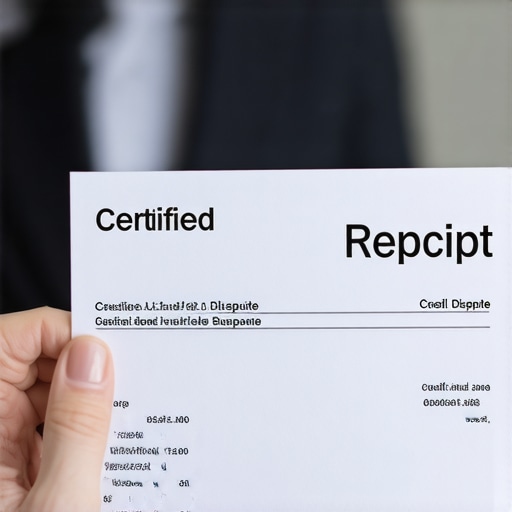
Why Snail Mail Beats the Internet Every Time
I know it’s tempting to use the ‘Easy’ button on the credit bureau’s website, but you have to resist. When you use those portals, you are often agreeing to automated systems that boil your complex legal argument down to a two-digit code. You lose your right to a manual investigation. Instead, use a physical letter sent via Certified Mail with a Return Receipt. This creates a legal ‘paper trail’ that the bureaus cannot ignore. This is one of the most effective credit repair secrets because it forces a human being to actually look at your documents. It’s about accountability. If they don’t respond within 30 days, they are in violation of the Fair Credit Reporting Act.
Identify Mixed Files Before Sending Your Letter
Sometimes the bill isn’t a ‘zombie’ from your past—it belongs to someone else with a similar name. This happens way more often than you’d think, especially if you have a common surname or live in a multi-unit building. Before you fire off your dispute, check for other errors like a wrong middle initial or a slight variation in your birth year. Knowing how to fix a credit file that has been merged with a relative can save you months of frustration. If you see their names or addresses on your report, that’s your ‘smoking gun’ proof that the utility bill is a case of mistaken identity. You also need to never pay a debt buyer without verification, because once you send them a single dollar, you might accidentally ‘reset’ the clock on an old debt or admit ownership of a mistake. Always verify first, dispute second.The biggest myth in credit repair is that a ‘verified’ account is a closed door. Most people see that word on a response letter and give up, thinking a human at the bureau actually analyzed their evidence. In reality, they likely just ran an automated check through a system called e-OSCAR, which simply asks the collector if the data matches their spreadsheet. You need to know why you should ask for a method of verification every time. If they can’t tell you the name of the person they spoke with or provide the specific documents reviewed, that verification is legally hollow. Have you ever fallen into this trap where a bureau just parroted back what the collector said? Let me know in the comments. I’ve seen this happen to hundreds of people who were doing everything right but didn’t know the ‘backend’ of the industry.
What Happens if the Bureau Ignores Your Second Dispute?
When you send a follow-up with even more proof, bureaus often try to hit you with a ‘frivolous’ designation. They do this to stop the clock and get you to go away. This is where you have to be aggressive. According to a study by the Federal Trade Commission (FTC), nearly one in four consumers found errors on their credit reports that were serious enough to affect their credit scores. This isn’t just a minor glitch; it’s a systemic failure. If they ignore your follow-up, you should know what to do when a credit bureau ignores your second dispute. You don’t just send the same letter again; you escalate to a formal complaint through the Consumer Financial Protection Bureau (CFPB). This forces a higher-level review that bypasses the entry-level scanners.
Don’t Give the Collector a Map to Your Wallet
The ‘oops’ factor usually comes from a place of over-explaining. Many well-meaning people send their entire life story to the credit bureau to prove a utility bill isn’t theirs. They’ll include bank statements or old leases that inadvertently contain their current employer’s name or updated contact info. Stop doing that. If you provide a document to prove you moved out of a state in 2021, but that same document shows your 2024 salary, you’ve just handed a debt buyer the exact roadmap they need to garnish your wages. Use dispute errors like a pro as your guide—keep your communication clinical, short, and strictly focused on the error. You aren’t trying to be their friend; you are defending your financial reputation.
Master the Nuance of Debt Re-Aging
Another advanced trap is ‘zombie debt’ that miraculously gets a new date of last activity. If a collector can’t prove you owe the utility bill, they might sell the debt to another agency who then reports it as a ‘new’ collection. This is illegal re-aging. You must understand how to handle a collection agency that keeps selling your debt to stop this cycle. It’s like a game of whack-a-mole, but once you have a paper trail of the first agency’s failure to validate, you can use that as a ‘silver bullet’ to kill the debt permanently across all future owners. If you feel overwhelmed, how credit counseling can transform your financial future might be the right path to get an expert eye on your specific situation without falling for predatory ‘quick fix’ schemes. Remember, the goal isn’t just a higher number today; it’s a clean record that stays clean for years to come.I don’t just win the dispute and walk away. That’s how people end up back in the same mess two years later. To really scale your financial health, you need a system that works while you’re sleeping. Personally, I use a dedicated ‘Credit Fortress’ spreadsheet. It’s not fancy, but it tracks every letter sent, every certified mail receipt number, and every response date. This is the foundation of the ultimate blueprint for effective credit repair because it turns your defense into a data-driven offense. If a collector pops back up, I don’t dig through drawers; I hit Ctrl+F. Beyond the spreadsheet, I’m a huge advocate of using the official MyFICO platform rather than free apps. You need to know the difference between your FICO score and your real score used by lenders. Most free apps use VantageScore, which is fine for a general idea, but it’s not what the mortgage guy is looking at.
Build a Wall Around Your Financial Reputation
Once you’ve cleared the debris, you have to prevent new errors from taking root. I’ve seen people work hard to fix a bill only to have a new one appear because of a simple typo in their file. Learning how to stop credit bureau errors before they happen is mostly about data hygiene. I keep a ‘frozen’ status on my accounts at all times. It’s the single best tool in my kit. If I’m not actively applying for a loan, my files are locked tight. This prevents ‘soft’ inquiries from turning into ‘zombie’ collections later. 
How do I keep my report spotless for the next decade?
Maintenance is a habit, not a one-time event. Every six months, I pull my ‘Specialty Reports’—places like LexisNexis and SageStream—that most people don’t even know exist. This is where credit repair secrets really live. These background data miners feed the big three bureaus. If you don’t clean the source, the error will eventually leak back onto your main report. I predict that by 2025, the bureaus will rely even more heavily on AI-driven ‘e-OSCAR’ filters to automatically reject disputes. This means the human touch—physical letters and manual tracking—will become even more valuable. If you find yourself hitting a brick wall even after following these steps, don’t be afraid to consult the National Association of Consumer Advocates (NACA). They are the gold standard for finding attorneys who specialize in the Fair Credit Reporting Act (FCRA). You don’t have to do this alone if the bureaus are breaking the law. To stay ahead of the game, you should focus on top strategies that work for 2025 and beyond. You’ve already done the hard part by starting. Now, I want you to try this: pull one report today and just look for one tiny address error. Fixing that is your first step toward mastering credit counseling on your own terms. Your future self will thank you for the thirty minutes you spend today.
What the Collector Hopes You Never Discover
After years of navigating the credit maze, I’ve learned that debt collectors rely on your lack of knowledge more than their own documentation. One of the most important credit repair secrets is that ‘verified’ usually just means an automated system matched a name to a number, not that they actually have proof. When you dispute errors effectively, you aren’t just saying ‘it’s not mine’—you are challenging their legal right to report it. Debt buyers often purchase accounts in bulk and lack the original ‘media’ or contracts required to legally prove the debt. This shift in strategy is how you truly regain control of your financial reputation.
[image_placeholder_final]
The Toolkit That Keeps My Record Clean
You don’t need a high-priced service to fix your report, but you do need the right tools to stay organized. I’ve found that a systematic approach is more effective than any quick-fix scheme. Here is what I recommend for anyone serious about credit repair:
- The CFPB Complaint Portal: If a bureau is being stubborn, this is your primary tool for escalation. It’s a key part of top credit repair strategies to boost your score faster because it forces a manual human review.
- Physical Certified Mail: Never use the online portal ‘trap.’ A physical paper trail is the only thing that holds weight in a legal dispute. This is the core of the ultimate blueprint for effective credit repair.
- Official MyFICO Reports: Don’t rely on ‘educational’ scores from free apps. To see exactly what lenders see, you need your real credit score from the source.
Stop Letting These Mistakes Define Your Future
I know how exhausting it feels to stare at a report full of errors, but every big win starts with one small correction. Taking the time to master credit counseling on your own terms isn’t just about a number; it’s about the freedom to buy a home or get a car without being haunted by the past. The system is designed to be difficult, but you now have the roadmap to navigate it. Start with that one zombie utility bill and watch how your confidence grows as your record clears up. Have you ever had a credit bureau verify a debt that you knew for a fact was an error? Let me know in the comments below; I’d love to hear how you handled it!