

I’ll never forget the sinking feeling in my stomach when I opened that thin, white envelope for the second time. I had done everything by the book. I gathered my receipts, wrote a clear letter, and even used a highlighter to point out the errors. Yet, there it was: “Information Verified.” It felt like the credit bureau hadn’t even bothered to look at the paperwork I’d spent hours organizing. I was stuck with a mistake that wasn’t mine, watching my score sit in the gutter while I tried to qualify for a decent car loan. It was a visceral moment of frustration that made me realize the system isn’t designed to help us—it’s designed for speed. But I promise you, there is a way to break through that wall and force them to actually look at your evidence.
They Aren’t Actually Reading Your Letters
The truth is a hard pill to swallow. Most of these disputes are handled by automated systems, not humans with common sense. My biggest mistake early on was thinking that if I just sent the same thing again, they’d eventually “get it.” Spoiler alert: they didn’t. I was caught in a loop because I didn’t know the method for beating automated dispute scanners at the bureau. You can’t just repeat yourself; you have to change the game. If you’re sitting there with a second rejection letter in your hand, don’t give up. We are going to move past the basic “it’s not mine” phase and start using the tools that actually make these multi-billion dollar companies pay attention. According to the Consumer Financial Protection Bureau (CFPB), credit bureaus often rely on automated systems that reduce your detailed evidence to a simple three-digit code, which often leads to legitimate claims being ignored.
Is fighting a second time just a waste of stamps?
You might be thinking, “If they ignored me twice, why would a third time be any different?” I get it. It feels like throwing money down a drain. But the law is actually on your side here. The Fair Credit Reporting Act (FCRA) requires them to conduct a reasonable investigation. When they ignore clear evidence twice, they’ve stopped being reasonable. That’s when we stop asking nicely and start demanding results. I’ve been exactly where you are, and I promise, there is a way out. You just need to know how to handle a credit bureau that ignores your evidence without losing your mind.
Stop Using Those “Easy” Online Portals Right Now
If you’ve been clicking “dispute” on their website, you’ve already lost half the battle. I spent months clicking buttons on a screen, wondering why nothing changed. It wasn’t until I realized that why online dispute portals are a trap for consumers that I finally saw movement. When you use their portal, you often waive your right to a full investigation and make it incredibly easy for their robots to ignore your proof. Have you ever felt like you were arguing with a brick wall when trying to fix your credit? Tell me about your experience—I’d love to hear if you’re currently stuck in this “verified” loop. In the next section, we are going to look at how to escalate this to the next level. We aren’t just going to dispute errors effectively; we are going to force their hand using the CFPB portal and certified mail.
Grab Your Envelopes and Skip the Digital Trap
The first rule of real credit repair is that if it’s easy, it’s probably ineffective. Those shiny ‘Dispute’ buttons on the bureau websites are essentially ‘ignore me’ buttons for their automated systems. To get results, you have to go old school. I’m talking about physical paper, blue ink, and certified mail. When you send a letter through the mail, you are creating a legal paper trail that a digital click simply cannot replicate. You need to master credit disputes with a step-by-step guide to success that prioritizes physical documentation over digital convenience. By doing this, you’re forcing a human—or at least a more sophisticated scanning process—to acknowledge that you aren’t just a random data point in an app. 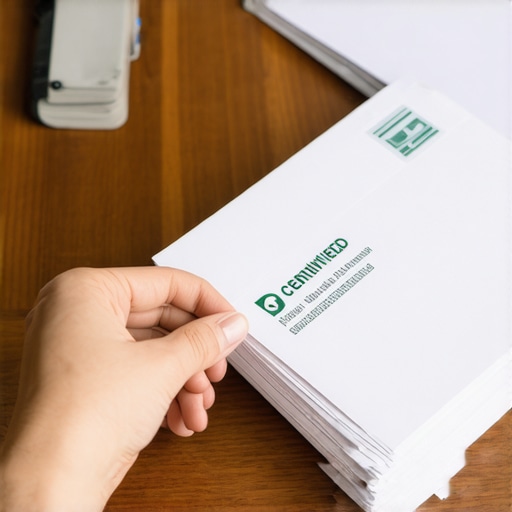
Receipts Create an Irrefutable Paper Trail
Think of certified mail as your insurance policy. I remember one specific instance where I was fighting a $412 medical collection that I knew for a fact was paid. The bureau kept sending me the same ‘Verified’ response. It was infuriating. I finally printed out my bank statement, wrote a letter in blue ink (which is harder for some automated scanners to process as a form letter), and sent it via certified mail with a return receipt requested. Two weeks later, I got a signature back. That signature meant they couldn’t claim they never saw my evidence. If you’re dealing with similar issues, knowing the most common errors found on medical collections can help you spot the exact discrepancy to highlight in your letter.
Demand to See Their Work
If the bureau comes back and says the information is ‘verified’ again, don’t just take their word for it. They are required by law to tell you *how* they verified it. This is where you use a ‘Method of Verification’ (MOV) request. Most people forget this step, but it’s the one that usually breaks the stalemate. You are essentially asking, ‘Who did you talk to, and what documents did they provide?’ Frequently, they haven’t actually talked to anyone; they just checked an internal database. When you ask for a method of verification every time, you put them in a corner where they have to prove they did their job. If they can’t provide the specifics, they are technically in violation of the FCRA, and the item must be removed.
The Secret Weapon They Hope You Never Use
When the bureaus play games, you stop talking to them and start talking to their boss: the Consumer Financial Protection Bureau (CFPB). This isn’t just another dispute; it’s a formal complaint. In my medical bill saga, the MOV request still didn’t budge them, so I uploaded my entire paper trail—the certified mail receipts, the bank statements, and the previous rejection letters—to the CFPB portal. Within 11 days, the collection was deleted. The bureaus hate getting flagged by the CFPB because it affects their compliance ratings. You can learn exactly how to use the CFPB portal to resolve stalled disputes to bypass the automated wall entirely.
Know When to Call in the Experts
Sometimes the mess is too big to clean up with just a few stamps. If you have dozens of errors or a complex identity theft case, you might need to decide between doing it yourself and seeking professional help. There is a significant truth about credit repair software vs professional help that you need to understand before spending money. While software can automate the letters, a professional might know the specific legal nuances that a program misses. Alternatively, if your issues stem from high debt rather than just errors, looking into an ultimate guide to credit counseling might be the better path to long-term stability. You have to be honest about whether you have the time and the ‘stomach’ to keep up this paper war for months at a time.One of the biggest lies you’ve been told by mainstream financial blogs is that the goal is a perfect zero balance on every single card. In reality, why keeping a zero balance on all cards might hurt your score is one of the most overlooked nuances in the industry. The scoring models want to see that you can use credit responsibly, not that you’ve abandoned it entirely. If every card shows a $0 balance at the time of reporting, the algorithm might interpret that as inactivity rather than responsibility. Have you ever cleared your balances only to see your score stall or even drop? Let me know in the comments if you’ve fallen into this ‘all-zero’ trap. Then there’s the debt buyer trap. Many people think paying an old debt is always the right moral and financial move. However, why you should never pay a debt buyer without verification is because the moment you send a single dollar, you might inadvertently restart the clock on the statute of limitations. This brings me to a huge ‘Oops’ factor: updating the Date of Last Activity. If a collection is five years old and you pay it off, that account now looks ‘fresh’ to the scoring model, potentially dragging your score down even though you were trying to do the right thing. It’s why you need to understand the strategy to wipe a collection without paying a dime before you ever open your wallet. 
Why did my score drop after I paid off my car loan?
It feels like a slap in the face. You work hard to pay off a debt, expecting a reward, and instead, your score takes a 20-point hit. This happens because FICO considers your ‘credit mix’—the balance between revolving accounts and installment loans. According to a FICO analysis on score fluctuations, closing an installment loan can reduce the variety of credit you’re managing and lower the ‘average age of accounts.’ It’s a sophisticated nuance that most beginner repair guides miss entirely. If you’re in this boat, you might need to look at the simple move to improve your credit mix to stabilize the damage. Furthermore, be extremely careful when seeking professional help. There is a massive difference between non-profit and for-profit counseling that can determine if your credit survives the process. Most for-profit companies will tell you to stop paying your bills to ‘force’ a settlement—which is a recipe for a destroyed credit file. Instead, you should master credit counseling by finding an agency that prioritizes your score’s long-term health over a quick and damaging settlement. You have to be proactive about how to stop credit bureau errors before they happen rather than just reacting to the damage once it appears.Once the initial dust settles and you see those first few deletions, the temptation is to put your feet up and assume the job is done. I made that mistake early on. I stopped checking my reports for six months, only to find that an old utility bill I thought was dead and buried had been sold to a new debt buyer and ‘re-aged’ on my file. This is why you must treat your credit like a garden; if you don’t pull the weeds, they will take over the yard again. You have to learn how to stop credit bureau errors before they happen by staying hyper-vigilant with your documentation. I personally use a Brother ADS-1700W scanner specifically because it handles thick cardstock and receipts without jamming, allowing me to digitize every single piece of correspondence from creditors immediately. Having a searchable PDF database of your financial life is the only way to unlock your credit score potential with expert tips for 2025 that actually stick.
The Filing Cabinet is Your New Best Friend
You might think a digital-only lifestyle is the way to go, but when you are dealing with multi-billion dollar bureaucracies, physical evidence is king. I keep a dedicated accordion folder specifically for ‘Certified Mail Receipts’ and ‘Bureau Responses.’ There is something incredibly powerful about being able to pull a physical slip of paper that proves a debt collector received your letter on a specific Tuesday at 2:14 PM. This level of organization is what separates the people who struggle for years from those who use the science of credit repair and expert advice to elevate your score. If you’re wondering whether you should buy automated tools, remember the truth about credit repair software vs professional help: no software can replace the legal weight of a well-documented paper trail. 
How do I keep my score from crashing again?
Maintenance is actually harder than the initial repair because it requires consistency. You need to monitor your file at least once a month—not just the score, but the actual line items. Small errors, like a misspelled address or a transposed digit in a social security number, are often the first signs of a ‘merged file’ or impending identity theft. By keeping an eye on the key credit score factors every borrower must know, you can spot these anomalies before they tank your points. I also recommend setting up ‘Balance Alerts’ on every card you own. I have mine set to notify me if any balance exceeds 5% of the limit. This ensures I never accidentally hurt my utilization ratio before the statement closes. To stay ahead of the curve, you should follow credit repair secrets and proven steps to boost your credit score fast even when your score is already ‘good.’
The Future of Your Data is Automated
We are moving into an era where ‘trended data’ is becoming the standard. According to the technical documentation for FICO® Score 10 T, lenders are no longer just looking at your score today; they are looking at the trajectory of your balances over the last 24 months. This means you can’t just ‘clean up’ for a month to get a loan. You need a the ultimate blueprint for effective credit repair that focuses on long-term behavior. If you want to stay relevant, start focusing on your ‘payment-to-debt’ ratio, which measures how much of your total balance you pay off each month. This is the next frontier of credit scoring. My challenge to you: pick one account today, find the original creditor’s address, and send a ‘goodwill’ letter if you have a single late payment. It’s a small move that builds the muscle of proactive management.
What the Bureaucracies Don’t Expect You to Do
Through years of trial and error, I have learned that the credit bureaus operate on the assumption that 99% of people will quit after the first rejection. My biggest ‘lightbulb moment’ was realizing that persistence is actually a metric they track. When you continue to dispute errors with fresh evidence and certified mail, you shift from being a ‘nuisance’ to a legal liability. It is also vital to remember that credit repair is a marathon, not a sprint; skipping even one month of monitoring can let errors creep back in. You can find more top credit repair strategies to boost your score faster that emphasize this level of consistent pressure. Lastly, never underestimate the tiny errors on your report that cost thousands in interest over the life of a mortgage or car loan. Every detail matters.
The Gear That Keeps My Files Searchable
To stay organized, I rely on a few specific tools that keep my paper trail ironclad. First, a dedicated high-speed document scanner is non-negotiable for digitizing those blue-ink letters and certified mail receipts. I also recommend a physical accordion file labeled by year and bureau. While many people use digital apps, having a physical folder to bring to a lender or lawyer provides a level of credibility that a smartphone screen just can’t match. For those looking to get organized for the upcoming year, you should prepare to boost your credit score in 2025 with top strategies that work by auditing your current filing system first. Finally, always keep a copy of the Fair Credit Reporting Act (FCRA) bookmarked; knowing your rights is the most powerful tool in your belt. #IMAGE_PLACE_HOLDER_E#
Claim Your Financial Future Today
The sinking feeling I felt years ago when I opened my first rejection letter was a catalyst for change, and I want it to be the same for you. Don’t let a computer algorithm decide your financial worth or your ability to provide for your family. You now have the blueprint to move past the automated scanners and the ‘verified’ loops. By using certified mail, demanding methods of verification, and escalating to the CFPB when necessary, you are taking back the power. You are more than a three-digit number, and you deserve a credit profile that reflects your true responsibility. Have you ever received a ‘Verified’ response even though you had clear proof the item was an error? Let me know your experience in the comments below!