

I still remember the cold sweat that broke out on my forehead when I pulled a final notice from my mailbox for a city I hadn’t lived in since 2021. The bill was for a staggering $1,400 in unpaid electricity usage. I felt sick. How could I owe money for a home where someone else was currently sleeping? This wasn’t just a clerical error; it was a direct threat to the financial life I had worked so hard to rebuild. If I didn’t act fast, this ghost debt was going to haunt my credit report for years. [image-placeholder]
Your Credit Score is Too Important to Let a Ghost Debt Win
Today, I am going to show you exactly how to stop these zombie utility bills from draining your bank account and trasher your credit. We will look at the specific steps to prove you aren’t responsible and ensure your file stays clean. You see, the exact way to dispute an account that is not yours isn’t about being loud; it is about being precise and persistent. When I first dealt with this, I made a massive rookie mistake. I tried to explain my situation over the phone without any paper trail. I thought the customer service rep would just see I was a good person and hit delete. Spoiler alert: they didn’t. In fact, that phone call just confirmed my identity in their system and made the collection agency more aggressive. If you want to win, you have to dispute errors effectively using a formal process that they cannot ignore.
Does Disputing These Bills Actually Work or is it a Waste of Time?
You might be sitting there thinking the utility company is a giant and they aren’t going to listen to a single person. I get it. It feels like screaming into a void. But here is a surprising fact: according to the Consumer Financial Protection Bureau (CFPB), credit reporting agencies and creditors are legally obligated to investigate disputes within 30 days. If they can’t prove the debt is actually yours, they have to remove it. Period. Why does this matter right now? Because your credit health affects everything from your car insurance rates to your ability to buy a home. Have you ever opened a bill and realized it belonged to a previous tenant or a totally different address? Let me know, because you’re definitely not alone in this. Understanding why your utility provider is your secret weapon for credit can actually turn this headache into a chance to strengthen your profile. It is time to stop the automated rejection loop and take control. Let us get into the nitty-gritty of the paperwork you’ll need to prove your case.First, stop looking at your screen and start looking for your old lease. You need to assemble what I call the ‘Vindication Vault.’ Think of credit reporting agencies like a cold, automated librarian; they do not care about your story, they only care if the book has the right return stamp. To win, you must provide the proof needed to dispute a ghost debt on your file. This includes your move-out inspection report, a copy of your new lease starting in a different city, and even a final pay stub from that era showing your new address. When I was fighting my $1,400 bill, I actually found a grainy photo I took of the electric meter on the day I left. That one photo, timestamped in my cloud storage, was the piece of evidence that finally broke the utility company’s stance.
The Lease is Your Ultimate Shield
The utility company’s computer system is designed to assume you are the resident until someone else signs up. If a new tenant never moves in or uses a different provider, the ‘zombie’ account stays in your name by default. You have to break that link. Use the document checklist for a successful credit dispute to ensure you are not missing the obvious stuff. If you can show a lease agreement for your new place that overlaps with the dates of the disputed bill, you have a concrete alibi. 
Beating the Bureau Scanners at Their Own Game
Once you have your stack of papers, do not—I repeat, do not—use the online dispute button on the credit bureau websites. Those buttons are essentially traps designed to funnel your dispute through an automated scanner that looks for keywords and rejects anything that is not perfectly formatted. If you want to dispute credit errors swiftly and securely in 2025, you have to go old school. You must mail a physical letter.
Why Certified Mail is the Only Way to Speak to Bureaus
When you send a dispute via certified mail with a return receipt requested, you create a legal paper trail. The bureaus cannot claim they never received it. This is a core part of mastering credit disputes. In my case, I sent my package to Equifax and waited. About 22 days later, I got a notification that the $1,400 collection had been deleted. It was not because the collector felt bad; it was because they could not refute the evidence I physically mailed to the bureau. To keep the momentum, you have to know how to stop the automated rejection loop in your next dispute by using specific language that forces a human to actually look at your move-out photos and lease documents.
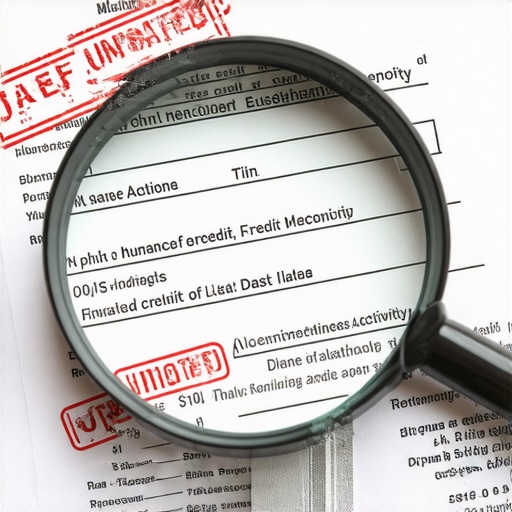
Let’s peel back another layer, because this is where most people—and even some self-proclaimed experts—get it completely wrong. Everyone tells you that if you owe money, you should just pay it to make the problem go away. While that sounds morally right, in the world of FICO algorithms, it can be a total disaster. Here is the contrarian truth: paying an old, stagnant collection can actually cause your score to plummet overnight. This happens because the ‘Date of Last Activity’ on the account updates to the current month, making a five-year-old mistake look like it happened yesterday. Understanding the reason your score did not jump after paying off your cards is the first step toward true financial literacy.
This is what I call the ‘Data Furnace.’ When you interact with a zombie debt without a strategy, you’re just throwing fuel on a fire that was almost out. If you want to see real movement, you need to lean into the science of credit repair rather than just throwing money at collectors. Have you ever sent a partial payment thinking it would help, only to see your score drop further? Let me know in the comments, because that trap is set specifically to catch honest people off guard.
Watch Out for the Re-Aging Trap
The biggest ‘oops’ factor I see involves the statute of limitations. In many states, a debt becomes legally uncollectable after a certain number of years. However, if you make even a $5 ‘good faith’ payment, you might inadvertently restart the entire clock. Debt buyers are notorious for this. They buy portfolios for pennies and then use 5 dirty tactics debt collectors use to restart the clock. They want you to acknowledge the debt so they can sue you or keep it on your report for another seven years. This is why you must master the difference between a factual dispute and a general denial. A general denial is weak; a factual dispute based on the law is an iron wall.
Can a Non-Profit Counselor Actually Damage Your Profile?
It sounds counterintuitive, but why nonprofit credit counselors might be hurting your score is a question every advanced borrower should ask. According to a report by the National Consumer Law Center, while debt management plans (DMPs) can help you pay down principal, some lenders view a DMP notation on your report as a sign that you cannot manage your own finances. This can lead to lower credit limits or higher interest rates on future loans, even if your score looks okay. If you are considering this route, you need to learn how to avoid common pitfalls in credit counseling programs before signing any contracts. It is about more than just the monthly payment; it is about the long-term shadow those notes cast on your file.
Before you move forward, realize that the bureaus are looking for any reason to ignore you. They prefer ‘frivolous’ labels because it saves them work. If you provide a generic letter, you are doing their job for them. Instead, focus on dispute errors like a pro by citing specific inaccuracies in the account history, payment status, or balance. This forces a manual review, which is the only way to break the cycle of automated rejections.
Once you have scrubbed those ghost debts and corrected the glaring errors, you enter what I call the ‘Vigilance Phase.’ It is tempting to delete your monitoring apps and never look at a credit report again, but that is exactly when the bureaus or a rogue debt buyer might slip something back onto your file. To truly stay on top, you need to learn how to read your credit report like a professional auditor. I don’t just glance at the three-digit number; I look at the ‘Date of Last Activity’ and the ‘Payment Remark’ fields every single month. This level of detail is the only way to catch re-inserted items before they destroy your momentum.
Why a Simple Spreadsheet Beats Every Shiny App
I have tried every credit monitoring tool on the market, from the free ones to the pricey premium subscriptions. But here is my secret weapon: a custom Excel spreadsheet where I track my individual account balances on the ‘Statement Closing Date,’ not the ‘Due Date.’ Most people don’t realize that your utility and debt levels are reported on the closing date, and if you pay on the due date, you might still be showing a high balance to the bureaus. This is a core part of the strategy for keeping your credit score high while carrying debt. By tracking these dates manually, I can time my payments to ensure my reported utilization is always under 3%.

As we look toward the future of lending, the industry is shifting toward ‘Trended Data.’ According to FICO’s technical documentation on the FICO 10T model, lenders are no longer just looking at a snapshot of your debt; they are looking at whether your balances are growing or shrinking over a 24-month period. This means the science of credit repair is evolving from a one-time fix into a long-term behavioral game. If you want to stay ahead of this trend, you need to focus on credit score boosters that emphasize consistent balance reduction rather than just hitting a target number once.
How do I maintain a perfect score over time?
Maintenance is about automation and defense. I recommend setting up a ‘credit freeze’ on all three major bureaus immediately after you finish your repair process. This prevents any new accounts from being opened without your express permission, even if your data was leaked in a breach. You should also check out mastering credit disputes to handle the small, annoying errors that inevitably crop up as systems update. If you really want to scale your profile, try this advanced tip: Request a ‘Soft Pull’ credit limit increase every six months on your oldest cards. This lowers your utilization ratio without the risk of a hard inquiry. Do this tonight on just one account and watch how the algorithm rewards your increased capacity.
The Hardest Lesson I Learned About Managing Dispute Errors
Looking back at that $1,400 mess, the biggest realization was that the utility company isn’t your friend, and customer service reps aren’t investigators. They are data entry clerks. When you deal with dispute errors like a pro, you stop treating the situation like a conversation and start treating it like a court case. I learned that every word spoken on the phone can be twisted, but a certified letter is a permanent record they can’t hide from. I also realized that key credit score factors every borrower must know involve timing—mailing your dispute just before their reporting cycle can sometimes lead to faster removals. Finally, the most ‘lightbulb’ moment was realizing that the burden of proof is on them, not you; if they can’t find the original contract, the debt must die.
[image-placeholder]
My Personal Arsenal for a Better Credit Score
You don’t need a magic wand to fix your profile, but you do need these three things. First, a dedicated ‘Dispute Binder’ to track every piece of mail. Second, a subscription to a service that provides all three bureau reports, so you can see if a ghost debt is hiding on TransUnion but not Equifax. For those feeling overwhelmed, reading an ultimate guide to credit counseling helped me understand when to seek help and when to handle it myself. Lastly, keep a folder of ‘Move-Out Evidence’ for every home you ever live in; that timestamped photo of my empty apartment saved me a fortune. For a complete strategy, look into credit repair secrets that emphasize this kind of deep documentation.
Reclaim Your Financial Freedom Today
The road to a perfect profile is paved with persistence. It might take three rounds of letters, but seeing that ‘Deleted’ status update is a feeling like no other. As you work on your credit score, remember that you are fighting for the best version of your future self. Don’t let a mistake from a previous city or a lazy landlord dictate your mortgage rates in 2025. You have the law, the logic, and the evidence on your side. Have you ever been blindsided by a bill for an address you left years ago? Share your story in the comments so we can help each other out!