

I will never forget the cold sweat that broke over me when a car loan officer looked at me with pity and said, “I’m sorry, but we can’t approve you with those three recent collections.” I didn’t have any collections. Or so I thought. It turns out, a guy with a name remarkably similar to mine lived just three towns over, and the credit bureaus had decided we were essentially the same person. This “mixed file” nightmare nearly cost me my sanity and a new set of wheels. Today, I am helping you skip the panic and go straight to the fix, because the proper way to dispute an account that is not yours isn’t as intuitive as you would hope. I spent months screaming into the void before I figured out the specific paper trail needed to win. Have you ever opened your report only to find a stranger’s debt staring back at you?
My Name Is Not My Identity According to the Credit Bureaus
I used to think my Social Security number was a unique key that kept my financial life separate from the rest of the world. I was dead wrong. According to a landmark study by the Federal Trade Commission, one in four consumers found errors on their credit reports that might affect their credit scores. In my case, it was a “mixed file” error, where the bureau combined my data with a complete stranger’s because our names were 90% identical. I made the massive mistake early on of trying to fix it through a generic online portal, which is basically where good intentions go to die. Instead, you need to know the best way to handle a wrong name on your credit profile through certified mail and hard evidence.
Is fighting the big bureaus even worth the headache?
You might feel like David taking on three different Goliaths. It is exhausting to prove you didn’t do something, like trying to prove you weren’t at a party you never heard of. But let me tell you, that point or two difference in your interest rate is worth thousands of dollars over a lifetime. If you have been seeing accounts that do not belong to you, learning how to fix a credit file that has been merged with a relative or a stranger is the most important skill you can learn this year.
Why Your Social Security Number Is Not the Safety Net You Think
Most of us assume that as long as we guard our SSN, we are safe. However, bureaus often use “loose matching” logic. If the names are close and the addresses have ever overlapped in a database, they might merge the files. This is exactly how I ended up with a stranger’s medical debt on my record. To fight back, you need the paper trail that proves your identity was stolen or, in this case, just mismanaged by a computer algorithm. I am going to walk you through the exact letters I sent to finally get my name—and my credit score—back in my own hands.
Grab Every Version of Your Report First
To fix a mess this big, you have to stop relying on the summary screens of your banking apps. You need the full, raw disclosure from all three bureaus. I remember sitting at my kitchen table with three thick stacks of paper, highlighting every single line that wasn’t mine with a neon yellow marker. It looked like a crime scene, but it was the only way to see the ‘ghost’ data. To dispute errors effectively, you must identify the ‘anchor’ point—the specific incorrect address or misspelled name that is linking you to another person. This is how you force a correction for an error in your credit file name. Often, the bureau has a secondary name associated with your Social Security number that belongs to the other person. If you don’t kill that link first, the bad debt will keep jumping back onto your file like a magnet.
Stop Using the Big Blue Button Online
It is incredibly tempting to just click ‘dispute’ on a website and move on with your day. Don’t do it. Why online dispute portals are a trap for consumers is simple: these systems are designed for speed, not accuracy. They often force you to choose from a pre-set list of reasons that might not accurately describe a mixed file. When I tried the online route, the bureau’s automated system ‘verified’ the debt in 48 hours because the names matched 90%. They didn’t even look at the fact that the other guy lived in a different state. By sending a physical letter, you force a human—or at least a more sophisticated process—to acknowledge your specific evidence. 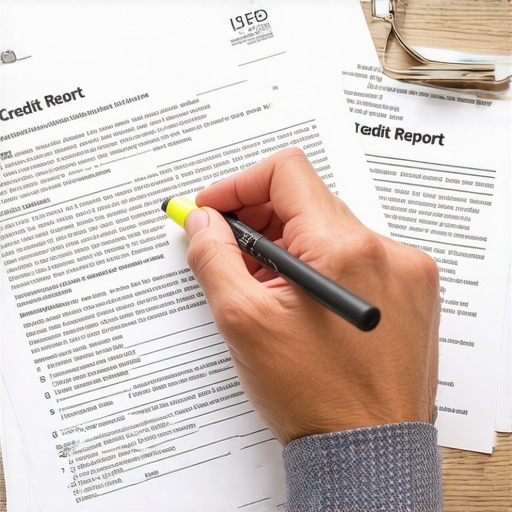
Build a Paper Trail They Cannot Ignore
Your dispute letter shouldn’t just be a complaint; it needs to be an identity packet that is impossible to refute. This is the evidence you need to win an identity theft dispute or a mixed file case. I included a copy of my Social Security card, my driver’s license, and two different utility bills. I even included a short, polite cover letter explaining that I have never lived at the address associated with the collections. When I finally sent this packet via certified mail with a return receipt, the dynamic changed. I wasn’t just a digital blip anymore; I was a real person with a legal trail. Within thirty days, I received a letter that looked like a trophy: ‘Account Deleted.’
Keep the Pressure on the Data Furnishers
The bureaus aren’t the only ones at fault; the collection agencies or banks ‘furnishing’ the data are also responsible. If the bureau refuses to budge, you take the fight directly to the source. Demand that the creditor prove the debt belongs to *your* Social Security number, not just someone with your name. This level of mastering credit disputes requires patience, but it is the only way to ensure the error doesn’t just get sold to another collector and pop up again six months later. I had to call one medical billing office four times before I reached a manager who realized they had ‘merged’ two patients in their own system. Once they fixed it on their end, the credit report fix followed almost automatically.Let’s dig deeper because there is a massive, lingering misconception that ‘clean’ means ’empty.’ Many people think the ultimate goal is a zero balance across the board, but in my experience, the ‘All Zero Except One’ (AZEO) method is far more effective for a rapid boost. If every single credit card shows a $0 balance, the FICO algorithm might actually penalize you for ‘non-use’ of credit. Lenders want to see you are responsible with active debt, not that you’ve retired from the financial world entirely. This is why keeping a zero balance on all cards might hurt your score. You need a tiny bit of activity to prove the engine is still running. Another nuance I see people miss is the ‘activity date’ trap. I have seen folks pay off a six-year-old collection thinking it would help their score, only to watch it drop 40 points the next week. By paying it without a specific agreement, you essentially ‘wake up’ the debt, making it look like a fresh negative event to some scoring models. You have to learn how to negotiate a pay for delete without admitting the debt to ensure your payment actually results in a removal rather than a localized score explosion.
Why did my score plummet right after I paid off a major loan?
It feels like a total betrayal, doesn’t it? You work hard to clear a debt, and the ‘reward’ is a lower score. This happens because closing an account can reduce your ‘credit mix’ and the average age of your accounts. According to a report by the Consumer Financial Protection Bureau, the complexity of these automated scoring models often leaves consumers confused about their actual progress. This is the specific reason your fico score dips after a payoff. It is not that you did something wrong; it is that the math favors active, aging accounts over closed, inactive ones.  Before you jump into any more disputes, you should also realize that the truth about credit repair software vs professional help often comes down to the strategy behind the letters. Automated tools cannot think like a human who sees a logical inconsistency in a report. For instance, why you should ask for a method of verification every time is because the bureaus often fail to actually contact the original creditor, relying instead on ‘e-OSCAR’—an automated system that frequently misses the nuances of a mixed file or identity theft. You must force them to show the actual signature or digital log of the transaction. Have you ever fallen into this trap of paying off a debt only to see your score drop? Let me know in the comments.Once you have finally cleared those phantom accounts, you cannot just set it and forget it. I learned this the hard way when I stopped checking my mail for three months, thinking the war was won. It starts with learning how to stop credit bureau errors before they happen by being proactive rather than reactive. I personally use a ‘Credit Audit’ spreadsheet once a month. I do not just look at the big number; I look at the balance-to-limit ratio of every single revolving account. Why? Because the bureaus are constantly updating their datasets, and if a bank forgets to report a payment, you need to catch it before the next billing cycle.
Don’t Let Your New High Score Evaporate Overnight
You need to know the difference between your fico score and your real score. Free apps often use the VantageScore 3.0 model, which is great for general tracking but can be wildly different from the FICO 8 or 9 models that most lenders actually use. I pay for a premium subscription to MyFICO because it gives me access to all 28 versions of my score, including the industry-specific ones for mortgages and car loans. If you are serious about a big purchase, seeing what the lender sees is non-negotiable. 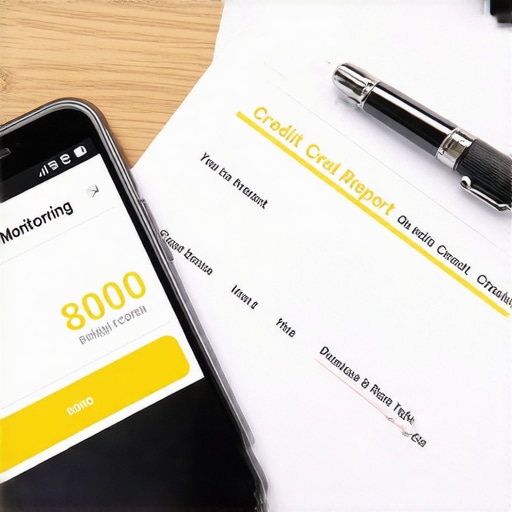
How do I maintain my credit health for the long haul?
Maintenance is about consistency and defense. I recommend setting up alerts for any new inquiry. According to FICO’s technical documentation on Reason Codes, the specific factors that influence your score are weighted differently as your file matures. For instance, once you hit the 750 mark, even a tiny mistake like a single late utility bill can cause a much larger drop than it would for someone with a 600 score. That is why unlock your credit score potential expert tips for 2025 emphasizes consistent auditing over just one-time fixes.
Why I Ditch the Free Apps for Real Professional Data
Looking ahead, I predict credit scoring will shift toward ‘hyper-personalized’ metrics. We are already seeing the bureaus try to pull in ‘alternative data’ like Netflix subscriptions or cell phone payments. While this sounds helpful for building credit from scratch, it also gives the bureaus more ways to track your habits. Using credit score boosters essential tips for rapid improvement is great for a jumpstart, but the real secret to staying in the 800 club is keeping your ‘data footprint’ clean. I have seen how master credit counseling unlock your path to financial freedom can change the game for those who feel overwhelmed by the sheer volume of data points. My best tip? Perform a ‘reason code’ audit. Look at the specific negatives listed on your official FICO report—even if they seem minor—and address the top one first. This week, I want you to go beyond the summary screen and download one full, raw report from one bureau. Check every address listed. If you see one you do not recognize, delete it immediately.
The Brutal Truth About Paper Trails and Persistence
The biggest hurdle I faced wasn’t the law; it was the sheer exhaustion of being ignored. I learned the hard way that the credit bureaus are effectively data brokers, not consumer advocates. One ‘lightbulb moment’ for me was realizing that why you should ask for a method of verification every time is the secret weapon that forces a bureau to prove they actually contacted the original creditor. It isn’t enough to say ‘this isn’t mine.’ You have to make it more expensive and legally risky for them to keep the error than to delete it. Also, remember that mastering credit disputes is a marathon of documentation. You might get a ‘verified’ response three times before a human finally looks at your proof and realizes the mistake.
My Personal Survival Kit for Credit Warfare
If you are ready to stop guessing and start fixing, I highly recommend a few specific tools. First, get a physical accordion folder; your paper trail is your only shield in a court of law. Second, learn how to use the cfpb portal to resolve stalled disputes when the bureaus stop responding to your certified mail. Third, I trust the raw data from MyFICO over any free tracking app because it shows you the industry-specific scores lenders use for auto loans and mortgages. These tools transformed my approach from reactive panic to proactive management.
Take Back Control of Your Financial Narrative
Your credit report is the story of your financial reliability, and you should be the only one holding the pen. Don’t let a computer algorithm or a stranger’s medical debt write that story for you. By implementing improve your credit score with proven repair techniques in 2025, you are investing in a future where you get the lowest interest rates and the keys to your dream home. It feels overwhelming today, but the relief of seeing a clean, accurate report is worth every stamp and every phone call. You have a legal right to an accurate file—go claim it. Have you ever found a stranger’s address or a misspelled name on your report? Let me know in the comments below!