

The coffee in my mug was stone cold, but I couldn’t look away from the screen. A $4,200 charge for a high-end sofa in a state I hadn’t visited in a decade sat there, mocking me. That was the moment I realized my identity wasn’t mine anymore. I did what most people do: I panicked. I called the bank, I cried a little, and I assumed the ‘system’ would just fix it because the fraud was so obvious. Spoiler alert—it didn’t. In fact, my first three attempts to clear the mess were rejected faster than a bad pickup line. I learned the hard way that the ‘truth’ doesn’t matter to credit bureaus; only ‘admissible evidence’ does. Today, we are going to stop the bleeding. I am going to show you exactly how to fix your credit profile after identity theft using a strategy that forces their hand.
The Bureaus Won’t Do the Investigative Work for You
I made a massive mistake early on. I thought if I just clicked ‘dispute’ on a website and wrote ‘this isn’t mine,’ a human would investigate. I was wrong. When you use those automated systems, you’re basically shouting into a void. You absolutely must learn why you should never use an online portal to dispute errors if you want real results. The bureaus are looking for a reason to keep that data on your file because it’s cheaper than investigating it. To win, you need to provide the specific evidence needed to remove a fraudulent account, which goes way beyond a simple phone call. According to the Federal Trade Commission, identity theft reports have skyrocketed, with consumers losing billions annually, yet the burden of proof remains squarely on your shoulders. Have you ever opened your credit app only to find a balance that made your stomach drop? Tell me about it in the comments below; I want to know I am not the only one who felt that instant wave of dread.
Is a simple police report actually enough to clear my name?
Most people think a police report is the ‘golden ticket,’ but it’s actually just the first step in a much longer paper trail. You need to read your credit report like a professional auditor to find the tiny inconsistencies in the fraudulent reporting that prove the debt isn’t yours. We are going to look at the affidavits, the utility bills, and the identity theft reports that actually make an impact. Let’s get into the nitty-gritty of the paperwork that actually moves the needle.
Stop Clicking Buttons and Start Printing Documents
When I first tried to scrub that sofa charge, I treated the bureau’s website like a customer service portal. It isn’t. It’s an intake filter designed to minimize their workload. To actually get results, you have to treat this like a legal proceeding. You need to gather every scrap of paper that proves you weren’t the one who signed for that debt. I’m talking about utility bills from the month of the fraud, a copy of the FTC Identity Theft Report, and a government ID that matches your current address perfectly. This is the foundation of credit repair secrets proven steps to boost your credit score fast. If you skip the physical evidence, the bureau’s software will simply flag your request as “verified,” and you’ll be stuck in a loop for months.
Why Your Paper Evidence Needs to Be Bulletproof
Think of the credit bureau as a high-security vault. If you don’t have the exact key—the right documentation—they won’t even look at the contents. I once spent three weeks arguing about a $200 medical bill only to realize the bureau had my Social Security number slightly wrong in their internal notes. Once I learned the tactic to remove a wrong social security number, the fraudulent accounts linked to that error started falling like dominoes. You have to verify that your basic identifying information is 100% accurate before you even touch the disputed accounts. If they can’t verify who you are, they won’t even bother looking at the exact way to dispute an account that is not yours.
Beating the Robots That Read Your Mail
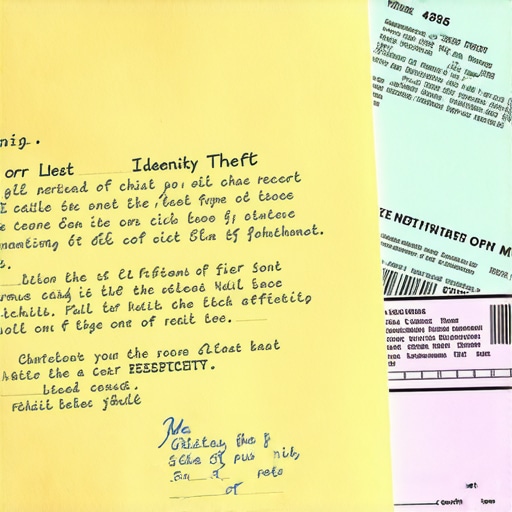
When your letter arrives at the bureau, it’s usually scanned by an Optical Character Recognition (OCR) system. These robots are looking for keywords to categorize your dispute into a “standard” bucket. If you look too professional—like you used a template from a cheap website—they might label you as a credit repair “mill” and ignore you. This is why you must master the method for beating automated dispute scanners at the bureau. I found that hand-writing my letters in blue ink on yellow legal pads actually worked better than typed letters. It forces a human to actually read the page because the machine struggles with cursive or non-standard fonts. I remember my fourth attempt; I was so frustrated I wrote the letter by hand while sitting in a car wash. That was the only one that actually got the fraudulent sofa debt removed. It felt messy and unprofessional, but it was the only way to prove a real human was behind the claim.
Force Them to Acknowledge Your Evidence
Never send a standard stamp. You need a paper trail that the post office can swear by. Sending your packet via Certified Mail with a Return Receipt is the only way to hold their feet to the fire. It creates a legal clock. Once they sign for that green card, they have 30 days to investigate. If they ignore you, you then have the leverage to learn how to handle a credit bureau that ignores your evidence. This isn’t just about being organized; it’s about creating a “chain of custody” for your dispute. You are building a case so strong that it’s cheaper for them to delete the error than it is to risk a lawsuit. By using these dispute errors effectively a guide to correct your credit report techniques, you’re not asking for a favor—you’re demanding your rights under the Fair Credit Reporting Act.
But here is where even the most diligent people get tripped up. They assume that once they’ve cleaned up the identity theft, their job is done. Or worse, they seek professional help from the wrong places. You’ve probably heard that credit counseling is a safe haven. It’s a ‘non-profit,’ right? How could that be bad? In reality, some of these programs put you on a Debt Management Plan (DMP) that shows up as a red flag to mortgage underwriters. You absolutely must know the risks of using a non-profit credit counseling agency before you sign anything. While it might help your monthly budget, it could kill your chances of a home loan for years because lenders see a DMP as an inability to manage original debt terms. It’s a classic case of solving one small problem while creating a much larger one for your future. Have you ever fallen into this trap? Let me know in the comments below. Then there’s the ‘pay-off’ myth that keeps so many people stuck. I see this every day: a reader pays off a five-year-old collection account, expecting their score to rocket up, only to find it hasn’t moved an inch. There is a very specific reason your score did not jump after paying off your cards or old collections. Most versions of the FICO score—specifically the widely used FICO 8—do not give you ‘extra credit’ for paying a collection. The damage is already done. According to research from the Consumer Financial Protection Bureau (CFPB), consumers often misunderstand how payments affect their standing, unaware that in some cases, paying an old debt can actually update the ‘date of last activity.’ This makes an old, ‘sleeping’ debt look brand new to the scoring software.
Why does my FICO score stay flat even after I settle a debt?
It almost always comes down to the version of the software the lender is using. Newer models like FICO 9 and VantageScore 4.0 are designed to ignore paid collections, but the majority of mortgage lenders still rely on older versions that penalize you regardless of the account balance. This is why you must understand the science of credit repair expert advice to elevate your score. If you don’t negotiate a ‘pay for delete’ agreement before you send a single penny, you are essentially making a donation to a collection agency without receiving any scoring benefit in return. 
Stop checking just one app and expecting the truth
You might see a beautiful 780 on one app and a soul-crushing 710 on another. Understanding why your credit score might be different on every app you check is crucial for managing your financial expectations. Each platform uses different scoring models, different bureaus, and different data refresh cycles. If you’re preparing for a major purchase like a home or a car, you need to see the exact data the lender sees, not a flashy marketing estimate. By learning how to avoid common pitfalls in credit counseling programs and becoming surgical with your evidence, you stop playing defense and finally start winning the credit game.
Keep Your Score from Slipping Back into the Basement
Once you finally see that number tick up into the 700s, the adrenaline is real. But here is the cold truth: credit repair is not a ‘one-and-done’ event. It is more like keeping a garden; if you stop weeding, the errors and high utilization rates will grow back and choke your progress. I’ve seen people do the hard work of mastering credit disputes a step-by-step guide to success, only to fall back into old habits or, worse, ignore their reports for six months. In that time, one late utility payment or a misreported balance can undo a year of effort. You need a system that alerts you the second a ‘ghost’ appears on your file. I personally use a dedicated spreadsheet to track the ‘Date of Last Activity’ for every account I’ve ever disputed because I know debt buyers love to ‘re-age’ old accounts to make them look new.
Stop Guessing and Use the Same Data Your Lender Sees
I am often asked why I don’t trust the free ‘vantage’ scores provided by most banking apps. It’s because those apps are for entertainment; they aren’t what lenders use when you’re trying to boost your credit score in 2025 top strategies that work. If you are serious about maintenance, you need to understand the difference between your fico score and your real score. I personally pay for a premium subscription to MyFICO because it gives me all 28 versions of my FICO score, including the ones used specifically for mortgages and auto loans. This isn’t just about vanity; it’s about seeing the key credit score factors every borrower must know before you walk into a dealership. According to technical documentation from Fair Isaac Corporation regarding their FICO® Score 10T model, lenders are moving toward ‘trended data,’ which looks at your payment behavior over the last 24 months rather than just a single snapshot. This means your long-term consistency is becoming more valuable than a one-time ‘rapid rescore.’

How do I maintain my credit score without obsessing over every point?
The secret to long-term success is automation and defensive maneuvering. I set up ‘micro-payments’ for my credit cards, paying them off every Friday instead of once a month. This ensures my reported utilization is always low, which is a massive part of the strategy for keeping your credit score high while carrying debt. I also keep my oldest accounts active by putting one small recurring subscription, like a $10 streaming service, on them and setting it to auto-pay. This preserves my ‘age of credit,’ which is often the hardest factor to rebuild once it’s lost. If you are currently in the middle of a rebuild, make sure you are using unlock your credit score potential expert tips for 2025 to stay ahead of the curve. The future of credit is going to be more automated and AI-driven, meaning the bureaus will get faster at spotting patterns—both good and bad. My prediction? Within the next three years, we will see ‘real-time’ credit reporting where your score fluctuates daily based on your bank account balance. Start practicing high-frequency monitoring now so you aren’t caught off guard when the system shifts. I want you to go into your banking app right now and set a ‘balance alert’ for 10% of your limit. This simple move will save you from the utilization traps that kill scores overnight.
Why Persistence Beats Perfection in the Bureau War
Looking back at that $4,200 sofa charge, I realize the hardest part wasn’t the theft—it was the feeling of powerlessness. If I could give my past self one piece of advice, it would be this: your first rejection letter is not a defeat; it is an invitation to provide better evidence. I’ve learned that the science of credit repair expert advice to elevate your score isn’t about being “lucky,” it’s about being more documented than the bureau is organized. The system often relies on you giving up after the first automated “verified” response. If you stay in the fight, you will eventually win because the law is on your side, even when the software isn’t.
Here are the lightbulb moments that changed everything for me:
- Robots ignore your feelings: The OCR scanners don’t care that your identity was stolen; they only care if your documentation matches their legal intake filters. Be clinical, not emotional.
- The “No” is often a test: Many first-round disputes are rejected by automated systems. It often takes a second, more detailed letter to reach a human who actually has the authority to delete a fraudulent account.
- Your paper trail is your armor: Every Certified Mail receipt is a piece of evidence. If you ever have to take legal action, those green cards are what win the case for you.
#IMAGE_PLACEHOLDER_E#
The Survival Kit for Guarding Your Financial Name
You don’t need a thousand-dollar consultant to fix this, but you do need the right tools in your belt. I personally recommend starting with MyFICO for the most accurate data, because knowing the difference between your fico score and your real score is the only way to avoid surprises when applying for a mortgage or auto loan. I also suggest keeping a physical folder for every piece of correspondence; there is something incredibly powerful about having a “paper trail” you can touch. Use IdentityTheft.gov to generate your official FTC affidavits, and don’t forget to look into boost your credit score in 2025 top strategies that work to keep your momentum going as the old errors finally fall off. Finally, if you ever feel stuck in a loop with the bureaus, revisit mastering credit disputes a step-by-step guide to success to refine your approach.
Reclaim Your Financial Identity Once and For All
Fixing your credit after a disaster is a marathon, not a sprint, but every step forward is a victory for your future self. You now have the blueprints, the tactics to beat the scanners, and the knowledge of which accounts to ignore and which to attack with surgical precision. It’s time to stop letting a thief’s actions dictate your interest rates and your life. You have the power to fix your credit profile after identity theft and build a score that opens doors instead of slamming them shut. Go get your name back. Have you ever managed to get a stubborn error removed after multiple tries? Let me know your biggest win in the comments below.