

I sat staring at my laptop screen, my stomach doing slow, sickening somersaults. My mortgage application had just been flagged because my name didn’t match the credit file the bank pulled. Apparently, the credit bureau thought I was my cousin, whose financial habits are—let’s just say—a bit more chaotic than mine. I ignored a small typo a year prior, thinking it was no big deal. It was a massive mistake. That one extra letter in my last name had allowed our files to bleed together, and suddenly, I was responsible for a car loan I’d never signed for. It took months of stress to learn how to force a correction for an error in your credit file name, but I made it through, and today I’m going to show you exactly how to protect your own identity from these clerical nightmares.
My Identity Crisis and Why It Matters to Your Wallet
When your name is misspelled or an alias you’ve never used shows up on your report, it’s rarely a harmless typo. It is often the first sign of a ‘merged file.’ This happens when the credit bureaus accidentally combine your data with someone else’s because you share similar names or social security numbers. I learned the hard way that the bureaus won’t just take your word for it over the phone. I spent weeks shouting into the void before I realized I needed a specific paper trail. Addressing the tiny errors on your report that cost thousands in interest is the only way to ensure your financial reputation stays yours. If you don’t fix this, you might find yourself being denied for a house or a car because of a stranger’s bad habits. Have you ever found a misspelled name or a weird alias on your own report? Drop a comment below; I’d love to hear how you discovered it and if it caused you any grief.
Is fixing a tiny typo actually worth the hassle?
You might think a middle initial being wrong isn’t worth a three-week dispute process. I thought so too. But according to a landmark study by the Federal Trade Commission (FTC), 5% of consumers had errors on their reports that could lead to less favorable terms for loans. That is one out of twenty people paying more for their lives because of a computer glitch. If you have been struggling to get ahead, the culprit might not be your spending; it might be your name. By following the right process of dispute errors effectively, you can reclaim your score. I’ll show you the exact letters I sent and the evidence I gathered to prove I was who I said I was, and more importantly, who I wasn’t. This isn’t just about spelling; it’s about making sure your hard-earned credit history isn’t being handed out to someone else. In the next section, we’ll dive into the specific documents you need to gather to make the bureaus actually listen to you.
Stop guessing and start gathering your proof
To win this fight, you need more than just a polite request. Think of the credit bureau as a gatekeeper who doesn’t trust anyone without a sealed envelope. First, you need your ‘Big Three’ identity documents: a clear copy of your Social Security card, a valid driver’s license, and a recent utility bill. I call this the ‘Financial DNA’ kit. If these don’t match perfectly, you’re dead in the water. I remember trying to use a cell phone bill once; the bureau laughed it off because it wasn’t a ‘land-based utility.’ It taught me that precision is your only weapon. This isn’t just about fast credit repair tips navigating dispute errors with confidence; it is about building a wall around your reputation. Collect these documents and make sure the name on every single one is spelled exactly how it should appear. Any deviation gives them an excuse to say ‘information not verified.’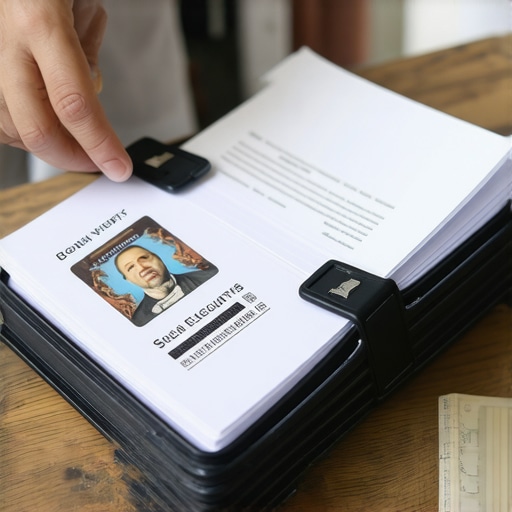
Why your computer is the worst tool for this job
You might be tempted to just log into their website and click a ‘dispute’ button. Don’t do it. I fell into this trap during my first month of trying to fix my name. The problem is that why online dispute portals are a trap for consumers is based on the fact that these portals force you to pick a pre-set category. There usually isn’t a button for ‘You merged my file with my deadbeat cousin.’ When you use their digital system, you often waive your right to a full investigation under the Fair Credit Reporting Act. Instead, you need to write a physical letter. This is the method for beating automated dispute scanners at the bureau. By mailing a physical letter, you force a human being (or at least a more sophisticated manual entry process) to look at your actual evidence. Use blue ink for your signature; it proves you didn’t just print a digital scan and helps bypass certain automated filters.
The 30-day clock and how to keep it ticking
Once that letter leaves your hands at the post office, the bureau has 30 days to investigate and respond. But here’s the kicker: I once sent a letter and waited six weeks only for them to claim they ‘never received it.’ This is why you must use Certified Mail with a Return Receipt. That green card is your insurance policy. If they don’t respond, you have the the paper trail that proves your identity was stolen or mismanaged. If they ignore you, it’s time to learn how to handle a credit bureau that ignores your evidence. While you wait, don’t apply for anything new. Adding new inquiries while your name is in flux is like trying to fix a leaky pipe while the water is still running full blast. You want a clean, static environment where the only thing changing is the correction of your name. This focus is the core of effective the ultimate blueprint for effective credit repair. Stick to the paper trail, keep copies of everything, and stay relentless.The common advice you’ll hear in every Facebook group and from most entry-level advisors is that you should just pay off your old collections to clear your name. I’m here to tell you that’s a dangerous half-truth. In my experience, paying a debt buyer without a plan is like throwing gasoline on a fire. When you pay an old, dormant collection, you can inadvertently update the date of last activity. This makes the negative mark look brand new to the scoring algorithms, potentially tanking your score further. Instead of blindly paying, you should focus on why you should never pay a debt buyer without verification. If the agency cannot prove they legally own the debt, you should not be sending them a dime. The real pro move is to leverage the secret to negotiating a pay-for-delete agreement that sticks. Without this, that Paid status remains a scar on your report for seven years. Have you ever rushed to pay a bill thinking it would help, only to be shocked by the result? Let me know in the comments; I’ve definitely been there.
Why did my score drop after I paid my balance in full?
It feels like a betrayal, doesn’t it? You do the responsible thing, and the system punishes you. This happens because of a nuance in how FICO handles credit utilization and account types. According to a report by the Consumer Financial Protection Bureau (CFPB), many consumers are unaware that certain scoring models favor active credit over closed accounts. When you pay off a loan and the account closes, you lose that mix of credit and the age of that active line. This is the specific reason your fico score dips after a payoff. It is a temporary glitch in the matrix, but if you’re applying for a mortgage next week, it can be devastating.  Another trap is the rapid rescore myth. While lenders often push these for quick gains, I usually tell my clients why you should avoid rapid rescore services for small gains when the underlying data is still messy. You are better off using top credit repair strategies to boost your score faster by addressing the root causes. Remember, the credit bureaus are not your friends; they are data aggregators. If you don’t treat this like a legal chess match, you’ve already lost. You need to be asking for more than just a correction; you should be learning why you should ask for a method of verification every time a bureau claims a debt is verified. They often use automated systems that don’t actually check the original paperwork. By demanding the method, you force them to prove they actually did the work. Furthermore, be wary of zombie debt. This is when collectors try to get you to make a small payment on a debt that is past the legal timeframe for collection. If you pay even five dollars, you could reset the clock on the proof needed to delete a collection that is past the statute of limitations. It is a ruthless tactic used to keep you in a cycle of debt, but once you understand the rules of the game, you can navigate fast credit repair tips navigating dispute errors with confidence and finally see the progress you deserve.Once you have cleared the debris of name errors and zombie debts, you enter the most critical phase: the long-term maintenance. I used to think that once the letters were sent and the errors were gone, I could just walk away. I was wrong. The credit bureaus are constantly receiving fresh data, and if you aren’t vigilant, old ghosts can reappear. I don’t use those generic, expensive tracking apps that just show you a pretty graph. Instead, I rely on a simple encrypted spreadsheet where I log the date of every correction and the specific 10-digit file identification number from every bureau response. This level of detail is essential for how to stop credit bureau errors before they happen. If a deleted item ever pops back up—a practice known as reinsertion—you have the exact proof you need to force a permanent removal within five days. This is where the science of credit repair expert advice to elevate your score moves from basic cleanup to professional-grade defense.
The Simple Spreadsheet That Saved My Sanity
My system is built on one rule: never trust the dashboard of a free credit app. Those apps often use the VantageScore model, which is almost never what a mortgage lender actually looks at. I personally check my reports once a month through a service that provides the real FICO 8 and FICO 9 scores. This allows me to understand the key credit score factors every borrower must know without the fluff. I track my utilization on each individual card, not just the total across all accounts. If one card creeps over 28%, I know my score will likely dip on the next refresh. Knowing the truth about how often your score actually refreshes changed how I time my payments. I now pay my balances three days *before* the statement closing date, not the due date. This ensures that the report the bureau receives shows a $0 or very low balance, maximizing my score every single month.
How do I keep my score from crashing after the repairs are finished?
The answer lies in consistency and the legal tools at your disposal. According to the National Association of Consumer Advocates (NACA), the credit reporting system is fundamentally flawed because it prioritizes the creditors’ data over the consumer’s accuracy. This means you must be your own advocate. If you see a stalled dispute or a bureau that is simply refusing to follow the law, don’t keep sending the same letter. Instead, learn how to use the cfpb portal to resolve stalled disputes. This forces a higher-level review and usually gets a response when the standard mail fails. You should also consider that master credit counseling unlock your path to financial freedom isn’t just about debt management; it is about learning the architecture of the system so you can navigate it for life.
Why the Future of Your Score Depends on More Than Just Plastic
Looking ahead, the industry is shifting toward ‘Trended Data.’ This means bureaus aren’t just looking at what you owe today, but whether you are a ‘transactor’ (someone who pays in full) or a ‘revolver’ (someone who carries a balance). In 2025 and beyond, AI-driven algorithms will punish revolvers even if their score looks high on the surface. To stay ahead, you need to prove you don’t need the credit you have. My advanced tip for today: Go look at your last utility bill right now. If your name or address is even slightly different from your driver’s license, call them and fix it today. Small discrepancies are the seeds of future merged files. Stay one step ahead of the machines, and you’ll never have to deal with an identity crisis again.
The Hardest Lesson I Learned About Protecting My Financial Name
Looking back at my mortgage disaster, I realize that the system isn’t designed to be fair; it’s designed to be efficient. Here’s what I know now: First, your credit report is a living document, not a static record. If you aren’t checking it, someone else might be rewriting your story. Second, the ’30-day rule’ only works if you have proof of delivery. Never send a dispute without a tracking number. Finally, I learned that a name error is often a symptom of a deeper data leak. By utilizing unlock your credit score potential expert tips for 2025, I stopped seeing myself as a victim of a glitch and started acting like the owner of my data. It took a crisis to teach me that my name is my most valuable financial asset.
Tools That Keep My Credit File Bulletproof
To keep your progress on track, I recommend three things. Buy a dedicated ‘Dispute Folder’—keep your certified mail receipts and every letter from the bureaus there. Physical evidence beats digital promises every time. Use the official AnnualCreditReport.com site to get your data for free, but don’t rely on it for your score. For that, I trust services that show your mortgage-ready scores so you can improve your credit score with proven repair techniques in 2025. Lastly, bookmark the CFPB website; it is your ultimate shield when a bureau refuses to fix a documented error. These are the exact resources I used to climb out of the ‘merged file’ hole and stay out for good.
Take the First Step Toward Your Financial Clean Slate
You have the tools now to take back what’s yours. Don’t let a misspelled name or a stranger’s bad habits dictate where you live or what you drive. The process might feel slow at first, but each letter you mail is a brick in the wall of your financial security. When you dispute credit errors swiftly and securely in 2025, you aren’t just fixing a number; you are securing your future and protecting your legacy. You’ve got this. Have you ever found a name error on your report that felt like a complete mystery? Drop a comment below and let’s talk about it!