

I sat at my kitchen table, shivering, watching the windows rattle during the worst storm our county had seen in decades. My power was out, my driveway was a river, and honestly, checking my credit card statement was the furthest thing from my mind. I was just trying to keep the basement dry. I assumed the bank would understand. I was wrong. Fast forward three months, and there it was: a 30-day late payment mark that gutted my credit score by nearly 70 points. It felt like I was being punished for a literal Act of God. If you have ever felt that sinking feeling in your stomach, you are not alone. Today, I am going to show you exactly how to fight back and win. We are going to dive into the specific mechanics of cleaning up your record when life throws a catastrophe your way, because you shouldn’t have to pay for a storm twice.
The Credit System Doesn’t Care About Disasters Unless You Make It
The hard truth I learned is that banking computers are cold and automated. They do not watch the Weather Channel. When your payment does not arrive, a line of code triggers a negative report to the bureaus. Early on, I made the classic mistake of just calling a customer service rep and expecting them to ‘fix it’ because they sounded nice on the phone. They didn’t. Without a formal paper trail, that phone call meant nothing. To truly protect your future, you need to dispute errors like a pro by using the laws specifically designed for these moments. According to the Consumer Financial Protection Bureau, lenders are encouraged to work with victims of natural disasters, but the burden of proof often lands squarely on your shoulders. I found out that the specific proof needed to erase a late payment mark usually involves more than just a sad story; it requires a strategic approach that connects the disaster to your financial hiccup.
Can a Simple Letter Really Undo a Hurricane?
You might be skeptical. You might think that once a big bank has marked you as ‘late,’ it is set in stone. I thought the same thing until I started using a formal process. It is not about begging for mercy; it is about holding them to the standard of ‘accurate reporting.’ If a disaster prevented you from accessing your account, that reporting might be technically inaccurate under the law. Learning how to get your creditor to delete a late payment mark is the difference between a high-interest mortgage and a dream rate. Have you ever checked your credit report after a crisis and felt like the system was rigged against you?
Why Your Disaster Declaration is Your Best Friend
When the government declares a disaster area, it opens a window of opportunity for your credit. This is your leverage. In my case, I had to learn that mastering credit disputes requires citing the specific disaster dates and your proximity to the damage. You have to be assertive. The banks have the tools to help you, but they rarely volunteer them. By being proactive and providing the right documentation, you can force their hand and restore the score you worked so hard to build. Now, let’s get into the actual steps you need to take to make this happen.To get a bank to blink, you have to treat your credit report like a crime scene. You need evidence that isn’t just your word against theirs. When I went through my storm recovery, I realized that the bank’s automation is like a heavy iron gate; it doesn’t open because you ask nicely, it opens because you have the right key.
Build an Ironclad Paper Trail That Banks Cannot Ignore
The first thing you need is a physical folder. Do not trust your browser’s ‘Downloads’ folder. You need to gather every piece of paper that proves you were in a disaster zone. This includes FEMA declarations, insurance claims, and even local news reports about power outages in your specific zip code. Knowing the document checklist for a successful credit dispute is half the battle. If you can show that your local bank branch was closed or that your internet provider was down for seven days, you have a factual basis for why that payment was late. 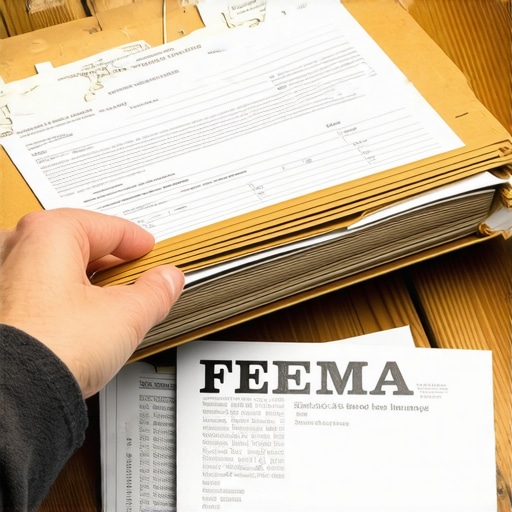
Stop Using Digital Portals and Start Licking Envelopes
I know it’s 2025, but the ‘Dispute’ button on a website is a trap. When you click that button, you often waive your right to a full investigation and your case is handled by an AI scanner. To win, you must use the certified mail hack that forces bureau responses. This puts a human clock on their desk. I remember the first time I did this; I sent a 12-page packet to TransUnion with photos of my flooded street. It felt like overkill until I got a letter back ten days later saying the mark was gone. If I had used an app, I would have been just another number in an automated rejection loop. You need to know why you should never use an online portal to dispute errors if you want real results.
Master the Language of a Factual Dispute
When you write your letter, don’t just say ‘it’s not fair.’ You need to be precise. There is a massive difference between a factual dispute and a general denial. A general denial says ‘I wasn’t late.’ A factual dispute says ‘Reporting this payment as late is inaccurate because the FEMA declaration made standard communication impossible.’ You are essentially auditing them. You might also want to look into the problem with method of verification requests if they try to come back with a generic ‘verified’ response. I once had a lender tell me they verified my late payment, but when I asked for the name and phone number of the person they spoke to, they suddenly couldn’t find the record and deleted the mark.
Leveraging Your Utility Provider as an Ally
Your power and water company often have better records of the disaster than you do. Because these companies aren’t usually reported to the big three bureaus, they are often overlooked. However, why your utility provider is your secret weapon for credit is that they can provide a letter stating exactly when your service was cut off due to the storm. This is the ‘smoking gun’ evidence that proves your life was interrupted. If you are struggling with deeper issues, it might be worth understanding credit counseling to help manage the fallout while you fight the bureaus. Once you have the proof, you are ready to apply top credit repair strategies to boost your score faster and get your financial life back on track.The mistake I see most often—and I almost made it myself—is the ‘pay it and it goes away’ myth. You think that by settling that old storm-related debt, your score will magically bounce back to 750. In reality, the history of the late payment remains for seven years. Even worse, if you aren’t careful, you might accidentally restart the clock on a debt that was about to fall off. You need to know how to identify re-aged debt before you pay a cent to avoid being haunted by the past for another decade.
Why Writing a Check Won’t Erase Your Financial Scars
Most people assume that a ‘zero balance’ is the ultimate goal. While that’s great for your bank account, the credit bureaus care more about the journey than the destination. A paid collection is still a collection. If you don’t negotiate a deletion, you’ve essentially just handed over your money without getting the credit benefit you deserve. This is exactly the reason your score did not jump after paying off your cards or that old utility bill. You have to be strategic. According to the Federal Trade Commission (FTC), nearly one in four consumers find errors that might affect their credit scores on their reports. If you’re just paying mistakes instead of disputing them, you’re leaving points on the table.
Does Paying Off a Collection Actually Boost Your Score?
The answer depends entirely on which FICO version your lender uses. Older models, like FICO 4 (still common in mortgage lending), don’t care if the balance is $0 or $1,000—the negative mark hurts you either way. Only newer models like FICO 9 ignore paid collections. This is why you must master the secret to negotiating a pay-for-delete agreement that sticks before you send a single dollar.
Watch Out for the Non-Profit Label
Here is a ‘trap’ that catches even the smartest people. When you’re overwhelmed, you might look for help from a ‘non-profit credit counseling agency.’ It sounds safe, right? But many of these agencies enroll you in a Debt Management Plan (DMP) that requires closing your accounts. Closing a card—especially your oldest one—can tank your score by destroying your average age of accounts and utilization. This is why nonprofit credit counselors might be hurting your score in the long run. Always ask the one question to ask before signing with a credit counselor: ‘Will this plan force me to close accounts that are helping my score?’  Dealing with the aftermath of a crisis requires more than just good intentions; it requires a deep understanding of the machinery behind the scenes. Have you ever fallen into the trap of paying off an old debt only to see your score stay exactly the same—or even drop? Let me know in the comments below, and let’s figure out your next move together.Cleaning the slate is only the first step. You have to keep the floor polished if you do not want to end up back at square one, wondering where your hard-earned points went. I learned the hard way that a one-time fix is a temporary bandage on a wound that needs constant care. If you want to truly win the credit game, you have to stop playing defense and start playing professional-level offense.
Stop Trusting Free Apps That Give You Fake Data
I used to check my credit scores on those free apps three times a day like it was a social media feed. I felt great seeing a 720, only to go to the bank for a car loan and get told my score was actually a 665. That is because most free apps use a ‘VantageScore,’ which almost no major lender uses for big-ticket items like mortgages or auto loans. I switched to using the official MyFICO tools because they give you the actual FICO versions—like FICO 2, 4, and 5—that lenders see. If you want to the science of credit repair to work for you, you must look at the same data the banks are using.
Keep Your Own Ledger to Beat the Banks
One tool I recommend that costs nothing but ten minutes a month is a personal credit audit log. I keep a simple spreadsheet where I track my statement closing dates—not just my due dates. Why? Because the balance on your statement is what gets reported to the bureaus. If you pay your bill on the due date but your balance was high on the closing date, your score will drop even though you paid in full. To boost your credit score in 2025, you need to time your payments so that your ‘reported’ utilization is under 3%. 
How do I maintain my credit score over the long term?
Maintenance is about consistency and catching errors before they ‘bake’ into your file. I recommend setting a calendar alert for every 90 days to pull a fresh report from all three bureaus. This is how you catch those ‘zombie’ debts that try to reappear after a disaster. When you stay on top of it, you can unlock your credit score potential because you are never surprised by a sudden drop.
Why the New FICO 10T is a Game Changer for You
The credit world is shifting. We are moving away from ‘snapshot’ scoring and toward ‘trended’ scoring. According to Tom Quinn, Vice President of Scores at FICO, the newest models like FICO 10T look at your behavior over a 24-month window. This means that if you have been consistently lowering your debt, you will be rewarded more than someone who just made a lump-sum payment yesterday. This is why long-term maintenance is more important than ever. If you have been through a storm, this trended data will eventually show your recovery as a positive upward slope, which is exactly what high-end lenders want to see. I want you to go to AnnualCreditReport.com today—it is still free weekly for now—and look specifically at your ‘payment history’ codes for the last 24 months. If you see even one ’30-day late’ that should have been cleared, use the methods we discussed to strike it down immediately.
What I Learned the Hard Way About Post-Disaster Debt
Going through a natural disaster taught me that the credit industry is not a monolith; it is a machine that requires manual intervention to change its course. One of the biggest shifts in my perspective was realizing that silence is your greatest enemy. If you do not tell your story through the proper legal channels, the bureaus will simply assume you became irresponsible. I also learned that while empathy is nice, documentation is what actually moves the needle. You have to dispute errors effectively by treating your case like a legal brief rather than a complaint letter. Lastly, never underestimate the power of the disaster declaration; it is a literal get-out-of-jail-free card for your credit score if you know how to play it correctly before the 24-month window of ‘trended data’ starts to work against you.
The Only Tools You Need to Rebuild Your Credit Fort
You do not need a flashy subscription or a high-priced lawyer to fix what the storm broke. My personal toolkit consists of three non-negotiables. First, I rely on AnnualCreditReport.com for the raw data; it is the most honest look at your file you can get for free. Second, I highly recommend keeping a physical log of every communication with a lender, paired with Certified Mail receipts. This is the only proof that holds up in a secondary dispute. Third, if you find yourself drowning in debt post-crisis, look for an ultimate guide to credit counseling that focuses on empowerment rather than just account closures. I also keep a bookmark for credit repair secrets that specifically address rapid score recovery so I can stay ahead of the next interest rate hike.
#IMAGE_PLACEHOLDER_E#
Your Financial Resilience Starts Right Now
The storm may have left marks on your house and your heart, but it does not have to leave a permanent mark on your future. You have the tools, the laws, and the strategy to reclaim your status as a prime borrower. Credit is not just a number; it is the key to your freedom, and no act of nature should be allowed to take that away from you. By being proactive and avoiding the pitfalls in credit counseling that often trap disaster victims, you can rebuild a credit score that is even stronger than it was before the clouds rolled in. You have survived the worst the weather could throw at you; these banking bureaucrats are nothing in comparison. Have you ever had a bank refuse to acknowledge a disaster declaration when you tried to fix a late payment? Let me know in the comments below, and let’s compare notes.