

I was sitting at my kitchen table three years ago, coffee in hand, when I opened a letter that felt like a ghost had jumped out of the envelope. It was a bill for $412 from a cell phone provider I hadn’t used since 2012. My heart sank. I’d worked so hard to boost my credit score, and here was this ‘zombie’ trying to drag it back into the grave. I almost made the fatal mistake of calling them and paying a small amount just to make it go away. That would have been a disaster. Today, I am going to show you exactly how to sniff out these undead debts before they wreck your financial life. [image placeholder]
Stop the Ghosts from Haunting Your Financial Future
Zombie debt isn’t just a catchy name; it is a predatory tactic where debt buyers purchase ancient, ‘dead’ debt for pennies and try to trick you into reviving it. I learned the hard way that you should never pay a debt buyer without verification. If you see a weird inquiry or get a vague letter, do not ignore it. These agencies count on your fear. They want you to panic and make a tiny payment, which legally ‘re-ages’ the debt and puts it right back on your report as a fresh collection. If you are already dealing with these calls, you need to know how to stop the harassment from zombie debt collectors immediately. It is about knowing your rights before you say a single word to them on the phone.
Is it actually possible for an old debt to just vanish?
This is the biggest skepticism I hear from my neighbors and friends. They think if they owe it, they have to pay it forever. That is not true. Every state has a statute of limitations, and once that passes, they can’t legally sue you for it. The Consumer Financial Protection Bureau (CFPB) reports that a massive portion of debt collection complaints involve debts that were already paid, discharged, or simply too old to collect. I once spent three weeks gathering the proof needed to delete a collection that was nearly a decade old. It felt like a part-time job, but it saved my mortgage application. Have you ever had a collector call you about a debt you thought was buried years ago? I’d love to hear your story in the comments below. Knowing how to master credit disputes is your best defense against these financial ghouls.
Force Them to Prove You Owe a Single Cent
Dealing with debt buyers is like playing a game of poker where you already know their hand is empty. These companies buy thousands of accounts at a time for a fraction of their face value, often with little more than a spreadsheet containing names and balances. They rarely have the original contract or payment history. This is your leverage. When you never pay a debt buyer without verification, you are demanding they show their cards. If they can’t produce the signed agreement or a full chain of title showing they actually own your specific debt, they have no legal leg to stand on.
The Magic of the Certified Mail Receipt
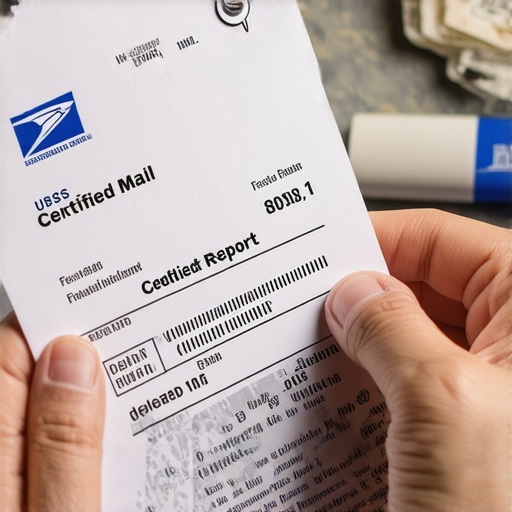
I learned this the hard way back in 2018 when I sent a simple dispute through a website portal. The agency just clicked ‘verified’ and my score stayed in the gutter. I realized then that online dispute portals are a trap for consumers because you waive your right to a full investigation. Now, I only use paper. I once spent $7 on a certified letter to challenge a $300 zombie debt. That receipt was my golden ticket. When the collector claimed they never got my letter, I pulled out that tracking number. It forced them to back off instantly. You must know why every credit dispute should be sent via registered mail—it creates a legal paper trail that scares collectors more than a lawsuit.
Scan Your Report for These Tiny Red Flags
Zombie debts often hide in plain sight with ‘re-aged’ dates. Look at the ‘Date of First Delinquency.’ If a debt from 2015 suddenly shows a 2023 date, that’s an illegal move. Identifying these tiny errors on your report that cost thousands is the fastest way to get a deletion. I remember helping a cousin who had a ‘merged file’ with a relative; it looked like he owed $15,000 he’d never even seen. We had to fix a credit file that has been merged with a relative by sending copies of their birth certificates and IDs to the bureaus. It was tedious, but it worked.
Escalate the Fight to the Credit Bureaus
If the debt buyer refuses to budge, you stop talking to them and go straight to the gatekeepers: Equifax, Experian, and TransUnion. This is where proven credit repair secrets come into play. You aren’t just saying ‘this isn’t mine.’ You are stating that the information they are reporting is inaccurate, incomplete, or unverifiable. Under the Fair Credit Reporting Act, if they can’t verify it within 30 days, they must delete it. If they stall, I always use the CFPB portal to resolve stalled disputes. It’s like bringing a big brother to a playground fight; the bureaus suddenly find the time to actually do their jobs when a federal agency is looking over their shoulder.
Most people think credit repair is just about deleting negatives, but I have seen folks successfully remove a collection only to see their score stay flat because they didn’t understand the ‘all-zero’ trap. Everyone says pay it all off, but why keeping a zero balance on all cards might hurt your score is one of those frustrating nuances of the FICO algorithm. If every card shows a zero balance, the system might penalize you for a lack of recent credit activity. In my experience, leaving a tiny balance—say, ten dollars—on just one card often triggers a higher score than a clean sweep across the board.
Stop Chasing a Zero Balance on Every Card
This contrarian approach flies in the face of traditional advice, but it is exactly how the ‘credit elites’ keep their scores above 800. You need to show that you can handle revolving credit without maxing it out. It is also important to realize that not all deletions are created equal. Many people obsess over tiny inaccuracies while ignoring the fact that how to stop credit bureau errors before they happen by monitoring your specialized reports is far more efficient than playing whack-a-mole with the big three. 
The Hidden Danger of Settling Your Old Debts
Then there is the settlement trap. I once helped a client who was thrilled to settle a debt for 50 cents on the dollar, only to find out why settling for 50 percent could block your mortgage application. Lenders see that ‘settled for less than full balance’ note as a red flag that you might not be trusted to pay back the full amount agreed in the future. If you are planning a big purchase, you must be strategic. Instead of just paying, you should focus on how to negotiate a pay-for-delete without admitting ownership. This is the ‘ninja’ move: you get the account removed entirely, leaving no trace of the settlement for a mortgage underwriter to find.
Why does your FICO score dip the moment you pay off a major loan?
This is the question that drives my readers crazy. You do the right thing—you pay off your car or personal loan—and your score drops 20 points. It feels like a slap in the face. The reason is usually a change in your ‘credit mix.’ When a loan closes, you lose an active installment account, which can impact your diversity of credit. According to experts at FICO, the ‘amounts owed’ category looks at the ratio of original loan amounts to current balances. Closing the account removes that positive data point entirely. You have to understand the specific reason your score dips after a payoff so you do not panic and think you did something wrong. Another advanced mistake is jumping into credit counseling without vetting the provider. Not all ‘non-profits’ are your friends. I always tell people to read the fine print in a credit counseling agreement before signing. Some programs effectively ‘freeze’ your credit for years, which might solve the immediate debt but destroys your ability to use top credit repair strategies to boost your score faster later on. Have you ever fallen into this trap or seen your score drop after a payoff? Let me know in the comments.
Build a Fortress Around Your Rebuilt Credit
Once you have successfully cleared the debris of zombie debts and errors, the real work begins: staying at the top. I don’t just ‘check’ my score; I maintain a physical ‘Dispute Diary.’ This is a simple accordion folder where I keep every single certified mail receipt and every response from the bureaus. If you don’t have a paper trail, you don’t have a case. I’ve seen too many people lose their gains because they didn’t know how to handle a creditor who claims they never received your letter. By keeping those receipts, you have irrefutable proof for a judge or a CFPB investigator if things go south again.
How do I keep my score high without checking it every day?
The secret isn’t constant surveillance; it’s smart automation and knowing which levers to pull. I personally use a combination of free monitoring tools and a quarterly ‘deep dive’ into my specialized reports. You need to know how to monitor your credit for free without giving away data to avoid the constant barrage of credit card ‘pre-approval’ spam. I also recommend setting up ‘micro-payments’—paying your balance down every Friday rather than once a month. This keeps your ‘reported’ utilization incredibly low, which is the fastest way to maintain an elite score.

Look Beyond the Big Three to Stay Safe
Most people stop at Experian, Equifax, and TransUnion, but the ‘credit elites’ know about secondary bureaus like Innovis and SageStream. These companies often hold the ‘ghost’ data that debt buyers use to find you. According to section 611 of the Fair Credit Reporting Act (15 U.S.C. § 1681i), these agencies are held to the same strict standards as the big three. If you want to be truly proactive, you should learn how to stop credit bureau errors before they happen by freezing your files at these smaller agencies. It stops the ‘leakage’ of your personal info to predatory lenders.
Transitioning to Premium Credit Lines
Once your score hits that 720 mark, don’t just sit on your hands. You need to move away from starter credit. I always guide my readers on how to transition from a secured card to a premium line because higher limits lead to lower utilization and more stability. It’s about scaling your credit power. Looking forward, I predict that ‘Trended Data’ (FICO 10T) will soon become the industry standard. This means the bureaus will look at whether you are paying off balances or just making minimum payments over a 24-month window. Staying ahead of this trend means being more aggressive about your payment habits now.
You must remain vigilant. If a bureau refuses to remove an error after your first attempt, you need to know why you should ask for a method of verification every time. It forces them to explain their ‘investigation’ process, which is often just an automated computer check. Demanding the ‘method’ often triggers a manual review that leads to a deletion. Try this today: Go into your primary credit card app, check your current ‘reported’ balance, and pay it down to exactly 1% of your limit before the statement close date. This single move, often called the ‘All Zero Except One’ method, can trigger a 15-20 point jump in a single cycle.
The Hard Truth About My 15-Point Credit Score Plateaus
When I first started, I expected my score to jump 100 points overnight. Instead, I hit plateaus that felt like walls. I realized that credit repair isn’t just about deleting the bad; it’s about the precision of your timing. One lightbulb moment was discovering how to dispute errors on your credit report by focusing on the ‘payment history’ grid rather than just the balance. Another was learning that the science of credit repair requires patience—sometimes a bureau will verify an error twice before a third, more specific letter finally forces the deletion. Don’t let a ‘verified’ response stop you; it is often just the start of the real negotiation.
Lastly, I learned that your ‘credit mix’ is the secret sauce. Removing a collection is great, but if you don’t have active, positive accounts, your score will stall. It is like cleaning a dirty room but leaving it empty—it is clean, but it is not yet functional for a lender’s needs.
Tools That Kept My Sanity While Fighting Bureaus
I did not do this alone; I used a specific set of resources to stay focused. First, the ultimate guide to credit counseling was my bible for understanding which debts were worth settling and which were better left to the statute of limitations. I also kept a ‘Dispute Diary’—a simple physical folder for every certified mail receipt and bureau response. If you are feeling lost in the fine print, I always recommend learning how to identify a legitimate credit counselor to avoid the predators who thrive on financial desperation. Lastly, I relied heavily on the official CFPB complaint database to hold agencies accountable when they ignored my legal rights.
[image placeholder]
Your Financial Rebirth Starts Today
Fighting zombie debt and fixing your report is about more than just numbers; it is about reclaiming your peace of mind. Every letter you send is a step toward a future where you do not have to fear a phone call or a loan application. Keep using these expert tips for 2025 to protect your hard-earned gains and maintain your momentum. You have got the tools and the knowledge—now it is time to use them to secure your legacy. Have you ever successfully removed a collection from your report that you knew was past the statute of limitations? I would love to hear your success story in the comments below!