

I remember sitting at my kitchen table three years ago, staring at a stack of late notices that felt like they were screaming at me. I was desperate, and that desperation made me target practice for every financial shark on the internet. One “counselor” told me they could make my debt disappear in weeks for a “small” upfront fee of $1,500. My gut told me to run, but my bank account was telling me to pray. I made the mistake of thinking all non-profits were created equal, and it nearly cost me my entire emergency fund. That moment of weakness almost cost me the little money I had left, and it’s exactly why I’m writing this today. I don’t want you to feel that same pit in your stomach. Today, I’m going to show you how to peel back the curtain and see exactly who is trying to help you and who is just trying to harvest your last few dollars.
The Day I Nearly Paid a Scammer to Ruin My Life
It’s a bitter pill to swallow, but my early days of trying to fix my finances were a comedy of errors. I didn’t know how to spot a shady credit repair contract before signing, and I assumed every agency had my best interests at heart. I was wrong. The “counselor” I spoke with spent more time asking for my credit card number than asking about my expenses. Real help doesn’t start with a sales pitch; it starts with a conversation about your goals. I eventually learned that the difference between non-profit and for-profit counseling is often just a tax status, not a guarantee of ethics. Many of these groups are just debt settlement companies in disguise, and they can leave your credit in tatters if you aren’t careful.
Is credit counseling actually worth the hype?
It’s a fair question. When you’re already feeling the squeeze, the last thing you want to do is spend your evening talking to a stranger about how you fell behind. But here’s the truth: a legitimate counselor is like a lighthouse in a storm. They provide a blueprint for better finances that actually works, without promising the moon. They won’t tell you they can magically delete valid debts, but they will show you how to manage them. [Image Placeholder]
Spot the Real Pros Before You Give Away a Dime
The Federal Trade Commission (FTC) warns that a major red flag is any agency that tries to charge you for “information” or “education” before they’ve even looked at your specific situation. Legitimate agencies are usually funded by creditors or grants, and while they might have small monthly fees for debt management plans, they never lead with a massive upfront cost. If you aren’t careful, you might fall for the risks of using a debt settlement company which often masquerade as helpful counseling services. Have you ever felt like a financial “expert” was actually just a salesperson in a cheap suit? I’ve been there, and it’s why understanding how credit counseling can transform your future starts with identifying the good guys first. We are going to break down the specific certifications and questions you need to ask to ensure your financial reputation is protected.
Sift Through the Paperwork Like a Forensic Accountant
Think of your credit report as a bucket. You are trying to fill it with a high score, but the tiny errors on your report that cost thousands are like small holes at the bottom. You will never get ahead until you plug them. Your first move is to grab every single report from the big three bureaus and look for things that don’t belong. When I finally did this, I found a $422 charge for a medical clinic in a city I hadn’t visited in years. It was a classic case of how to spot inaccuracies in your specialized medical credit report, and it was dragging my score down by nearly forty points. These mistakes are not just accidents; they are data glitches that you are paying for in high interest rates. You need to verify every address, every employer, and every middle initial. If even a single digit is off, that account might not even be yours, and it’s your right to have it removed.
Write the Letter That Bureaus Can’t Ignore
Once you find the junk, you have to take out the trash. Most people use the ‘easy’ buttons on bureau websites because they are fast, but why online dispute portals are a trap for consumers is simple: you often waive your right to a thorough investigation or a re-dispute. I learned the hard way that a physical letter, sent via certified mail with a return receipt, is your best weapon. You need to master credit disputes by providing a clear paper trail that includes copies of your ID, utility bills for address proof, and any evidence that the debt is wrong. I spent three weeks gathering old bank statements to prove that ‘ghost’ clinic bill wasn’t mine. When I sent that evidence in a physical envelope, the bureau was forced to respond within 30 days. [Image Placeholder]
Force Them to Prove Every Single Entry
If a bureau tells you a debt is ‘verified,’ don’t just take their word for it. This is where most people give up, but it’s where you should lean in. You need to know why you should ask for a method of verification every time. This forces the bureau to tell you exactly who they spoke to at the collection agency and what documents they used to prove the debt is yours. In my messy situation, I discovered the collection agency couldn’t even produce the original contract. When you dispute errors like a pro, you aren’t just saying ‘this isn’t mine’; you are demanding they prove it is. If they can’t, the law says it has to go.
Spot the Trap in Those ‘Helpful’ Agreements
If you decide you need a guide, you have to be a skeptic. Before you sign anything with a counseling agency, you must know how to read the fine print in a credit counseling agreement. I once sat across from a counselor who seemed like a saint, but tucked away in the back of their contract was a clause about ‘voluntary’ contributions that would have cost me $50 a month for five years. Those are the hidden fees in some debt management plans that keep people in a cycle of debt. You are looking for a partner who helps you negotiate interest rates, not someone who just adds another monthly bill to your pile. Treat your signature like it is the most valuable thing you own, because in the world of credit repair, it usually is.Let’s dig deeper into the details the self-proclaimed gurus usually gloss over because it is not as catchy as promising a fix in thirty days. Most people think that having a $0 balance on every single credit card is the ultimate goal, but I’ve seen scores drop twenty points the moment a person hits that mark. It is known as the all zero penalty. If you do not show the algorithms that you can manage a small balance responsibly, they assume you are not using credit at all. This is why keeping a zero balance on all cards might hurt your score more than you realize. You want to leave a tiny balance, even just ten dollars, on a single card to prove you are active and responsible.
Why did your score stall despite having no new collections?
It is incredibly frustrating to do everything right and watch the needle refuse to move. Often, this happens because you are focusing on the wrong metrics. You might be obsessing over the truth about how often your score actually refreshes while ignoring the fact that your credit mix is stale. If you only have credit cards and no installment loans, your score eventually hits a ceiling. However, the real expertise comes in knowing the reason your score stalled despite no new collections is usually tied to your utilization trend. Lenders are not just looking at a snapshot; they are looking at whether your balances are creeping up month-over-month.  Here is the major mistake that ruins most people: the zombie debt trap. A debt buyer calls you about an old bill from seven years ago and offers a settlement. You pay it, thinking you are doing the right thing, and suddenly your score tanks. You just reactivated a dead account, making it look brand new to the scoring models. This is why you should never pay a debt buyer without verification. You need to see the original contract first or you are just handing over cash to reset a clock that was already in your favor. These nuances matter because the bureaus are not your friends. A Consumer Financial Protection Bureau (CFPB) study highlighted that the investigation process is often just a computer matching codes rather than a human review. If your dispute is not specific enough, the computer wins. That is when you need to know how to use the cfpb portal to resolve stalled disputes to force a real person to look at your evidence. Have you ever fallen into this trap or felt like you were arguing with a brick wall? Let me know in the comments.I used to think that once my score hit 700, I could just walk away and never look at a bureau report again. I was dead wrong. Credit is not a ‘set it and forget it’ part of your life; it is a living, breathing metric that requires a specific set of tools to keep healthy. I personally swear by a physical ‘dispute log’—a simple spreadsheet where I track every letter sent, every certified mail receipt number, and every response date. This isn’t just about being organized; it’s about having a weaponized paper trail when a bureau tries to claim they never heard from you. If you don’t track the details, you’re just guessing. I’ve found that how to monitor your credit for free without giving away data is the first step in this long-term maintenance. You don’t need a paid service that sells your info to third parties; you just need a disciplined schedule to check the sources that matter.
The Spreadsheet That Saved My Sanity
While everyone is looking for an app to do the work, I recommend going manual. Every month, I log my utilization rates for each card. This allows me to see trends before the bureaus do. If I see my utilization creeping toward 30%, I know I need to pivot. This is part of the science of credit repair that most people ignore because it feels like homework. But this homework is what allows you to dispute credit errors swiftly and securely in 2025 because you have the data to back up your claims. The Consumer Financial Protection Bureau (CFPB) noted in their 2022 Report on Credit Reporting Complaints that the vast majority of consumers who fail in disputes do so because they lack a clear timeline of events. Don’t be that person. 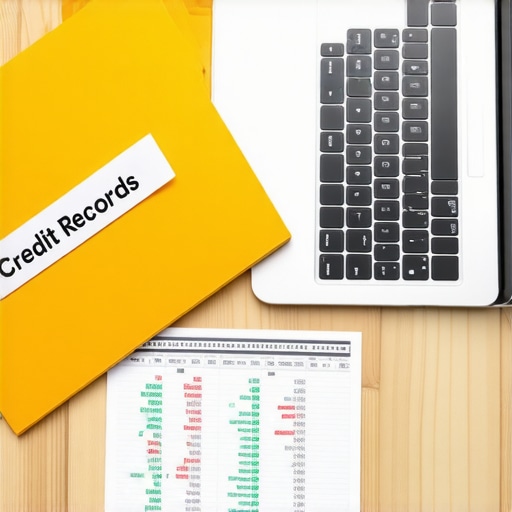
How do I keep my score from dropping after all this work?
Maintenance is about knowing key credit score factors every borrower must know and adjusting your behavior to match them. For instance, I’ve learned how to safely increase your credit limit without a hard pull every six months. This naturally lowers my utilization without me having to spend a dime less. It is a scaling strategy that works for anyone, regardless of their starting point. If you want the ultimate blueprint for effective credit repair, you have to realize that the ‘repair’ phase never truly ends; it just transitions into a ‘protection’ phase.
The Shift Toward Trended Data is Coming
Looking ahead, the way we think about credit is changing. We are moving toward models like FICO 10T and VantageScore 4.0, which use ‘trended data.’ This means the bureaus won’t just look at what you owe today, but whether you are paying down debt or accumulating it over a 24-month period. This makes how to build credit without going into massive debt more important than ever. If the algorithm sees you only paying the minimums for two years, your score will suffer even if you are ‘on time.’ My advanced tip for you today: start paying your credit card bill twice a month—once on the 15th and once two days before the statement closing date. This ensures the balance reported to the bureaus is always at its absolute lowest, regardless of your actual spending habits. Give it a shot for three months and watch what happens to your ‘transparency’ in the eyes of the lenders.
The Hardest Realities I Learned in the Credit Trenches
After years of fighting the bureaus, I realized that credit isn’t just a random number assigned by a computer; it is your financial reputation in data form. One of the biggest lightbulb moments for me was realizing that patience is a tactical advantage. You might be looking for the tactic to improve your score in under thirty days, but the real power comes from the long game. I also learned that the bureaus are not your friends—they are data aggregators who often prioritize speed over accuracy. Finally, never underestimate the power of the ‘follow-up.’ Most people stop after the first dispute is denied, but that is exactly when you should be doubling down on your evidence.
My Must-Have Arsenal for Credit Maintenance
I don’t believe in magic wands, but I do believe in having the right tools. First, I always recommend keeping a physical ‘Credit Bible’—a folder containing every piece of correspondence and every certified mail receipt. This organization is what separates the amateurs from the pros. For those who feel overwhelmed, I suggest diving into the ultimate guide to credit counseling to find a partner who actually works for your interests, not the creditors. I also frequently refer back to credit repair secrets when I need to remind myself of the nuances in the law that the bureaus hope you’ll forget. These resources have been my anchor when the financial seas got rough.
Believe in the Power of a Fresh Start
You have the tools, the knowledge, and the strategy to turn things around. Remember that your current score is a reflection of your past, not a prediction of your future. By taking these steps and staying disciplined, you can master credit counseling and regain the freedom you deserve. Your financial journey is uniquely yours, but you don’t have to walk it alone. Stay persistent, keep your records straight, and watch as doors that were once slammed shut begin to open. What is the biggest roadblock you have hit while trying to fix an error on your report? Share your experience below so we can troubleshoot it together.