

I’ll never forget the cold sweat that broke out when I saw a four thousand dollar charge for a designer sofa I never sat on. It wasn’t just the money; it was the realization that my digital life had been hijacked by a stranger. I felt violated. I spent the first week panic-calling banks and getting nowhere because I didn’t have a plan. I made the amateur mistake of thinking my word was enough, but in the world of finance, if it isn’t on paper, it didn’t happen. Today, I am going to show you exactly how to build the armor-clad paper trail you need to reclaim your life. We are going to move past the fear and get into the nitty-gritty of how to fix your credit profile after identity theft using hard evidence. Have you ever opened your mail only to find a bill for something you never bought? If so, you know that heart-sinking feeling, but I promise we can fix this together.
Stop Fighting Ghosts and Start Collecting Receipts
To win this fight, you have to stop acting like a victim and start acting like an auditor. When I first started, I thought a simple phone call would resolve everything. I was wrong. I once sent a dispute letter without a police report attached, thinking my explanation was clear enough. The credit bureau rejected it in forty-eight hours. That was my wake-up call. You need to gather the evidence you need to win an identity theft dispute before you even think about hitting send on a letter. This includes your FTC Identity Theft Report, police filings, and any correspondence from the fraudulent lender. According to the Federal Trade Commission, identity theft reports reached over one million in a single year, which means the systems are backlogged and they are looking for any reason to hit the ‘deny’ button on your claim. Don’t give them that excuse.
Is it actually possible to clear your name without a lawyer?
Absolutely. I did it, and thousands of others do it every year. It just takes patience and a very specific set of documents. You have to dispute errors effectively by proving the debt isn’t yours, rather than just saying it isn’t. We aren’t just asking them to look into it; we are providing the proof that makes it impossible for them to say no. I’ll walk you through the exact letters and logs I used to turn my nightmare around and get those fraudulent marks erased for good.
Turn Your Dining Table Into a Financial Command Center
To win this war, you need to think of your credit report as a crime scene that needs to be cordoned off. You cannot treat this like a casual weekend project; you must learn how to read your credit report like a professional auditor. When I was in the thick of my identity theft nightmare, I spent hours highlighting every single discrepancy—wrong middle initials, old addresses I never lived at, and of course, that fraudulent sofa charge. Each error is a crack in the bureau’s credibility. You have to master the exact way to dispute an account that is not yours by providing a mountain of truth that they cannot ignore. This involves gathering the specific evidence needed to remove a fraudulent account, such as a letter from the merchant’s fraud department or a notarized affidavit. I remember the day I finally received a physical letter from the furniture store admitting the sofa purchase was a systemic error—that piece of paper was worth more than gold. 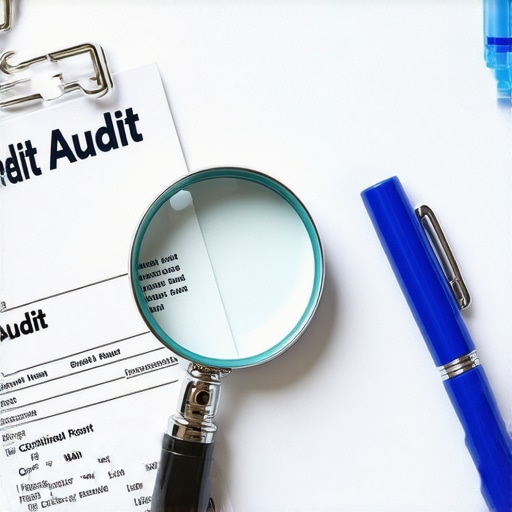
Don’t Fall for the Convenience of Online Disputes
The biggest mistake I ever made was thinking the Dispute button on a credit app was there to help me. It is actually a trap designed for the bureau’s convenience. I once used a mobile app to dispute a small collection, thinking it would be faster. Within seconds, the app forced me to choose from a limited drop-down menu of reasons that did not accurately describe my situation. This is why you should never use an online portal to dispute errors. When you use their digital systems, you often forfeit your right to include 50 pages of supporting evidence, and you might even inadvertently waive your right to a full investigation under the Fair Credit Reporting Act. The online portal turns your complex life story into a simple yes or no binary code that usually ends in a denied result.
Make the Bureau’s Automated Systems Work for You
Credit bureaus do not have thousands of people reading every letter; they use a system called e-OSCAR to scan and categorize disputes. If your letter looks like a generic template from the internet, the computer will summarize it into a two-digit code, and a human will never even see it. To get around this, you need to employ the method for beating automated dispute scanners at the bureau. This means using physical mail, blue ink, and perhaps even hand-addressing the envelope. I found that when I started using Certified Mail with a Return Receipt, the bureaus took me much more seriously. It creates a legal paper trail that proves they received your evidence. By being meticulous and avoiding the easy digital path, you can dispute errors like a pro improve your credit with ease and force the system to acknowledge the truth of your situation.Most people believe that as soon as the balance hits zero, the credit bureaus will throw a parade in their honor. The truth is much colder. I’ve seen countless people—myself included, in the early days—scramble to pay off old collections thinking it’s the fastest way to implement top credit repair strategies to boost your score faster. But here is the nuance: in many older FICO models, a paid collection hurts your score exactly as much as an unpaid one. The damage is in the mere existence of the mark, not the dollar amount. This is often the reason your score did not jump after paying off your cards or collections. You’ve spent the money, but the ‘scar’ remains for seven years. Instead of rushing to pay, you should be looking for the strategy to wipe a collection without paying a dime by challenging the validity of the data itself.
Stop Listening to the ‘Just Pay It’ Crowd
I have a radical take: paying a debt collector without a written agreement can actually be worse than doing nothing at all. When you make a partial payment on a debt that is five years old, you might inadvertently restart the statute of limitations, giving the collector a brand new window to sue you. This is a common trap that even ‘experts’ miss. You have to understand the secret to negotiating a pay-for-delete agreement that sticks. If it’s not in writing, it doesn’t exist. Collectors will promise you the world on the phone, but once that check clears, they often ‘forget’ their promise to remove the listing. This is the reason your score stalled despite no new collections appearing—the old one just got refreshed with a new date. 
Why did my score drop after I finally paid off my debt?
This is the most frustrating question in finance. According to research by FICO, paying off a collection doesn’t necessarily improve your score in FICO 8, which is the most widely used version. In fact, if the collector updates the account status, it can sometimes flag the account as ‘recently active’ to the algorithm, causing a temporary dip. If you’re dealing with a single late payment rather than a full collection, you’re better off learning how to get a goodwill adjustment for a single mistake. This asks the creditor to remove the mark out of kindness, which is far more effective than just paying it and hoping for the best. Have you ever fallen into this trap? Let me know in the comments. We need to be smarter than the algorithms they use against us. You can still dispute errors like a pro improve your credit with ease if you focus on the accuracy of the reporting rather than the guilt of the debt.Once you have scrubbed the errors, the real battle begins: keeping the vultures away. I personally use what I call a ‘Credit War Chest’—a heavy-duty physical accordion folder for every certified mail receipt and a locally saved, encrypted spreadsheet. Why? Because I don’t trust cloud-based credit apps to keep my most sensitive dispute history safe. You should be looking into boost your credit score in 2025 top strategies that work by moving toward manual oversight. I use myFICO for the raw data because it gives me access to the specific versions lenders actually use, but I never rely on their simulators. Instead, I track my own ‘Available Credit to Debt’ ratio weekly to stay ahead of the reporting cycles. According to the Consumer Financial Protection Bureau’s (CFPB) 2023 Annual Report of Credit and Consumer Reporting Complaints, over 70% of consumer complaints were about incorrect information on a credit report. This proves the system is fundamentally broken, and you cannot afford to be a passive observer. 
Build a Physical Paper Shield That No Algorithm Can Pierce
I recommend using a high-quality scanner like the Fujitsu ScanSnap to digitize every piece of mail you receive from a bureau immediately. This allows you to dispute errors like a pro improve your credit with ease because you can instantly recall exactly what a collector said six months ago. When I was fighting my identity theft case, having a searchable PDF of my initial FTC report saved me from a three-hour phone loop with a debt buyer.
Stop Data Brokers From Trading Your Financial Reputation
You need to cut the problem off at the source. Go to OptOutPrescreen.com to stop the bureaus from selling your data to ‘pre-approved’ offer hunters. This is how to stop the bureau from selling your information to lenders, which significantly reduces the risk of a new identity thief spotting your active file. I also suggest using a service like DeleteMe to scrub your personal address from the ‘people search’ sites that debt collectors use to find your new phone number.
How do I maintain my credit health without losing my mind?
The secret is setting up ‘Score Alerts’ but only for major changes. If you check your number every day, you will go crazy over the natural 5-to-10-point fluctuations. Instead, focus on key credit score factors every borrower must know, such as keeping your revolving utilization below 4% on each individual card. This is the strategy for keeping your credit score high while carrying debt: focus on the reporting dates, not the due dates.
The AI Takeover of Your Lending Future
I predict that by late 2025, FICO 10T will become the standard, which means lenders will look at ‘trended data’—your behavior over the last 24 months rather than just a snapshot of today. This makes long-term maintenance more important than ever. If you have any lingering marks, my advanced tip for today is to go back and why you should ask for a method of verification every time. Don’t just ask if the debt is yours; demand to see the electronic metadata of the original transaction. If they can’t produce the digital signature, the mark has to go.
The Reality Check I Got After 500 Hours of Credit Warfare
Walking through the fire of identity theft taught me more about the American financial system than any college course ever could. The hardest lesson I learned was that the credit bureaus are not judges; they are automated filing cabinets. They don’t care about ‘fairness,’ they care about matching data points. If you can disrupt those data points with superior documentation, you win. I also realized that silence is your biggest enemy. If you don’t follow up on a dispute within thirty-five days, the system assumes you’ve given up. Most importantly, I learned that while the theft was a violation, the recovery was an education that gave me total control over my financial future. You are essentially learning to dispute errors like a pro improve your credit with ease by treating every letter like a legal deposition.
My Non-Negotiable Toolkit for Financial Sovereignty
I didn’t get my four thousand dollars back by clicking buttons on a screen. I did it with a specific set of tools that I now recommend to everyone I mentor. First, get a high-speed document scanner; digitizing your paper trail is the only way to stay organized when you are fighting multiple creditors. Second, use the official FTC Identity Theft portal at IdentityTheft.gov to generate your primary affidavit—this is the ‘Golden Key’ that unlocks many legal protections. Third, I highly suggest checking out boost your credit score in 2025 top strategies that work to see how the landscape is changing with AI-driven scoring. Finally, keep a physical logbook of every person you speak to at the bank, including their employee ID and the exact time of the call. This level of detail makes you a nightmare for lazy customer service agents and a hero for your own credit report.
#IMAGE_PLACEHOLDER_E#
Why Your Recovery Story Matters More Than Your Score
It is easy to get obsessed with that three-digit number, but remember that the number is just a reflection of your underlying data integrity. When you take the time to unlock your credit score potential expert tips for 2025, you are doing more than just raising a score; you are protecting your ability to buy a home, start a business, or provide for your family. The bureaus may have the data, but you have the truth, and the law is designed to ensure the truth prevails—if you are persistent enough to demand it. Don’t let a single ‘denied’ letter stop your momentum. Every ‘no’ is just a request for more evidence. Have you ever felt like giving up on a dispute because the paperwork felt too overwhelming? Let me know in the comments below, and let’s figure out your next move together.