

I stood by my mailbox last Tuesday, clutching a stack of envelopes so thick I could have used them as a booster seat. I had just finished some hard work on my file, hoping to see the results of my credit repair strategies, and suddenly every predatory lender in a three-state radius knew my name. It is a violating feeling, isn’t it? You try to do one right thing for your finances, and the credit bureaus—the very entities supposed to be guardians of your data—sell your private information to the highest bidder. I learned the hard way that if you do not explicitly tell them to shut up, they will keep broadcasting your business to anyone with a stamp and a high-interest loan. Today, I am going to show you how to pull the plug on this data-harvesting machine once and for all.
Your Private Data Is Not a Product for Sale
For years, I made the mistake of thinking those “pre-approved” offers were a compliment. I honestly thought I was winning at the credit game because my mailbox was full. What a total rookie move that was. I was essentially inviting predatory lenders to flood my life and potentially lure me into traps that would cost me money through unnecessary inquiries. The truth is, the bureaus make a fortune off of “trigger leads.” According to the Consumer Financial Protection Bureau, these agencies often sell your data the moment you apply for a loan, allowing competitors to swarm you like vultures. My goal today is to help you silence that noise so you can focus on more important things, like disputing report errors like a pro without being distracted by shiny, high-interest garbage.
Does Opting Out Hurt Your Approval Odds?
This is the single biggest fear I hear from my neighbors. They worry that if they hide from the bureaus, they will miss out on the best rates or that banks will think they are “invisible.” Let me set the record straight: lenders who actually want your business based on your merit will still find you when you decide to go looking for them. Opting out does not hide you from your current bank; it just stops the unwanted solicitations. Have you ever felt like your mailbox was a public billboard for your financial status? I would love to hear if you have ever been bombarded by calls the same day you ran a credit check. It is time we take that power back and keep our private business private while we work on boosting our scores the right way.
Shut Down the Pipeline at the Source
To stop the bleeding, you have to go straight to the master valve. The first thing I tell everyone is to visit OptOutPrescreen.com. This is the official joint venture of Equifax, Experian, Innovis, and TransUnion. You have two choices here: a five-year opt-out that you can do online, or a permanent opt-out that requires a mailed-in form. I learned the hard way that the digital version is like a ‘do not disturb’ sign that occasionally falls off the door. I once spent five minutes clicking through their digital menu, thinking I was safe, only to have the junk mail return like a bad penny six months later because of a ‘system update.’ Now, I strictly recommend the permanent mail-in option. It creates a physical record they cannot easily ignore. While you are at it, hit the National Do Not Call Registry to stop the ‘trigger lead’ phone calls that usually start the second you apply for a mortgage. By combining these, you are using top credit repair strategies to boost your score faster by removing the distractions that lead to impulsive, high-interest decisions.
Put Your Data in a Vault with a Credit Freeze
If opting out is like closing your blinds, a credit freeze is like boarding up the windows. A ‘lock’ is a marketing product the bureaus want to sell you for a monthly fee, but a ‘freeze’ is a legal right that is totally free. When you freeze your files, no one can pull your credit to open a new account unless you explicitly ‘thaw’ it first. Think of it as a bouncer at the door of your financial life; if your name isn’t on the list for a specific date and time, nobody gets in. It is vital to understand the impact of a credit freeze on your existing accounts, as it won’t stop your current creditors from monitoring your behavior, but it effectively kills the ‘trigger lead’ market. 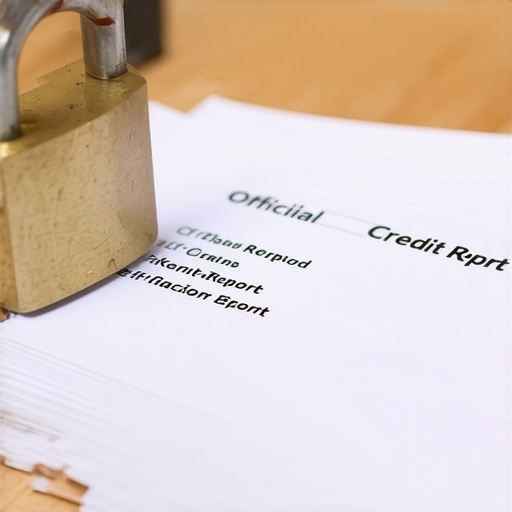
Stop Relying on Glitchy Online Portals
The bureaus love it when you use their internal websites. Why? Because those portals often force you to waive your rights to a full investigation or a jury trial. I remember trying to fix a simple address error online; the system kept looping me back to the homepage without saving my changes. It felt like I was being gaslit by a computer. I finally snapped and used the certified mail hack that forces bureau responses. The moment a human had to sign for my letter, the ‘glitches’ mysteriously vanished. When you are serious about the science of credit repair, you realize that paper is your best friend. It creates a timestamped trail that you can use in court if they fail to do their jobs. This method is the only way to truly how to stop the automated rejection loop in your next dispute because it forces a manual review by an actual person rather than a biased algorithm. You should why you should never use an online portal to dispute errors if you want your privacy and your score to stay protected under the full weight of the law.Now that we’ve locked down your privacy, let’s talk about where most people—even the smart ones—trip over their own feet. You’ve probably heard that the first thing you should do with a collection is pay it off. It sounds logical, right? But here is a hard truth from the trenches: on the most commonly used FICO 8 model, a paid collection hurts your score exactly as much as an unpaid one. Unless you secure a pay-for-delete agreement, you are essentially handing over cash for a ‘Paid’ sticker that provides zero immediate score benefit. You might be left wondering about the reason your score did not jump after paying off your cards or collections. This is why the science of credit repair is more about strategy than just writing checks.
Why Your Score Drops After You Do the ‘Right’ Thing
It feels like a punch in the gut when you pay off a mortgage or a car loan and see your score plummet ten points. You would think the bureaus would reward you for finishing a marathon, but instead, they penalize you for losing an active ‘credit mix’ and shortening your account age. According to a study by FICO, the ‘credit mix’ accounts for 10% of your total score, and closing a long-term installment loan can actually make you look less stable to the algorithms. If you are preparing for a big move, you need to know key credit score factors every borrower must know before you close those old accounts.  The biggest mistake I see, however, is what I call the ‘copy-paste’ catastrophe. People grab a generic template off a forum and send a ‘Method of Verification’ request before they even understand the difference between a factual dispute and a general denial. The bureaus have sophisticated optical character recognition (OCR) software that flags these templated letters as ‘frivolous’ before a human even sees them. When this happens, you get a canned response and your file is basically blacklisted for months. It is a massive ‘oops’ that resets your progress. To avoid this, you must learn how to stop the automated rejection loop in your next dispute by providing specific, unique evidence. Have you ever fallen into this trap? Let me know in the comments—I’ve been there, and I know how to pivot.
Keep Your Progress from Sliding Backward
Maintaining a high score isn’t about luck; it is about building a fortress around your financial data. I personally use a simple Excel sheet to track the ‘statement closing dates’ for every card I own. Why? Because paying by the due date ensures you aren’t late, but paying before the statement date ensures your balance is reported as zero. This is one of the most effective credit score boosters I’ve ever found. It keeps my utilization low without me having to stop spending money altogether. If you want to dive deeper into the mechanics, you need to understand the science of credit repair and how those data points are calculated by the algorithms. I also swear by specialized credit monitoring that alerts me to any change in my ‘Total Debt’ across all bureaus simultaneously. Most free apps only update once a week or once a month, which is a lifetime when you’re trying to time a mortgage application. I’ve found that using professional-grade tools allows you to dispute errors like a pro because you see the error the moment it hits. 
How do I maintain my credit health over time?
The secret is constant auditing. I pull a fresh report every quarter—not through a third-party app, but through the official channels—to look for ‘soft errors’ like slightly misspelled employers or old addresses. These seemingly minor details are often the anchors that link you to old, negative accounts. By keeping your file clean, you make it much harder for ‘zombie debt’ to resurface. I always recommend mastering credit disputes as a proactive measure, not just a reactive one. If you’re serious about long-term results, consider credit counseling secrets to restructure how you view your monthly cash flow. It’s not just about the score; it’s about the freedom that score provides.
The Shift Toward AI and Trended Data
We are entering an era where lenders aren’t just looking at a snapshot of your score today; they are looking at how you behaved over the last 24 months. This is called ‘trended data,’ and it is the backbone of the new FICO 10T model. According to technical documentation from the Consumer Data Industry Association (CDIA) regarding Metro 2 reporting standards, the way data is mapped from creditors to bureaus is becoming more granular than ever. This means that late payments from two years ago might carry more weight in the future than they do now. To stay ahead, you need to implement a strategy for keeping your credit score high while carrying debt, focusing on consistency rather than quick fixes. If you really want to level up, stop using the automated ‘increase’ buttons and start calling the reconsideration lines directly. This one move—speaking to a human about your limits—can help you unlock your credit score potential in ways an algorithm never will. My challenge to you today: find your next statement closing date and pay that balance off three days early. Watch what happens to your score next month.
The Expensive Myths That Nearly Drained My Bank Account
After years of trial and error, I realized that the most popular advice is often the most detrimental. For instance, the ‘settle it and forget it’ mentality usually leaves a scar on your report for years. I had to learn how to negotiate a pay-for-delete that actually works before I saw real movement in my numbers. Also, never assume that a zero balance on your statement means your work is done; the timing of when that data is captured by the bureaus is everything. If you are struggling to see progress, you might be missing the subtle science of credit repair that separates high achievers from those stuck in a cycle of stagnation.
A Few Tools That Keep My Financial House in Order
I do not rely on luck anymore; I rely on a system that prioritizes verification over trust. First, I always keep a stack of certified mail envelopes ready. Using the certified mail hack that forces bureau responses is my go-to move for any discrepancy because it eliminates the ‘we never received it’ excuse. I also highly recommend looking into master credit counseling if you feel overwhelmed by the sheer volume of data. It is not just about fixing the past; it is about having a blueprint for better finances that prevents the same predatory lenders from finding their way back into your life. I trust these methods because they put the power back in my hands, not the bureaus’.
#IMAGE_PLACEHOLDER_E#
Your Financial Future Is Worth the Extra Paperwork
Taking control of your credit is a marathon, not a sprint. It feels tedious to mail physical letters and track statement dates, but the freedom that comes with a top-tier score is worth every second of effort. You can dispute errors like a pro and finally stop the predatory cycle of high-interest offers. Remember, your data belongs to you—make sure it tells the story of someone who is in total control of their destiny. Have you ever managed to get a persistent error removed using physical mail instead of an online portal? Let me know your experience in the comments below!