

I’ll never forget the cold sweat I felt when I opened that envelope from a debt collector three years ago. I was trying to buy my first home, and there it was—a $450 medical bill I didn’t even recognize. My first instinct was to just pay it so it would go away. I thought, “Hey, if I pay it, they’ll remove it, right?” Wrong. That was the biggest mistake of my financial life. Paying that debt didn’t fix my score; it actually kept the negative mark on my report for longer because I validated the debt without a fight. It felt like I was being punished for trying to do the right thing.
The Truth About Those Nagging Collection Notices
Today, I’m going to show you the exact strategy I used to get that collection wiped clean without sending a single cent to the agency. Most people don’t realize that debt buyers often have no actual proof that you owe them money. They buy junk debt in bulk for pennies and hope you’re too scared to ask questions. If you follow the right steps to dispute errors effectively, you can often force them to fold before they even get a chance to ruin your next loan application. According to the Consumer Financial Protection Bureau (CFPB), roughly half of all credit report disputes involve medical collections, many of which contain blatant inaccuracies. This is why you must understand the most common errors found on medical collections before you even pick up the phone.
Is this strategy actually legal or just another credit repair scam?
I get it. It sounds too good to be true. You’re probably thinking, “If I owe the money, don’t I have to pay it?” Here is the neighborly truth: the law—specifically the Fair Credit Reporting Act—says that if a company can’t prove every single detail of the debt with original documentation, they are legally required to remove it. Period. It’s not about being a deadbeat; it’s about holding these multi-billion dollar companies to the legal standard they are supposed to follow. I’ve seen this work for friends and family alike, and it all starts with realizing why you should never pay a debt buyer without verification first. Have you ever felt like you were being bullied by a collector for a debt you weren’t even sure was yours? Reach out and let me know.
Stop Falling for the Debt Collector’s Trap
The biggest hurdle isn’t the paperwork; it’s the fear. Collectors use high-pressure tactics to make you feel like a criminal. But once you realize they are often working with incomplete files and missing signatures, the power shifts back to you. We’re going to dive into the nitty-gritty of how to demand that proof and what to do when they inevitably fail to provide it. You don’t need a fancy lawyer; you just need a paper trail and a bit of backbone. Let’s get that score moving in the right direction.
Take Control by Auditing Your Own File
Before you send a single letter, you have to know exactly what the enemy—the credit bureaus—is seeing. You can’t fix what you can’t identify. I spent weeks staring at my Equifax report until the numbers blurred together, but once I learned how to read your credit report like a professional auditor, the errors practically jumped off the page. Look for things like incorrect ‘date of last activity’ or balances that don’t match your records. These tiny discrepancies are your golden tickets to a deletion.
Demand Proof or Demand Deletion
The core of this strategy is the Debt Validation letter. When a collection agency contacts you, they are legally required to prove they have the right to collect. I once had a collection agency chase me for a three-year-old gym membership. They sent a fancy-looking statement, but when I followed the ultimate blueprint for effective credit repair and demanded the original signed contract, they went silent. Why? Because they bought the debt in a spreadsheet and didn’t have the actual paperwork. If they can’t produce the original contract with your signature, they must stop reporting it.
The Paper Trail That Actually Works
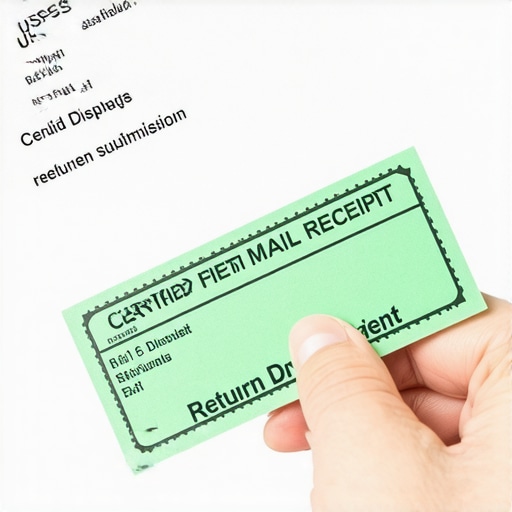
In a world of apps and instant messaging, the post office is still your best friend for credit repair. I learned the hard way that clicking a ‘dispute’ button on a website is like giving up your legal rights. There is a specific reason why you should never use an online portal to dispute errors: those portals often force you to choose generic reasons for your dispute, which are easily dismissed by automated scanners. Instead, use certified mail with a return receipt. This creates a legal timeline that the bureaus cannot ignore.
Why Snail Mail Still Beats Online Portals
When you send a physical letter, a human—or at least a more sophisticated scanning process—has to log it. This is where you include the paper trail needed to prove a debt is too old to collect or simply too inaccurate to remain. I remember the satisfaction of getting that green signature card back in the mail; it was proof that the clock was ticking for them to respond. If they don’t respond within 30 days, that negative item has to come off.
Break Through the Bureau’s Wall of Silence
Expect resistance. The bureaus aren’t your friends; they are data brokers. Their first response will likely be a canned letter saying the information has been ‘verified.’ This is a classic stall tactic. When this happened to me with a bogus phone bill, I didn’t back down. You have to know how to handle a credit bureau that ignores your evidence by escalating your language and mentioning the Fair Credit Reporting Act. It’s like a game of poker; they are betting you’ll give up. Don’t. Show them you know the rules, and they’ll usually fold to avoid a potential lawsuit or fine.
Don’t be fooled by the ‘paid’ status. One of the most dangerous myths I see people fall for is the idea that paying off an old collection account will automatically boost your score. In reality, it often does the exact opposite. If you have an old debt that hasn’t been touched in five years, paying it today updates the ‘date of last activity.’ To the FICO algorithm, a five-year-old debt looks like old news, but a ‘paid’ collection from yesterday looks like a brand-new failure. This is exactly the reason your score did not jump after paying off your cards or collections like you expected. If you aren’t using the secret to negotiating a pay-for-delete agreement that sticks, you might just be throwing money into a black hole.
Why does my score stay flat even after clearing medical bills?
This brings us to a huge nuance that even some ‘pros’ miss: the specific version of FICO a lender is using. According to official FICO data, their newer model, FICO 9, ignores paid medical collections entirely. That sounds great, right? But here is the trap: the vast majority of mortgage lenders are still using much older versions—specifically FICO 2, 4, or 5—which do not give you any extra points for paying those debts off. This is why you must understand the difference between FICO 8 and FICO 9 scores before you spend a single cent settling old medical bills. Have you ever fallen into this trap? Let me know in the comments.

The Hidden Danger in Seeking Help
Another sophisticated ‘oops’ factor involves credit counseling. Many people think a non-profit agency is a safe haven for those drowning in debt. While they can help with budgeting, being enrolled in a Debt Management Plan (DMP) can sometimes be flagged on your credit report. Some lenders might see this and assume you are one step away from filing for bankruptcy because you can no longer manage your own payments independently. I always tell my clients to look into the risks of using a non-profit credit counseling agency before signing that dotted line. It is about more than just the monthly payment; it is about how your future lender views your reliability as a borrower.
Play the Chess Game Not the Race
The real secret to moving the needle is knowing when to fight and when to stay quiet. If you are trying to boost your credit score in 2025, you have to stop playing by the rules the banks wrote and start playing by the rules of the Fair Credit Reporting Act. It is a strategic chess game, not a sprint to the finish line. Focus on the raw data, stay persistent with your certified mail, and do not let a collection agency’s ‘discount’ offer trick you into validating a debt that they likely cannot even prove in a court of law. When you hold them to the letter of the law, you win.
Winning a dispute is a rush, but the real work starts the day after that negative item falls off. I’ve seen too many people do the hard work of cleaning their report only to see their score tank again six months later because they stopped paying attention. Credit health isn’t a destination; it’s more like a garden that needs constant weeding. If you aren’t vigilant, old errors can ‘re-pollute’ your file through automated debt-buying software. This is where the science of credit repair meets personal discipline. I personally use a ‘Dispute Calendar’—a simple physical planner where I mark the exact date I sent a letter and the 30-day deadline for a response. If you rely on your memory, the bureaus will win by default because they thrive on your forgetfulness.
How do I maintain a high score after the errors are gone?
The key to long-term success is moving from a defensive mindset to an offensive one. Once you have cleared the junk, you need to focus on building a robust credit mix. I tell everyone I help to start looking into ultimate guide to credit counseling resources if they feel their budget is the reason they ended up in debt to begin with. It’s not just about removing the past; it’s about securing the future. I also recommend checking your reports at least once every quarter using the raw data from MyFICO or IdentityIQ. These tools give you the specific FICO versions lenders actually use, unlike the ‘educational’ scores you find on most free apps. According to the CFPB’s 2023 Consumer Response Annual Report, the vast majority of credit reporting complaints stem from incorrect information that reappears or was never fully corrected, making your recurring audits a necessity rather than a luxury.
Why a physical binder beats a phone app
In my home office, I keep a thick blue binder. Inside is every certified mail receipt, every ‘verified’ letter from a bureau, and every original statement I’ve ever gathered. Why? Because if a deleted item ever tries to sneak back onto my report, I have the ‘death certificate’ for that debt ready to go. Digital apps are great for alerts, but they are terrible for legal ammunition. When you are trying to unlock your credit score potential, having a physical paper trail is what forces a human at the bureau to actually look at your file instead of letting an algorithm dismiss you. 
The future of credit repair is personal and human
I predict that over the next few years, the credit bureaus will lean even harder into AI-driven ‘e-OSCAR’ systems to auto-reject disputes that look like templates. This means the old ‘copy-paste’ letters you find on the internet are going to stop working entirely. To stay ahead, your disputes need to be highly specific and handwritten or uniquely typed. You need to provide credit score boosters that show you are a real person with a real grievance. The system is trying to automate you out of the conversation; your job is to be too loud and too organized to ignore. My challenge to you today: go buy a pack of certified mail envelopes and a physical binder. Start your paper trail now, even if you think your report is clean. Being prepared is the only way to ensure you never feel that cold sweat of a surprise collection notice ever again.
Three Truths My Bank Would Never Admit to Me
I used to think credit repair was about hiding the truth or finding some magical loophole. It’s not. It is about demanding that the bureaus tell the whole truth, backed by actual evidence. Here are the three most important realizations I had during my journey:
- Verification is your only real shield. Once I realized debt collectors are often bluffing about having your original signatures, I stopped feeling like a victim and started acting like an auditor.
- Patience is a superpower. It took me three separate rounds of mail to remove one stubborn error, but learning these credit repair secrets and staying persistent saved me hundreds on my monthly mortgage payment.
- Humanity beats automation. If your letter looks like a generic template from a ‘how-to’ site, the bureau’s scanner will likely auto-reject it. Use your own voice and keep your disputes highly specific.
My Survival Kit for Rebuilding Your Financial Reputation
You don’t need expensive software to fix your file, but you do need the right weapons. This is the toolkit I personally rely on every time I help a friend or family member with mastering credit disputes and cleaning up their history:
- The MyFICO App: I trust this above all others because it gives you the raw data for FICO 2, 4, and 5—the versions lenders actually pull for mortgages. Free apps usually give you ‘educational’ scores that mean very little in the real world.
- A Printed Copy of the FCRA: I keep the Fair Credit Reporting Act on my desk. It’s the ultimate rulebook. When a bureau pushes back, I cite specific sections to show them I’m not just guessing.
- Certified Mail Receipts: I treat these like bars of gold. They are your legal proof that the clock is ticking. Without them, the bureau can simply claim they never received your evidence.
#IMAGE_PLACEHOLDER_E#
Flip the Script on Debt Collectors Today
The system is designed to make you feel overwhelmed, but the law is actually on your side. You have the tools, the logic, and the legal right to a report that is 100% accurate. Don’t let another month of high interest rates or rejected applications hold you back. It’s time to take what you’ve learned and improve your credit score with proven repair techniques in 2025. Your financial future isn’t in the hands of the bureaus; it’s in the mail you send today.
Have you ever had a collection agency fold the moment you demanded proof of the original contract? Let me know about your experience in the comments below!