

I’ll never forget the cold sweat that broke out on my forehead when a debt collector called me on a Tuesday evening, three years after my bankruptcy case was closed. They were demanding four thousand dollars for a credit card I’d specifically included in my filing. I was shaking. I thought I’d done everything right. I’d gone through the meetings, paid the lawyer, and waited the months for it all to end. But there I was, being treated like a deadbeat all over again. I realized then that my word meant nothing without that one specific document from the court. It was a wake-up call that simply finishing the process isn’t enough; you have to keep the receipts.
The One Document That Actually Stops the Collectors
If you have recently gone through the wringer of a Chapter 7 or Chapter 13 filing, you probably just want to forget it ever happened. I get it. But there is a specific piece of paper—the Discharge of Debtor order—that is your absolute golden ticket to financial peace. This isn’t just a courtesy note. It is a federal court order. Without it, you are essentially trying to fight a forest fire with a water pistol. When I first started my journey, I didn’t realize that creditors sometimes ‘forget’ to update their records or, worse, sell the discharged debt to junk buyers who hope you’ve lost your paperwork. I made the massive mistake of thinking the credit bureaus would just automatically know everything was settled. They don’t. You have to be the architect of your own recovery. If you don’t have your discharge order handy, you can’t effectively master credit disputes when those old debts inevitably pop back up like zombies. Today, I’m going to show you how to find this document, what it should look like, and why it is the foundation of your future credit score boosters.
Is chasing down these court records actually worth the effort?
You might be thinking, ‘My lawyer said it’s done, why do I need to dig through old files?’ The truth is, your lawyer moves on to the next case the moment yours closes. But you’re the one left dealing with the fallout if a mistake happens. According to the Administrative Office of the U.S. Courts, the discharge is a permanent injunction that prohibits creditors from taking any form of collection action on discharged debts. If they keep calling, they aren’t just being annoying—they are likely violating a federal order. I’ve seen people try to use how to remove a bankruptcy without hiring a high-priced law firm strategies, but none of them work if you don’t have the proof of discharge. It is the only thing that forces them to listen. Have you ever had a debt collector try to tell you that your bankruptcy didn’t ‘count’ for their specific debt? It’s a common scare tactic, and it’s almost always a lie. Once you have that document in your hand, you can use the simple phrasing that stops collection calls forever. It changes the dynamic from you begging for mercy to you demanding compliance. We’re going to walk through the exact steps to secure your ‘Discharge of Debtor’ and how to use it as a weapon against errors on your report.I remember sitting at my kitchen table with a stack of letters. One was from a junk debt buyer I’d never heard of, claiming I owed $1,200 for an old store card. Instead of panicking, I pulled out my ‘Discharge of Debtor’ order and checked ‘Schedule F.’ There it was—the exact account number, legally wiped out. I felt like a detective finding the smoking gun. I sent a copy of that order to the collector, and within a week, they stopped calling forever. That was the moment I realized the power of having a paper trail.
Grab Your Official Files from the PACER Vault
If your lawyer didn’t email you a final PDF of your discharge, you need to go to the source. Most people don’t know about PACER (Public Access to Court Electronic Records). It is the same system the pros use. You can create an account and search for your specific case number. You’re looking for the ‘Discharge of Debtor’ or the ‘Order of Discharge.’ It usually costs about ten cents per page to download, which is the cheapest insurance you’ll ever buy. Once you have it, save it in three different places: your hard drive, a cloud folder, and a physical filing cabinet. Think of this document like a digital shield. If a creditor tries to sneak a ‘charge-off’ status onto your report after the discharge date, you have the proof to dispute errors effectively and win. 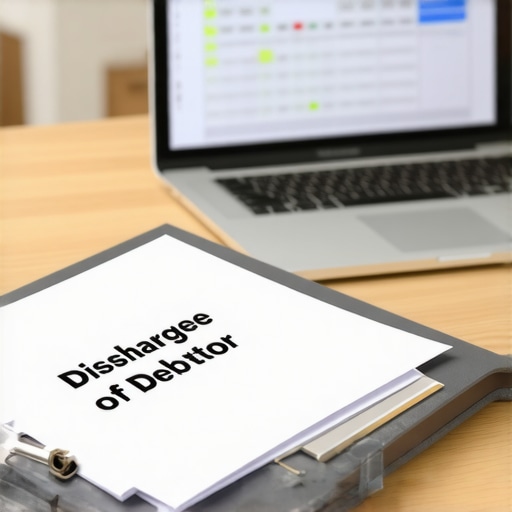
Check Every Line on Your Credit Report
Once you have the discharge order, it’s time to perform an audit. Creditors are notoriously lazy about reporting the ‘Discharged in Bankruptcy’ status. They often leave accounts marked as ‘Late’ or ‘Charge-Off’ because it hurts your score more and might trick you into paying. You need to look at every single account that was included in your filing. If the balance is anything other than zero, or the status doesn’t mention the bankruptcy, it is a reporting error. This is a crucial part of the the document checklist for a successful credit dispute. I once found a car loan that was still reporting as ‘repossession’ even though I had surrendered the vehicle through the court. It was tanking my score by fifty points until I forced them to correct it.
The Right Way to Send Your Evidence
When you find these mistakes, don’t just use the ‘Dispute’ button on a credit app. Those automated systems are designed to process thousands of requests a minute, and they often ignore the nuances of bankruptcy law. You need to the certified mail hack that forces bureau responses. Write a physical letter. State clearly that the account was discharged in your bankruptcy, provide the case number, and attach a copy of the discharge order. This physical trail makes it much harder for them to claim they didn’t receive your proof. If you are dealing with a company that bought your old debt, you may need to how to scrub junk debt buyers from your report permanently by proving they are trying to collect on a debt that no longer exists. You can dispute errors like a pro simply by being more organized than the collection agencies. Most of them are betting on the fact that you threw your court papers away years ago. Don’t let them win that bet.
Everyone tells you that if you need help after a financial collapse, you should run to the nearest non-profit credit counseling agency. It sounds safe, right? But here’s the cold truth I learned the hard way: some of those ‘helpful’ plans can actually look like a partial bankruptcy to a lender’s automated system. I’ve seen people choose these programs thinking they were protecting their score, only to realize why nonprofit credit counselors might be hurting your score more than helping it. The reality is that these agencies often negotiate payment schedules that get flagged as ‘managed debt,’ which can be a massive red flag for future mortgage lenders. If you aren’t careful, you might be trading one credit nightmare for another.
The Dangerous Myth of the ‘General Denial’
When I first started fighting back against the bureaus, I thought I could just send a letter saying, ‘I don’t owe this,’ and they would have to delete it. That is a ‘general denial,’ and it is the fastest way to get your letter thrown in the trash. The bureaus have seen every templated ‘sovereign citizen’ or ‘legal jargon’ letter on the internet. To actually win, you need to understand the difference between a factual dispute and a general denial. A factual dispute points to a specific error—like an incorrect date of last activity or a balance that doesn’t reflect your court discharge. According to a landmark study by the Federal Trade Commission (FTC), five percent of consumers had errors on their reports that could lead to less favorable loan terms. You aren’t just complaining; you are auditing a system that is statistically likely to be wrong.
Why does the bureau claim my debt is ‘verified’ when I have the court papers?
This is the most frustrating part of the entire process. You send your discharge order, and thirty days later, the bureau sends a letter saying the debt was ‘verified.’ How? Usually, it’s because the bureau didn’t actually look at your paper. They used an automated system called e-OSCAR to ping the creditor’s computer. If the creditor’s computer still says you owe money, the bureau considers it ‘verified.’ This is why your online dispute was rejected in seconds. You have to break that automated loop by demanding a ‘Method of Verification.’ This forces them to tell you exactly who they talked to and what documents they used. Most of the time, they can’t produce a human being who actually checked the facts. 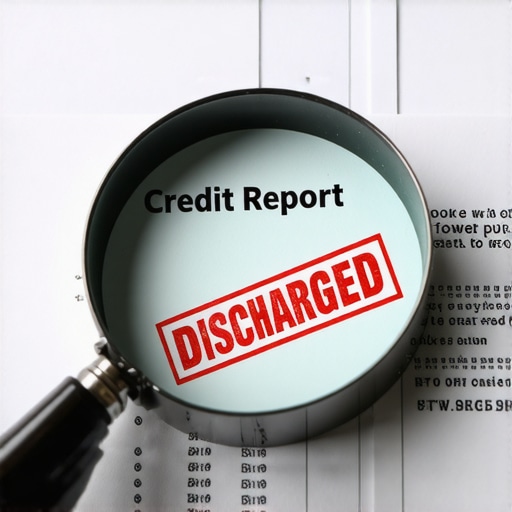
The biggest trap you can fall into is the ‘frivolous’ label. If you send ten disputes in a month for every single negative item on your report, the bureaus will flag your account and stop responding to you entirely. It is a strategic game, not a volume game. You need to focus on the high-impact errors first, especially how to identify re-aged debt before you pay a cent. Re-aging is a dirty tactic where collectors change the date of a debt to make it look newer than it is, keeping it on your report for an extra few years. If you spot this and use your discharge order as a shield, you can often get the entire account wiped off in one go. Have you ever fallen into the trap of using an online portal only to have your dispute instantly rejected? Let me know in the comments, and let’s talk about how to break that cycle. You can dispute errors like a pro once you stop acting like a victim of the system and start acting like its auditor.
To be a high-level auditor of your own life, you need more than just a stack of papers; you need a system that doesn’t fail when you’re tired. I’ve tried the flashy, expensive software, but I always come back to a custom-built Google Sheet. My personal ‘War Room’ spreadsheet has specific columns for the dispute date, the method of delivery—I only use the certified mail hack that forces bureau responses—and a column for the 30-day expiration date. This is the ultimate blueprint for effective credit repair because it shifts the burden of proof back onto the bureaus. If they don’t respond within that legal window, my spreadsheet turns bright red, and I know exactly which follow-up letter to send. It’s about being more organized than the person on the other end of the screen.
Build a Digital Fortress for Your Paper Trail
I keep a physical folder for every year, but the digital version is where the real work happens. Every time I get a response, I scan it and name the file with the date and the specific error I was attacking. This level of detail is why I can dispute errors effectively even years after the fact. If a junk buyer tries to re-surface an old debt, I don’t have to go digging through boxes in the attic; I just search my drive for the account number. This is a core part of the document checklist for a successful credit dispute. When you act with this kind of precision, creditors realize you aren’t an easy target. 
How do I keep my score from slipping after the cleanup?
The hardest part of this journey isn’t the fight; it’s the maintenance. I suggest setting a ‘Credit Audit’ calendar invite for the first Saturday of every quarter. Use this time to pull your reports from the big three. If you see even a minor hiccup, like a small medical bill you forgot about, you need to know the best way to handle collections under fifty dollars before they mushroom into a larger problem. Maintenance is also about knowing when to ask for a favor. If you’ve been a loyal customer and made one tiny slip, you should learn how to get a goodwill adjustment for a single mistake. It’s much easier to keep a clean report clean than it is to scrub a dirty one.
Why the FICO 10T Model Changes Everything
The game is changing right under our feet. We are moving toward ‘trended data.’ According to technical specifications from FICO (Fair Isaac Corporation), the new FICO 10T model doesn’t just look at what you owe today; it looks at whether your balances have been growing or shrinking over the last 24 months. This means you can’t just ‘bridge’ your score for a month to get a loan. You have to show a downward trend in debt. This is the science of credit repair in 2025. I predict that within the next two years, ‘balance trajectory’ will be just as important as your payment history. To stay ahead, you need to boost your credit score in 2025 by focusing on consistent, incremental debt reduction rather than sudden pay-offs. Try this today: Take your three highest credit card balances and set a goal to reduce them by just 2% every single month for the next year. That consistent downward slope is exactly what the new AI-driven algorithms are looking for.
Hard-Won Secrets from the Credit Repair Trenches
If there is one thing I’ve learned from staring at hundreds of credit reports, it’s that the system isn’t designed to be accurate; it’s designed to be efficient. Here are the lightbulb moments that changed everything for me during my own recovery:
- Precision beats volume: Sending fifty dispute letters at once marks you as a template user. Focusing on one specific error with a mountain of evidence is how you actually win.
- The bureau isn’t your friend: They are data aggregators. Their goal is to keep data on your file, not remove it. You have to prove they are legally obligated to delete it by showing it’s outdated or incorrect.
- Knowledge is the best defense: Understanding the difference between a factual dispute and a general denial was the turning point for me. Once I stopped sending generic ‘not mine’ letters and started pointing out actual legal errors, my success rate doubled.
My Private Arsenal for Financial Recovery
I didn’t rebuild my life with a magic wand; I used tools that anyone can access if they know where to look. To start your own audit, you need to have the document checklist for a successful credit dispute ready before you even open a web browser. I personally rely on three main sources: PACER for court records, a physical scanner for every piece of mail I receive, and the discipline to use the certified mail hack that forces bureau responses. Do not trust the online portals; they are built to filter you out through automation. Trust the paper trail instead.
#IMAGE_PLACEHOLDER_E#
Your Financial Ghost Story Ends Here
Bankruptcy is a heavy word, but it doesn’t have to be a life sentence. It’s a tool for a fresh start, and the work you do now—cleaning up the reporting errors and auditing the junk debt buyers—is what makes that start actually ‘fresh.’ You are now equipped with the ultimate blueprint for effective credit repair. It will take time, and you might get a few more ‘verified’ letters before the dam breaks, but persistence is the one thing the bureaus can’t automate away. It is entirely possible to learn how to build a 700 score from zero in six months if you are meticulous about your paper trail. Keep your head up, keep your receipts, and don’t let them take one cent more than they are legally owed. Have you ever had a debt collector try to claim a bankruptcy didn’t count toward their specific account? Let me know in the comments below!