

I remember sitting at my kitchen table with three different highlighter colors and a stack of papers that felt a mile high, yet I was getting absolutely nowhere. My mortgage application had just been stalled because of a clerical error from a hospital visit three years prior, and no matter how many times I told the credit bureaus the debt was settled, they kept sending back that dreaded form letter: “Item Verified.” It felt like I was screaming into a void, and the void was just mailing me automated rejection notices. That moment of pure, unadulterated frustration was my wake-up call. I realized I wasn’t fighting a person; I was fighting an algorithm designed to dismiss me as quickly as possible. Today, I’m going to help you break that cycle and finally get the attention your credit file deserves.
The Soul-Crushing Reality of the Verified Stamp
When you send a dispute, you probably imagine a diligent clerk reviewing your evidence and making a fair judgment. In reality, your letter is often scanned by a machine and reduced to a two-digit code that is then sent to the creditor via a system called e-OSCAR. This is exactly why your online dispute was rejected in seconds in the past. It’s a game of speed for them, but it’s a game of survival for your finances. My biggest mistake when I started was thinking that the “Dispute” button on a free credit app was a helpful tool. It isn’t. It’s a trap that often waives your right to a full investigation under the Fair Credit Reporting Act. To win, you have to stop using the dispute button on Credit Karma right now and start a paper trail that the machines can’t ignore.
Is this whole system actually rigged against the consumer?
It certainly feels like it. When you realize that the credit bureaus are private companies—not government agencies—and that their “customers” are actually the lenders, not you, the skepticism sets in fast. According to a landmark study by the Federal Trade Commission, 25% of consumers identified errors on their credit reports that might affect their scores. That is a massive number of people being unfairly penalized by a digital loop. We are here to change the narrative. I’ve learned the hard way that you need to dispute errors effectively by using specific language that forces a human eye to look at your documentation. Have you ever felt like you were arguing with a brick wall after sending what you thought was a perfect dispute letter? I want to hear about your experience in the comments below. Let’s look at how we can stop the automated scanners from throwing your future in the trash.To beat the scanners, you have to think like a prosecutor building a case, not a victim asking for a favor. The first rule of thumb is to take your fight off the screen and into the mailbox. You need to use the certified mail hack that forces bureau responses. When you send a physical letter via certified mail with a return receipt, you create a legal timestamp that the credit bureaus cannot ignore. In my early days, I spent six frustrating months trying to remove a $45 medical bill through an online portal. Every time, I got a ‘verified’ response within 48 hours. I finally snapped, printed a physical letter, and sent it with that little green card. Exactly 22 days later, the item was deleted. Why? Because a human had to sign for that mail, and suddenly, the 30-day clock under the FCRA became a very real threat to them. If you’re dealing with small amounts, you need to know the best way to handle collections under fifty dollars because these are often the easiest to knock off if you use the right paper trail. 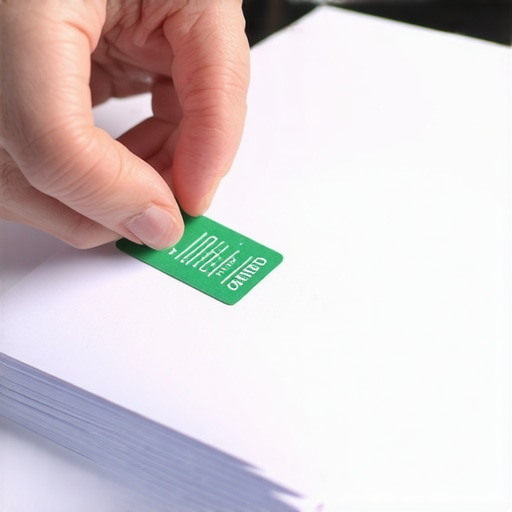
Attack the Data Not the Debt
Most people fail because they argue the ‘story’ instead of the ‘data.’ The bureau doesn’t care if you were in the hospital or if your ex-spouse was supposed to pay the bill. They only care if the data reported is 100% accurate. You must learn the difference between a factual dispute and a general denial. A general denial says ‘this isn’t mine,’ which the computer easily ‘verifies.’ A factual dispute says ‘The date of last activity is reported as January 14th on Equifax but March 2nd on TransUnion; therefore, this information is inaccurate and must be deleted.’ See the difference? One is a complaint; the other is a trap. You should dispute errors effectively by cross-referencing your reports and finding these contradictions.
Make Them Prove the Original Contract Exists
When a debt is sold to a third-party collector, they often buy thousands of accounts for pennies on the dollar, but they rarely get the original paperwork. This is your leverage. You have the right to force a creditor to produce the original signed contract. If they can’t produce the document with your signature, they have no legal standing to report that debt. I once helped a friend challenge a three-year-old credit card charge that had been sold twice. We didn’t argue that he didn’t owe the money; we simply demanded the original agreement. The collector sent back a generic billing statement. We pushed back, stayed firm, and the account was purged because they couldn’t meet the burden of proof. Knowing how to read the data fields collectors use to track you allows you to spot where their records are thin, giving you the upper hand in every negotiation.One of the biggest lies told in the world of financial recovery is the idea that you should ‘carpet bomb’ your credit report. Beginners often think if they dispute twelve items in one envelope, they’re being efficient. In reality, you’re waving a giant red flag that screams ‘I hired a cheap service!’ The Consumer Financial Protection Bureau (CFPB) has noted in their annual reports that credit bureaus use sophisticated filtering to identify what they deem ‘frivolous’ disputes. If you send too many requests at once, the system won’t even look at your evidence—it will just dump you into a pile of automated rejections. You need to know how to spot a credit repair clinic that will get you flagged before you let them touch your file. It’s better to target the two most damaging items with surgical precision than to spray and pray with twenty. 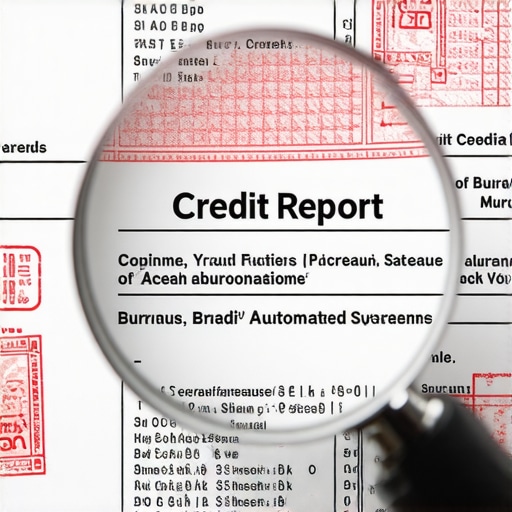
Avoid the Trap of Disputing Active Accounts
Another massive ‘oops’ factor is disputing an account you still use. I’ve seen people try to remove a late payment from a card they still use every day at the grocery store. This is a recipe for disaster. When you dispute an open account, the bank might just decide you’re too much of a liability and close the account entirely, tanking your average age of accounts and your score simultaneously. This is exactly why you should never dispute an account you still use daily unless you are prepared to lose that line of credit. Have you ever had a credit card company retaliate after you questioned a mark on your report? Let me know in the comments.
Why does a 750 score still get you a ‘no’ from the bank?
Most people fixate on the three-digit number, but lenders look at the ‘layered risk.’ You can have a 750 score and still get rejected if your file is ‘thin’ or if you’ve recently used the truth about credit repair software vs professional services that left messy footprints. Lenders aren’t just looking at the score; they are looking for patterns of stability. If they see a ‘Method of Verification’ request that looks like a robotic template, they may flag you as a high-risk borrower. You have to understand the problem with method of verification requests—they are often the ‘final boss’ of disputes and require a nuanced touch, not a copy-paste letter.
The Hidden Risk in Non-Profit Counseling
Finally, be wary of the ‘Non-Profit’ label. People assume non-profit credit counselors are the ‘good guys,’ but many of them are funded directly by the banks you owe money to. In my experience, the truth about most non-profit credit counselors is that their primary goal is to get the bank paid, not necessarily to protect your credit score. In fact, why nonprofit credit counselors might be hurting your score often comes down to the fact that they place you in a Debt Management Plan (DMP) which can show up on your report as a negative signal to future mortgage lenders. If you’re serious about your future, you need to learn how to dispute errors on your credit report and improve score on your own terms, without a middleman whose interests might be split.
Once you’ve stopped the automated rejections and started winning the paper war, you need a way to keep those gains permanent. I’ve seen too many people do the hard work of scrubbing their reports only to fall back into the same score traps six months later because they lacked a maintenance system. Credit repair isn’t a one-and-done event; it’s a lifestyle of data management. Personally, I don’t waste my time with the ‘educational’ scores provided by most free apps. They use VantageScore 3.0, which is almost never used by actual mortgage or auto lenders. Instead, I rely on the easiest way to track your fico score for free to ensure I’m seeing exactly what the bank sees when I apply for a loan.
The dashboard I use to stay ahead of the bureaus
For my personal tracking, I use a spreadsheet that logs my ‘Statement Closing Dates’ rather than my ‘Due Dates.’ This is a pro-level distinction. If you pay your bill on the due date, the high balance has already been reported to the bureaus, tanking your score for the month. By paying three days before the statement closes, you ensure a $0 or low balance is reported. This is part of what I call the 2-point rule for lowering credit utilization. If you can master this timing, you’ll see your score stabilize in a way that feels like magic, but it’s really just basic data logistics.
How do I maintain my score without losing my mind?
Consistency beats intensity every time. I set a calendar alert for the 15th of every month to do a ‘sweep’ of my active accounts. During this sweep, I’m looking for any unauthorized inquiries or weird balance spikes. If life hits a snag, you need to know how to keep your credit healthy during a job loss before the missed payments start. It’s much easier to negotiate a forbearance or a temporary interest rate reduction while your score is still high than it is to fix a 30-day late mark after the fact. I also keep a close eye on my secondary reports. Most people ignore companies like SageStream or LexisNexis, but the big three bureaus often ‘verify’ your disputes by checking these smaller data miners. That’s why you need to freeze your sagestream report today; it cuts off the bureaus’ ability to cross-reference old, potentially incorrect data.

Lock the back door with data suppression
Advanced credit scaling requires you to think about the ‘invisible’ data. Beyond just the big reports, there are specialty agencies that track your check-writing history and even your insurance claims. According to the National Consumer Law Center (NCLC), these ‘shadow’ reports are often riddled with even more errors than the standard ones because they face less public scrutiny. By suppressing these files, you force the creditors to rely solely on the primary evidence you’ve already vetted. This is a core part of unlock-your-credit-score-potential-expert-tips-for-2025. If you want the secret to hitting 800 without a major credit card, it often involves cleaning up these peripheral reports so your profile looks pristine to every algorithm. I predict that as AI becomes more integrated into lending, ‘clean’ data will be worth more than a high score alone, as lenders look for any excuse to hike rates based on perceived risk patterns. My advice? Try freezing your LexisNexis and SageStream files this week. It’s a 10-minute task that acts as a permanent shield for your dispute results.
The Hard Truths I Learned While Fighting the Credit Bureau Machines
Reflecting on my own journey, the biggest shift happened when I stopped treating the credit bureaus like a government service and started treating them like a data company that makes mistakes. I realized that a generic dispute is just fuel for their automated fires. You have to be precise, or you’re just wasting stamps. Another ‘lightbulb moment’ was seeing that my credit score wasn’t a grade on my character, but a calculation of my risk. When I shifted from ‘please help me’ to ‘this data is factually incorrect,’ everything changed. I wish I had known earlier that the science of credit repair is more about forensic accounting than it is about negotiation.
My Personal Arsenal for Keeping the Big Three in Check
I don’t recommend products lightly, but there are a few non-negotiables if you want to stay in control. First, always keep a copy of the Fair Credit Reporting Act (FCRA) bookmarked; it is your shield and your sword. For actual execution, I rely on the certified mail process because it’s the only way to prove they received your evidence. If you are feeling overwhelmed by the technicalities, I’ve found that mastering credit disputes becomes much easier when you have a template that focuses on data fields rather than stories. Also, if you’re considering outside help, make sure you’re understanding credit counseling deeply before signing any contracts, as some plans can accidentally flag you as a risk to mortgage lenders.
Take Back the Reins of Your Financial Narrative Today
You have more power than the algorithms want you to believe. The system is designed to be exhausting so that you’ll give up and just pay the higher interest rates. Don’t let them win. By being diligent with your data and persistent with your mailings, you can absolutely unlock your credit score potential and open doors that have been slammed shut for years. Your financial future isn’t written in stone; it’s written in a database that you have the legal right to correct. Have you ever successfully removed an item only to see it pop back up a month later? Let me know in the comments how you handled it!