

I sat at my kitchen table three years ago, sweating over a collection notice for a medical bill I thought I’d already paid. I did what most people do: I called them up, negotiated a settlement for 60% of the balance, and felt like a champion when I hung up. I thought I was finally following a blueprint for better finances. But two months later, my credit score hadn’t budged. That Settled status was still sitting there like a lead weight, telling every lender that I was someone who didn’t pay their full obligations. I had essentially handed over my hard-earned cash for a cosmetic fix that did nothing for my real-world borrowing power. That mistake cost me a car loan later that year, and I don’t want you to feel that same sting. Today, I’m going to show you why settling is often a trap and why you need to fight for a total deletion instead.
Your Score Needs a Clean Slate Not a Settled Stamp
When you settle, the account stays on your report for seven years, just with a different label. It is like painting over a moldy wall; it looks better for a second, but the rot is still underneath. I learned the hard way that the risks of using a debt settlement company are often hidden in the fine print. They want their fee, but they don’t always care if your score actually recovers. If you want to see a real jump, you have to dispute errors like a pro and demand that inaccurate or unverifiable items are removed entirely. A study by the Federal Trade Commission (FTC) revealed that one in five consumers has an error on at least one of their credit reports, which means the odds are high that you have leverage you aren’t even using yet. Have you ever felt the frustration of paying off a debt only to see your score stay stagnant or even drop?
Can you actually force a creditor to delete an entry?
Skepticism is healthy here. Most collectors will tell you they cannot delete an account because it is against their policy. That is usually a lie designed to keep you compliant. I used to believe them until I started sending my own letters and realized that policy is a lot more flexible when you know how to correct your credit report effectively. We are going to dive into the exact mechanics of making this happen without begging for permission.
Demand Proof Before You Hand Over a Cent
The first thing you must realize is that a debt collector is often like a secondary market scavenger; they bought your debt for pennies on the dollar and are looking for the path of least resistance to turn a profit. I remember a $400 collection from an old gym membership that haunted me. My first instinct was to just pay it to make it go away, but I stopped. Instead, I realized why you should never pay a debt buyer without verification. I sent a simple request for the original signed contract. Since the gym had closed and the files were a mess, the collector couldn’t produce it. Within thirty days, that lead weight was gone from my report without me spending a single dime. If you pay first, you lose all your leverage. Think of it like buying a used car; you wouldn’t hand over the cash before seeing the title and the service history. Your credit report deserves that same level of scrutiny.
The Precise Way to Ask for a Deletion
If the debt is verified and you actually owe it, your next move is the ‘Pay-for-Delete’ dance. Most people fail here because they admit the debt is theirs over the phone. Big mistake. You need to learn how to negotiate a pay-for-delete without admitting ownership. You are simply offering an ‘accord and satisfaction.’ You tell them: ‘I don’t recognize this debt, but I am willing to pay $X in exchange for a full deletion of the trade line from all credit bureaus.’ If they won’t put it in writing, don’t send the check. A verbal promise from a collector is about as valuable as a screen door on a submarine. I once had a client who got a verbal promise, paid the full $1,200, and the collector just marked it as ‘Paid Collection,’ which did absolutely nothing to help his mortgage application. Always get a physical or digital letter stating they will request the removal upon receipt of funds.
Paper Trails Win When Digital Portals Fail
The credit bureaus want you to use their online ‘easy’ dispute buttons. Do not fall for it. Why online dispute portals are a trap for consumers is simple: they force you to waive your right to a manual investigation and limit your dispute to a pre-set list of radio buttons. When I fixed my own score, I switched to the ‘analog’ method. 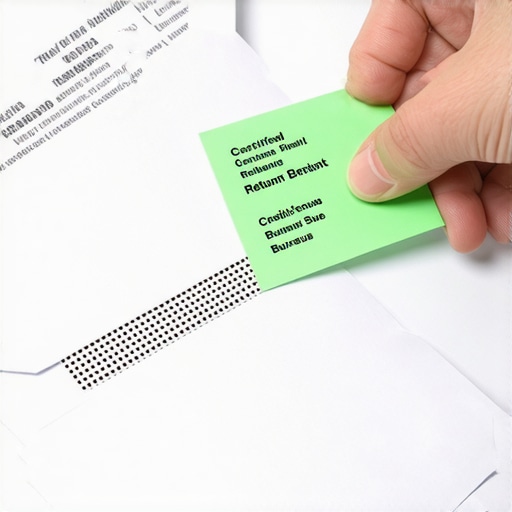 I started sending everything via the post office. There is a specific legal weight to a physical letter that an automated web form just doesn’t have. Knowing why every credit dispute should be sent via registered mail is the secret sauce. It provides a timestamped paper trail that forces the bureau to act within the 30-day window mandated by the Fair Credit Reporting Act (FCRA). When you have that green return receipt in your hand, you have a weapon you can use if they try to ignore you. Use that leverage to master credit disputes with a step-by-step guide to success and stop letting them dictate the rules of the game. It’s about being the most organized person in the room.
The nuance that most ‘experts’ miss is the obsession with a zero balance. Everyone tells you to pay it all off, but why keeping a zero balance on all cards might hurt your score is a concept called ‘no recent usage.’ If the bureaus see a string of zeros across every line, they can’t calculate your risk, and your score can actually flatline. You want a small, manageable balance on at least one card to prove you can handle credit responsibly. This is just one of many key credit score factors every borrower must know before they start making big moves. According to data from FICO, the ‘Amounts Owed’ category makes up 30% of your total score, and having all accounts at zero can sometimes result in a lower score than having a very low utilization ratio of around one percent.
The Counterintuitive Reality of a Zero Balance
I see it every day: someone pays off a massive car loan and expects their score to skyrocket, only to see it drop by twenty points the following week. This happens because you just closed an active, seasoning trade line. The specific reason your fico score dips after a payoff is often due to the loss of credit mix or the average age of open accounts. It feels like a betrayal, doesn’t it? You did the right thing, and the system punished you. This is why you must always look at your report as a living ecosystem rather than a simple checklist of debts.

How can a non-profit counselor still lead you into a trap?
There is a common belief that if an agency is a non-profit, they are automatically on your side. However, the difference between non-profit and for-profit counseling often comes down to who is funding them. Many non-profit agencies are funded by the very creditors you owe money to. Their goal is to get the bank paid, not necessarily to maximize your credit score. If they put you on a Debt Management Plan (DMP), they might require you to close all your credit cards. While this helps you pay the debt, it destroys your ‘length of credit history’ and your ‘available credit’ metrics simultaneously. Always take the time to read the fine print in a credit counseling agreement before signing your rights away.
Don’t Let the Bureau’s Stall Tactics Stop You
Another high-level trap is the ‘frivolous’ letter. If you send two disputes too close together, the bureaus will use an automated filter to flag your request as frivolous and ignore it. I’ve had many people come to me frustrated because they didn’t know what to do when a credit bureau ignores your second dispute. The secret is to provide ‘new’ evidence each time, even if it is just a different utility bill or a more detailed explanation of the error. If they continue to stone-wall you, it is time to escalate. I recommend learning how to use the CFPB portal to resolve stalled disputes. A report by the Consumer Financial Protection Bureau (CFPB) shows that companies are much more likely to provide a substantive response when a federal agency is looking over their shoulder. Have you ever fallen into this trap where doing the ‘right’ thing made your score go down? Let me know in the comments.
Once you have cleared the hurdles of the initial dispute process, the game changes from offense to defense. I stopped obsessing over my daily fluctuations when I realized the truth about how often your score actually refreshes. Most lenders only report once a month, so checking every morning is just a recipe for cortisol spikes. Now, I use a specific system to monitor my credit for free without giving away data to third-party marketers who want to sell me high-interest personal loans. Maintenance isn’t about doing more work; it’s about having a better system.
Stop the Constant Anxiety of Checking Your Score
I personally use a simple spreadsheet to track my ‘statement closing dates’ rather than just the ‘due dates.’ If you pay your balance down to 1% the day before the statement closes, that is the low number that gets reported to the bureaus, even if you spend more the next day. This is the foundation of the ultimate blueprint for effective credit repair and maintenance. It is a level of precision that automated ‘autopay’ settings simply cannot match. If you rely solely on automation, you are leaving your score to chance.
Why I Prefer a Physical Dispute Ledger Over High-Priced Software
There is a lot of noise about automated tools, but I often weigh the truth about credit repair software vs professional help before I make a move. Personally, I keep a physical ‘Dispute Ledger’—a simple three-ring binder where I keep every registered mail receipt and every response from a bureau.  This is because the bureaus often use the ‘Metro 2’ format—a technical standard for electronic data reporting created by the Consumer Data Industry Association (CDIA). As Eric J. Ellman of the CDIA has noted, this system is designed for high-volume efficiency, not individual nuance. When you have a physical paper trail, you can pinpoint exactly where their automated system failed to translate your evidence. If you want to dispute credit errors swiftly and securely in 2025, you have to be more organized than the computers on the other end.
How do I maintain a high credit score for the next decade?
Consistency is the only real secret. I set a quarterly calendar reminder to pull one report from a different bureau every four months. This keeps me in a constant loop of verification without being overwhelmed. I also recommend looking into the truth about rapid rescoring for home buyers if you are planning a major purchase. It is a specialized tool that can update your score in days rather than months, but it requires a mortgage lender to initiate it. For the future, I predict we will see a massive shift toward ‘Trended Data.’ Lenders are moving away from a single ‘snapshot’ score and are now looking at whether your balances are increasing or decreasing over a 24-month period. This means your habits today are literally building the score you will have two years from now. I want you to try this one advanced tip: the next time a creditor verifies a debt you know is wrong, don’t just dispute it again. Ask for the specific ‘Method of Verification’ they used. It forces them to show their cards, and often, they don’t have a winning hand.
The Financial Scars That Finally Taught Me How to Win
Reflecting on my journey, the biggest takeaway wasn’t just about the math; it was about the psychology of the credit system. First, I realized that a one-time mistake doesn’t have to be a permanent stain if you know the right way to ask for a goodwill deletion. Sometimes, a polite, well-reasoned letter explaining a life hardship can do more than a hundred angry dispute forms. Second, I learned that errors often happen because of clerical laziness, especially when you have to fix a credit file that has been merged with a relative who shares a similar name or address. Finally, I stopped looking at my score as just a gateway to loans and started seeing why your score matters more for insurance than you think; a bad report can literally make your car insurance premiums double, even if your driving record is perfect.
My Private Arsenal for a 750+ Score
I didn’t reach a high score by accident; I used a specific set of tools that provided the leverage needed to move the needle. If you are currently hitting a wall with the bureaus, I highly recommend using the CFPB portal to resolve stalled disputes because federal oversight is often the only thing that gets a human to actually read your evidence. For those starting from scratch or rebuilding after a major financial crisis, learning how to use a credit builder loan to jumpstart your profile is a massive game-changer for adding positive payment history without needing a standard credit card. I also swear by keeping a physical ‘Dispute Ledger’ to track every piece of registered mail, ensuring I have the timestamped proof needed to dispute credit errors swiftly and securely in 2025. #IMAGE_PLACEHOLDER_E#
Take the Keys to Your Financial Future Back
The credit system is designed to be confusing so that you’ll settle for less than you deserve and pay more in interest than you should. But now you have the knowledge to push back against automated systems and lazy collectors. By following the ultimate blueprint for effective credit repair, you are moving from a passive victim of your report to an active manager of your reputation. It won’t happen overnight, but the freedom of being approved for a mortgage or a low-interest car loan makes every registered letter worth the effort. You have the tools; now you just need the persistence to use them. Have you ever successfully removed a negative item through a pay-for-delete agreement? Let me know below.