

I was sitting in a cramped bank office back in 2018, clutching a folder of documents and a dream of finally owning a place with a backyard. My income was solid. My debt-to-income ratio was textbook. Then, the loan officer frowned at her screen, looked at me, and said those four soul-crushing words: “Your identity wasn’t verified.” My heart sank. Was I a ghost? No, it turns out I was just “Apt 4B” on my credit report and “Unit 4-B” on my application. That one tiny dash felt like a mountain standing between me and my front door. It was a wake-up call that the small stuff really does matter. Today, I am going to walk you through exactly how to audit your personal information so you never have to feel that gut-punch of a rejection letter over a simple typo.
The Night I Realized My Mailbox Was Sabotaging My Future
Most people think credit repair secrets are all about late payments or high-interest balances. I certainly did. I spent months focusing on how to remove a late payment from your history permanently, thinking I’d cleared every hurdle. But the reality is that lenders use sophisticated algorithms to cross-reference your personal data before they even look at your FICO. According to the Consumer Financial Protection Bureau, approximately 20% of consumers have a verified error on at least one of their credit reports. Sometimes, it is not a $10,000 collection account; it is the fact that you lived on “West Main Street” but your report says “W. Main St.” These discrepancies trigger fraud alerts in automated systems, leading to an immediate, automated denial. I learned the hard way that the tiny errors on your report that cost thousands often start with your name and address history.
Does a simple typo actually have the power to stop a mortgage?
It sounds like a bad joke, but the answer is a resounding yes. Early in my credit journey, I made the mistake of ignoring my old address history entirely. I thought it was just “clutter” that didn’t affect my score. I didn’t realize that disputing inaccuracies in your personal profile is just as critical as how to dispute errors on your credit report and improve score. When your address history is a mess of misspelled street names and outdated rentals, you look like a high-risk candidate to an algorithm designed to spot identity theft. I’m here to show you how to clean this up so you don’t get stuck in the same “identity mismatch” loop that cost me my first house deal. Have you ever been denied a loan for something as silly as a misspelled street name? I would love to hear your story in the comments below.You need to stop thinking of your credit report as a final grade and start seeing it as a witness statement. If the witness keeps changing the details—your name is ‘Mike’ on one page and ‘Michael’ on another—the jury (the bank) won’t trust them. I learned this when I saw my own report listed seven different addresses, three of which were variations of the same apartment complex. This confusion is why I am a firm believer that you must audit your data before you ever ask for a loan.
Treat Your Credit Report Like a Crime Scene
The very first thing I did after that bank rejection was pull my raw data. You cannot rely on a summary from a colorful app; you need the full disclosure. Once you have it, you’re not just looking for big debts; you’re looking for ‘alias’ names or social security numbers that aren’t yours. This is where you apply the tactic to remove a wrong social security number before it ruins your next application. Think of your report as a house: if the foundation (your personal identity) is cracked, it doesn’t matter how pretty the paint (your score) looks. 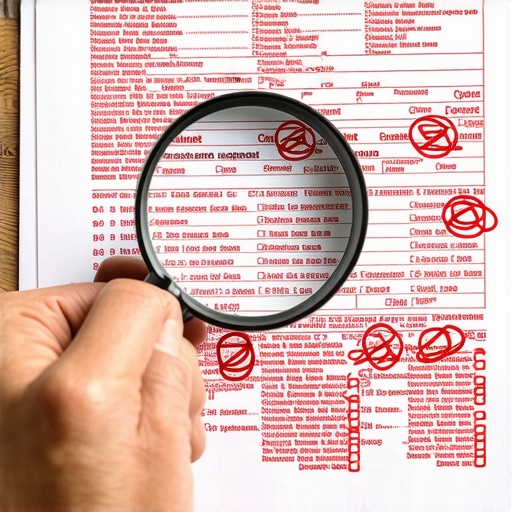
Scrub Your Name Down to One Single Variation
If you see five different ways your name is spelled, you are asking for trouble. When I cleared my report, I found ‘Jon Doe,’ ‘Jonathan Doe,’ and ‘Jonathon Q. Doe.’ Each one of these can potentially fragment your file. You need to learn how to force a correction for an error in your credit file name so the system recognizes you as one human being. When I finally sent in my driver’s license and a utility bill to demand they delete the aliases, my identity verification success rate jumped from ‘questionable’ to ‘instant’ in thirty days. This is the same level of precision I recommend in the science of credit repair expert advice to elevate your score.
Delete the Ghost of Your Old Apartments
Lenders love stability. If your report shows you’ve moved every six months for five years, you look flighty. In my case, several of those ‘moves’ were just typos from old landlords. Learning how to fix a mistaken identity error on your credit report involves more than just a quick click. I tried the easy route first—the online dispute buttons. Huge mistake. I found out why online dispute portals are a trap for consumers the hard way: they often force you to waive your right to a full investigation. Instead, I started mailing physical letters.
Use Physical Paper to Win the Verification War
To get my ‘Unit 4-B’ mess fixed, I had to provide a paper trail. I used the exact way to dispute an account that is not yours or information that is outdated by sending certified mail. When you send a letter, the bureaus are legally required to investigate. I attached a copy of my lease and a circled screenshot of the error. Within weeks, the ‘clutter’ vanished. Removing those old addresses didn’t just clean the page; it removed the ‘hooks’ that old collections agencies use to attach themselves to your file. If you are struggling with a cluttered history, you might want to look into the method to remove incorrect inquiries from your credit profile at the same time to ensure your ‘crime scene’ is completely spotless.
Once you’ve cleared the low-hanging fruit of typos and old addresses, you enter the territory where most people actually start losing the game. Everyone tells you that the goal of credit repair is to reach a zero balance across the board. In my early days, I paid off every single card to $0, expecting my score to skyrocket. Instead, it dipped. I was baffled. It turns out, FICO algorithms actually penalize you for having a ‘dormant’ profile. This is why why keeping a zero balance on all cards might hurt your score; the system needs to see active, responsible management of debt, not just the absence of it.
Stop Chasing a Zero Balance Like a Holy Grail
The nuance here is a strategy called AZEO (All Zero Except One). According to data from FICO, the ‘Amounts Owed’ category makes up 30% of your total score. If every account shows $0, the algorithm can’t calculate your risk level effectively. I learned that leaving a tiny balance—just enough to trigger a statement—on one primary card while keeping the rest at zero is the science of credit repair expert advice to elevate your score. This proves you are using credit without being dependent on it. Have you ever seen your score drop after a major payoff? It’s a frustrating trap, but once you know the rules, you can stop the bleeding. Let me know in the comments if you’ve experienced this ‘payoff penalty.’
Another dangerous trap is the ‘counseling’ mirage. People often confuse credit repair with credit counseling, and while they sound similar, the impact on your report is vastly different. I’ve seen homeowners get denied because their ‘non-profit’ counselor put them on a debt management plan that looks like a partial default to a mortgage lender. You must distinguish the difference between non-profit and for-profit counseling before you sign anything. Some plans include the hidden fees in some debt management plans that can actually drain your savings while you’re trying to fix your history.
Why did my score drop after I finally paid off my car loan?
This is the ultimate ‘oops’ factor in the credit world. When you close an installment loan, you are essentially removing a ‘type’ of credit from your report. Lenders want to see a healthy ‘credit mix’—a blend of revolving cards and fixed loans. When the car is paid off, that account closes, and your mix becomes less diverse. This is one of the key credit score factors every borrower must know before they celebrate a final payment. Instead of panic, use this as an opportunity for how credit counseling can transform your financial future by planning your next move before the score dip hits your next application. I always tell my readers to look at the difference between your fico score and your real score; the number you see on a free app is often a ‘Vantage’ score, which reacts much more violently to closed accounts than the actual FICO score a bank uses. Don’t let a temporary dip stop your momentum.
Set Up a Warning System That Actually Works
Once you have climbed the mountain and reached that coveted 700 or 800 range, the fear shifts from ‘will I ever get approved?’ to ‘how do I keep from falling?’ I treat my credit report like a high-performance engine that needs a weekly oil check. You have to how to stop credit bureau errors before they happen by being proactive rather than reactive. I personally use a combination of automated alerts from my bank and a monthly manual deep dive. I don’t just look at the number; I look at the ‘Total Accounts’ and ‘Inquiries’ sections. This is how I caught a fraudulent utility application in my name before it ever became a collection. Knowing the truth about how often your score actually refreshes helps you realize that a daily check is overkill, but a monthly audit is your best defense. 
How do I maintain my credit score for the long haul?
Maintenance is about consistency and organization. I keep a physical ‘Credit Bible’—a folder where I store every dispute letter, every response from a bureau, and every proof of payment. This paper trail is vital if you ever need to the tactic to handle a persistent debt collector after a dispute. Many people assume their digital records are enough, but when a bureau ‘accidentally’ re-inserts a deleted item, having a dated physical letter makes the re-deletion process ten times faster. I also recommend following the ultimate blueprint for effective credit repair even when your score is good, just to ensure you aren’t slipping into old habits. Remember, why checking your own score never lowers the number; it is a myth that keeps people in the dark. Check it often, check it deeply, and don’t be afraid of the data.
Brace Yourself for the AI Credit Revolution
Looking ahead, the way we manage credit is changing. We are moving away from static snapshots and toward ‘Trended Data.’ According to Ethan Dornhelm, FICO’s Vice President of Scores and Predictive Analytics, newer models like FICO 10T are designed to look at your financial behavior over a 24-month rolling window. This means the algorithm will know if you are gradually paying down debt or slowly creeping toward your limits. To stay ahead of this, you must improve your credit score with proven repair techniques in 2025 that focus on long-term stability rather than short-term ‘hacks.’ I predict that in the next few years, manual reviews will become even rarer, replaced by AI that analyzes your spending patterns with surgical precision. If you want to scale your financial life, you need to master the science of credit repair expert advice to elevate your score today. Start by setting up a ‘Credit Audit’ calendar reminder for the first of every month. It’s the single most effective way to ensure your hard work doesn’t vanish due to a bureau’s clerical error or a forgotten $5 subscription.
The Costly Mistakes My Bank Statement Finally Revealed
Reflecting on my journey, I’ve realized that credit isn’t a static number—it’s a dynamic reputation. One of the biggest shifts in my perspective was moving away from the ‘hope and pray’ method to a ‘verify and document’ lifestyle. I used to think the bureaus were there to help me; now I know they are data aggregators that require constant manual oversight. It is vital to dispute credit errors swiftly and securely in 2025 before they become permanent stains on your record. Through trial and error, I found that maintaining a ‘one-name’ standard across all financial institutions is the single most effective way to prevent automated declines.
- Your Name is Your Brand: If you have four variations of your name on your report, the algorithm sees four different risks. Consolidate them into one legal variation immediately.
- Bigger Isn’t Always Better: A massive credit limit can sometimes be a liability if you aren’t managing your mix correctly. Learn the simple move to improve your credit mix to show lenders you can handle variety without over-extension.
- The 30-Day Rule: Never assume a fix is permanent just because a bureau says so. Check back exactly 30 days later to ensure the ‘ghost’ data hasn’t reappeared.
The Gear I Use to Protect My Financial Identity
I don’t recommend tools lightly, but there are a few essentials that changed the game for me. First, a high-quality physical filing system for what I call my ‘Credit Bible’—nothing beats a paper trail when a debt collector gets aggressive or a bureau makes a mistake. Second, I swear by the official CFPB resources; if you hit a wall with the bureaus, you must know how to use the cfpb portal to resolve stalled disputes. Finally, for those who feel overwhelmed by the debt side of the equation, I recommend checking out unlock your credit score potential expert tips for 2025 to see how to balance aggressive repayment with strategic score growth. I trust these methods because they prioritize consumer rights over corporate convenience.
Take the Wheel of Your Financial Future Today
Your credit report shouldn’t be a source of anxiety; it should be a tool for your personal freedom. Whether you are searching for fast credit repair tips navigating dispute errors with confidence or just trying to maintain an elite status for a future mortgage, the power is in your hands. Using top credit repair strategies to boost your score faster is about consistency and organization, not a secret magic trick. Don’t let a simple typo or an old apartment address from ten years ago define what kind of home you can live in today. You’ve got the roadmap; now it’s time to start the engine and drive toward the life you deserve. Have you ever found a typo on your report that felt like a personal insult to your financial progress? Drop your story in the comments below!