

It was a rainy Tuesday when my phone buzzed for the seventh time before noon. I knew that number. I’d already sent my certified letters, received my delivery receipts, and felt a brief moment of triumph thinking I had finally cleared my name. Then the ‘verified’ notice arrived in the mail—a blatant lie—and the calls started right back up. My heart hammered against my ribs, not from fear, but from the sheer, soul-crushing frustration of being ignored by a machine that didn’t care about the truth. I felt small, like the entire financial system was designed to keep me under a thumb. But that moment was my tipping point. I realized that if they weren’t going to follow the rules, I had to learn how to enforce them. Today, I’m going to share the exact move I used to flip the script on a persistent collector who thought they could steamroll over my rights.
Collectors won’t stop until you change your strategy
Most of us start this journey with a bit of naivety. We think that if we just show them the error, they’ll apologize and walk away. They won’t. These agencies often buy debt for pennies on the dollar and their only goal is a high-volume payout. When I first tried to dispute errors like a pro, I made the massive mistake of trying to ‘be nice’ over the phone. I spent forty minutes explaining my life story to a collector who was literally trained to ignore it. I learned the hard way that phone calls are a trap. They want to bait you into saying something that restarts the statute of limitations. In fact, many agencies use 5 dirty tactics debt collectors use to restart the clock just when you think you’re safe. According to the Consumer Financial Protection Bureau, debt collection is consistently one of the most complained-about industries, with thousands of people reporting that collectors continue to pursue debt that has already been disputed or corrected. Have you ever felt like you were screaming into a void after sending a perfectly valid dispute?
Will this actually work or am I just wasting more stamps?
It’s natural to be skeptical. I’ve been there—staring at a stack of envelopes and wondering if I’m just fueling a fire that won’t go out. But the key isn’t just disputing; it’s about building a legal paper trail that makes it more expensive for them to keep bothering you than it is to just delete the entry. You have to move beyond the basic ‘this isn’t mine’ and start mastering credit disputes by demanding the specific evidence they are legally required to provide. I’ll show you how to stop a debt collector from calling your cell phone using a specific type of ‘cease and desist’ that only applies to communication, not your right to accurate reporting. We aren’t just asking for a favor anymore; we are asserting our rights under the Fair Debt Collection Practices Act. Let’s get into the weeds of how to make them regret picking up your file.
Stop playing the game on their turf
Think of a credit dispute like a legal trial where you are both the detective and the prosecutor. When you engage with a collector on the phone, you’re playing an away game in a stadium they built. To win, you have to move the battle to a medium where every word is recorded and every deadline is legally binding: the U.S. Postal Service. I remember the first time I challenged a medical bill that clearly wasn’t mine. I felt so confident that I just logged into a portal and clicked a few boxes. Five days later, I got an automated email saying the account was ‘verified.’ It was a punch in the gut because I knew for a fact they hadn’t actually contacted the hospital. That’s when I realized that to see real results, you must stop using the dispute button on Credit Karma right now. These digital tools are designed for the bureaus’ convenience, not your protection. They often strip away your right to re-dispute the same item if you lose the first round.
Read your report like an auditor
Before you send a single letter, you have to know exactly what you’re looking at. Most people glance at their score and panic, but the gold is in the line items. You need to how to read your credit report like a professional auditor to spot the tiny inconsistencies that bring the whole house of cards down. Does the account opening date on Equifax match TransUnion? Is the balance exactly the same to the penny? If there is even a one-dollar discrepancy, that is a reporting error, and under the law, it must be accurate or it must be removed.
Bypass the scanners to get human eyes on your file
The biggest hurdle in credit repair is a system called e-OSCAR. It’s an automated scanner that reads your dispute letter, turns it into a three-digit code, and sends it to the creditor. If your letter looks too ‘professional’ or like a template, the machine handles it in seconds without a human ever seeing your evidence. To break this loop, I started hand-writing my envelopes and using blue ink on my letters. This simple trick often forces a manual review because the scanners struggle with cursive or non-standard fonts. You are trying to the method for beating automated dispute scanners at the bureau so that a real person has to actually look at the proof you’ve attached.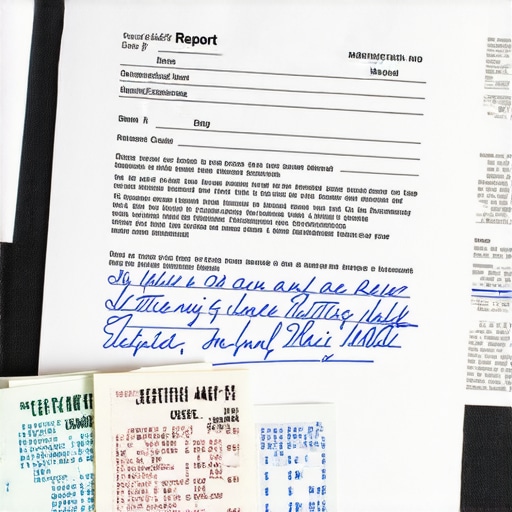
Demand the actual proof of the debt
When a collector says a debt is ‘verified,’ they usually just mean they checked their own internal database. That isn’t enough. You need to see the original contract with your signature. If the debt has been sold multiple times, the current collector likely doesn’t have the paperwork. This is why you must demand the paper trail needed to prove a debt is too old to collect or even valid in the first place. If they can’t produce the contract, they are legally required to stop reporting it. If you find yourself in a position where the debt is valid but you want it gone, you can pivot your strategy and learn how to negotiate a pay-for-delete that actually works, ensuring that your payment results in total removal, not just a ‘paid collection’ status which still hurts your score. You are no longer asking for permission; you are auditing their compliance. If they fail the audit, they lose the entry. It’s that simple.The most common piece of advice you’ll hear in ‘beginner’ circles is to pay off your old collections immediately. It sounds logical, right? But here is the nuance that usually gets lost: paying a collection doesn’t remove it. In many cases, you are actually harming your immediate recovery. When you pay an old, stagnant debt, you often update the ‘date of last activity,’ which can make a five-year-old mistake look like it happened yesterday to the scoring algorithms. This is the reason your score did not jump after paying off your cards or collections as expected. Unless you have a written ‘pay-for-delete’ agreement, you’re often just throwing money at a ghost that will still haunt your report for years.
Don’t let the ‘non-profit’ label fool you
We’ve been conditioned to think that ‘non-profit’ equals ‘good,’ but in the world of debt management, that label can be a smokescreen. Many people run to these agencies thinking they are a safe alternative to credit repair, but there’s a significant ‘oops’ factor here. When you enter a debt management plan, the agency often adds a notation to your credit report. While it’s not as damaging as a bankruptcy, many mortgage lenders view it through a similar lens because it indicates you couldn’t handle your original terms. You need to know why nonprofit credit counselors might be hurting your score before you sign their contracts. It’s vital to how to avoid common pitfalls in credit counseling programs that prioritize the creditors’ kickbacks over your long-term borrowing power.
Is the shift to FICO 9 actually going to save your score?
Advanced filers often ask if they should even bother disputing small medical collections now that newer models like FICO 9 and VantageScore 4.0 ignore paid medical debts or give them less weight. The catch? Most lenders—especially in the mortgage industry—are still stuck using FICO 2, 4, or 5. According to a report by the National Consumer Law Center, the slow adoption of newer scoring models means your ‘improved’ score on a modern app might be 50 points higher than what a bank actually sees. This is why you must grasp the difference between FICO 8 and FICO 9 scores to avoid being blindsided during a loan application. 
The ‘piggybacking’ trap that backfires on mortgage day
Another strategy that sounds great on paper but fails in practice is becoming an authorized user on a high-limit card. While this can provide a quick boost, underwriters are getting smarter. If they see you have a 740 score built entirely on someone else’s history without any primary accounts of your own, they may manually down-grade your application. I’ve seen people lose out on homes because they didn’t realize why your authorized user status might be hurting your mortgage odds at the finish line. Have you ever fallen into this trap or followed ‘expert’ advice that ended up lowering your score? Let me know in the comments.Once the smoke clears and those red numbers finally turn green, the real challenge begins: holding the line. I’ve seen so many people do the hard work of the ultimate blueprint for effective credit repair only to let their guard down and end up right back where they started. You have to treat your credit profile like a high-performance engine that requires constant tuning. Personally, I don’t rely on the ‘free’ apps for my serious monitoring. I use a dedicated ‘Evidence Folder’ strategy—a physical three-ring binder combined with a password-protected spreadsheet. I track every single dispute by its USPS tracking number, the date it was received, and the exact 35-day deadline for a response. If a bureau misses that window by even twenty-four hours, I’m already printing my next demand letter.
Don’t let the bureaus ‘oops’ your progress away
The most frustrating thing that can happen is ‘reinsertion.’ This is when a negative item you successfully removed suddenly pops back up because a lazy debt buyer resold the account. To fight this, you need to be familiar with Section 611(a)(5)(B) of the Fair Credit Reporting Act (FCRA). It strictly mandates that if a bureau re-inserts a deleted item, they must notify you in writing within five business days. If they don’t, they are in violation. I keep the document checklist for a successful credit dispute at the front of my binder so I can prove the item was previously deleted. This isn’t just about being organized; it’s about being prepared for a legal skirmish if they try to pull a fast one. 
How do I maintain my credit health for the long haul?
Maintenance is less about disputing and more about strategic spending. I’m a huge fan of using ‘burner cards’ for small monthly subscriptions like Netflix or gym memberships. These virtual cards allow you to set a hard spending limit, which prevents an unexpected price hike or a ‘zombie’ subscription from hitting a maxed-out card and triggering a late payment. This is part of the strategy for keeping your credit score high while carrying debt or managing daily expenses. I also make it a point to gather the documentation needed to fix a wrong birthdate on your file or address name variations immediately, because as the industry moves toward AI-driven verification, these tiny ‘mixed file’ errors are going to become much harder to untangle.
The future of credit is automated and predictive
We are heading toward a world where FICO scores aren’t just snapshots but predictive models based on ‘trended data.’ Lenders aren’t just looking at what you owe today; they are looking at whether you are paying down balances or just shifting them around. To stay ahead, you need to understand the science of credit repair expert advice to elevate your score and start thinking like an algorithm. In 2025 and beyond, unlock your credit score potential expert tips for 2025 will focus on ‘UltraFICO’ and other models that might even look at your checking account balances. If you want to keep your score high, start by setting up one ‘safety’ account that never goes below a certain threshold. My advanced tip for you today? Go into your existing accounts and set a ‘balance alert’ for 10% of your limit. Never wait for the statement to tell you that you’ve used too much. Try setting those alerts on your top three cards right now and watch how much more control you feel.
What the Bureaus Won’t Tell You About Your Rights
The biggest realization I had was that the credit system isn’t broken; it’s working exactly as intended to benefit the large creditors. If you don’t speak their legal language, you remain invisible. You need to dispute errors effectively by using federal laws like the FCRA as your primary leverage. Another hard truth I learned is that most ‘quick fixes’ advertised online are just temporary band-aids. True financial freedom happens when you stop looking for shortcuts and start understanding credit counseling as a tool for structural change rather than a sign of failure. It is about building a sustainable path forward.
My Go-To Tools for Staying Credit Healthy
To stay on top of your game, I recommend a few non-negotiables that have served me well over the years. First, keep a dedicated ‘Credit Bible’—a physical binder for every single letter you send and receive. This is your evidence if you ever need to go to court. Second, always rely on credit repair secrets that prioritize human interaction and certified mail over automated online portals. Lastly, stay ahead of the curve by implementing boost your credit score in 2025 tactics, such as auditing your personal information for consistency across all three bureaus to prevent mixed-file errors. #IMAGE_PLACEHOLDER_E#
Stop Letting Your Past Define Your Future
Your financial story is still being written, and you hold the pen. Don’t let a mistake from years ago stop you from the home or car you deserve today. By following these steps and remaining persistent, you are reclaiming your power from a system that often thrives on your silence. It’s time to take control of your credit score and build a foundation that lasts for decades. The journey is long, but every accurate line item on your report is a win for your future. Have you ever felt like you were finally making progress only to see an old negative item reappear on your report? Let me know your experience in the comments below.