

I remember the exact moment I realized I was in trouble. I was sitting at my kitchen table, nursing a lukewarm coffee, staring at a “Notice of Change” letter from my bank. They had slashed my credit limit by five thousand dollars. My first thought? I did not care because I was not even spending that much. I felt safe, even a bit smug. But when my credit score refreshed a week later, it had dropped 42 points. I had not changed my spending habits by a single dime, but suddenly, the math of my financial life was broken. This is the hidden impact no one warns you about, and it is why why your credit limit matters more than your total debt when it comes to keeping your score healthy.
The Math Behind Your Credit Score Meltdown
It sounds crazy that you can be penalized for doing absolutely nothing wrong, but that is exactly how the credit bureaus operate. When a lender lowers your limit, they are essentially shrinking the available credit you have. If you owe $2,000 and have a $10,000 limit, you are using 20%. But if that bank cuts your limit to $3,000 while you still owe that same $2,000, you are suddenly at 66% utilization. That is the danger zone. You need to know the key credit score factors every borrower must know to realize that your usage is a ratio, not a flat dollar amount. I made the massive mistake of thinking as long as I was not maxed out on the old limit, I was fine. I was wrong, and my score paid the price.
Is this credit limit drop actually worth the panic?
The short answer is yes. According to FICO, your amounts owed make up a staggering 30% of your total credit score. When your limit drops, your debt-to-limit ratio skyrockets instantly. This tells the algorithms that you are a higher risk, even if your actual spending has not changed. If you have ever wondered why your score wont budge despite paying down debt, it might be because the banks are moving the goalposts faster than you can run. Have you ever logged into your banking app and found a lower limit than you expected? If so, you are not just losing a safety net; you are losing points. I have seen this happen to friends who were doing everything right, like paying on time and staying responsible. But the hidden costs of carrying a high credit card balance become much more expensive when your ceiling is lowered. Today, we are going to walk through how to stop this slide and what you can do to force the banks to give that room back. We are looking at ways to dispute errors and manage your profile so the algorithm starts working for you again.
Stop the Bleeding and Take Back Your Limit
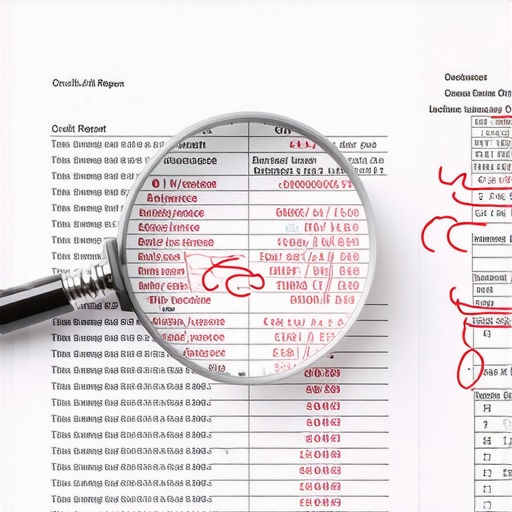
When your credit limit drops, your first instinct is to call the bank and complain. I did that, and it was a disaster. The representative just read a script and told me the decision was final. To actually win this fight, you have to shift your strategy from begging to auditing. You need to identify exactly why the algorithm flagged you. Often, it is a mismatch in data. You must learn how to read your credit report like a professional auditor to find the ‘why’ behind the bank’s sudden cold shoulder. Look for accounts that are reporting high balances relative to their individual limits, as why small balances on multiple cards hurt your score more than one large one is a nuance most people miss. If the bank sees activity across several cards simultaneously, they get nervous.
Ditch the Online Portals Immediately
One of the biggest traps you can fall into is the convenience of ‘one-click’ disputes. I spent three months clicking buttons on a free monitoring app, only to have my score remain stagnant. You should stop using the dispute button on Credit Karma right now because these portals use automated systems that often force you to waive your right to a manual reinvestigation. When I finally switched to physical mail, the response time from the bureaus actually felt faster because they knew I was serious. This is where you apply the difference between a factual dispute and a general denial. A general denial says ‘this is not mine,’ which usually fails. A factual dispute points to a specific date or a balance that does not match your records, forcing the bureau to actually do their job.
Build a Paper Trail They Cannot Ignore
I remember the morning I walked into the local post office with three thick envelopes, feeling like a character in a spy movie. I was using the certified mail hack that forces bureau responses. It feels old-fashioned, but having that green signature card is your insurance policy. If they do not respond within 30 days, they are legally required to remove the disputed item.  While you wait for those responses, you can proactively improve your profile by learning how to get a credit limit increase without a hard credit pull on your other healthy accounts. This helps offset the damage done by the bank that slashed your limit in the first place.
Attack Inaccuracies with Precision
If your score is stuck because of old errors, do not just throw everything at the wall. Focus on the high-impact items first. I once had a medical bill for $45 that was dragging my score down by 60 points. I had to learn the proof you need to delete a medical debt from your report to finally get it scrubbed. Once that small anchor was gone, my score floated back up, and the original bank actually restored my limit without me even asking. It is all about the credit score boosters essential tips for rapid improvement that target the algorithm’s specific pain points. By the time I finished this process, my total available credit was higher than before the bank cut me off.
While physical mail is a power move, the real battle happens in the nuances of the data itself. Most people assume that ‘doing the right thing’ is rewarded by the credit bureaus, but the system is not designed to be fair; it is designed to be a risk-assessment tool. For instance, many well-meaning borrowers turn to credit counseling when they are overwhelmed. However, you need to understand why nonprofit credit counselors might be hurting your score more than they are helping it. When a lender sees a ‘Debt Management Plan’ notation on your report, it can signal that you are unable to manage your original agreements, making you look just as risky as someone who simply stopped paying altogether. According to the National Consumer Law Center, these notations can sometimes prevent you from obtaining new lines of credit even if your score seems to be recovering. This is a nuance the ‘experts’ rarely mention during the initial sales pitch.
The Debt Collector Trap That Restarts the Clock
One of the most dangerous mistakes you can make is engaging with a collection agency without a plan. I have seen people try to be honest by calling a collector to acknowledge an old debt, only to have their score plummet again. This happens because of 5 dirty tactics debt collectors use to restart the clock. By simply admitting the debt is yours or making a ‘good faith’ five-dollar payment, you can reset the statute of limitations on a debt that was about to fall off your report. You must learn how to identify re-aged debt before you pay a cent, or you risk anchoring your score to a ghost from your past for another seven years. If you want to unlock your credit score potential expert tips for 2025 dictate that you remain silent until you have verified every single piece of data in writing.
Will paying my old collections actually make my score jump?
The short answer is: not necessarily. This is the biggest ‘oops’ factor in the industry. Many people spend thousands of dollars paying off old collections only to find their score hasn’t moved an inch. This is because older FICO models, like FICO 8, do not give you ‘extra credit’ for paying off a collection; they only care that the collection existed in the first place. You need to understand the difference between FICO 8 and FICO 9 scores to realize that while the newer FICO 9 ignores paid collections, most mortgage lenders are still using the older versions. To see a real boost, you should focus on how to negotiate a pay for delete that actually works. If the agency does not agree to remove the entire account from your report upon payment, your money might be better spent elsewhere. This is the reason your score did not jump after paying off your cards or collections—you settled for a ‘paid’ status instead of a full deletion.
Mastering the science of credit repair expert advice to elevate your score requires looking past the surface-level advice found on TikTok or generic finance blogs. It is about understanding the interaction between different scoring models and the legal protections you have against predatory reporting. Have you ever fallen into this trap of paying off a debt only to see your score stay flat? Let me know in the comments.
Maintenance is not about checking an app once a month and hoping for the best. It is about maintaining a defensive financial posture that prevents the banks from ever having the upper hand again. I personally use a dedicated document scanner—not a phone app—to keep high-resolution, timestamped copies of every piece of correspondence. Why? Because the bureaus often use ‘poor image quality’ as a tactic to stall your investigation. To truly scale your results, you need a system that tracks the ‘Date of Last Activity’ (DOLA) for every single account with surgical precision. This is the heart of the science of credit repair expert advice to elevate your score. If you lose track of the timeline, you lose your legal leverage under the Fair Credit Reporting Act.
How do I maintain a pristine credit profile over time?
Consistency is the only thing that beats the algorithm. I suggest setting a ‘hard audit’ date every ninety days. During these sessions, you should pull your reports directly from the official source, avoiding the third-party middleman apps that often provide ‘cloned’ or simplified data. During these audits, look for the strategy for keeping your credit score high while carrying debt to ensure that even if your balances fluctuate due to life’s emergencies, your reported data remains accurate. If a ghost item or a previously deleted error reappears, you must immediately apply fast credit repair tips navigating dispute errors with confidence to squash the re-insertion before it settles into your permanent file.
The bureaus are rapidly moving toward AI-driven filtering systems designed to flag and reject ‘templated’ dispute letters. According to Section 611(a)(1) of the Fair Credit Reporting Act (FCRA), the bureaus are legally required to conduct a ‘reasonable reinvestigation’ within 30 days, but their automated ‘e-OSCAR’ system often reduces your complex, evidence-backed letter into a generic two-digit code. This is why you must learn how to stop the automated rejection loop in your next dispute by using unique, handwritten elements or specific ‘trigger’ keywords that bypass the optical character recognition (OCR) and force a human representative to actually read your file. I predict that by late 2025, the bureaus will attempt to phase out paper disputes entirely in favor of biometric-locked digital portals, making your current physical paper trail even more valuable as a legal backup in court.
Do not just wait for things to go wrong; build a buffer now. Use improve your credit score with proven repair techniques in 2025 to create a profile so robust that a single late payment or a limit drop won’t tank your score. This includes setting up ‘micro-payments’ twice a month to keep your reported utilization near zero, regardless of your spending. If you really want to reach the elite tier, look into boost your credit score in 2025 top strategies that work by diversifying your account types without triggering high-risk hard inquiries. I personally use a custom-built spreadsheet that tracks the statement closing date of every card I own, allowing me to pay them down 48 hours before the ‘snapshot’ is taken. This is one of the top credit repair strategies to boost your score faster because it manipulates the math of the algorithm in your favor before the data is even reported. Your advanced tip for today: go find your last physical credit statement and compare the ‘Date of Last Activity’ to what is showing on your digital report. If there is even a one-day discrepancy, you have found a factual error that can be used to demand a full deletion.
What the System Hides from Every Honest Borrower
One of the biggest shifts I had to make was realizing the bureaus aren’t looking for ‘the truth’ in the way we think; they are looking for ‘reporting compliance.’ If a bank can’t prove every tiny detail of an account, they legally lose the right to report it. This is why you must dispute errors effectively a guide to correct your credit report focuses on the technicalities, not just the emotions. I also learned that my ‘good behavior’ didn’t matter half as much as my ‘data footprint.’ The system rewards those who audit the data, not just those who pay the bills. Another lightbulb moment for me was realizing that the bureaus are private, for-profit companies—they aren’t government agencies. They work for the lenders, but they are terrified of the laws that protect you. When you use improve your credit score with proven repair techniques in 2025, you are essentially speaking their legal language, which forces them to take you seriously.
The Audit Toolkit That Actually Moves the Needle
I rely heavily on physical records because digital trails can be manipulated or ‘lost’ in a server migration. I keep a dedicated binder for every ‘Notice of Change’ I receive. I also follow the credit repair secrets proven steps to boost your credit score fast because they prioritize the legal nuances of the Fair Credit Reporting Act rather than just clicking buttons on a consumer app. My favorite ‘tool’ is actually a simple paper calendar where I track my statement dates to optimize the 48-hour window before my balances are reported. I also recommend checking the National Consumer Law Center for updates on consumer protections, as these laws change faster than the banks will ever admit to you. Finally, I trust my own manual spreadsheets over any automated tracker because I want to see the raw data before the algorithm ‘interprets’ it for me.
Stop Letting the Algorithm Define Your Value
You have the power to change these numbers by applying the science of credit repair expert advice to elevate your score. Don’t let a bank’s internal policy or an automated limit reduction dictate your ability to secure a future mortgage or car loan. You are now armed with the same advanced strategies the professionals use to unlock your credit score potential expert tips for 2025. It starts with one audit and the commitment to never let a discrepancy go unchallenged. Your credit score is a tool, and it is time you learned how to swing the hammer yourself. Have you ever noticed a sudden drop in your score even when your spending stayed the same? Let me know in the comments below.