

I remember standing in that cramped office, the smell of burnt coffee thick in the air, while the loan officer stared at his screen and slowly shook his head. ‘I’m sorry,’ he said, not looking at me. My face felt hot. My credit score was a dismal 580, and I was being rejected for a car I desperately needed to get to work. It was a visceral gut-punch that made me feel like a total failure. I had been paying my bills, or so I thought, but my credit report was a minefield of mistakes I didn’t even know existed. I spent months wandering in the dark, trying to figure out the reason my score stalled despite no new collections. I was frustrated and felt like the system was rigged against me. Today, I’m showing you the shortcut I wish someone had handed me that day—the exact tactic to see a real shift in your numbers in under thirty days. This isn’t about some secret loophole; it’s about understanding how the system actually works and using it to your advantage.
Stop Guessing and Start Attacking Your Credit Report
The biggest lie in the financial world is that credit repair is a slow, agonizing crawl that takes years of penance. It isn’t. Most people fail because they use a disorganized shotgun approach, hitting every negative item at once and hoping something sticks. I made that exact mistake early on. I sent out dozens of generic dispute letters I found on a shady forum, and you know what happened? The bureaus flagged them as ‘frivolous’ and ignored me for sixty days. It was a massive waste of time and energy. [image_placeholder_1] To get results fast, you need to focus on credit score boosters that actually move the needle in the short term. This means identifying the errors that carry the most weight—like late payments that aren’t yours or incorrect balances—and hitting them with surgical precision. I eventually learned that disputing errors effectively is a skill, not a chore. Have you ever felt like you were doing everything right, only to see your score drop for no apparent reason? It’s incredibly disheartening, but it’s usually just a sign that there’s a ghost in the machine of your credit file.
Does this actually work or is it just another scam?
It’s healthy to be skeptical. We’ve all seen those late-night commercials promising ‘magic’ credit fixers that charge thousands of dollars up front and deliver absolutely nothing. But this approach isn’t about magic; it’s about exercising your rights under federal law. According to a landmark study by the Federal Trade Commission, one in five consumers has a mistake on their credit report that could be dragging their score down significantly. When you take the time to clean up these inaccuracies, you aren’t asking the banks for a favor; you are demanding that they follow the rules. The key is to avoid the convenience trap. For instance, why you should never use an online portal to dispute errors is the first lesson I teach my neighbors. Those portals often force you are often designed to make it harder to appeal. We’re going to do things the right way, with a solid paper trail and undeniable proof, to ensure the bureaus can’t just look the other way. By targeting the right errors now, we can set the stage for a dramatic turnaround before your next mortgage or auto loan application.Think of your credit report like a professional resume. If it’s messy or full of inaccuracies, no lender is going to trust you with their capital. The first thing I did after that initial loan rejection was sit down with a highlighter and look for the tiny errors on your report that cost thousands. I found three different variations of my name and an old address from a college apartment I hadn’t lived in for a decade. It seems small, but cleaning this identity clutter is the foundational step because it makes it harder for the bureaus’ automated systems to verify negative accounts later. When your personal data is tight and accurate, you prevent the credit bureaus from using ‘close enough’ matches to keep negative items on your file.
Clean Your Personal Data Before You Send a Single Letter
Most people jump straight into fighting a big debt, but that is like trying to paint a house while the walls are still covered in dirt. You have to prep the surface first. I once helped a neighbor who had a collection account that simply would not budge no matter how many times he disputed it. We eventually realized the collection agency had his name misspelled. By correcting his name and outdated addresses on the report first, the agency’s next automated verification failed because the data no longer matched his official profile. This is the kind of surgical precision that actually works. Focus on credit score boosters that start with your personal identifying information to set the stage for bigger wins.
Use Hand-Written Notes to Bypass Automated Scanners
The bureaus use high-speed optical character recognition (OCR) to scan your letters and assign them a generic code. If you use a printed template you found online, you are playing right into their hands. I have found that using blue ink on a yellow legal pad—something as human and un-scannable as possible—forces a physical person to actually read your letter. This is the method for beating automated dispute scanners at the bureau. It is inconvenient for them, and that is exactly the point. When I started doing this, my response rate and the quality of the investigations I received improved dramatically. 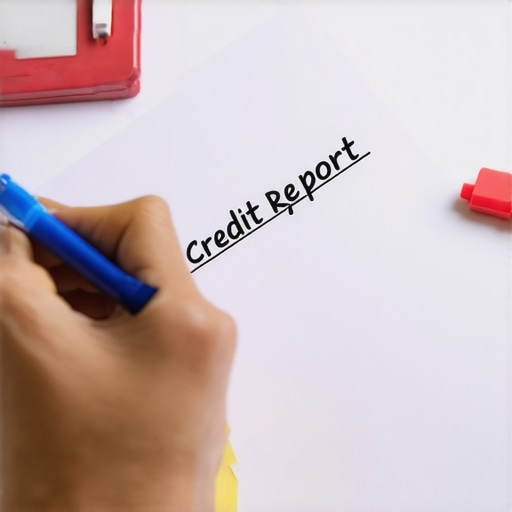
The Paper Trail That Actually Wins
If you have a balance that is just plain wrong, do not just complain; provide the math. I once had a credit card where I paid off a $500 balance, but the report showed it as still owing the full amount. I did not just send a generic letter; I sent the confirmation receipt and the bank statement with the specific transaction circled in red ink. Learning how to dispute an incorrect balance on a credit card statement isn’t about being right; it’s about making it impossible for the bureau to say you are wrong. The more physical evidence you provide, the harder it is for them to ignore your request.
Why You Should Never Give Up After the First Rejection
The bureaus will almost always send a ‘verified’ letter the first time you dispute something. It is their way of testing your resolve to see if you will just go away. I remember getting that first rejection letter and feeling like I had hit a brick wall, but that is where disputing errors effectively truly begins. You have to follow up. Demand their ‘Method of Verification.’ By law, they have to tell you who they contacted and how they verified the information. If they cannot provide that specific paper trail, they are legally required to delete the item from your profile.
The Snowball Effect of Small Wins
Start with the low-hanging fruit to build your confidence. When I cleared that first incorrect late payment, my score jumped 15 points. It wasn’t a home run, but it was enough to prove the system could be moved. From there, I moved on to more complex issues, like learning how to remove a closed account that is reporting incorrectly. Each deletion adds momentum to your journey. This is about building a case, piece by piece, until your report accurately reflects your financial responsibility. Do not be afraid to be a nuisance; it is your financial future on the line.Most people think that once they start seeing a few deletions, they are on the fast track to a 750. But here is the hard truth I learned after months of trial and error: the system has layers of traps designed to catch you just when you think you’re winning. A common belief is that signing up for a debt management plan is the ultimate ‘responsible’ move. While understanding credit counseling your blueprint for better finances is helpful for some, many people don’t realize that entering a program can sometimes be flagged by mortgage lenders in a way that mimics a Chapter 13 bankruptcy filing. It’s not always the clean slate it’s marketed to be.
Is the score you see the same one your lender sees?
The answer is almost always no. This is one of the most frustrating nuances of the industry. You might be checking an app every morning, but you’re likely looking at a VantageScore 3.0, while your auto lender is pulling a FICO Auto Score 8 or 9. I’ve seen people walk into a dealership thinking they had a 720, only to be told their ‘real’ lending score was a 660. Understanding the difference between your fico score and your real score is vital before you apply for high-stakes financing. 
Stop Trusting the Non-Profit Label Blindly
We are conditioned to think ‘non-profit’ means ‘on my side,’ but in the world of debt management, that isn’t always the case. Some agencies are actually funded by the very creditors you owe money to. I always tell my clients to look closely at the risks of using a non-profit credit counseling agency because their primary goal might be ensuring the bank gets paid, not necessarily maximizing your credit score. According to a report by the National Foundation for Credit Counseling (NFCC), while these programs can reduce interest, the notation that an account is ‘managed by a third party’ can stay on your report and spook certain manual underwriters. It’s a sophisticated trap that can stall your progress for years if you aren’t careful.
The Authorized User Trap That Could Sink Your Mortgage
Another ‘pro tip’ that often backfires is the authorized user strategy. Adding yourself to a high-limit card owned by a family member can give you a quick boost, but it’s a double-edged sword. If that family member suddenly maxes out the card or misses a payment, your score will plummet right along with theirs. Even worse, why your authorized user status might be hurting your mortgage odds often comes down to the fact that many modern lending algorithms ignore these accounts entirely if they suspect you’re just ‘piggybacking.’ This is why you need to focus on building your own primary accounts rather than relying on someone else’s history.
Why Your Credit Apps Are Giving You Mixed Signals
If you’ve ever wondered why your credit score might be different on every app you check, it’s because each one uses different models and data refresh cycles. Relying on a single app to gauge your readiness for a loan is a recipe for rejection. You need to be looking at the raw data in your reports, not just the flashy number at the top of a screen. Have you ever fallen into this trap or been surprised by a lender’s ‘real’ score? Let me know in the comments.It took me years to realize that the ‘set it and forget it’ mentality is why so many people see their scores plummet after a successful cleanup. When you finally hit that target number, you aren’t at the finish line—you’re just starting the maintenance phase. I personally rely on a simple, color-coded Google Sheet to track every single account, its reporting date, and the specific bureau it hits. I don’t just look at the score; I track the ‘Date of Last Activity’ for every negative item. While many people ask about the truth about credit repair software vs professional help, I find that a manual audit every 90 days is the only way to catch ‘re-insertions.’ This is when a deleted item sneaks back onto your report because a creditor resubmitted the data. If you don’t have your previous deletion letter ready to go, you’re back at square one. I use a dedicated scanner—not just a phone app—to digitize every piece of mail from the bureaus because those physical timestamps are your only defense in court if a bureau refuses to comply with the FCRA.
Why Your Smartphone Apps Are Failing You
I stopped trusting the push notifications on my phone a long time ago. Those apps are lead-generation machines for credit cards, not precision tools for builders. Instead, I go straight to the source. Every quarter, I pull my raw reports to look for how to stop credit bureau errors before they happen by verifying that my limits are reported correctly. If your bank lowers your limit and you don’t notice, your utilization spikes instantly. I’ve seen this happen to friends who thought they were safe just because they paid on time. I suggest keeping a paper log of your calls to customer service—record the date, the representative’s ID, and the outcome. This log is pure gold when you’re disputing errors effectively. 
How do I maintain my credit score over time?
Maintenance is about vigilance, not just avoidance. You have to keep your old accounts active without falling into the trap of new debt. I always tell people why you should keep your oldest credit card open forever even if it has a terrible rewards program; that age is your score’s anchor. Set a small recurring bill—like a $10 streaming service—on that old card and turn on auto-pay. This keeps the account ‘alive’ and reporting. As we move into 2025, the industry is shifting toward ‘Trended Data’ (FICO 10T), which looks at your payment patterns over 24 months rather than just a snapshot of today. This means consistency is more valuable than a one-time payment. According to a 2023 report by the Consumer Financial Protection Bureau (CFPB), the biggest failure in the system is the lack of human oversight during the dispute reinvestigation process. This is why you must become your own best advocate and never rely on the ‘easy’ path.
Force the Banks to Respect Your Paper Trail
If you’re serious about scaling your financial power, you need to be aggressive about how to ensure your credit limit increase is reported fast. Don’t wait for the automated cycle; call the bank and ask when they update the bureaus. This level of detail is what separates the ‘okay’ scores from the elite 800s. I challenge you to do one thing today: Send a ‘Request for Information’ to any creditor that recently updated your balance. Ask them for the exact date they sent that data to the bureaus. Knowing their reporting schedule allows you to time your large purchases perfectly so your score stays high while you’re carrying debt. This isn’t just about repair; it’s about mastering the ultimate blueprint for effective credit repair and keeping it that way. If you’ve been stuck, don’t just wait—take the initiative and why you should ask for a method of verification every time you see a ‘verified’ status that you know is wrong.
The Hardest Lesson I Learned While Fighting the Bureaus
Looking back at my journey from a 580 to the high 700s, I realized that the credit system isn’t actually designed to be fair; it is designed to be efficient for the banks. One of the most critical things I wish I knew on day one is that the ‘Verified’ response is often a gatekeeper. The credit bureaus frequently send an automated response saying an item is verified just to see if you will give up. If you have the physical proof, you must keep pushing. Accuracy is a legal requirement, not a suggestion, and you aren’t asking for a favor when you dispute errors effectively; you are enforcing your rights under the Fair Credit Reporting Act. I also learned that small victories lead to big momentum. Removing a single $50 collection can sometimes do more for your score than paying down a massive loan balance because it removes the ‘derogatory’ flag from your entire file.
The Tools That Actually Force Results
I didn’t get real results until I stopped using generic mobile apps and started using precision tools. If you are serious about following the ultimate blueprint for effective credit repair, you need a setup that creates an undeniable paper trail. [image_placeholder_5] My personal toolkit always includes the CFPB Complaint Portal for when a bureau ignores undeniable evidence, and a physical yellow legal pad for those hand-written letters that bypass automated OCR scanners. I also suggest focusing on credit score boosters like timing your payments before the statement closing date, which can gain you points without spending an extra dime. For complex cases, understanding how credit counseling can transform your financial future can provide the expert eye needed to spot legal violations you might have missed on your own.
Your Path to a 750 Score Starts with One Letter
I know how heavy it feels to be stuck behind a low number, living through rejections and the embarrassment of being told ‘no’ by a stranger in a suit. But your current credit score is just a snapshot of your past, not a prediction of your future. By mastering credit disputes and staying vigilant with your documentation, you can force the system to reflect the responsible person you are today. Don’t wait for the bureaus to ‘fix’ themselves—they won’t. Take the first step, send that first letter, and start reclaiming your financial power. Have you ever received a ‘verified’ response for an error you knew was 100% wrong? Let me know your story in the comments below.