

I will never forget the gut-punch feeling of my first mortgage rejection. I had a solid job, a decent down payment saved up, and a five-year record of never being even a day late on my $1,600 rent. But when the loan officer looked at my file, he saw a ghost. “Your profile is too thin,” he told me. I was furious. I had spent nearly $100,000 on rent over half a decade, but because that money went to a landlord instead of a bank, the credit bureaus didn’t care. It was a massive wake-up call that I was playing the financial game with one hand tied behind my back. I had to learn the hard way that you need to build credit without going into massive debt by making your largest monthly expense actually count toward your future.
Your Monthly Rent Check Is an Untapped Goldmine
The reality is that your rent is likely your biggest monthly outflow, yet for most of us, it remains totally invisible on our credit reports. When I finally discovered how to bridge that gap, my score didn’t just budge; it soared. Today, I am going to show you exactly how to stop being credit-invisible and start using your lease as a ladder to homeownership. We are going to fix the disconnect between your bank account and your credit file so you can boost your credit score and prove to lenders that you are a reliable bet. I made the early mistake of thinking the credit bureaus would just “find” my data eventually—they won’t. You have to be the one to put it in front of them.
Is rent reporting actually worth the extra effort?
I know what you are thinking. You are worried it is a gimmick or that it might backfire if you have a landlord who is difficult to work with. I had those same fears. I was terrified that if I tried to report my rent, it would somehow expose a tiny late payment from three years ago and tank my progress. But the data says otherwise. According to a report by Fannie Mae, positive rent reporting has helped thousands of renters establish the credit history necessary to qualify for a mortgage. This isn’t just a trend; it is a fundamental shift in how the industry views your financial reputation.
Stop Letting Your Best Financial Habit Go Unnoticed
If you are tired of watching your money disappear every month without seeing a bump in your score, you are in the right place. Most people miss out on their dream home because they don’t understand the key credit score factors every borrower must know, and rent history is the most overlooked piece of that puzzle. Have you ever felt like your credit score doesn’t actually tell the whole story of how responsible you are? I want to hear about it. We are about to change the narrative and make sure your landlord’s ledger becomes the key to your own front door.
Pick a Reporting Service That Actually Communicates with Bureaus
Your first move isn’t talking to your landlord—it is finding the right middleman. Most landlords are too busy to manually report data, so you need a service that plugs into your bank account and does the heavy lifting for you. Companies like RentTrack or LevelCredit act like a bridge; they verify your payment and then hand-deliver that data to the credit bureaus. When I first started this, I thought I could just send my bank statements to TransUnion and call it a day. It doesn’t work that way. You need a verified third party to vouch for you. Choosing a service that reports to all three bureaus is the ultimate tactic to improve your score in under thirty days because it maximizes the visibility of your good habits across the entire financial spectrum. 
Verify Every Entry Before It Hits the Bureaus
Once you are signed up, do not just set it and forget it. I learned this the hard way when I shifted from paying via an online portal to writing an old-fashioned paper check for one month. The reporting service missed the payment because their algorithm wasn’t looking for a check image. For sixty days, my score stalled because that ‘month of history’ was missing. I had to dive into the credit repair secrets proven steps to boost your credit score fast to realize that even one missing month can break your momentum. You must log in monthly to ensure your service is pulling the correct data. Think of your credit report like a garden; if you don’t pull the weeds and water the plants, nothing grows.
Clean Up the Mess When Your Data Goes Wrong
Sometimes the reporting service or the bureau gets it wrong. They might list your rent as a ‘new loan’ instead of an ongoing payment, which can actually cause a temporary dip. If this happens, you need to know how to dispute errors effectively a guide to correct your credit report. You aren’t just complaining; you are demanding accuracy. When my report showed a double-entry for my security deposit, it looked like I had taken out a high-interest loan. I had to use a specific paper trail to prove it was a one-time refundable deposit. Knowing how to mastering credit disputes a step-by-step guide to success is your primary defense against a messy file.
Force the Bureaus to Recognize Your History
Many services allow you to ‘look back’ at up to 24 months of previous rent payments. This is where the magic happens. Instead of starting from zero, you can suddenly drop two years of perfect history onto your report overnight. When I added my two-year look-back, my score jumped by 42 points in a single week. To do this right, you need to unlock your credit score potential expert tips for 2025 by ensuring your landlord is willing to sign a simple verification form. It is the closest thing to a financial time machine you will ever find.But even with a financial time machine, you can still trip over your own feet if you do not watch the terrain. Most beginners think they can just click a few buttons and watch their score climb, but that is exactly how you get stuck in a loop of denials. If you really want to move the needle, you have to look at the nuances that the ‘one-size-fits-all’ advice misses.
Why your keyboard is a trap during a dispute
The most common mistake I see people make is falling for the convenience of the credit bureau’s own website. Everyone says it is the easiest way to fix a mistake, but in my experience, using those shiny buttons is a massive strategic error. When you use those portals, you often inadvertently waive your right to a full investigation or the ability to re-dispute the same item later. This is exactly why online dispute portals are a trap for consumers who want long-term results. You lose the paper trail that a certified letter provides, and in the world of credit, if it isn’t on paper with a tracking number, it basically didn’t happen. By sending a physical letter, you force a human to actually look at your evidence rather than letting an algorithm dismiss you in seconds. 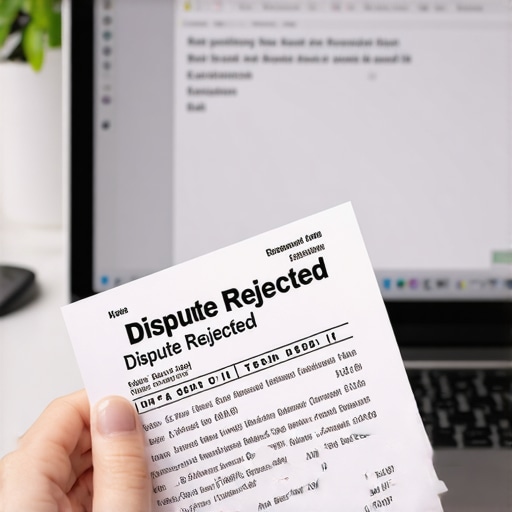
The hidden danger of paying off old debt
There is a persistent myth that paying off an old collection will immediately boost your score. I fell for this myself, thinking I was doing the ‘responsible’ thing by clearing a four-year-old medical bill. Instead, my score dropped 15 points. This happens because [the specific reason your fico score dips after a payoff] is often tied to how the scoring model views ‘recent activity.’ By making a payment, you essentially ‘wake up’ a sleeping debt, making it appear fresh to the algorithm. Instead of blindly paying, you should focus on how to dispute errors effectively a guide to correct your credit report or negotiate a ‘pay-for-delete’ agreement where the mark is removed entirely in exchange for payment. A study by the FTC found that one in five consumers had an error on at least one of their reports; do not assume the debt listed is even accurate to begin with.
How do you handle a bureau that refuses to budge?
Sometimes the standard letters just do not cut it. If you have sent evidence and the bureau sends back a generic ‘verified’ response, you are likely dealing with an automated system. This is when you need to stop playing nice and learn how to handle a credit bureau that ignores your evidence by escalating to the Consumer Financial Protection Bureau (CFPB). I have found that filing a formal complaint through the how to use the cfpb portal to resolve stalled disputes is the only way to get a real human to take your file seriously. It is about moving from a polite request to a legal demand.
Don’t let ‘non-profit’ labels fool you
When your debt feels overwhelming, you might be tempted to call a credit counseling agency. But be incredibly careful. Not all of these organizations have your best interest at heart. You must understand the difference between non-profit and for-profit counseling before you give them access to your accounts. Some ‘non-profit’ groups are actually funded by the very credit card companies you owe money to, which means their advice might lean toward making sure the bank gets paid rather than helping you settle for less. I have seen readers join a debt management plan only to realize later that the agency was taking a massive fee and marking their payments as ‘partial,’ which trashed their credit score for years. Have you ever fallen into this trap where you thought you were helping your score but it actually dropped? Let me know in the comments.Once you have cleared the major hurdles, the real work begins—maintenance. I do not rely on those free apps that only update once a week. I built my own command center because the truth about how often your score actually refreshes is that it happens at different times for every single creditor. If you are waiting for a notification from a third-party app, you are already behind. I use a simple encrypted spreadsheet to log my balances on the 25th of every month, five days before most of my cards report to the bureaus. This allows me to see my utilization before the rest of the world does. If I see a spike, I pay it down immediately. It is about being proactive rather than reactive. The most powerful tool in my arsenal isn’t software; it is the law. Whenever a bureau refuses to remove an error after my first letter, I do not just send the same thing again. I send a demand letter and why you should ask for a method of verification every time becomes my secret weapon. I want to see the name of the person they spoke to at the collection agency and the date of that conversation. According to the Consumer Financial Protection Bureau’s (CFPB) Supervisory Highlights, many furnishers fail to conduct reasonable investigations into disputes. When you demand the method of verification, you are essentially checking their homework. Most of the time, they cannot provide it, and the negative item falls off by default. 
How do I maintain my credit momentum for the long haul?
Consistency is the boring secret to a high score. You have to treat your credit report like a vital organ. I personally set a calendar alert for every 90 days to perform a deep scrub. This is where I check for small, pesky errors like a misspelled address or an old phone number. These seem minor, but they are the tiny errors on your report that cost thousands because they can link your profile to someone else’s bad debt. I also make sure that why a credit freeze is your best defense against identity theft is active on my files whenever I am not actively applying for a loan. It prevents anyone from opening a new account in my name while I am sleeping. Looking forward, the game is changing. We are moving toward trended data with models like FICO 10T and VantageScore 4.0. Lenders will not just look at what your score is today; they will look at your financial trajectory over the last 24 months. They want to see if you are paying down or layering on debt. This means you cannot just fix your score for a month to get a loan; you have to prove a lifestyle of responsibility. This is where the hidden data points that lenders use beyond your score become the new frontier of credit health. My advice? Start the method of verification tactic on your oldest negative mark this week. Do not wait for the bureaus to play fair—force them to be accurate.
The Brutal Truths I Learned While Playing the Credit Game
One of the hardest pills to swallow was realizing that traditional financial virtue doesn’t always translate to a high score. I used to think paying off every debt immediately was the gold standard, but I quickly learned the specific reason your fico score dips after a payoff often comes down to losing that active, positive payment history. Another shocker? Small, quiet bills can do the most damage. I have seen people maintain a decade of perfect rent history only to have it overshadowed because your score dips after you open a new utility account or ignore a tiny, forgotten medical charge. The most important lesson, however, is that the bureaus are not your friends—they are data aggregators. If you do not advocate for yourself by mastering credit disputes a step-by-step guide to success, no one will protect your financial reputation for you.
My Go-To Kit for Keeping My Score in the 800s
If you are ready to get serious, stop relying on automated apps. My personal toolkit consists of three non-negotiables. First, I always keep a template for a physical dispute letter; because online dispute portals are a trap for consumers, a paper trail is your only real leverage. Second, I regularly study the science of credit repair expert advice to elevate your score to stay ahead of algorithm shifts like trended data. Finally, I keep a dedicated folder for all my rent receipts and verification forms. Having these organized means I can how to dispute errors on your credit report and improve score with cold, hard facts instead of feelings. These tools turned me from a credit ghost into a prime borrower.
Stop Renting Your Reputation and Start Owning It
You have worked too hard and paid too much in rent to remain invisible to lenders. By making your largest monthly expense work for you, you are not just building a number; you are building a bridge to your future home. It takes a little bit of setup and a lot of consistency, but you can boost your credit score in 2025 if you start reporting your history today. Don’t let another rent check go unrecorded. Have you ever tried a rent reporting service, and did you see the jump you were expecting? Let me know in the comments below!