

I remember sitting in a car dealership back in 2018, sweating under the fluorescent lights while clutching a printout of my 720 credit score. I felt like a king. I’d spent months figuring out how to boost my score in 2025, and I was ready to drive off in a shiny new SUV with the lowest interest rate possible. Then the finance manager walked back in, looking more like a sympathetic uncle than a closer. He told me my rate was going to be 9%. I nearly choked on my complimentary coffee. “My score is great!” I argued. He sighed and told me that while my score was high, my recent account history looked like a frantic shopping spree. That was my first hard lesson in the reality that lenders see way more than just three digits. [image-placeholder] Most of us are taught to worship the FICO, but we ignore the data trails we leave behind. Today, I’m going to show you how to look past the number and see what the banks are really looking at when they decide your financial fate.
The Day My 720 Score Failed Me at the Dealership
Lenders are like private investigators, and your credit score is just the first lead they follow. They dig into things like your debt-to-income ratio, the types of credit you use, and even how long you’ve lived at your current address. I made the classic mistake of opening three new retail cards for the discounts right before I went car shopping. Even though my score stayed high, I looked unstable to the bank. It turns out, there is a massive difference between your FICO score and your real score that lenders actually use for approval. According to the Consumer Financial Protection Bureau, many lenders now use customized internal risk scores that weigh your specific payment patterns more heavily than the generic number you see on your dashboard. This is exactly why your credit score might be different on every app you check. These ‘hidden’ data points can include your employment history and even how often you’ve requested a credit limit increase. If you aren’t careful, you might be accidentally trying to dispute errors that don’t matter while ignoring the behavioral triggers that actually scare lenders off. Have you ever been blindsided by a loan denial despite having what you thought was a ‘safe’ score?
Can You Really Trust the Number on Your Banking App?
It’s tempting to think that as long as that little dial is in the green, you’re golden. But that’s a dangerous assumption that I had to unlearn the hard way. I used to obsess over every point, but I didn’t realize that how a small balance on too many cards can destroy your chances of a mortgage, even if your total debt is low. It creates a profile of ‘credit hunger’ that makes banks nervous. Today, we’re going to peel back the curtain and look at the invisible data points—the ones they don’t teach you in school—so you can stop guessing and start borrowing with real confidence. We need to look at key credit score factors every borrower must know before they ever set foot in a bank. It’s not just about ‘repairing’ credit; it’s about managing your financial reputation. I’ll walk you through how to audit your own report for these silent killers, from the way your authorized user status might be hurting you to the specific way you handle automatic payments. Let’s get into the nitty-gritty of what’s actually happening behind the scenes.
Strip Your Credit Report Down to the Bare Bones
You can’t fix what you haven’t truly seen. Most people just glance at their score on a colorful app, but you need to act like a forensic accountant. I remember the first time I did a deep dive—I found a ghost address from three states over that I’d never even visited. It turned out my file had been merged with a distant relative who shared my first name. If I hadn’t learned how to fix a credit file that has been merged with a relative, that guy’s missed car payments would still be dragging me down today. You need to look for these tiny, silent killers. Start by checking every single name variation and address listed. If you find something that isn’t yours, don’t just hope it goes away. You need to use the ultimate blueprint for effective credit repair to systematically remove those anchors before you ever apply for a major loan.
The Right Way to Fight a Bureaucratic Giant
When you find an error, your first instinct is to hit that dispute button on a banking app. Stop. That’s exactly what the bureaus want you to do because it often forces you to waive your right to a thorough manual investigation. I learned the hard way that why online dispute portals are a trap for consumers. They use automated scanners that can dismiss your claim in seconds based on simplified logic. Instead, you need to go old school. Sending a physical letter with a clear paper trail is the method for beating automated dispute scanners at the bureau. I once spent three months arguing with an online portal over a $50 medical bill that wasn’t mine, only to have it deleted in ten days once I sent a certified letter. This isn’t just about being stubborn; it’s about the science of credit repair and knowing which levers to pull. #IMAGE_PLACE_HOLDER_B#
Pick a Partner for Your Financial Clean-up
If the mess feels too big to handle alone, you might look into professional help, but be careful where you step. There is a massive difference between non-profit and for-profit counseling. I’ve seen people sign up for relief programs that actually tanked their scores by advising them to stop paying bills entirely. Before you sign anything, you need to know how to dispute errors effectively on your own first, so you aren’t paying someone to do something you can do better. If you go the counseling route, ensure they are teaching you how to manage your debt, not just shuffling it around. While you’re cleaning up the past, don’t forget to fuel the future. Make sure you know how to ensure your credit limit increase is reported fast to help balance out your utilization ratios while the disputes are processing. Every positive data point acts as a counterweight to the negative ones you are fighting to remove.
Most people think a ‘Paid Collection’ is a badge of honor, but it’s often a trap. Everyone tells you to settle your debts to fix your score, but in my experience, settling can actually backfire if the timing is wrong. If you pay a collection that hasn’t been touched in years, you might inadvertently update the ‘Date of Last Activity.’ This tells the scoring algorithm that this negative event is ‘new’ again, which can cause an immediate drop in your points. You need to use the science of credit repair to determine if it’s better to wait it out or negotiate a specific ‘pay-for-delete’ agreement. I’ve seen clients wipe thousands in debt by knowing the strategy to wipe a collection without paying a dime simply by challenging the legal right of the collector to report it. According to a study by the National Consumer Law Center, collectors often lack the proper documentation for older debts, yet consumers keep paying them out of fear. You should always demand the proof needed to delete a collection that is past the statute of limitations before you even think about opening your wallet. 
Why did my score drop after I finally paid off my biggest loan?
This is the question that keeps most borrowers up at night. You finally finish paying off that 60-month auto loan and expect a victory lap, only to see your score tank by 20 points the next month. It feels like a betrayal. The reason is simple but annoying: credit mix and age. When you close an installment loan, you lose an active ‘credit type’ and sometimes shorten the average age of your open accounts. It’s a nuance that highlights the specific reason your fico score dips after a payoff. To prevent this, you should have other lines of credit aging in the background. If you’re currently in the middle of a major purchase, it might actually be better to wait until the keys are in your hand before making that final payment. This is why following the ultimate blueprint for effective credit repair is about more than just deleting negatives; it’s about timing your positives.
Avoid the High-Priced Rapid Rescore Trap
When you’re at the finish line of a mortgage, your loan officer might suggest a ‘rapid rescore’ to bump you up a few points. Watch out. This is a classic ‘oops’ factor for many. While it sounds great, you should often avoid rapid rescore services for small gains because they are expensive and can be hit-or-miss. I’ve seen people spend hundreds only to find that the bureau’s automated system rejected the update anyway. You are better off learning how to dispute errors on your credit report and improve score using standard, federally protected methods that don’t cost a premium. Remember, the goal isn’t just a temporary bump; it’s a permanent fix. Have you ever fallen into this trap or been blindsided by a score drop you didn’t expect? Let me know in the comments, and let’s figure out your next move together.
The work doesn’t stop once the deletions hit your report. After you have successfully used the science of credit repair to scrub the junk off your profile, you might be tempted to put your feet up. That is a massive mistake. Credit is a living, breathing entity that requires regular tuning. I personally rely on a dedicated digital workflow to keep my reputation pristine. I set up micro-alerts on every major account that trigger the moment my utilization on any single card crosses 9%, rather than the standard 30% that most generic advice suggests. Why? Because by the time you hit 30%, the algorithm has already flagged you as a higher risk. This proactive approach is one of the top credit repair strategies to boost your score faster because it focuses on preventing damage before it ever happens. I also maintain a physical ‘Dispute Bible’—a simple binder where I log every tracking number and certified mail receipt. Bureaus are notorious for losing paperwork, and having that physical paper trail is your only real defense. 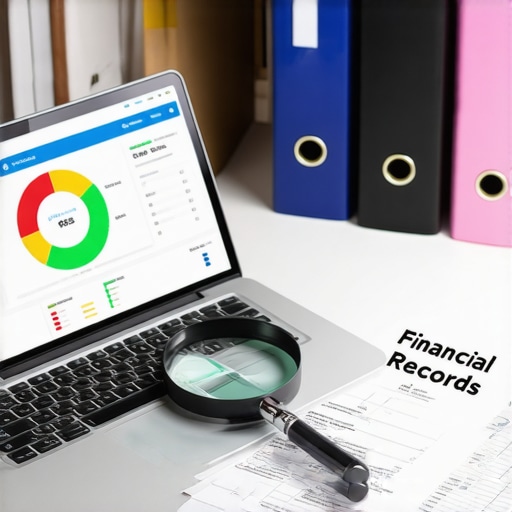
How can I keep my score from sliding backwards?
Consistency is the only thing that consistently beats the algorithm over a ten-year span. I have found that understanding credit counseling is not just a tool for those in deep financial trouble; it is actually a blueprint for anyone who wants to scale their borrowing power. You should be performing a ‘deep-dive’ audit of your own reports every 90 days. If you spot a new ‘zombie’ debt or an inquiry you didn’t authorize, you must know how to dispute errors on your credit report and improve score immediately. Speed is your greatest ally. According to the FICO 10T technical specifications, which many top-tier lenders are now adopting, the system is moving toward ‘trended data.’ This means the bureaus are now looking at your payment behavior over a rolling 24-month window. It is no longer enough to just have a good score today; you need to show a stable pattern of behavior over the last two years.
The Future of Lending is Watching Your Every Move
We are entering an era where AI-driven scoring models do not just look at what you owe, but how you spend. I predict that within the next few years, ‘behavioral scoring’ will become more influential than your actual balance. Lenders will begin analyzing whether you pay your utility bills the day they arrive or wait until the final hours of the grace period. This is why you need to master credit counseling techniques to automate your financial life and remove the human element of forgetfulness. Stop looking at your score as a trophy you won and start viewing it as a utility that needs regular maintenance. If you want to scale your wealth and access the lowest rates, you have to improve your credit score with proven repair techniques in 2025 that anticipate these technological shifts. Try this advanced tip today: Download your full raw data file from AnnualCreditReport.com and search for the ‘Date of Last Activity’ on every closed account. If that date has been recently updated on an old debt, it is a reporting error that is actively dragging you down. Catching these tiny leaks is what separates the 700s from the 800s.
What the Scoring Algorithms Won’t Tell You
I’ve spent years obsessing over those three little numbers, only to realize that the ‘behavioral fingerprint’ I leave behind matters more than the score itself. One major lightbulb moment was discovering that the science of credit repair isn’t just about deleting old mistakes; it’s about rewriting the narrative the banks see. Another hard truth: speed is a weapon. If you don’t dispute errors on your credit report the moment you see them, you’re essentially giving the bureaus permission to keep dragging you down. Lastly, remember that a high score with a ‘thin’ file is often viewed more suspiciously than a lower score with a decade of diverse history. Stability is what lenders crave, and that only comes with time and a clean paper trail.
The Tools That Saved My Financial Reputation
If you’re ready to get serious, you need more than just a free app. I recommend starting with the ultimate blueprint for effective credit repair to map out your journey. For those feeling overwhelmed by debt, an ultimate guide to credit counseling can provide the structure you need to stop the bleeding. I also swear by a physical ‘Dispute Bible’—a simple binder for your certified mail receipts and tracking numbers. Without proof of delivery, the bureaus can simply ignore your hard work. Finally, use the CFPB portal as your ‘big stick’ when lenders refuse to play fair; it’s the most underutilized tool in the consumer arsenal.
Your Path to Financial Sovereignty Starts Today
Rebuilding your credit isn’t a sprint; it’s a strategic long-game that sets the foundation for your future wealth. Whether you’re looking to boost your credit score in 2025 for a new home or just want the peace of mind that comes with a clean record, the power is entirely in your hands. Don’t let the complexity of the system intimidate you into inaction. You now have the insider knowledge to look past the number and take control of your financial destiny. Have you ever found a weird error on your report that felt impossible to remove? Let me know in the comments below!