

I still remember sitting in that sterile loan officer’s office, sweating through my shirt because my FICO score was exactly three points shy of the “Preferred” interest rate. He leaned in, whispered about a “Rapid Rescore,” and made it sound like a secret handshake into the financial elite. I paid the fees, waited breathlessly for 72 hours, and… I got exactly two points back. Two points. I paid fifty bucks a point for a score that still left me in the high-interest basement. It was the most expensive “nothing” I’ve ever bought. I felt cheated, not by the lender, but by my own desperation. We’ve all been there—staring at a screen, wondering why your credit score might be different on every app you check, and hoping for a miracle. Today, I’m going to show you why that “miracle” rescore is often a trap for small gains and how you can actually move the needle without lighting your cash on fire.
Stop Chasing the Three-Point Dragon with Your Wallet
The allure of the rapid rescore is powerful, especially when a house or a car is on the line. It promises to bypass the standard 30-day reporting cycle by having a lender manually submit proof of a balance change or a deleted error directly to the bureaus. But here is the cold, hard truth: if you are looking for a massive jump, you are looking in the wrong place. I made the classic mistake of thinking speed equaled power. I didn’t take the time to read my credit report like a professional auditor to see that my report was already optimized for the most part. The rescore only works if there is new information to report; it doesn’t magically inflate your worthiness. Have you ever felt like you were paying for a “fix” that ended up doing absolutely nothing for your loan approval?
Is a Rapid Rescore Really Just a Paid Shortcut to Nowhere?
Many folks are skeptical, and they should be. If you’re only looking for a 5 or 10-point bump, the cost-to-benefit ratio is usually abysmal. According to data from FICO, while credit reporting accuracy is vital, the scoring models themselves are incredibly sensitive to the total picture of your debt, not just a single balance update. You might pay for a rescore only to find the reason your score did not jump after paying off your cards was that other factors, like your average account age, were pulling you down. Instead of paying a middleman, you could often achieve better results by learning how to get a credit limit increase without a hard credit pull. It’s about being smarter with the data, not just faster with the delivery.
Clean Up the Foundation Before Building the House
If you want real movement, you have to stop treating your credit report like a static document and start treating it like a high-stakes negotiation. The first move is never to pay a lender for speed; it is to dispute errors like a pro by identifying the structural cracks in your file. I remember a time I found a $400 collection from a gym I hadn’t visited in three years. I tried the lazy route first—clicking buttons on the credit bureau’s website. I did it four times over two months. Each time, I got a generic ‘verified’ response within minutes. It was infuriating. I finally realized that why you should never use an online portal to dispute errors is because those systems are essentially automated ‘no’ machines. They are designed to preserve the status quo, not to help you. I eventually sat down, printed my reports, and used the document-checklist for a successful credit dispute to craft a physical letter. That single shift from digital to paper was the turning point.
Why Your Printer is Your Best Credit Repair Tool
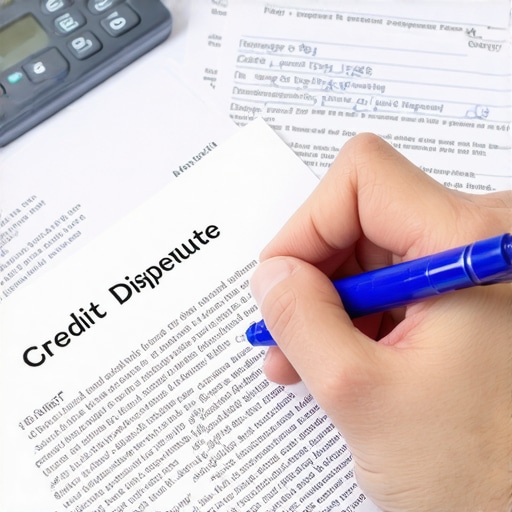
When you send a physical, certified letter, you are forcing a human being or a sophisticated compliance process to engage with your evidence. Think of an online dispute like shouting into a hurricane—no one hears you and nothing changes. A certified letter is like hand-delivering an eviction notice to a bad tenant; it creates a paper trail that the bureaus cannot ignore. You need to use the method for beating automated dispute scanners at the bureau by varying your font, using blue ink, and including specific proof that contradicts their records. If they can’t verify the data with 100% accuracy, the law says it must go. I’ve seen entire records of late payments vanish simply because the date of the last activity was off by three days. Precision is your leverage.
Play the Consolidation Game to Outsmart the Algorithm
Next, you have to master the math of your ‘debt-to-limit’ ratio. Most people think paying a card down to zero is the ultimate goal, but the algorithm is pickier than that. I once had five different credit cards, all with balances under $50. I thought I was being responsible until I learned why small balances on multiple cards hurt your score more than one large one. The FICO model looks at the percentage of your accounts that carry a balance. Having five out of five accounts ‘active’ with debt, even if it’s just the price of a pizza, makes you look like a higher risk. I moved all those tiny balances to one card and left the others at zero. My score jumped 18 points in three weeks. It wasn’t about the total amount of money; it was about the simple move to improve your credit mix and density. You also need to verify that your lenders are reporting your limits correctly; if you need to, learn how to dispute an incorrect balance on a credit card statement to ensure your utilization isn’t being artificially inflated by lazy reporting.
Let’s dig deeper into the mechanics of the credit bureau, where common sense often leads to financial self-sabotage. Most people assume that paying off an old, dusty collection is an automatic win for their score. It seems logical—you owe money, you pay it, and your reputation improves. But in the world of FICO, logic often takes a backseat to the ‘Date of Last Activity.’ When you pay a five-year-old collection, that account suddenly updates to the current month in the eyes of the reporting system. To the algorithm, it looks like a brand-new delinquency, which can cause a sudden, sharp drop. In my experience, you should never pay a debt buyer without verification first. You need to confirm the debt is legally collectible before you accidentally refresh a negative mark that was nearing its expiration. According to the Consumer Financial Protection Bureau (CFPB), many consumers are misled into thinking that paying a debt ‘erases’ the history, when the negative mark actually remains for seven years regardless of the balance. Have you ever paid a debt only to see your score plummet? Let me know in the comments. 
Why Do ‘Non-Profit’ Labels Hide So Many Financial Traps?
The ‘non-profit’ tag acts like a shield that prevents people from asking the right questions. We are taught to trust these entities, but why nonprofit credit counselors might be hurting your score is often tied to how they manage your accounts. When you enter a Debt Management Plan (DMP), the counselor may negotiate lower rates, but they often require you to close your accounts. This destroys your ‘length of credit history’ and ‘credit mix,’ two factors that represent 25% of your score. I’ve seen clients lose 50 points in a month because they followed a counselor’s advice to close their oldest cards. Instead of blindly following a plan, you need to learn how to avoid common pitfalls in credit counseling programs by keeping your oldest lines of credit open while you settle the balances.
Clear Your Dispute Comments Before You Apply for a Home Loan
The most dangerous ‘oops’ factor I see with advanced DIY-ers is the ‘Account in Dispute’ comment. When you dispute errors like a pro, the bureau adds a note to the account. If you apply for a mortgage while that note is active, the lender’s automated underwriting system (AUS) often cannot generate a valid risk assessment. This can stall your closing for weeks. You must understand the difference between a factual dispute and a general denial and ensure those comments are removed before a lender pulls your file. Mastering these credit score boosters requires more than just sending letters; it requires timing your moves like a grandmaster. You need to leverage the proof needed to delete a collection that is past the statute of limitations to ensure your report is clean and compliant before the bank ever sees it.
Once you’ve cleared the debris of old errors, the real challenge begins: keeping the machine running without constant supervision. I don’t use those free ‘credit monitoring’ apps for anything more than a rough estimate because their VantageScore models are often wildly different from what a lender actually sees. For the heavy lifting, I rely on myFICO. I pay for it because it’s the only place I can see my actual mortgage-ready scores across all bureaus. It’s like having the teacher’s edition of a textbook before the final exam. If you want to boost your credit score in 2025 with top strategies that work, you need the same data your lender uses, not a dumbed-down version designed to sell you high-interest cards.
Build a Financial Fortress That Repels Errors Automatically
Maintenance isn’t just about paying bills on time; it’s about defensive architecture. I personally use a ‘Credit Freeze’ as my primary security layer. Most people think it’s only for identity theft victims, but I treat it like a deadbolt on my financial life. It prevents the bureaus from selling your data to ‘trigger lead’ lists and ensures no one—not even a persistent debt collector—can sneak a new inquiry onto your file without you knowing. This is part of the science of credit repair; you must control the flow of information before it controls you. I also recommend setting up ‘Balance Alerts’ for every card you own at the $100 mark. This prevents that ‘accidental’ high utilization that happens when a large annual subscription hits a card you rarely use.
How do I maintain a high credit score over time?
The secret is the ‘Quarterly Audit.’ Every three months, I pull my raw data and look for ‘soft errors’ like an incorrect employer name or an address I haven’t lived at in a decade. These seem minor, but they are the data points used to ‘verify’ fraudulent accounts later on. By keeping your personal information section pristine, you make it much harder for ghost debts to attach to your profile. If you do find something, you must dispute credit errors swiftly and securely to prevent them from anchoring your score. According to the National Consumer Law Center (NCLC), nearly 25% of credit reports contain errors serious enough to affect a consumer’s access to credit. You cannot afford to be passive.

The Future of Credit is Moving Toward Trended Data
Looking ahead, the industry is shifting toward FICO 10T and VantageScore 4.0, which look at ‘trended data.’ This means the algorithm isn’t just looking at your balance today; it’s looking at whether you are paying down debt or accumulating it over the last 24 months. The old trick of ‘paying it all off the day before the statement closes’ won’t be enough soon. You’ll need to demonstrate a consistent downward trend in your balances. This is why I tell everyone to improve your credit score with proven repair techniques now, while the older models are still the standard. If you get caught in a loop of automated denials, you need to learn how to stop the automated rejection loop in your next dispute by escalating to a formal consumer complaint through the CFPB. Go ahead and freeze your credit reports today—it takes ten minutes and provides more security than any paid ‘monitoring’ service ever could.
The Hardest Truths I Learned Fighting for My FICO Score
After years of navigating the bureaucratic maze of credit reporting, I’ve realized that the system isn’t designed for your convenience. Here are the lightbulb moments that changed my approach forever: First, time is your most valuable asset, but only if you use it to build a paper trail. Second, the ‘verified’ response from a bureau is often just an automated placeholder, not a final verdict. Third, your score is a living reflection of data, and if you change the data, the score must follow. I finally stopped looking for shortcuts and started applying credit repair secrets that focused on long-term accuracy rather than temporary jumps. Have you ever felt like you were shouting into a void when dealing with the bureaus?
The Only Tools I Trust to Guard My Credit
You don’t need a dozen apps to manage your financial reputation; you just need the right ones. I personally rely on myFICO for the most accurate data because it provides the actual versions used by mortgage and auto lenders. For the heavy lifting of cleanup, I always suggest people master credit counseling concepts to understand how debt management affects their profile. I also keep a physical folder for every certified mail receipt—this is the only evidence that holds up if you have to escalate a dispute. If you’re just starting, use this guide to correct your credit report as your primary manual. These resources are what I use to stay ahead of the reporting cycle every single month.
Start Rewriting Your Financial Future Today
Your credit score is not a permanent grade on your character; it is a fluid reflection of the information currently available to the bureaus. By taking these steps—disputing with physical mail, managing your card density, and watching for trended data—you are moving from a passive observer to an active manager of your wealth. Whether you are implementing fast credit repair tips for a quick win or playing the long game, the most important thing is to simply begin. You have the tools, the strategies, and the knowledge to build a score that opens doors instead of closing them. Have you ever successfully removed a negative item from your report using a physical letter? I’d love to hear your success story in the comments below!