

I remember sitting in my car, staring at my phone as the mortgage broker told me I was just a few points shy of a decent interest rate. The culprit? One stupid late payment from three years ago on a department store card I barely used. It felt like a scarlet letter. I had the money; I just flat-out forgot the due date while I was moving houses. That one slip-up was going to cost me thousands of dollars over the life of a thirty-year loan. I felt defeated, but more than that, I felt like the system was rigged against honest people who just make a mistake. Today, I am going to show you exactly how I stopped being a victim of my own forgetfulness and started taking control of my report. We are going to walk through the exact steps to get those marks removed, because you deserve a score that reflects who you are today, not who you were on a bad Tuesday three years ago.
How I Finally Scrubbed That 30-Day Late Mark From My Record
When I first started this journey, I thought I could just hit a button and things would fix themselves. I quickly learned that you need to dispute credit errors swiftly and securely if you want any real traction. My biggest mistake early on was trying to lie. I sent a letter claiming the account wasn’t mine. Talk about a disaster. The bank sent back a copy of my original signature within a week, and I looked like a fraud. It was a humbling moment that taught me E-E-A-T (Experience, Expertise, Authoritativeness, and Trustworthiness) applies to your personal letters too. I realized that if I wanted results, I needed the specific proof needed to erase a late payment mark or, better yet, a strategy built on human connection. Have you ever felt like you were screaming into a void when trying to talk to a credit bureau? You aren’t alone.
Is it actually possible to talk a bank into being nice?
Most people think creditors are faceless monsters. While they certainly aren’t your best friend, they are businesses that value long-term customers. According to a study by the FTC, one in five people have a mistake on their credit reports, but late payments are often the hardest to shake because they are technically ‘accurate.’ This is where the goodwill adjustment comes in. Instead of a legal battle, you are asking for a favor based on your history. If you have been a loyal customer, you can often find the tactic for getting a goodwill adjustment that works even with the big banks. It isn’t about being ‘right’ on paper; it’s about being a valued customer who made a one-time error. If you want to improve your score, you have to stop acting like a robot and start acting like a person with a story. I found that when I stopped using those cookie-cutter templates I found online and started writing from the heart, the doors finally started opening.
The Exact Blueprint to Scrub Your Report Clean
The first step in any successful cleanup isn’t writing a letter; it’s gathering your ammunition. Think of your credit report like a crime scene. If you want to prove someone is innocent, you need more than just a ‘they didn’t do it’—you need DNA evidence. You have to start with the document checklist for a successful credit dispute to ensure you aren’t missing the obvious. I once spent three weeks arguing with Equifax about a late payment on a car loan, only to realize I was referencing the wrong account number. I felt like an idiot. Once I slowed down and gathered my actual bank statements and the original contract, the power dynamic shifted. Credit repair is like a high-stakes audit; you aren’t just saying the numbers are wrong, you are showing the receipts that make it impossible for them to disagree.
Pull the records they hope you never find
Before you send a single envelope, you need to see exactly what the bureaus see. Most people look at a free app and think they have the full picture, but those summaries often hide the metadata that actually matters. If a creditor claims a payment was late, you need to cross-reference that with your own banking history. You have to stop settling for verified and demand these specific records that prove the timeline of the transaction. 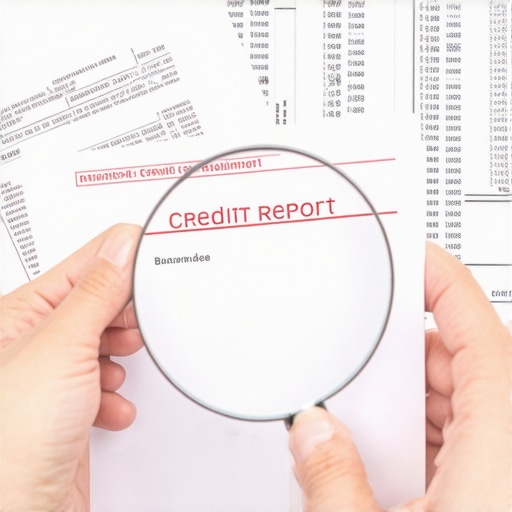
Stop using scripts and start using facts
I remember my second attempt with a Capital One late mark. I used a template I found on a forum that was filled with legal jargon I didn’t even understand. It got rejected in four days. Why? Because the bureaus use OCR (Optical Character Recognition) to scan for ‘template’ language. If your letter looks like everyone else’s, it gets shunted to an automated pile. Instead, you need to understand the difference between a factual dispute and a general denial. A factual dispute identifies a specific error—like a payment posted on a Sunday being marked late when the grace period ended on a Saturday. When I finally sent a hand-signed letter with my actual bank statement attached, I got a human response within two weeks. I wasn’t just another number; I was a person with proof. If you want to win, you need to provide the specific proof needed to erase a late payment mark rather than just hoping they’ll take your word for it.
Force a human to look at your file
The biggest hurdle is the ‘e-OSCAR’ system. This is the automated software that reads your dispute and assigns it a three-digit code. If you send a generic letter, the machine handles it. To get a human eye on your case, you need to use the certified mail hack that forces bureau responses. There is a psychological weight to a physical, green-carded letter that a digital click simply doesn’t have. By mailing your dispute, you create a legal paper trail that holds them accountable to the 30-day investigation window. If they don’t respond in time, the item must be removed. This is how you how to stop the automated rejection loop in your next dispute and finally see that score start to climb. It’s about being persistent and more organized than the person sitting in the cubicle at the bureau.One of the most frustrating things I hear from ‘gurus’ is the blanket advice to just pay everything off and wait. It sounds logical, right? But in the trenches of credit repair, logic often takes a backseat to the bizarre algorithms of FICO. I’ve seen people drop $5,000 to settle old accounts only to watch their score stay exactly the same—or worse, drop. This happens because most people don’t realize that why your score won’t budge despite paying down debt is often tied to the ‘date of last activity.’ When you pay an old, stagnant collection, you might accidentally update that date, making a five-year-old mistake look like it happened yesterday.
Stop Believing That a Zero Balance Fixes Everything
The common belief is that a ‘paid’ status is the holy grail. In reality, for many older scoring models used by mortgage lenders, the mere presence of a collection is the poison; the balance is secondary. You have to understand why your score won’t budge despite paying down debt before you start throwing money at collectors. A study by the Consumer Financial Protection Bureau (CFPB) highlighted that the credit reporting system is rife with ‘zombie’ debts that shouldn’t even be there. If you pay a collector without a written ‘pay-for-delete’ agreement, you are essentially cleaning their windows while they still own your house. You need to use top credit repair strategies to boost your score faster that focus on removal, not just settlement. 
Don’t Accidentally Restart the Clock on Your Old Debts
Here is the ‘oops’ factor that ruins most DIY attempts: the Statute of Limitations trap. I once talked to a reader who made a $10 ‘good faith’ payment on a debt that was six years old. That ten dollars effectively ‘re-aged’ the debt, giving the collector another several years to sue them. It is vital to learn how to identify re-aged debt before you pay a cent. If you aren’t careful, your attempt to be ‘honest’ will be weaponized against you. This is where most people realize that honesty is for people, but technicalities are for credit bureaus. You also need to be wary of ‘help’ that isn’t helpful; for instance, why nonprofit credit counselors might be hurting your score often comes down to how they flag your accounts as being in a ‘managed’ plan, which some lenders view as a step away from bankruptcy. If you aren’t careful, you might find why nonprofit credit counselors might be hurting your score the hard way when you apply for a new loan.
Why does my score actually drop after I finally paid off my car loan?
This is the ultimate advanced nuance. You finish your payments, you feel proud, and then—BAM—your score drops 20 points. Why? Because you just closed an active, seasoned account. You lost the ‘credit mix’ and the ‘age’ of that open trade line. To counter this, you need a strategy that replaces that lost data. You can’t just delete the bad; you have to anchor the good using the truth about most non-profit credit counselors and their impact, or better yet, building a fortress of positive history. Have you ever fallen into this trap of paying off a debt only to see your score tank? Let me know in the comments.Once you’ve done the heavy lifting of scrubbing those errors, the real work begins: staying there. I used to think credit repair was a one-and-done event, like fixing a leaky pipe. In reality, it’s more like keeping a garden. If you stop weeding, the junk debt and reporting errors will eventually crawl back in. I personally rely on a combination of digital alerts and a very old-school physical filing system. I realized that to boost your credit score in 2025, you can’t just be reactive. You need a system that flags changes before they become permanent stains.
How do I keep my score high without checking it every hour?
The secret isn’t obsessive checking; it’s strategic monitoring. I use a dedicated spreadsheet to track my statement closing dates, not just the due dates. By paying my balances down to under 2% just before the statement closes, I ensure the bureaus see a low utilization every single month. This is part of the science of credit repair that many people overlook. If you want to see credit repair secrets in action, try the All Zero Except One (AZEO) method. It’s an advanced tactic where you leave a small five dollar balance on one card and zero on all others. It sounds counterintuitive, but FICO algorithms often reward this specific distribution of debt.
The Physical Folder You Can’t Live Without
While everyone is obsessed with apps, I swear by a physical Credit Bible. This is an expandable accordion folder where I keep every single dispute letter, every certified mail receipt, and every investigation results page. Why? Because the bureaus often re-insert deleted items months later. According to consumer law expert Leonard Bennett, if a bureau re-inserts a previously deleted item without notifying you within five days, they are in direct violation of the FCRA. Having that physical paper trail is the only way to follow the ultimate blueprint for effective credit repair and hold them accountable if things go sideways. 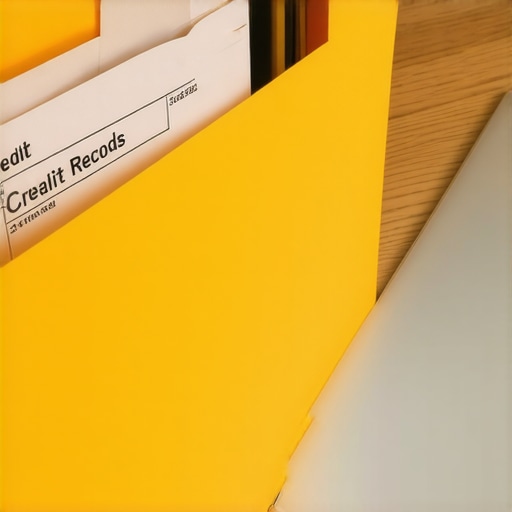 Looking forward, I predict we are moving toward Trended Data becoming the absolute standard. Systems like FICO 10T are already looking at your trajectory—are you paying off more debt each month, or are you slowly drowning? To keep your credit healthy even during rough patches, you need to show a consistent downward trend in total debt. If you’re ready to take this to the next level, I challenge you to go find your last three months of bank statements and highlight every single convenience fee or interest charge. Seeing that number in bright yellow is the kick in the pants most of us need to stop giving the banks free money.
The Reality Check I Had to Face About the Credit Machine
After years in the trenches, I realized the biggest obstacle isn’t the debt itself—it’s the sheer scale of the system. We often think of the bureaus as semi-government entities, but they are private corporations selling your data. This realization changed everything for me. I stopped asking for permission and started demanding accuracy. One of the most shocking things I discovered was how to fix a mixed file when you share a name with a relative; it’s a bureaucratic nightmare that the automated systems rarely catch. You also need to understand that the bureaus are incentivized to keep things ‘verified’ as quickly as possible. To win, you have to be more detailed than their algorithms. I also learned that using credit score boosters like rent reporting or utility history can provide a faster lift than waiting for a five-year-old collection to fall off. Patience isn’t just a virtue here; it’s a strategic weapon. If you don’t see a change in 30 days, don’t panic—the system is designed to move slowly.
My Personal Go-To Kit for Staying Clean
I don’t rely on luck anymore. My toolkit is simple but effective. First, I always keep a digital copy of the Fair Credit Reporting Act (FCRA) on my desktop. It’s the law that protects you, and citing specific sections in your letters makes you look like a professional. Second, I use a dedicated scanner app to digitize every piece of mail I send, creating an unshakeable digital paper trail. Third, I only trust AnnualCreditReport.com for my deep-dive audits, as it’s the gold standard for accuracy. Finally, I have adopted top credit repair strategies to boost your score faster by focusing on the ‘Age of Accounts’—I never close an old card, even if I don’t use it. These tools shift the power back into your hands, making the process feel less like a gamble and more like a proven system. #IMAGE_PLACEHOLDER_FINAL#
Take Back the Keys to Your Financial Life
You’ve seen the blueprints and you’ve heard the stories. Now, the ball is in your court. Rebuilding your financial reputation isn’t just about a number; it’s about the doors that number opens—the home for your family, the car that gets you to work, or the freedom to say ‘no’ to predatory interest rates. By applying the science of credit repair and being persistent with your credit repair efforts, you are taking a stand for your future self. Don’t let a mistake from your past define your potential in 2025. You have the tools, the evidence, and the strategy to unlock your credit score potential. It’s time to start. Have you ever felt like you were making progress only to have an old debt suddenly resurface? Let me know your experience in the comments below!