

I still remember the feeling of absolute triumph when that sleek, silver envelope arrived in my mailbox. I’d just been approved for a 0% APR card, and in my head, I had already beaten the banking system at its own game. I sat at my kitchen table, moved $5,000 from a high-interest card to this new ‘savior,’ and waited for my financial life to get easier. I felt smart. I felt in control. Then, my phone buzzed three weeks later with a credit alert that felt like a punch in the gut. My score had tanked by 42 points overnight. I was doing the ‘right’ thing, yet the numbers were screaming that I’d messed up. It turns out, I had fallen into the classic trap of ignoring key credit score factors every borrower must know, thinking a lower interest rate was a free pass to a better profile. It wasn’t.
The Zero Percent Interest Trap You Never Saw Coming
We’re often told that moving debt is the smartest way to get ahead of the game. While the math on interest savings makes total sense on a calculator, the algorithms that dictate your financial reputation don’t always play by the same rules. I made the massive mistake of maxing out that brand-new card immediately. I didn’t realize that even if my total debt stayed the same, skyrocketing the utilization on a single account looks like a massive red flag to lenders. It’s one of those tiny errors on your report that cost thousands over time because you end up paying higher rates for your next car or home. Today, I’m going to show you how to navigate these transfers without destroying your hard-earned progress, and why sometimes the best move is to focus on an ultimate blueprint for effective credit repair instead of just shifting numbers around.
Is a balance transfer actually worth the hype?
I get it—you’re skeptical. If the goal is to pay less interest, why does the credit bureau care so much about where the money sits? The truth is that balance transfers are a double-edged sword. You get hit with a hard inquiry, which is a minor sting, but the real damage happens when you shift too much weight onto a new line. According to the Consumer Financial Protection Bureau, credit utilization is a primary driver of your score, and when you consolidate debt onto one card, you often push that specific account’s utilization past the 90% mark. This triggers an ‘at-risk’ profile. Have you ever seen your score take a nosedive right after you thought you were being responsible with your debt? It’s a frustrating cycle, but it is one we can break by understanding how a small balance on too many cards destroys your score compared to the danger of one maxed-out account. We need to stop looking at interest alone and start looking at the bigger picture.
Why Your Credit Utilization is Screaming for Help
When I was early in my journey, I thought as long as I wasn’t spending more money, I was safe. I was wrong. The moment you open that new account and shift debt, you’re changing your credit mix and your average age of accounts. If you aren’t careful, you might find yourself needing to dispute errors on your credit report just to fix the mess created by a simple transfer that was reported incorrectly. Before you sign that next offer, we need to talk about the tactical way to move money without triggering the high-risk alarms at the big three bureaus. The goal is financial freedom, not just a different name at the top of your bill.
I felt like a genius until I realized my score was tethered to my utilization on each card, not just the total. Think of your credit limit as a sponge. If you soak up 90% of one sponge, it’s dripping wet and messy, even if you have three other dry sponges sitting in the cabinet. Lenders want to see that no single sponge is oversaturated. When I moved that $5,000 in my earlier story, I saturated the new card completely. If you find yourself in this spot, you might need to look at the ultimate blueprint for effective credit repair to undo the damage of a poorly timed move. Moving the debt is only half the battle; protecting the report is the other half.
Keep Your Score Intact While Moving Money
The 30% Ceiling You Can’t Afford to Break
The golden rule is to keep your balance below 30% of the limit on the new card. If you have $10,000 in debt but your new card only has a $5,000 limit, moving it all is a suicide mission for your score. I learned this when I tried to consolidate three small cards into one big one. The convenience wasn’t worth the 50-point drop. Instead, consider how to safely increase your credit limit without a hard pull before you make the transfer. This gives you more breathing room and keeps those alarm bells from ringing at the bureaus. It is better to leave a small balance on the old card than to max out the new ‘savior’ card.
Surviving the Reporting Lag Nightmare
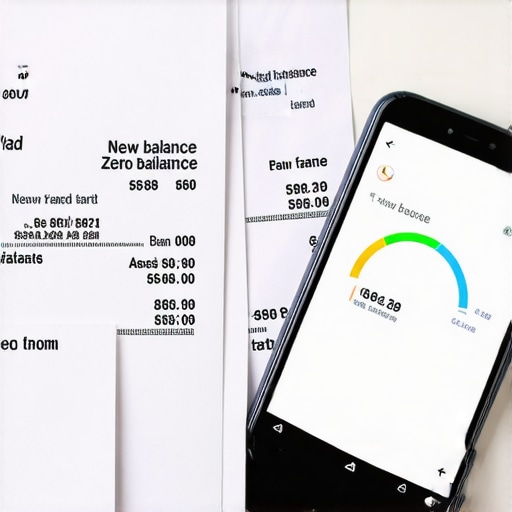
In 2019, I transferred a balance from my high-interest retail card to a bank card. For thirty-five days, my credit report showed I owed the money to both places. The old bank was slow to report the paid-off status, and the new bank was lightning-fast to report the new debt. It looked like I’d doubled my debt overnight. This is why you need to know the truth about how often your score actually refreshes. If this ‘phantom debt’ doesn’t disappear within two billing cycles, you must dispute errors effectively to force the bureaus to reconcile the accounts. This lag is a temporary hit, but it can be devastating if you’re applying for a mortgage at that exact moment.
Don’t Kill Your History by Closing Accounts
The most common mistake I see—and one I’ve made myself—is closing the old card once the balance is gone. You think you’re removing the temptation, but you’re actually shortening your credit history and reducing your total available credit. There are specific reasons why you should keep your oldest credit card open forever. Closing it is like deleting chapters from a book; the story of your reliability suddenly has huge gaps, and lenders hate gaps. If the old card has an annual fee, call them and ask to ‘downgrade’ to a no-fee version instead of shutting it down entirely.
When Shifting Debt Isn’t Enough
Sometimes, a balance transfer is just putting a bandage on a broken leg. If your score is already low, you might not even qualify for the best 0% offers. In that case, your focus shouldn’t be on moving debt, but on cleaning the slate. You can learn the strategy to wipe a collection without paying a dime if you have old skeletons in your closet that are doing more damage than your interest rates. Moving money around won’t fix a fundamentally broken report; you have to address the root causes first through careful monitoring and persistence.
But here is where the ‘expert’ advice you find on social media usually falls apart. Everyone tells you to just ‘dispute everything’ as if you’re throwing spaghetti at a wall to see what sticks. In reality, that is the fastest way to get your file flagged as frivolous. If you want to see real results, you have to stop thinking like a victim of the system and start thinking like a consumer advocate. I’ve seen people spend years in a loop of automated denials because they didn’t understand that why online dispute portals are a trap for consumers. When you use those convenient ‘dispute’ buttons, you often waive your right to a full investigation under the Fair Credit Reporting Act (FCRA). You’re essentially agreeing to a streamlined, automated process that favors the bureau’s efficiency over your accuracy.
Stop clicking that digital dispute button
In my experience, the ‘oops’ factor for most people is the belief that digital is better. It isn’t. According to studies by the National Consumer Law Center (NCLC), credit bureaus often use automated systems like e-OSCAR to boil your complex, documented evidence down to a single two-digit code. This is why I always recommend mailing physical, certified letters. It forces a human element back into the equation. You need to provide the ‘why’ and the ‘how,’ not just click a checkbox. If you aren’t seeing progress, it’s time to improve your credit score with proven repair techniques in 2025 that rely on paper trails rather than pixels. Have you ever fallen into this trap of clicking ‘dispute’ online only to have it come back ‘verified’ within 48 hours? Let me know in the comments—I’d love to hear your story.
Does paying an old debt actually reset your clock?
This is the biggest myth in the industry. People think that by paying off an old collection, they are doing their score a favor. In many cases, you are actually doing the opposite. While the debt is gone, the ‘date of last activity’ might update, which can temporarily tank your score because a seven-year-old mistake suddenly looks like it happened yesterday. Instead of blindly paying, you should focus on the strategy to wipe a collection without paying a dime through specialized verification. You should also know that why you should ask for a method of verification every time is your strongest legal weapon. If the creditor can’t prove exactly how they arrived at that number, they have no business reporting it to your file. I’ve seen $2,000 medical bills vanish just because the provider couldn’t produce the original intake form from five years ago.

Why non-profit counseling isn’t always the hero
We’ve been conditioned to think ‘non-profit’ means ‘free and helpful.’ But when you master credit counseling unlock your path to financial freedom, you’ll realize that many credit counseling agencies are actually funded by the very credit card companies you owe money to. Their goal is to get the bank paid, not necessarily to maximize your credit score. If they put you on a Debt Management Plan (DMP), they might require you to close all your accounts. As I mentioned earlier, closing accounts kills your age of history. This is why you must dispute errors effectively a guide to correct your credit report before you let a counselor touch your accounts. A counselor might help your budget, but they can accidentally wreck your mortgage eligibility for years. It’s vital to understand how credit counseling can transform your financial future without sacrificing the longevity of your oldest lines of credit. Moving forward, always look at the fine print of any agreement before you trade your credit score for a lower monthly payment.
Once you’ve done the heavy lifting of cleaning up your report, the real challenge begins: staying there. I’ve seen people work for eighteen months to hit a 750, only to watch it slide back into the 600s because they stopped paying attention to the mechanics. You cannot just ‘set it and forget it’ with your financial reputation. You need a system that alerts you the second a zombie debt collector tries to re-report a deleted item or a small error creeps back into your file name. For my personal workflow, I stopped relying on those generic ‘free’ apps that sell your data and started focusing on how to monitor your credit for free without giving away data using specific credit union portals and the official annual reports. I also keep a dedicated ‘verification folder’—physical and digital—containing every dispute letter and response I’ve ever received. If a bureau tries to re-insert a deleted item, that folder is my legal shield.
The tech that keeps my score in check
People always ask me about the truth about credit repair software vs professional help. Personally, I use a combination of simple automated trackers and manual monthly audits. Software is great for identifying obvious patterns, but it lacks the nuance to spot the subtle ways a creditor might try to re-age an account. I’ve found that even the best software can’t replace the human eye when you need to dispute credit errors swiftly and securely in 2025. The trend is moving toward ‘Trended Data.’ According to FICO’s technical documentation for the FICO® Score 10 T model, lenders are now looking at your payment behavior over the last 24 months, not just a single snapshot. This means if you’ve been paying just the minimums for two years, your score might suffer even if you aren’t ‘late.’ You have to show a downward trend in your total debt to stay competitive in this new environment.

How do I maintain my credit score over the long term?
Maintenance is about balance, not perfection. One of the strangest quirks I discovered is why keeping a zero balance on all cards might hurt your score. If every card shows $0, the algorithm thinks you aren’t using credit at all, and your score can actually stall or drop. I use the ‘Small Charge Method’: I put one small recurring subscription (like a $10 streaming service) on each of my oldest cards and set them to autopay. This keeps the lines active and reporting ‘current’ without me having to think about it. If you ever hit a wall where your score won’t budge, it might be time to force a manual review of your denied loan or credit application. Most automated systems are rigid, but a human underwriter can see the context of your repair journey that a computer misses. I always tell my readers to be their own best advocate; nobody cares about your score as much as you do.
Looking ahead, I predict we are going to see a massive shift toward AI-driven dispute resolutions on the bureau side. This makes it even more critical to improve your credit score with proven repair techniques in 2025 that are designed to bypass automated filters. If you want to stay ahead of the curve, stop sending generic letters you found on a forum. Customize everything. My advanced tip for you today: next time you apply for something important, don’t just accept a ‘no’ from an algorithm. Call the reconsideration line and ask for a manual review of your recently updated file. It works more often than you think, especially if you can point to a recently resolved dispute as proof of your improved standing.
Lessons I Learned While Staring at a Denied Application
Reflecting on my own journey, I realized that credit isn’t just a number; it’s a living record of your reliability. One of the biggest shifts in my mindset occurred when I stopped trying to ‘game’ the system and started respecting the science of credit repair expert advice to elevate your score. First, I learned that a ‘no’ today isn’t a ‘no’ forever—it is often just a request for more data or more time. Second, the anxiety of a low score often leads to rushed decisions, like using those ‘easy’ online dispute buttons that I now know to avoid at all costs. Finally, I discovered that consistency beats intensity. Checking your report once a year won’t save you, but a five-minute monthly audit can prevent the tiny errors on your report that cost thousands from taking root in your file.
The High-Impact Toolkit I Never Leave Home Without
If you are ready to take control, you need more than just a spreadsheet. I personally rely on the how to use the cfpb portal to resolve stalled disputes guide whenever a bureau stops responding to my letters or gives me a generic rejection. It is the ultimate ‘escalation’ button for a consumer. For those just starting, I highly recommend checking out credit score boosters essential tips for rapid improvement to find low-hanging fruit that can jumpstart your progress in under 30 days. #IMAGE_PLACE_HOLDER_E# And if you’re drowning in paperwork, remember that to dispute errors like a pro improve your credit with ease is about having a repeatable system, not just a one-time effort. I keep a stack of certified mail envelopes and a dedicated printer just for my credit correspondence—it makes the process feel official, which is exactly how the bureaus will treat it.
Stop Chasing Points and Start Building Wealth
At the end of the day, a high credit score is simply a tool that gives you access to better opportunities. Whether you want to buy a home, start a business, or just sleep better at night, the work you do today matters. Don’t let a temporary dip from a balance transfer or a frustrating ‘verified’ dispute result stop you from moving forward. You have the legal right to an accurate report, and you have the power to demand it. Your financial future is waiting for you to claim it. Have you ever had a credit ‘win’ that felt like a total surprise after a long struggle? Let me know in the comments below—I read every single one.