

I remember standing at the register of a high-end department store three years ago, clutching a winter coat I couldn’t quite justify. The cashier, sensing my hesitation, leaned in and whispered the magic words: "You can save 20% right now if you just open a store card." It sounded like a win. I saved a hundred bucks, felt like a genius, and went home happy. Two weeks later, I checked my monitoring app and nearly dropped my phone. My score had tanked. I hadn’t missed a payment or maxed out a card, but my average credit age had been gutted. It felt like a betrayal. Today, I am going to show you exactly how these seemingly innocent retail cards drag down your financial maturity and, more importantly, how you can protect your score from the checkout counter trap.
The Checkout Counter Trap That Cost Me 20 Points
Most shoppers see a discount, but lenders see a brand-new, unseasoned account that lowers the average age of everything you’ve worked for. Your credit history length accounts for about 15% of your FICO score, and when you add a "zero-month-old" account to the mix, the math is brutal. It’s one of those key credit score factors that many people overlook until the damage is done. I learned this the hard way when I opened three different retail accounts in a single holiday season, effectively cutting my credit age in half. If you are in the same boat, you might be looking for top credit repair strategies to help stabilize your profile. Retail cards often have low limits and high interest rates, making them a double-edged sword for anyone trying to maintain a pristine record.
Is One Little Store Card Really That Dangerous?
You might think I am overreacting. After all, it is just one card, right? But if you have a "thin" credit file, that one new account is a heavy anchor. According to FICO, the length of your credit history is a major pillar of your score calculation, and new credit can signal risk to potential lenders. If you have been focused on how to build credit without going into massive debt, a retail card can feel like taking two steps backward. It is not just about the hard inquiry that hits when you apply; it is the long-term mathematical reality of your credit’s maturity being diluted. Have you ever walked away from a register feeling like you won, only to realize later that the "discount" cost you more in credit points than it saved you in cash? I would love to hear your story in the comments. Navigating these waters requires a bit of a blueprint for better finances to ensure your next move is the right one.
Stop the Bleeding and Audit Your Report
Your first move isn’t to close the card—that’s a common mistake that actually doubles down on the damage. Instead, you need to see exactly what the lender reported. I remember the time I tried to fix a $200 Kohl’s card error. I called the store, they said it was fine, but my report showed a 110% utilization because the store hadn’t reported my actual credit limit correctly. It was a mess. To fix this, you must learn how to dispute errors on your credit report and improve score by scrutinizing the fine print on your monthly statement versus your official report. Think of your credit report like a restaurant bill; if you don’t check the items, you might end up paying for someone else’s steak.
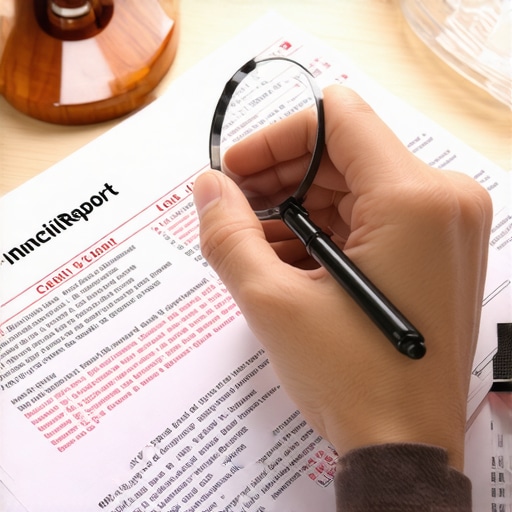
Identify the Hard Pull and Utilization Spikes
Retailers often report a low credit limit, which means that 20% discount you grabbed could put you at 90% utilization the moment the transaction clears. This is why key credit score factors like utilization are so volatile with store cards. If you see a spike, don’t just pay it off; ensure the limit is being reported accurately. Sometimes you can safely increase your credit limit without a hard pull to balance that ratio out quickly and stop the points from dropping further.
Master the Art of the Formal Dispute
When the data is wrong, you have to be aggressive. Most people use the online portals provided by the bureaus, but why online dispute portals are a trap for consumers is something I learned after three failed attempts to fix a simple name misspelling. Use certified mail. Mention that you want a “method of verification” for any account that seems off. This forces the bureau to actually do the legwork rather than just letting a computer algorithm rubber-stamp the creditor’s data. If you are feeling overwhelmed, mastering credit disputes requires a paper trail that no one can ignore. I once sent a physical letter to a creditor who claimed I was late on a payment I had made early; three weeks later, the mark was gone. It felt like winning a court case without a lawyer.
Keep the Account Open Even if You Hate It
This is the counter-intuitive part. Since the damage to your “average age of accounts” is already done, closing the card now will only remove a potential line of positive history in the future. Unless there is a high annual fee, let it sit in a drawer. You should keep your oldest credit card open forever because that age is the bedrock of your score. Closing it is like cutting down a young tree you just planted; it might be small now, but in five years, it will be the shade that protects your score. To stay ahead, look into the tactic to improve your score in under thirty days and keep your eyes on the long-term horizon.
Why a Zero Balance is Secretly Sabotaging Your Score
Many people believe that keeping every single credit card at a zero balance is the pinnacle of financial health. However, why keeping a zero balance on all cards might hurt your score is a nuance that even seasoned borrowers miss. FICO data suggests that a small, reported balance on one card—often called the ‘All Zero Except One’ (AZEO) method—can actually result in a higher score than having zero balances everywhere. This is because lenders want to see active, responsible usage, not total dormancy. If you have been focused on essential tips for rapid improvement, you might find that keeping a 1% balance on your primary card yields better results than a clean sweep. 
Why did my score drop after I paid everything off?
This is the single most frustrating question I hear. The ‘Oops’ factor often kicks in when you settle an old collection. I’ve seen clients celebrate paying off a five-year-old debt, only to see their score plummet twenty points the following week. This happens because the specific reason your score dips after a payoff often involves the ‘date of last activity’ being refreshed on a negative account, making an old mistake look like a brand-new one to the scoring algorithm. Instead of just writing a check, you should be focused on how to negotiate a pay for delete without admitting the debt. According to a report by the Consumer Financial Protection Bureau (CFPB), nearly one in five credit reports contains a ‘materially’ significant error, which underscores why you shouldn’t trust the automated systems to update your status fairly.
Don’t Let Debt Management Plans Ruin Your Reputation
Another common trap is the assumption that all credit counseling is created equal. While a non-profit plan can be a lifesaver, the difference between non-profit and for-profit counseling can mean the difference between a recovery and a total profile meltdown. Some lenders view a Debt Management Plan (DMP) as a sign of extreme distress, which could lead to why settling for 50 percent could block your mortgage application later on. You need to be aggressive about your own data. Instead of letting a third party take the wheel, you can dispute errors effectively using your own paper trail. Have you ever fallen into this trap or seen your score drop for no apparent reason? Let me know in the comments. Before you make your next move, consider the impact of authorized user accounts on mortgage underwriting if you are trying to lean on someone else’s good history. Real progress requires a deep dive into the truth about credit repair software vs professional help to find the path that actually works for your specific profile.Once you move past the initial shock of a retail card disaster or a botched dispute, the real work begins: maintenance. I personally don’t rely solely on the pretty colorful dials on free apps. I use a dedicated spreadsheet to track my ‘Statement Closing Dates’ because that is when the reporting magic actually happens. If you want to boost your credit score in 2025, you have to know exactly when your bank reports to the bureaus. For example, if your bill is due on the 15th, but the statement closes on the 18th, any spending you do in those three days is what the world sees. I recommend using a tool like the CFPB portal to resolve stalled disputes when the bureaus stop listening. It is the ‘nuclear option’ I have used twice to force a human review when the automated systems kept spitting out ‘verified’ for an error that was clearly their fault. 
Take Control with This Simple Spreadsheet Hack
My system is simple but effective. Every month, I log my reported balance versus my actual spending. This allows me to spot ‘ghost balances’ before they impact a mortgage application. To truly dispute errors effectively, you need a baseline of what your report looked like six months ago. Most people wait until they need a loan to look at their data, but by then, it is often too late to fix a major reporting lag. If you are scaling your profile to qualify for high-limit cards, this granular level of tracking is non-negotiable.
The Shift Toward Trended Data is Coming
Looking ahead, the way we think about credit is changing. We are moving toward a world of ‘Trended Data.’ Newer scoring models like FICO 10T and VantageScore 4.0 are looking at your trajectory over the last 24 months, not just a snapshot of today. This means the truth about how often your score actually refreshes will become even more critical to understand. It is no longer enough to pay everything off the day before you apply for a loan; the lenders will see if you have been carrying high balances for the last two years. John Ulzheimer, a credit expert formerly with FICO and Equifax, points out that the ‘new credit’ category remains one of the most sensitive metrics for anyone with a shorter history. To stay safe, I have shifted my focus to fast credit repair tips that emphasize profile hygiene rather than just temporary deletions.
How do I keep my score high after the repair work is done?
The secret is automation paired with manual audits. Set your accounts to autopay the minimum so you never miss a date, but manually pay the full balance before the statement closes to keep utilization at 1%. I want you to try this today: Find the statement closing date (not the due date) for your highest-limit card and pay it down to exactly $10 three days *before* that date. Watch your score next month; you will likely see a jump that no ‘quick fix’ service could ever provide.
Lessons from the Trenches: What the Retailers Don’t Tell You
One thing I wish I’d realized sooner is that the credit bureaus aren’t your friends; they are data aggregators. When you understand the key credit score factors, you realize that a 20% discount is often a marketing trick designed to get you to lower your average credit age. I’ve learned that being aggressive with your paperwork is the only way to win. If you want to unlock your credit score potential, you have to treat your report like a business ledger. There are no shortcuts, only consistent habits that prove you are a low-risk borrower over a long period. This mindset shift—from seeing credit as a score to seeing it as a financial reputation—changed everything for me.
My Personal Toolkit for Keeping a Pristine Profile
I don’t leave my financial future to chance. To dispute errors like a pro, I always keep a digital folder of my last twelve months of statements. I highly recommend using the official CFPB portal if you ever hit a wall with the standard bureaus. Additionally, focusing on proven steps to boost your credit score fast means checking your reports at least once a quarter for ghost accounts or incorrect address data. These small details are what separate a 680 from a 750. I also swear by a simple physical calendar where I mark my statement closing dates so I never miss the optimal utilization window.
Take the Reins of Your Financial Reputation
You don’t have to be a victim of a retail cashier’s upsell or a bureau’s clerical error. By staying vigilant and using these strategies, you can rebuild what was lost and even surpass your old high score. Remember, your credit is a living document that reflects your consistency and attention to detail. Have you ever regretted opening a store card just for a one-time discount? Let me know your story in the comments below!