

I remember the exact moment I hit ‘submit’ on my final auto loan payment. I practically did a victory dance in my kitchen, envisioning my credit score soaring into the stratosphere now that I was officially debt-free. But when I checked my report a few weeks later, I nearly dropped my phone. My score hadn’t climbed; it had plummeted by twenty-two points. I felt like I had been punched in the gut by a system I was working so hard to please. It felt completely backwards—how could being responsible and paying off a massive debt result in a penalty? If you have ever felt that same sting of betrayal, let me tell you right now: you are not crazy, and you are definitely not alone. We are going to dive into the mechanical quirks of the credit bureaus and I will show you exactly how to navigate this temporary dip so you can get back to building the financial future you deserve.
Why a Zero Balance Can Actually Hurt Your Rating
When you pay off a loan, you expect a gold star. Instead, the algorithm sees a ‘closed’ account. Early in my journey, I made the mistake of thinking every zero balance was a win, but I did not realize that FICO loves seeing active, healthy accounts more than it likes seeing dead ones. When that car loan or personal mortgage vanishes, you often lose a chunk of your ‘credit mix’ and the average age of your accounts might shift. It is one of the most vital key credit score factors every borrower must know before they make their next big move. According to FICO, your credit mix accounts for about 10% of your total score, and losing that variety can trigger an immediate, albeit usually temporary, decline.
Is FICO actually rigged against us?
It certainly feels that way when you are doing the ‘right’ thing and getting punished for it. The skepticism is real—why should we be forced to stay in debt just to keep a high score? The truth is less about a conspiracy and more about how the math views risk. A closed account provides no more data on your current ability to manage monthly payments. If you are worried about your score stalling or dropping, you might want to look into ultimate guide to credit counseling to see how to balance your portfolio better. Don’t let a temporary dip discourage you; there are plenty of credit score boosters that can help you recover that lost ground faster than you think. Have you ever seen your score drop right after you thought you did everything right? Drop a comment or reach out—I want to hear your story. We need to stop letting these reporting quirks keep us from our goals. Let’s look at why the truth about how often your score actually updates plays a massive role in when you will see that number start to bounce back.
Stop Assuming the Bureau Got it Right
When my score tanked after that final car payment, I realized I couldn’t just sit back and wait for the math to fix itself. I had to look at my report like a detective hunting for a culprit. The reality is that once an account closes, the bureaus often get sloppy with the remaining data. I once spent three months wondering why my score wouldn’t budge, only to find a $45 medical bill from three years prior had been double-reported because the collection agency sold the ‘debt’ to another firm the same day I paid it. If you see a duplicate entry, you need to how to fix a double-reported debt on your credit history immediately. You have to be your own advocate because the automated scanners aren’t looking for your best interest; they are looking for excuses to keep your risk profile high. Check for the most common errors found on medical collections as these are the most frequent ghosts that haunt your report after a major loan is cleared.
Force a Correction When the Algorithm Fails
 If you find a mistake, do not just use the online ‘dispute’ button on the bureau’s website. It is a trap that often strips you of your right to a manual re-investigation. Instead, draft a physical letter. When I dealt with my double-reported debt, I sent a certified letter with a copy of my bank statement showing the cleared check. It felt like overkill until the bureau tried to claim they ‘could not verify’ my claim. By having a paper trail, I was able to dispute errors effectively and force a human to actually look at the documents. If you are hitting a wall, you must learn how to handle a credit bureau that ignores your evidence so you don’t end up in a loop of automated rejections.
Add the Right Type of Fuel to Your Credit Mix
Since paying off that loan likely hurt your ‘credit mix,’ you need to fill that void without drowning in new interest rates. Think of your credit mix like a balanced diet; you just removed a major protein, so you need to replace it with something substantial, not just financial junk food. I decided to use a small, credit-builder loan specifically designed to show ‘installment’ activity without the massive debt load of a vehicle. This is the simple move to improve your credit mix that most people ignore because they are too afraid of opening new accounts. If you are unsure how to balance these new entries, understanding credit counseling can provide a structured roadmap so you aren’t just guessing.
Keep the Old Guards Standing
Whatever you do, do not close your oldest credit cards right now. You need that ‘length of credit history’ to act as a buffer while your score recovers from the loan closure. I once closed a store card I hadn’t used in five years thinking I was ‘cleaning up’ my finances, and my score dropped another ten points because I accidentally shortened my average account age. Use credit score boosters like keeping zero-balance cards active with one tiny subscription payment per month. This keeps the data flowing and proves you are still a reliable borrower even without a massive monthly car note.
Why Paying Off a Collection Could Sink Your Score Further
Most people assume that paying an old debt is the ultimate sign of financial responsibility. I used to think so, too, until I realized that the algorithm sees things differently. When you pay an old, stagnant collection, you are essentially ‘re-activating’ that negative entry. It brings the ‘last date of activity’ to the current month, which can make a three-year-old mistake look like a brand-new failure. Instead of just throwing money at collectors, you need to master the secret to negotiating a pay-for-delete agreement that sticks. If the collector won’t agree to remove the entry upon payment, you might be better off leaving it alone until it falls off naturally, or focusing on other top credit repair strategies to boost your score faster. Don’t let a sense of moral obligation override your mathematical strategy.
Is that non-profit counseling agency actually a wolf in sheep’s clothing?
This is the nuance most people miss: just because an agency is a non-profit doesn’t mean it’s your friend. Many of these organizations are actually funded by the creditors themselves. When you enter a debt management plan, it can be flagged on your report, signaling to future lenders that you can’t manage your original terms. You must understand the risks of using a non-profit credit counseling agency before signing your life away. In many cases, how credit counseling can transform your financial future depends entirely on whether they are prioritizing your score or the bank’s bottom line. 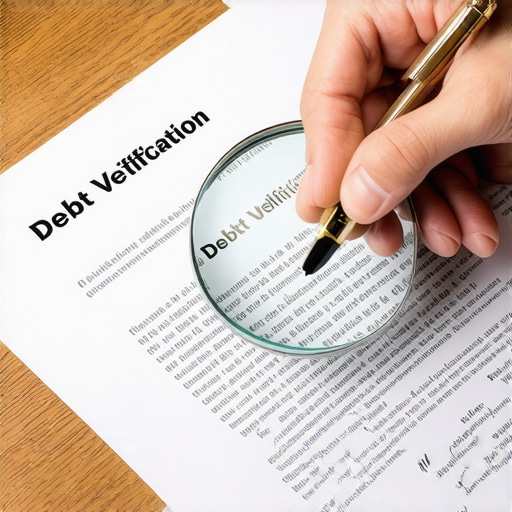
Don’t Fall for the ‘Dispute Everything’ Trap
One of the biggest mistakes I see is the ‘shotgun’ approach. People get a template online and dispute every single negative item on their report at once. The credit bureaus aren’t stupid; their automated systems will quickly flag your file as ‘frivolous,’ which can make it nearly impossible to get a real error removed later. You need to be surgical. According to a landmark study by the Federal Trade Commission (FTC), 20% of consumers have a verified error on their report, but you have to prove it with precision. If you want to win, you have to learn how to dispute errors on your credit report and improve score by focusing on one or two high-impact inaccuracies at a time. This is why why you should never pay a debt buyer without verification first; the burden of proof is on them, not you. Have you ever fallen into this trap of paying a debt only to see your score drop? Let me know in the comments. We need to start playing the game by the bureaus’ rules, not our own assumptions. By shifting your focus from ‘paying’ to ‘validating’ and ‘positioning,’ you can stop the bleeding and finally see that number climb. Use the science of credit repair to your advantage and stop guessing what the algorithm wants.
To move beyond the basics, you need to understand that the free score on your banking app is often a ‘VantageScore,’ which is mostly irrelevant to mortgage lenders. I personally use MyFICO because it provides the actual versions used in 90% of lending decisions. You need to know the difference between your fico score and your real score before you walk into a car dealership or a bank. I also maintain a ‘credit folder’—it’s a simple digital archive where I save a PDF of my reports every quarter. This simple habit is how I how to stop credit bureau errors before they happen because I have a baseline to compare against when a new error pops up.
Get the Data the Banks Actually Use
According to credit expert John Ulzheimer, formerly of FICO and Equifax, the ‘reason codes’ found on your FICO report are the most valuable data points you own because they tell you exactly why the algorithm is holding you back. If you ignore these codes, you’re just shooting in the dark. In the near future, I expect the industry to shift toward FICO 10T, which uses ‘trended data.’ This means the bureaus won’t just look at your balance today; they’ll look at whether your balances are growing or shrinking over the last 24 months. You need to unlock your credit score potential expert tips for 2025 by shifting from a ‘monthly’ mindset to a ‘yearly’ trend mindset.

Lock Your File Against the Next Data Breach
I also recommend a total credit freeze. It is the only way to ensure no one opens an account in your name. I’ve learned that why a credit freeze is your best defense against identity theft and it is far more effective than those ‘monitoring’ services that only tell you after you’ve already been compromised. When you are ready to apply for something, you just ‘thaw’ it for 24 hours. It’s a minor inconvenience that provides massive security for your financial reputation.
How do I maintain this momentum over time?
Maintenance isn’t about checking your score every hour; it’s about systems. I use a staggered approach: I pull a free report from a different bureau every four months via AnnualCreditReport.com. In January it’s Experian, in May it’s Equifax, and in September it’s TransUnion. This keeps a fresh set of eyes on my data all year long. This allows me to dispute errors like a pro improve your credit with ease because I catch the small stuff before it becomes a mountain. If you want to improve your credit score with proven repair techniques in 2025, start by automating your tracking and securing your file. Go to the three major bureau websites today and initiate a freeze on your credit files; it is the single most powerful move you can make to protect the work you’ve put in so far.
The Brutal Reality of the Bureau Waiting Game
If there is one thing I’ve learned from years of fixing my own financial mistakes, it’s that patience is your strongest asset. The algorithm is often slow on purpose, but you can’t let that silence make you quit. I used to panic every time I saw the reason your credit score drops after a new loan approval, thinking I’d ruined my hard-earned progress. In reality, that dip is just the mathematical system recalibrating to your new lack of debt. Another lesson? The human element is fading from these bureaus. You are increasingly fighting robots, so you must use the method for beating automated dispute scanners at the bureau to ensure a real person actually reviews your evidence. Lastly, do not chase a perfect 850 score like it is a religious requirement; once you hit 760, you are getting the best rates available. Focus on the lifestyle freedom the number provides, not just the digits on the screen.
Tools I Actually Use to Fight the FICO Machine
I don’t rely on luck to keep my report clean, and you shouldn’t either. My toolkit starts with the CFPB (Consumer Financial Protection Bureau) database—it is the ultimate ‘big brother’ you can call when a creditor refuses to listen to reason. I also highly suggest keeping a copy of the ultimate guide to credit counseling on hand to navigate those complex moments when your debt mix feels out of balance. For tracking, I avoid the free apps that sell your data to lenders and instead use MyFICO for the raw data versions that lenders actually see. Knowing the truth about how often your credit score actually updates will save you from the anxiety of checking your phone every hour and driving yourself crazy. #IMAGE_PLACEHOLDER_E#
Your Financial Future Starts with This One Move
It is easy to feel defeated when the credit bureaus push back, but remember that you are the one in control of your financial narrative. Every certified letter you send and every error you catch is a deliberate step toward a lower interest rate, a better home, and a life with less stress. I have seen countless people use credit score boosters to jump-start their recovery in just a few weeks, and I know you can do the same. Don’t let the technicalities of credit repair stop you from taking that first step today. You now have the tools, the strategy, and the mindset to win this game. Have you ever noticed a weird drop in your score right after you thought you did everything right? Let me know in the comments below.