

I remember sitting in a glass-walled conference room in downtown, the smell of expensive coffee masking the scent of my own panic. I had spent fifteen years building a portfolio I was proud of, only to realize that a single signature could potentially halve my life’s work. It wasn’t just about the houses or the stocks; it was the realization that my financial identity was tied to someone who was about to become a legal adversary. I made a massive mistake early on by thinking my personal credit was untouchable. I didn’t realize that key credit score factors every borrower must know would become the battleground for our settlement negotiations. My ignorance almost cost me six figures in future interest rates because I let a joint account slide into delinquency during the heat of the ‘discussions.’ [image_placeholder_1]
Don’t Let Emotional Stress Trash Your Net Worth
Divorce is messy, but a high-asset split is a surgical operation on your future. If you have significant investments, real estate, or business interests, you aren’t just dividing a bank account; you are untangling a web that took decades to weave. Today, I’m going to walk you through the exact steps to build a perimeter around your wealth. We are going to look at how to audit your reports for the tiny errors on your report that cost thousands and why you need to be proactive before the discovery phase begins. According to the American Academy of Matrimonial Lawyers, financial disputes remain the leading cause of prolonged litigation, and nearly 90% of experts have seen an increase in the use of ‘financial forensics’ to uncover hidden assets, which means every decimal point on your balance sheet matters.
Is a Clean Break Actually Worth the Legal Fees?
You might be wondering if it’s better to just concede and move on. I thought that too. But ‘moving on’ shouldn’t mean starting from zero. Your credit reputation is your most valuable asset during this transition. I’ve seen people lose out on prime real estate because they didn’t understand the impact of a credit freeze on your existing accounts when trying to prevent a vengeful spouse from racking up debt. We’re going to solve that today by getting you a clear view of your standing. And don’t worry about looking; why checking your own score never lowers the number is something I had to learn the hard way after months of avoiding my own mailbox out of fear.
Take Charge of Your Accounts Immediately
The first thing I did—and the first thing you must do—is map out every single joint obligation. Have you ever found a credit card you forgot you even co-signed for? Tell me in the comments, because that’s usually where the trouble starts. It’s those forgotten accounts that become the biggest liabilities when things get heated. We need to look at how to remove a closed account that is reporting incorrectly to ensure your post-divorce life starts on solid ground.
Stop the Bleeding Before the Lawyers Step In
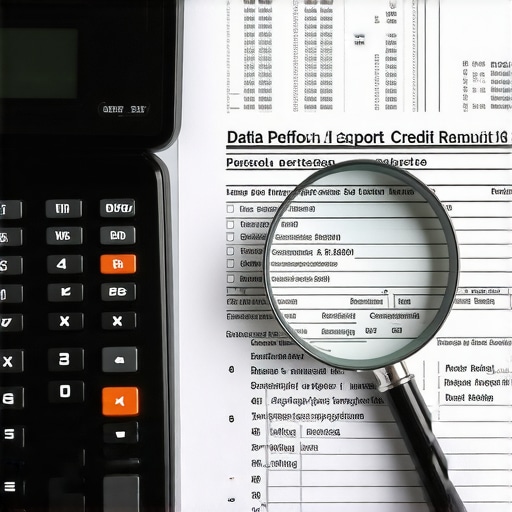
The biggest mistake I made was waiting for the legal ‘discovery’ phase to see exactly where I stood. By then, the damage was done. Think of your credit report as a ship with a slow leak; you do not wait for the coast guard to arrive before you start plugging holes. Your first move is a total, unfiltered audit. You need to dispute errors effectively as soon as they appear on your radar. I remember finding a 60-day late payment on a shared BMW lease that I thought had been handled months prior. My ex-husband had simply ‘forgotten’ to mail the final check, but my FICO score took a devastating 40-point hit right as I was applying for a bridge loan. I had to learn the tactic to remove a late payment from your auto loan by providing direct proof of my own financial stability to the lender. It wasn’t just about the money; it was about the leverage I lost at the negotiating table because he knew my credit was temporarily weak.
Hunt Down Hidden Joint Liability
You have to be a detective. Go through every single line of your credit report from all three bureaus. This is vital because why your credit score might differ across all three bureaus is a technical reality that can hide a ‘zombie debt’ on one report that doesn’t show on another. If you find an account you don’t recognize, you must use the exact way to dispute an account that is not yours immediately. During my own split, I discovered a store card from a luxury jeweler I hadn’t visited in a decade. It was still open, still joint, and my ex was using it to buy ‘gifts’ for a new acquaintance. Closing that account felt like reclaiming a piece of my soul, but it also protected me from his new spending habits before they became my legal responsibility.
Win the Battle Against Inaccurate Reporting
Once you’ve identified the errors, the real work begins. Sending a generic, templated letter won’t cut it in a high-stakes scenario. You need to use the method for beating automated dispute scanners at the bureau. These scanners are designed to reject anything that looks like it came from a mass-produced credit repair factory. I once spent three months shouting into a void because I used a basic online portal. It wasn’t until I sent a physical, handwritten letter with copies of my bank statements and the final decree that a human actually looked at my file. If you are struggling with complex accounts, how credit counseling can transform your financial future is a resource worth exploring, especially if you need an expert to help categorize which debts are legally yours and which belong to the past.
Force the Bureaus to Prove It
If a collection agency comes knocking for a debt you don’t recognize or one that should have been settled in the divorce, do not just pay it. That is a tactical trap. Instead, understanding why you should ask for a method of verification every time becomes your strongest shield. In my case, a medical bill from three years prior surfaced during the final mediation. By asking for a specific method of verification, I forced the agency to admit they had no original record of the service. I used the strategy to wipe a collection without paying a dime and it saved me thousands in unnecessary settlement costs. This isn’t just about numbers; it’s about financial self-defense. You need to implement top credit repair strategies to boost your score faster so that when you finally walk out of that courtroom, you have the power to buy a new home or start a new business on your own terms.
However, the most common trap I see is the belief that ‘zeroing out’ an account is an automatic fix. Many high-asset individuals assume that simply liquidating a stock portfolio to pay off a joint line of credit will instantly repair the damage. In reality, the reason your score did not jump after paying off your cards is often because you’ve accidentally altered your credit utilization ratios in a way the algorithm hates. I’ve seen scores stagnate for months because a borrower didn’t understand the timing of the reporting cycle. You might be tempted by ‘express’ solutions, but you should generally why you should avoid rapid rescore services for small gains unless you are within five points of a specific lending threshold and have documented proof already in hand.
Can Credit Counseling Actually Sabotage Your Next Mortgage?
Here is the hard truth: not all help is helpful. Many people flock to debt management programs thinking they are taking the high road. But the risks of using a non-profit credit counseling agency often include a ‘third-party managed’ notation on your report. According to reports from the National Consumer Law Center, these notations can lead some mortgage underwriters to view your profile with the same skepticism they reserve for a restructuring event. You also need to watch for the hidden fees in some debt management plans that eat away at the very principal you are trying to protect. Have you ever entered a program thinking it was free, only to find ‘service charges’ appearing later? Let me know in the comments.
Spot the Trap in Automated Dispute Systems
When you are fighting a complex error—like how to fix a double-reported debt on your credit history—the biggest obstacle isn’t the bank; it’s the machine. Most disputes are processed by a system called e-OSCAR, which strips away your carefully drafted letters and reduces your evidence to a generic code. To win, you have to dispute errors effectively by using specific language that forces a manual human review. If you simply click ‘dispute’ on an app, you are playing into their hands. I learned the hard way that a surgical, evidence-backed approach is the only way to protect a high-net-worth reputation when the automated filters are set to ‘reject.’
I eventually stopped relying on the glossy interfaces of consumer apps and built my own ‘Command Center’ in a simple Google Sheet. The reason is simple: apps give you the ‘what,’ but they rarely give you the ‘why’ or the timing. I track the statement closing date of every single card because that is the day the data is captured, regardless of when I pay the bill. If you want to scale your wealth, you need to treat your credit like a business ledger. I use the ultimate blueprint for effective credit repair to audit my file every quarter, looking for those phantom inquiries that pop up after you’ve looked at a new car or a mortgage. If you aren’t watching the ‘soft’ inquiries too, you’re missing half the story. I recommend setting a calendar alert for 35 days after you mail a dispute; if you haven’t heard back, the law is on your side, and you need to know exactly when to strike.
How do I maintain my credit reputation after the dust settles?
Maintenance isn’t about checking a score once a month; it’s about tactical vigilance. I personally use a ‘freeze-first’ strategy. Unless I am actively applying for capital, my reports are frozen. This prevents the ‘zombie debt’ collectors I mentioned earlier from even being able to see my current profile to see if I’m a target worth pursuing. You should also consider ultimate guide to credit counseling take control of your financial future if you find that your debt-to-income ratio is fluctuating too much during a transition. Staying in the ‘safe zone’ requires understanding the science of credit repair expert advice to elevate your score, specifically how ‘trended data’ now allows lenders to see if you are paying off your balances in full every month or just making minimum payments. According to Chi Chi Wu, an attorney at the National Consumer Law Center, the shift toward these more granular data points means that your habits over the last 24 months are now just as important as your current score. 
Watch Out for the Shift Toward AI-Driven Financial Profiling
Looking ahead to the next few years, the biggest trend I see is the rise of FICO 10T and the use of ‘alternative’ data. Lenders are starting to look at your utility payments and even your rental history to build a ‘financial character’ profile. This is why I tell people to boost your credit score in 2025 top strategies that work by making sure even their non-credit obligations are spotless. If you have been debating whether to use the truth about credit repair software vs professional help, remember that software can’t argue the nuances of a legal decree, but it can help you spot the trends before a human ever could. To stay ahead, you need to unlock your credit score potential expert tips for 2025 by focusing on your ‘credit mix’—don’t just have cards; have a well-managed installment loan too. My specific tip for you today: go into your main bank’s app right now and turn on ‘low balance’ alerts for every card. This prevents a high utilization report from hitting the bureaus before you have a chance to pay it down. Try this for one month and watch how much more control you feel you have over that three-digit number.
The Hardest Realities I Faced While Untangling My Life
If I could go back to that glass-walled conference room, I would tell myself that the emotional weight of the split is temporary, but the paper trail is permanent. One of the biggest ‘lightbulb moments’ for me was realizing that my ex-partner’s financial behavior could haunt me for years if I didn’t proactively use credit score boosters essential tips for rapid improvement to offset the damage of closed joint accounts. I also learned that patience is a tactical necessity; you cannot rush the bureaus. Another realization? Your credit score is essentially a ‘reputation metric’ for the next chapter of your life—treat it with more reverence than your physical assets. Finally, I discovered that how to fix your credit profile after identity theft is a skill set that applies perfectly to post-divorce recovery, especially when a former spouse still has access to your sensitive data.
My Go-To Resources for Navigating This Transition
I didn’t do this alone, and you shouldn’t either. My first recommendation is to maintain a ‘master dispute log’—a simple physical folder where you keep every piece of correspondence. For technical guidance, I relied heavily on how to dispute errors on your credit report and improve score to ensure I wasn’t missing the small details that lenders look for. I also suggest reading the Fair Credit Reporting Act (FCRA) directly; it’s surprisingly readable and gives you the legal teeth you need when a bureau ignores your evidence. Lastly, always consult a specialized credit mentor who understands how to dispute credit errors swiftly and securely in 2025, as the automation tools used by banks are constantly evolving.
Reclaim Your Narrative and Your Net Worth
The transition from ‘ours’ to ‘mine’ is one of the most powerful moves you will ever make. It is about more than just money; it is about the freedom to choose your own path without being tethered to someone else’s mistakes. By focusing on credit repair secrets proven steps to boost your credit score fast, you are not just fixing a number; you are rebuilding your foundation. Don’t let the complexity of the process intimidate you. Take it one account, one letter, and one day at a time. You have worked too hard for your wealth to let it dissolve in the wake of a divorce. Which joint account or forgotten debt is currently causing you the most stress as you move forward? Let me know in the comments—I’d love to help you strategize your next move.