

I remember the pride I felt sliding the keys into the lock of my new place, only to have that feeling crushed two weeks later when I checked my credit app. I hadn’t missed a payment. I hadn’t maxed out a card. All I did was call the electric company and the water department to get the lights on. Yet, there it was—a 12-point drop that felt like a slap in the face. It’s a classic trap that catches even the most diligent of us off guard. Today, I’m going to pull back the curtain on why this happens and show you how to protect your rating when you’re just trying to live your life.
That Frustrating Dip After You Just Wanted Lights and Water
If you’ve ever wondered why the system seems rigged against basic necessities, you aren’t alone. When I started out, I made the huge mistake of thinking utility accounts were ‘neutral’—that they didn’t report to bureaus unless I messed up. I was wrong. The reality is that many providers perform what’s called a hard pull, which can be one of the why your recent credit inquiries are costing you money reasons your score takes a sudden hit. These inquiries signal to lenders that you might be seeking new credit, even if you’re just trying to keep the AC running in July. Have you ever seen your score plummet right after a big move? I’d love to hear your story in the comments.
Is a Utility Account Really Enough to Tank Your Mortgage Odds?
It sounds dramatic, doesn’t it? But here’s the kicker: while one inquiry might only shave off a few points, it’s the cumulative effect that hurts. According to the Consumer Financial Protection Bureau, utility and telecom companies are increasingly reporting data that can influence your financial standing in ways most people don’t expect. I’ve seen people lose out on prime interest rates because they opened several new service accounts right before applying for a loan. You need to understand the difference between your FICO score and your real score to see the full picture.
Why Your Credit Report Cares About the Electric Company
The credit bureaus view a new utility account as a new obligation. Even if the account itself doesn’t show up as a traditional line of credit, the inquiry used to open it certainly does. Back when I was first learning about key credit score factors every borrower must know, I ignored these ‘small’ pulls, thinking they were harmless. They aren’t. They can linger on your report for up to two years. If you didn’t give permission for a deep dive into your history, you should definitely learn how to identify an unauthorized credit inquiry fast to ensure your report stays clean. We’re going to dive into how you can potentially avoid these hits next time you move.
Stop the Bleeding Before You Call the Provider
Before you pick up the phone, you have to realize that you have more leverage than you think. Utility companies want your business, and they use credit pulls as a shortcut to see if you’re a risk. You can break this cycle. Think of a credit inquiry like a small scratch on a car. One is annoying; ten make the car look neglected. Your goal is to keep the finish pristine and avoid unnecessary dings that lower your borrowing power.
Negotiate Your Way Out of a Credit Pull
Always ask the representative if they can perform a ‘soft pull’ rather than a hard inquiry. A soft pull doesn’t affect your score. If they claim it’s impossible, ask about providing a ‘Letter of Guarantee’ or a ‘Letter of Credit’ from your previous utility provider. This document proves you paid on time for at least 12 months and often bypasses the credit check entirely. When I was moving into my third apartment, the gas company rep had no idea what I was talking about. I stayed on the line, asked for a supervisor, and eventually, they waived the credit check because I had proof of my clean streak. It saved my score from another unnecessary ding during a time when I was shopping for a car loan.
Leverage Your Existing History Instead
If you’re already a customer of the same company in a different city, insist that they use your internal payment history rather than a fresh credit report. They already have your data; there is zero reason for them to ding your FICO score again just because you moved across town. If they refuse, you might consider paying a small security deposit. While it ties up some cash for a year, it’s often cheaper in the long run than the increased interest rates you’d face if your score drops right before a major purchase. Protecting your debt-to-income ratio and inquiry count is worth a temporary 200-dollar deposit.
Clean Up the Mess After a Move
If the damage is already done, you need to look at top credit repair strategies to boost your score faster. Start by auditing your report. Look for inquiries that you didn’t explicitly authorize in writing. If you find them, you can use the method to remove incorrect inquiries from your credit profile. This isn’t just about deleting a name; it’s about ensuring every piece of data on that report is valid and verified.

Force the Bureau to Fix Incorrect Records
Sometimes the problem goes deeper than a simple inquiry. If a utility bill from an old address follows you and shows up as a collection, you have to move fast. You should learn how to dispute errors effectively to stop that negative mark from haunting you for seven years. When you’re dealing with the bureaus, treat it like a legal deposition. Be precise and provide evidence of your move-out date. Use mastering credit disputes techniques to ensure your letters don’t get tossed by an automated scanner. If you find a bill that isn’t even yours, you need to know how to dispute a utility bill that is not yours immediately to protect your identity. If the process feels like too much to handle alone, understanding credit counseling can provide a roadmap to manage these obligations without drowning in the paperwork.
Handle Ghost Accounts and Shared Records
Moving often causes a mess of data entry. I once discovered an electric bill on my report for a house I had moved out of six months prior. The new tenant never switched the name. To fix this, you need to use the exact way to dispute an account that is not yours. Gather your lease termination and your new utility connection date as proof. This paper trail is your best weapon. If the utility company is being stubborn, you can escalate the issue by learning how to force a correction for an error in your credit file name or address. Keeping these records straight ensures that your financial reputation doesn’t get muddied by someone else’s negligence.
But even if your records are perfect, the ‘standard’ advice you hear in Facebook groups or from well-meaning friends can often lead you right into a ditch. Let’s dig deeper into the nuances that the ‘gurus’ usually skip. One of the most common myths is that simply paying off an old collection—like that pesky utility bill from three years ago—will instantly fix your score. In reality, unless you know the secret to negotiating a pay-for-delete agreement that sticks, paying a debt can actually keep the negative mark ‘fresh’ in the eyes of the bureaus by updating the date of last activity. This is where most people fail to unlock your credit score potential because they focus on the balance rather than the reporting status.
Why Paying That Old Utility Bill Could Backfire
When you pay a collection that’s been sitting there for years, the scoring algorithm sees a brand-new update on a negative account. This can cause a temporary dip, which is incredibly discouraging. To avoid this, you must understand the secret to negotiating a pay-for-delete agreement that sticks. Never send a dime until you have a written agreement stating the account will be completely removed from your report upon payment.
The Automated Dispute Trap That Ruins Your Rights
The ‘Oops’ factor often happens when you try to take the path of least resistance. You’ve probably seen the big ‘Dispute’ button on the credit bureau’s website or your favorite credit app. Stop right there. I’ve seen countless people lose their legal leverage because they used those portals. When you dispute online, you often waive your right to a full 30-day investigation or the right to appeal the results. To dispute errors like a pro, you need to use physical mail. According to a report by the National Consumer Law Center, the automated systems (like e-OSCAR) used by bureaus frequently ignore supporting documentation, reducing your detailed evidence to a generic two-digit code. To get results, you must use the method for beating automated dispute scanners at the bureau by making your letters stand out from the AI-generated templates. 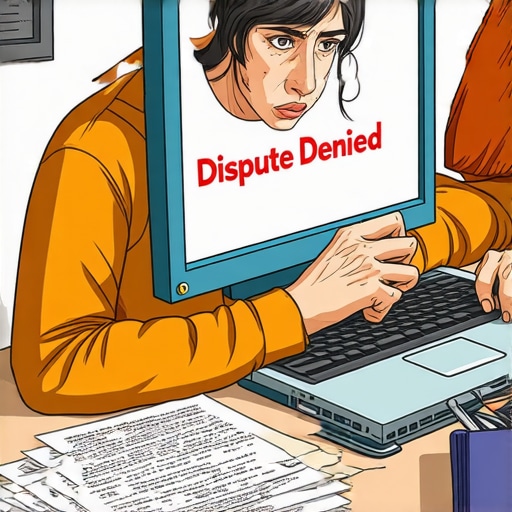
Why Did My Score Drop After I Paid Off My Entire Loan?
This is the ultimate sophisticated reader question. You do the ‘right’ thing—paying off a car or a house—and your score drops 20 points. Why? It’s because the algorithm rewards ‘active’ accounts with high history. Closing an account reduces your ‘credit mix’ and can lower the average age of your accounts. This is exactly why your credit score stalls after paying off a mortgage. It feels counter-intuitive, but the system is built to measure your current relationship with debt, not your past successes.
What They Don’t Tell You at the Counseling Office
If you find yourself overwhelmed and looking for professional help, be careful. Not all programs are created equal. You need to know credit counseling secrets to identify which agencies are actually non-profit and which are just debt-settlement companies in disguise. If you aren’t careful, you might learn how to avoid common pitfalls in credit counseling programs the hard way—usually after your score has already tanked from missed payments. When you finally decide to challenge the bureaus, remember the difference between a factual dispute and a general denial. A factual dispute is surgical and backed by evidence; a general denial is a guess that usually gets ignored. Have you ever fallen into this trap where doing the ‘right’ thing actually hurt your score? Let me know in the comments.I don’t use fancy, expensive software to track my progress. I use a ‘low-tech’ binder and a ‘high-tech’ spreadsheet. When you start the process of improve your credit score with proven repair techniques in 2025, you’ll realize that the bureaus count on you being disorganized. My spreadsheet has specific columns: the date I mailed the dispute, the Certified Mail tracking number, and the 30-day ‘drop-dead’ date for their response. Under Section 611 of the Fair Credit Reporting Act (FCRA), they generally have 30 days to investigate. If I don’t have a response by day 35, I’m on the phone or sending a follow-up demand. In my tracking sheet, I also distinguish between the ‘Original Creditor’ and the ‘Debt Buyer.’ This is the ultimate blueprint for effective credit repair because it gives you the evidence needed to challenge any generic ‘verified’ response. 
How can you keep your score steady for the long haul?
Maintaining a high score isn’t a one-time event; it’s a lifestyle. I personally check my raw data once a month—not just the flashy number on an app, but the actual account balances. I follow the strategy for keeping your credit score high while carrying debt by ensuring my reported balances never cross the 10% threshold on any single card. If I know a big purchase is coming up, I pay the balance down before the statement closing date, not the due date. This proactive approach is how to dispute errors on your credit report and improve score by preventing data errors before they can root. Looking ahead, the industry is shifting toward Trended Data. According to the Consumer Data Industry Association’s (CDIA) Metro 2 Technical Specifications, lenders are now looking at your behavior over a 24-month window rather than just last month’s snapshot. This means gaming the system for a quick 30-point jump is getting harder. You have to understand the science of credit repair to stay ahead of these algorithmic shifts. My advice? Go grab a three-ring binder tonight—label it ‘Financial Freedom’—and print out your first Certified Mail receipt. It’s the only way to prove a bureau is ignoring your rights when the automated scanners fail.I remember the pride I felt sliding the keys into the lock of my new place, only to have that feeling crushed two weeks later when I checked my credit app. I hadn’t missed a payment. I hadn’t maxed out a card. All I did was call the electric company and the water department to get the lights on. Yet, there it was—a 12-point drop that felt like a slap in the face. It’s a classic trap that catches even the most diligent of us off guard. Today, I’m going to pull back the curtain on why this happens and show you how to protect your rating when you’re just trying to live your life.
That Frustrating Dip After You Just Wanted Lights and Water
If you’ve ever wondered why the system seems rigged against basic necessities, you aren’t alone. When I started out, I made the huge mistake of thinking utility accounts were ‘neutral’—that they didn’t report to bureaus unless I messed up. I was wrong. The reality is that many providers perform what’s called a hard pull, which can be one of the why your recent credit inquiries are costing you money reasons your score takes a sudden hit. These inquiries signal to lenders that you might be seeking new credit, even if you’re just trying to keep the AC running in July. Have you ever seen your score plummet right after a big move? I’d love to hear your story in the comments.
Is a Utility Account Really Enough to Tank Your Mortgage Odds?
It sounds dramatic, doesn’t it? But here’s the kicker: while one inquiry might only shave off a few points, it’s the cumulative effect that hurts. According to the Consumer Financial Protection Bureau, utility and telecom companies are increasingly reporting data that can influence your financial standing in ways most people don’t expect. I’ve seen people lose out on prime interest rates because they opened several new service accounts right before applying for a loan. You need to understand the difference between your FICO score and your real score to see the full picture.
Why Your Credit Report Cares About the Electric Company
The credit bureaus view a new utility account as a new obligation. Even if the account itself doesn’t show up as a traditional line of credit, the inquiry used to open it certainly does. Back when I was first learning about key credit score factors every borrower must know, I ignored these ‘small’ pulls, thinking they were harmless. They aren’t. They can linger on your report for up to two years. If you didn’t give permission for a deep dive into your history, you should definitely learn how to identify an unauthorized credit inquiry fast to ensure your report stays clean. We’re going to dive into how you can potentially avoid these hits next time you move.
Stop the Bleeding Before You Call the Provider
Before you pick up the phone, you have to realize that you have more leverage than you think. Utility companies want your business, and they use credit pulls as a shortcut to see if you’re a risk. You can break this cycle. Think of a credit inquiry like a small scratch on a car. One is annoying; ten make the car look neglected. Your goal is to keep the finish pristine and avoid unnecessary dings that lower your borrowing power.
Negotiate Your Way Out of a Credit Pull
Always ask the representative if they can perform a ‘soft pull’ rather than a hard inquiry. A soft pull doesn’t affect your score. If they claim it’s impossible, ask about providing a ‘Letter of Guarantee’ or a ‘Letter of Credit’ from your previous utility provider. This document proves you paid on time for at least 12 months and often bypasses the credit check entirely. When I was moving into my third apartment, the gas company rep had no idea what I was talking about. I stayed on the line, asked for a supervisor, and eventually, they waived the credit check because I had proof of my clean streak. It saved my score from another unnecessary ding during a time when I was shopping for a car loan.
Leverage Your Existing History Instead
If you’re already a customer of the same company in a different city, insist that they use your internal payment history rather than a fresh credit report. They already have your data; there is zero reason for them to ding your FICO score again just because you moved across town. If they refuse, you might consider paying a small security deposit. While it ties up some cash for a year, it’s often cheaper in the long run than the increased interest rates you’d face if your score drops right before a major purchase. Protecting your debt-to-income ratio and inquiry count is worth a temporary 200-dollar deposit.
Clean Up the Mess After a Move
If the damage is already done, you need to look at top credit repair strategies to boost your score faster. Start by auditing your report. Look for inquiries that you didn’t explicitly authorize in writing. If you find them, you can use the method to remove incorrect inquiries from your credit profile. This isn’t just about deleting a name; it’s about ensuring every piece of data on that report is valid and verified.
#IMAGE_PLACE_HOLDER_B#
Force the Bureau to Fix Incorrect Records
Sometimes the problem goes deeper than a simple inquiry. If a utility bill from an old address follows you and shows up as a collection, you have to move fast. You should learn how to dispute errors effectively to stop that negative mark from haunting you for seven years. When you’re dealing with the bureaus, treat it like a legal deposition. Be precise and provide evidence of your move-out date. Use mastering credit disputes techniques to ensure your letters don’t get tossed by an automated scanner. If you find a bill that isn’t even yours, you need to know how to dispute a utility bill that is not yours immediately to protect your identity. If the process feels like too much to handle alone, understanding credit counseling can provide a roadmap to manage these obligations without drowning in the paperwork.
Handle Ghost Accounts and Shared Records
Moving often causes a mess of data entry. I once discovered an electric bill on my report for a house I had moved out of six months prior. The new tenant never switched the name. To fix this, you need to use the exact way to dispute an account that is not yours. Gather your lease termination and your new utility connection date as proof. This paper trail is your best weapon. If the utility company is being stubborn, you can escalate the issue by learning how to force a correction for an error in your credit file name or address. Keeping these records straight ensures that your financial reputation doesn’t get muddied by someone else’s negligence.
But even if your records are perfect, the ‘standard’ advice you hear in Facebook groups or from well-meaning friends can often lead you right into a ditch. Let’s dig deeper into the nuances that the ‘gurus’ usually skip. One of the most common myths is that simply paying off an old collection—like that pesky utility bill from three years ago—will instantly fix your score. In reality, unless you know the secret to negotiating a pay-for-delete agreement that sticks, paying a debt can actually keep the negative mark ‘fresh’ in the eyes of the bureaus by updating the date of last activity. This is where most people fail to unlock your credit score potential because they focus on the balance rather than the reporting status.
Why Paying That Old Utility Bill Could Backfire
When you pay a collection that’s been sitting there for years, the scoring algorithm sees a brand-new update on a negative account. This can cause a temporary dip, which is incredibly discouraging. To avoid this, you must understand the secret to negotiating a pay-for-delete agreement that sticks. Never send a dime until you have a written agreement stating the account will be completely removed from your report upon payment.
The Automated Dispute Trap That Ruins Your Rights
The ‘Oops’ factor often happens when you try to take the path of least resistance. You’ve probably seen the big ‘Dispute’ button on the credit bureau’s website or your favorite credit app. Stop right there. I’ve seen countless people lose their legal leverage because they used those portals. When you dispute online, you often waive your right to a full 30-day investigation or the right to appeal the results. To dispute errors like a pro, you need to use physical mail. According to a report by the National Consumer Law Center, the automated systems (like e-OSCAR) used by bureaus frequently ignore supporting documentation, reducing your detailed evidence to a generic two-digit code. To get results, you must use the method for beating automated dispute scanners at the bureau by making your letters stand out from the AI-generated templates.
Why Did My Score Drop After I Paid Off My Entire Loan?
This is the ultimate sophisticated reader question. You do the ‘right’ thing—paying off a car or a house—and your score drops 20 points. Why? It’s because the algorithm rewards ‘active’ accounts with high history. Closing an account reduces your ‘credit mix’ and can lower the average age of your accounts. This is exactly why your credit score stalls after paying off a mortgage. It feels counter-intuitive, but the system is built to measure your current relationship with debt, not your past successes.
What They Don’t Tell You at the Counseling Office
If you find yourself overwhelmed and looking for professional help, be careful. Not all programs are created equal. You need to know credit counseling secrets to identify which agencies are actually non-profit and which are just debt-settlement companies in disguise. If you aren’t careful, you might learn how to avoid common pitfalls in credit counseling programs the hard way—usually after your score has already tanked from missed payments. When you finally decide to challenge the bureaus, remember the difference between a factual dispute and a general denial. A factual dispute is surgical and backed by evidence; a general denial is a guess that usually gets ignored. Have you ever fallen into this trap where doing the ‘right’ thing actually hurt your score? Let me know in the comments.I don’t use fancy, expensive software to track my progress. I use a ‘low-tech’ binder and a ‘high-tech’ spreadsheet. When you start the process of improve your credit score with proven repair techniques in 2025, you’ll realize that the bureaus count on you being disorganized. My spreadsheet has specific columns: the date I mailed the dispute, the Certified Mail tracking number, and the 30-day ‘drop-dead’ date for their response. Under Section 611 of the Fair Credit Reporting Act (FCRA), they generally have 30 days to investigate. If I don’t have a response by day 35, I’m on the phone or sending a follow-up demand. In my tracking sheet, I also distinguish between the ‘Original Creditor’ and the ‘Debt Buyer.’ This is the ultimate blueprint for effective credit repair because it gives you the evidence needed to challenge any generic ‘verified’ response.
How can you keep your score steady for the long haul?
Maintaining a high score isn’t a one-time event; it’s a lifestyle. I personally check my raw data once a month—not just the flashy number on an app, but the actual account balances. I follow the strategy for keeping your credit score high while carrying debt by ensuring my reported balances never cross the 10% threshold on any single card. If I know a big purchase is coming up, I pay the balance down before the statement closing date, not the due date. This proactive approach is how to dispute errors on your credit report and improve score by preventing data errors before they can root. Looking ahead, the industry is shifting toward Trended Data. According to the Consumer Data Industry Association’s (CDIA) Metro 2 Technical Specifications, lenders are now looking at your behavior over a 24-month window rather than just last month’s snapshot. This means gaming the system for a quick 30-point jump is getting harder. You have to understand the science of credit repair to stay ahead of these algorithmic shifts. My advice? Go grab a three-ring binder tonight—label it ‘Financial Freedom’—and print out your first Certified Mail receipt. It’s the only way to prove a bureau is ignoring your rights when the automated scanners fail.
The Hard-Won Truths About Repairing Your Reputation
When I look back at my own journey, the biggest shift wasn’t learning how to write a letter; it was realizing that credit is a game of rules, not a reflection of your character. One major lightbulb moment was understanding the difference between a factual dispute and a general denial. If you just send a generic template, the bureau’s AI will flag it in seconds. You have to be precise. Furthermore, I learned that fast credit repair tips navigating dispute errors with confidence are about accuracy rather than shortcuts. If you have been a victim of something serious, like needing to know how to fix your credit profile after identity theft, you realize that your persistence is the only thing that forces the bureaus to act. It isn’t fair, but it is manageable once you stop playing by their unwritten rules and start using the FCRA to your advantage.
My Personal Toolkit for Fighting Financial Friction
I don’t trust the automated updates from free apps alone. To truly win, you need to go to the source. I always suggest starting with an ultimate guide to credit counseling take control of your financial future to get an objective view of your debt. For the DIY warriors, I highly recommend keeping a physical copy of the document checklist for a successful credit dispute in your repair binder. This prevents you from missing a signature or a piece of evidence that could restart your 30-day clock. Lastly, if you are feeling overwhelmed by high interest, exploring how credit counseling can transform your financial future can provide the legal and structural support you need to handle collectors while you fix your report.
Take Back Control of Your Financial Narrative
Fixing a credit score is about more than just numbers on a screen; it’s about the peace of mind that comes with knowing you aren’t being penalized for living your life. Whether it’s a utility pull or an old medical bill, you have the right to an accurate report. By utilizing the boost your credit score in 2025 top strategies that work, you are taking the driver’s seat in your financial future. Don’t let the fear of a 12-point drop keep you from moving forward. Grab your binder, send that first certified letter, and start rewriting your story today. #IMAGE_PLACEHOLDER_E# Have you ever had a utility provider refuse to waive a hard credit pull even after you showed them a perfect payment history from your previous address? Let me know in the comments below.