

I remember the pit in my stomach sitting in that fluorescent-lit office back in 2021. The finance guy didn’t even look me in the eye. He just pointed at a single ’30-day late’ from a year prior on my credit report and shook his head. I felt like a financial failure. I knew my income was solid and I’d worked hard to stay afloat, but that one missed payment—a total accident during a chaotic house move—was acting like a lead weight on my future. I realized then that the system doesn’t care about your ‘why’ unless you force it to. Today, I’m going to show you exactly how to navigate the messy world of credit reporting to get that black mark off your history for good. We aren’t just talking about waiting seven years; we are talking about taking control now.
Why One Small Mistake Costs You Thousands in Interest
It sounds dramatic, but it’s the cold, hard truth. According to FICO, payment history is the single most important factor in your credit score, accounting for a massive 35% of the total calculation. When I first saw that number, I panicked. I realized that my one-time slip-up was the reason my interest rates were sky-high. I wasted months trying the wrong things. I even tried a generic ‘not mine’ dispute, which was a huge mistake—the bureaus saw right through it because the account was clearly mine. If you want to dispute errors like a pro, you have to be smarter than the automated scanners. I eventually learned that the key isn’t just shouting that the report is wrong; it’s about using specific tactics like goodwill letters or finding technical reporting errors that the bank can’t verify. Once I stopped using generic templates and started using proven credit repair secrets, the doors finally started opening. Have you ever been blindsided by a credit rejection over something that felt so small? I’d love to hear your story in the comments.
Does this goodwill stuff actually work in 2025?
I get the skepticism. Banks aren’t exactly known for their bleeding hearts. You might think they have no incentive to help you out, especially when they can just keep charging you higher interest. But here is the secret: they want to keep you as a customer. I found that if you approach them with the right tone, you can often get your creditor to delete a late payment mark simply by proving it was an anomaly in an otherwise perfect history. It took me three tries with my lender before I found the right person who would actually listen, but that persistence saved me nearly $150 a month on my next loan. If you are tired of being held back, it’s time to stop asking for permission and start using the strategies that actually move the needle. We are going to dive into the exact phrasing and the ‘factual dispute’ method that can bypass the bots and get a human to actually look at your file.
Stop Shouting at the Screen and Start Mailing Letters
If you think clicking a ‘dispute’ button on a website is going to fix your life, I have bad news. Those portals are designed to make you fail. They strip away your rights to provide evidence and force you into a pre-selected category that an algorithm can dismiss in seconds. I learned this the hard way when I tried to fix a double-reported debt. I clicked ‘not mine’ on the portal, and within ten minutes, I got an automated rejection. It felt like being hung up on by a robot. To truly win, you have to never use an online portal to dispute errors if you want real results. Instead, treat your credit file like a legal case. You need to read your credit report like a professional auditor, looking for tiny inconsistencies in the dates, balances, or account numbers. Even a misspelled street name can be the crack in the door you need to pry the whole thing open. 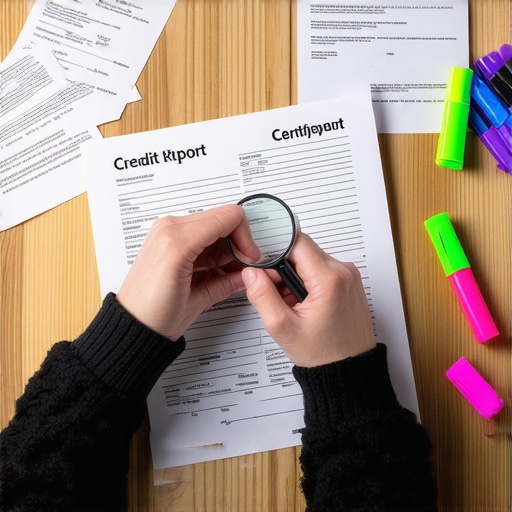
The Secret Weapon Against Automated Scanners
The bureaus use a system called e-OSCAR to process disputes. It turns your carefully written letter into a three-digit code. To beat this, you must use the method for beating automated dispute scanners at the bureau by writing your letters in a way that forces a human eyes-on review. I once spent three weeks chasing a medical collection. I didn’t just say ‘it’s not mine.’ I dug up proof that the clinic was actually closed for a holiday on the date they claimed I was there. I sent a photo of their holiday hours from their own website and a copy of my travel itinerary. That specific, undeniable proof is what breaks the loop. You need to know the difference between a factual dispute and a general denial. A general denial is a ‘he-said, she-said’ battle you will lose. A factual dispute is a ‘the-data-is-impossible’ battle that the bank cannot win.
Build a Paper Trail They Can’t Ignore
Every letter you send should be via Certified Mail with a Return Receipt Requested. This is your insurance policy. If they don’t respond within 30 days, you have them cornered. Make sure you have the document checklist for a successful credit dispute ready before you lick a single stamp. When I finally cleared my record, my desk was buried in green certified mail slips. It looked like a mess, but that mess was the proof I used to stop the automated rejection loop in your next dispute. If you aren’t seeing progress, it’s often because you haven’t provided a high enough ‘burden of proof’ for the bureau to override the bank’s data.
The Art of the Goodwill Pivot
If the late payment is actually your fault, the strategy changes from ‘dispute’ to ‘diplomacy.’ This is where you get a goodwill adjustment for a single mistake by appealing to the human on the other end of the phone or letter. I once got a major bank to delete a 30-day late mark by explaining that I was moving house and my mail forwarding failed. I didn’t make excuses; I just showed them five years of perfect history and asked for a one-time favor. It took four different phone calls to find a supervisor who had the authority and the empathy to hit ‘delete,’ but that one change jumped my score by 45 points in a single week. Persistence is the only thing the credit bureaus and banks cannot defeat.While persistence is king, the direction of that persistence is what separates a 600 from a 750. Most people think that the moment they pay off a collection, their score will skyrocket. It’s a logical thought, but the credit world is anything but logical. In many cases, paying off an old collection can actually cause your score to drop or stay stagnant. I’ve seen people devastated because the reason your score did not jump after paying off your cards was that they accidentally updated the ‘date of last activity,’ making an old mistake look brand new to the FICO algorithm. As noted in a landmark report by the Consumer Financial Protection Bureau (CFPB), the automated nature of credit reporting often leads to ‘data mirroring’ where one error propagates across multiple bureaus, making simple fixes impossible without professional-grade auditing. You have to understand that the science of credit repair expert advice to elevate your score involves knowing exactly which debts to touch and which to leave alone to avoid the ‘re-aging’ trap.
Will a debt management plan secretly sabotage your mortgage application?
This is the nuance that standard online advice misses. People flock to non-profit credit counseling thinking it is a safe haven for their reputation. But here is the contrarian truth: some mortgage lenders view a debt management plan (DMP) similarly to a Chapter 13 bankruptcy. While it might lower your interest rates, it can flag you as a high-risk borrower for years. You need to be aware of why nonprofit credit counselors might be hurting your score before you sign any contracts. I once worked with a couple who could not get a home loan despite a 700 score because their report was littered with ‘counseling’ notations that scared off the underwriter. It is one of the biggest ‘oops’ factors in the industry. To avoid this, you must learn how to avoid common pitfalls in credit counseling programs. 
Don’t fall for the ‘zombie debt’ trap
Another sophisticated mistake is engaging with ‘zombie debt’ collectors on the phone. The moment you acknowledge a debt is yours or make a tiny ‘good faith’ payment, you might be resetting the statute of limitations. This is why you need the ultimate blueprint for effective credit repair. Instead of talking to collectors, use the ‘factual dispute’ method to challenge the legal right of the agency to collect. Have you ever fallen into this trap where you paid something off only to see your score go down? Let me know in the comments.I realized that winging it with spreadsheets wasn’t enough; I had to shift to a more technical workflow to stay ahead of the bureaus. Once you’ve done the heavy lifting of scrubbing those errors, you can’t just set it and forget it. I treat my credit file like a high-performance engine that needs regular tuning. I personally use a dedicated credit vault—a simple encrypted folder where I keep PDFs of every dispute, every response, and every certified mail receipt. If you don’t have the document checklist for a successful credit dispute organized, you’re essentially fighting with one hand tied behind your back. I also rely on raw data from MyFICO rather than the educational scores you see on free apps. Understanding the difference between FICO 8 and FICO 9 scores became my obsession when I realized mortgage lenders were looking at a completely different version of me than my credit card app was showing.
Build a fortress around your newly repaired file
Maintaining a 750+ score is about more than just paying on time; it’s about managing the velocity of your credit report. I’ve found that using a physical scanner to digitize every piece of mail from the bureaus is the only way to dispute credit errors swiftly and securely in 2025 if they ever reappear. This is a common industry problem known as re-pollution, where a deleted item is sold to a new collector and pops back up. As highlighted in the Fair Credit Reporting treatise by the National Consumer Law Center (NCLC), the reasonable investigation requirement is often the weakest link for bureaus, but you can only call them on it if you have your previous deletion letters. For those who need a jumpstart after a cleanup, I always suggest looking into how to rapidly rescore your way to a lower mortgage rate if you are in the middle of a home purchase. It is a highly specific tool that forces an update in days rather than months.
Look ahead to the AI-driven future of lending
The game is changing rapidly. In 2025 and beyond, we are seeing the massive rollout of FICO 10T. Unlike previous models, this T stands for trended data. Instead of seeing your balance on one single day, they see if you’re paying it down or building it up over a rolling 24-month window. It’s no longer about a snapshot; it’s about the movie of your financial life. This makes it even more vital to boost your credit score in 2025 using habits that show a consistent downward trend in debt. 
How do I keep my credit score in the ‘Excellent’ range long-term?
Sustaining greatness requires a mix of strategic patience and technical discipline. I recommend using the ultimate blueprint for effective credit repair even when your score is already good, just to audit for phantom errors. Many people think they need to close old accounts to clean up their look, but that is a dangerous trap. You must keep your oldest credit card open forever because the length of credit history accounts for a significant portion of your score. If you feel overwhelmed by the technicalities, diving into the ultimate guide to credit counseling can provide a structured path to managing your debt-to-income ratio effectively. My advanced tip for today: go check your reason codes on your latest FICO report. They tell you exactly what is holding you back. If it says too many accounts with balances, focus on paying down those small $10-20 balances on miscellaneous cards first. That simple move can provide a massive lift to your profile by following the science of credit repair expert advice to elevate your score.
The Hardest Lesson I Learned About Fixing My Own Credit
I used to think that as long as I was right, I would win. I spent weeks angry at the “injustice” of the bureaus until I realized they aren’t judges; they are data entry firms. The biggest lightbulb moment for me was realizing that silence is a weapon. If they can’t verify a debt within 30 days, it has to go. This shifted my focus from emotional pleas to the difference between a factual dispute and a general denial. I also learned that you can’t rush the process; the bureaus count on you getting frustrated and giving up before the second or third letter.
The High-Performance Toolkit for Credit Masters
If you are serious about this, you need more than just a login to a free app. I personally trust the raw data from MyFICO over anything else because it shows you exactly what lenders see. I also recommend keeping a physical “credit bible”—a binder with every certified mail receipt. To truly unlock your credit score potential expert tips for 2025, you have to be more organized than the banks. Finally, I suggest everyone learn how to read your credit report like a professional auditor to spot the tiny date errors that automated systems usually ignore.
#IMAGE_PLACEHOLDER_E#
It’s Time to Stop Being a Victim of the Algorithm
Your credit score is not a reflection of your character; it is a reflection of how well you manage a specific set of data points. By using the science of credit repair expert advice to elevate your score, you are simply taking back the narrative. Don’t let a mistake from 2021 or a clerical error define your financial ceiling. Take the first step today, even if it’s just printing out your report and highlighting one error. You have the power to boost your credit score in 2025 if you stay the course. Have you ever sent a dispute letter only to get a rejection letter within days? Let me know your experience in the comments below!