

I’ll never forget the pit in my stomach when I saw that “Collection” alert on my phone. It was for a routine blood test I’d had eight months prior. I had the receipt in my kitchen junk drawer, but there it was, sitting on my credit report like a stain on a white rug. I felt powerless, angry, and honestly, a little embarrassed. How could I be someone who has “debt in collections”? It felt like a personal failure, even though I knew I’d paid the bill.
Why Your Medical Bills Are Probably Full of Lies
I spent weeks trying to “talk” my way out of it over the phone—my first big mistake. I thought being a “reasonable person” would fix it. It didn’t. What I didn’t realize back then is that medical billing is a chaotic mess of typos, outdated codes, and insurance miscommunications. If you are seeing a medical mark on your file, there is a massive chance it shouldn’t even be there. You need the ultimate blueprint for effective credit repair to handle these systemic glitches. According to a study by the Consumer Financial Protection Bureau, approximately 58% of all third-party collection accounts on credit reports are for medical debt, and many of these records are riddled with inaccuracies. One tiny typo at the doctor’s office can tank your mortgage chances. My goal today is to help you dispute errors like a pro by showing you exactly what to look for. Have you ever found a bill on your report that you know you already paid at the front desk?
Does a Medical Debt Actually Need to Come Off to Fix Your Score?
Some people think they can just ignore these small bills. They can’t. Even a $50 error can cause a major drop. You need to gather the proof you need to delete a medical debt and stop letting hospital bureaucracy dictate your financial future. It’s not just about the money; it’s about the accuracy of your life story on paper. If you have been struggling to get traction, you might want to look into credit counseling to take control. Let’s get into the specific errors that are hiding in plain sight and how we are going to fix them.Think of your credit report as a restaurant receipt. If the waiter tries to charge you for two steaks when you only ate one, you do not just pay it to be nice. You speak up. But in the world of credit, speaking up over the phone is like shouting into a hurricane. You need a paper trail.
Audit Your Report Like a Professional Auditor
The first thing you have to do is learn how to read your credit report like a professional auditor. You are not looking for big things; you are looking for the boring stuff. Check the account numbers, the dates of service, and even the spelling of your name. I once found a medical collection that was not even mine—it belonged to a guy with the same last name who lived three blocks away. This happens because the bureaus use fuzzy matching to connect debts to people. To dispute errors effectively, you need to highlight these mismatches. If the date of service on your credit report does not match the date on your doctor’s receipt, that is a factual inaccuracy you can use to force a deletion.
Stop Using the Online Dispute Button
It is so tempting to just log into an app and click dispute. Do not do it. You need to stop using the dispute button on Credit Karma right now. When you click that button, you often waive your right to a full investigation under the Fair Credit Reporting Act. You are essentially handing the bureaus a get out of jail free card. They use automated scanners to process those clicks in seconds. Instead, you want to use the ultimate blueprint for effective credit repair which involves physical paper. I remember the first time I tried the online route—it was rejected in less than 24 hours. The second time, I sent a physical letter and got the item removed in three weeks. The bureaus hate mail because a human actually has to look at it.
Force a Response with Certified Mail
This is the secret sauce. You need to use the certified mail hack that forces bureau responses. When you send a letter via Certified Mail with a Return Receipt Requested, you are creating a legal clock. They have 30 days to respond once they sign for that letter. If they do not, the law says they have to remove the item. 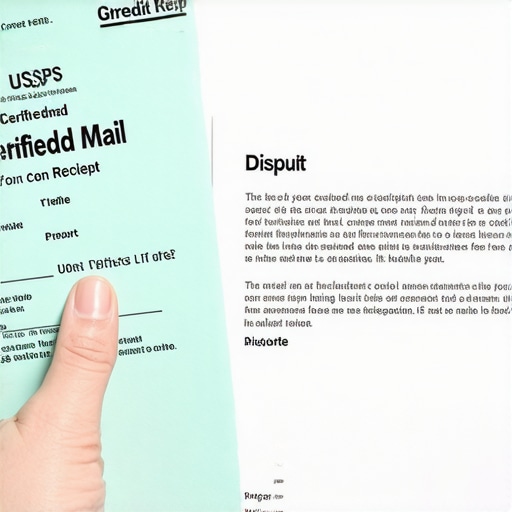 I once had a collection agency ignore my letters for months. The moment I sent that green card through the USPS, they realized I was not just another person they could bully. They could not find the original contract, and the debt vanished. You should also dispute errors like a pro by including a copy of your ID and a utility bill to prove your identity, so they can not hit you with the we could not verify it is you delay tactic.
Identify the Double Dipping Trap
Medical providers often sell their old debts to multiple collectors. This leads to double dipping, where the same $100 blood test shows up twice under different agency names. It is like being billed for the same cup of coffee by two different baristas. If you see two collections for the same amount or date, one or both must go. This is a common hurdle, and knowing how to spot it is key to mastering credit disputes. I once saw a client who had four different entries for one single ER visit. By the time we were done cleaning up the duplicates, their score had climbed 60 points without them paying a single cent to the collectors.People often assume that seeing a “non-profit” badge on a credit counseling website means they have found a safe haven. It is a comforting thought, but in my experience, it is one of the most dangerous myths in the industry. Many of these agencies are actually funded by the very banks and credit card companies you owe money to. When you sign up for a debt management plan, you are not just getting advice; you are often entering a structured repayment system that requires you to close all your accounts.
The Non-Profit Label Is Often a Trap
While their intentions might seem noble, closing your oldest accounts can cause your score to plummet due to a sudden loss of credit age and a spike in your utilization ratio. You need to look at the risks of using a non-profit credit counseling agency before you sign any contracts. I have seen clients who thought they were doing the right thing, only to find their mortgage applications denied months later because their credit profile was flagged with “DMP” notations. This is why I advocate for a more surgical approach. Instead of just managing the debt, you should be focused on improving your credit score with proven repair techniques in 2025 that keep you in the driver’s seat.
Can Credit Counseling Actually Tank Your Score?
Yes, and it happens more often than the industry likes to admit. A report by the Federal Reserve Bank of Philadelphia noted that while these programs can help consumers eventually become debt-free, the immediate impact on credit accessibility is often negative because lenders view a DMP as a sign of financial distress. If your goal is to buy a home or a car soon, you are better off learning how to master credit counseling on your own terms. 
Spotting the Re-Aging Scam Before You Pay
Here is a specific trap you must avoid: the “goodwill payment” request. A collector might call and say, “Just give us five dollars today to show you are acting in good faith.” Do not do it. This is a tactic used to “re-age” your debt. In many states, making even a tiny payment resets the statute of limitations, giving the collector a brand new seven-year window to sue you or keep the item on your report. You must identify re-aged debt before you pay a cent. Instead of talking to them, your focus should be on mastering credit disputes through formal, written channels.
The Difference Between Verification and Validation
Most people think these are the same thing, but for a pro, they are worlds apart. Verification is a lazy check of the bureau’s own database. Validation is a demand for the original contract with your signature. If you want real results, you have to understand the difference between a factual dispute and a general denial. When you use the ultimate blueprint for effective credit repair, you stop asking the bureaus to “check their math” and start demanding they prove the debt exists legally. Have you ever fallen into the trap of making a small payment just to get a collector to stop calling? Let me know in the comments, and let’s talk about how to reverse that damage.I didn’t just walk away once my score hit 750. Credit isn’t a “set it and forget it” machine; it is more like a high-performance engine that needs regular oil changes. If you stop paying attention, the errors creep back in like weeds in a neglected garden.
Keep Your Records Better Than the Bureau Does
My secret weapon isn’t a fancy app—it is a $15 accordion folder and a dedicated spreadsheet. Every time I send a letter, the tracking number and the date go into my “Credit War Room” sheet. This allows me to see exactly when the 30-day legal clock expires. You have to improve your credit score with proven repair techniques in 2025 by being more organized than the people you are fighting. Most people fail because they lose their receipts or forget which bureau they already challenged. If you are serious, you will also want to use credit score boosters and essential tips like setting up a small recurring charge on an old card to prevent the bank from closing it for inactivity.
The Boring Hardware That Saves Thousands in Interest
While everyone else is looking for the latest flashy AI app, I still swear by a physical high-speed scanner. Digitizing every piece of mail from a creditor or a bureau protects you if they ever try to “re-age” a debt years down the line. This level of detail is how you unlock your credit score potential. But here is the real pro move: you need to look beyond the “Big Three.” Data miners like SageStream and LexisNexis feed information to Equifax, Experian, and TransUnion. If those secondary reports contain errors, the major bureaus will keep “verifying” bad data because their source is contaminated. That is why you should freeze your SageStream report today to cut off the bad info at the source. 
How can I ensure my credit stays flawless for the long haul?
The answer is a disciplined 90-day audit. Every three months, I pull my own reports and cross-reference them with my tracking sheet. I am looking for new inquiries I didn’t authorize or balances that haven’t updated correctly. You need the strategy for keeping your credit score high even when life gets messy. According to the Consumer Financial Protection Bureau’s (CFPB) technical guidance on the e-OSCAR system, automated investigations often boil your detailed, 10-page dispute down to a simple 2-digit “dispute code.” This is why your manual, persistent follow-up is the only thing that breaks the cycle of automated rejections. I predict that as AI becomes more prevalent in the credit industry, the bureaus will get even faster at rejecting claims. To combat this, you will need to use the method for beating automated dispute scanners by using varied fonts, blue ink, and physical attachments that optical character recognition (OCR) machines struggle to process.
Stop the Leak Before It Starts
If you have been working hard to dispute errors on your credit report, do not let a new impulsive application ruin your progress. Every hard inquiry can shave off a few points and reset your momentum. Before you apply for any new credit line, try to master credit disputes to clear any lingering ghost debts first. My biggest piece of advice for this week? Go freeze your secondary reports—LexisNexis, SageStream, and Innovis—immediately. It is the “ghost layer” of the credit world that most people ignore, but it is exactly where the real power lies for maintaining a clean file.
Why I Stopped Fearing the Collection Notice
The biggest shift in my journey wasn’t learning the law; it was realizing that the credit bureaus are not gods. They are massive, data-driven machines that thrive on the path of least resistance. When you become the ‘difficult’ person who refuses to accept an automated rejection, the dynamic changes. First, I learned that persistence always beats perfection. Your letters don’t need to sound like they were written by a Harvard lawyer; they just need to clearly point out a factual error. Second, I realized that my voice matters more than their algorithm. If you feel stuck in the system, you must learn how to avoid common pitfalls in credit counseling programs so you can protect your progress. Third, I discovered that the most powerful thing you can say to a collector is ‘show me the original signature.’ Most of the time, they can’t. #IMAGE_PLACEHOLDER_E#
The Essential Toolkit for Your Financial Comeback
You don’t need a high-priced attorney to fix your file, but you do need the right resources. I personally swear by a physical accordion folder to keep every single certified mail receipt and hospital bill organized. Without that paper trail, you are just another person making claims the bureaus can ignore. I always recommend using the ultimate blueprint for effective credit repair to ensure you aren’t skipping critical legal steps. Additionally, I use the Consumer Financial Protection Bureau (CFPB) complaint portal as a secondary weapon when the bureaus fail to conduct a reasonable investigation. Being organized and informed is the only way to dispute errors like a pro and see real, lasting results on your score.
You Are More Than a Three-Digit Number
At the end of the day, your credit score is just a reflection of data, and as we’ve seen, that data is often wrong. Don’t let a medical debt or a billing error steal your peace of mind or your ability to buy a home. When you take the time to improve your credit score with proven repair techniques in 2025, you are reclaiming your financial narrative. You deserve a report that accurately reflects your responsibility, not the administrative failures of a hospital billing department. It takes time and it takes grit, but the freedom waiting on the other side is worth every stamp and every letter sent. Have you ever successfully removed a medical error from your report? Tell me your story in the comments below—your experience might be the exact spark someone else needs to start their own journey!