

I’ll never forget the cold sweat I felt at a local electronics store three years ago. I was trying to buy a mid-range laptop, something I desperately needed for work, but I was about $200 over my limit. I figured, ‘Hey, I’ve been a loyal customer, they’ll just bump it up, right?’ Wrong. Not only did they say no, but that impulsive request triggered a hard pull that lingered on my report for two years. It felt like being punished for wanting to spend money I intended to pay back. I realized then that I didn’t understand the rules of the game. Most of us think a credit limit increase is a favor the bank does for us, but it’s actually a calculated risk assessment you can influence. Today, I’m going to pull back the curtain on how I finally broke that cycle and started getting ‘yes’ after ‘yes’ without ever seeing a ding on my report again. We are going to fix your utilization and expand your purchasing power without the usual headaches.
I Tired of Trading My Credit Score for a Higher Limit
For a long time, I made the classic mistake of thinking that the reason your credit limit request was denied again was simply because I didn’t earn enough. I would call up the bank, practically begging, and they would invariably perform a hard inquiry that shaved points off my FICO score. It was a self-defeating cycle. I needed a higher limit to lower my utilization, but the act of asking for it made me look desperate to the algorithms. According to data from FICO, a single hard inquiry can drop a score by 5 to 10 points, which is a high price to pay when multiple hard inquiries are costing you more than points—they are costing you better interest rates on future loans. I eventually learned that there is a ‘soft’ way to do things, a method where you look for creditors that specifically offer increases based on your existing payment history rather than a fresh look at your credit file.
Is getting a higher limit really worth the risk of a denial?
You might be wondering if it’s even worth the trouble. I used to think I should just pay down my debt and leave the limits alone. But then I realized why your credit limit matters more than your total debt. It’s all about the ratio. If you have a $1,000 limit and owe $500, you’re at 50% utilization—which looks terrible. But if you can get that limit up to $5,000 without a hard pull, that same $500 balance suddenly only represents 10% utilization. Your score jumps almost overnight. Have you ever felt like you were doing everything right, paying on time every month, only to have your limit stay exactly the same? It’s incredibly frustrating, and honestly, it’s often because you aren’t using the right ‘soft pull’ triggers that banks already have in place. We’re going to change that today by looking at the specific phrasing and timing you need to use.
Force the Algorithm to Update Your Internal Score
The first mistake most people make is ignoring the ‘Update Income’ button on their banking portal. Think of this as casting bait. Banks are constantly running background checks on your spending habits, but they don’t always know when you’ve had a raise or a side hustle win. By manually updating your income, you are essentially signaling to their internal risk model that you are ready for a larger ‘leash.’ I used to think I had to wait for them to notice me, but knowing why your income is irrelevant to the credit bureaus is crucial; while the bureaus don’t track your salary, the bank uses it to justify your internal creditworthiness. Aim to update this every six months, even if the increase is modest. This small action keeps your profile fresh and often triggers an automatic, system-generated offer that requires zero effort on your part.
Why 181 Days is the Magic Number for Success
Patience is the most underrated tool in credit repair. Most major issuers like American Express and Discover have a ‘cool-down’ period. If you ask too soon, you hit a brick wall. I remember exactly where I was when I tried the ‘soft pull’ method for the first time. I was sitting in a dimly lit coffee shop, staring at my American Express dashboard. I had been at a $2,000 limit for nearly a year. I typed in my updated salary—which had only gone up by a few thousand dollars—and held my breath. I didn’t call anyone; I just hit ‘Submit’ on the request page after verifying there was no ‘hard inquiry’ language. Within three seconds, the screen refreshed: ‘Congratulations, your new limit is $6,000.’ It felt like finding a secret cheat code. No ding to my score, just pure breathing room.
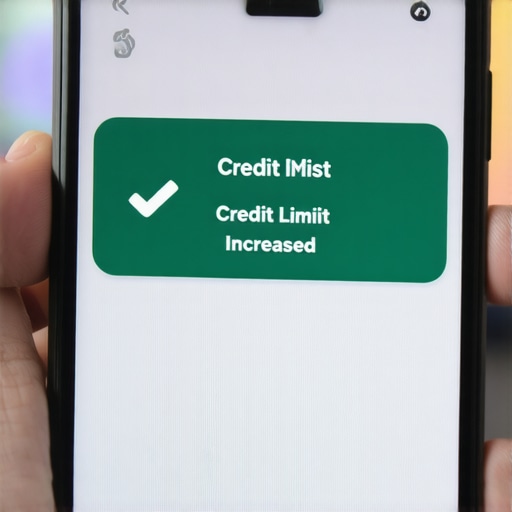
This success came because I followed the 181-day rule. If you’ve recently opened a card or received a previous increase, trying again before six months have passed is a recipe for an automated denial. Understanding key credit score factors every borrower must know will help you realize that stability is what these algorithms crave most. If you stay consistent and time your requests properly, the bank views you as a low-risk, high-value customer rather than a desperate borrower.
Identify the Hidden Warning Signs of a Hard Pull
You must become a detective before you click that final button. Most banks are required to disclose if they are going to perform a hard inquiry. Look for phrases like ‘we will check your credit report’ or ‘this may impact your credit score.’ If you see those, back away immediately. You want to see language like ‘this will not affect your credit score’ or ‘a soft credit check will be used.’ If the portal isn’t clear, you must call. Use this specific script: ‘I am interested in a credit limit increase, but only if it can be processed as a soft pull. Can you verify if this request requires a hard inquiry?’ If they hesitate, hang up. Protecting your report from unnecessary dings is one of the boost your credit score in 2025 top strategies that work because it preserves your score for when you actually need it, like for a mortgage or a car loan.
Lower Your Utilization Without Spending Your Savings
The beauty of a higher limit is the mathematical magic it does for your debt-to-limit ratio. If you carry a balance, you already know the hidden costs of carrying a high credit card balance, both in interest and in score suppression. By doubling your limit via a soft pull, you effectively cut your utilization in half instantly. This is like getting a ‘get out of jail free’ card for your FICO score. You aren’t spending more; you are simply creating a larger buffer. To ensure this works, you must avoid the how to stop the automated rejection loop in your next dispute mindset and treat your credit limit requests as a formal business proposal to the bank, backed by your history of on-time payments and responsible usage.
While securing that soft-pull limit increase feels like a massive victory, it is only one piece of a much larger chess game. Most people treat their credit report like a static record of their past, but seasoned experts view it as a living negotiation. The biggest mistake I see beginners make isn’t missing a payment; it’s assuming the system is designed to be fair or even accurate. In reality, the credit reporting system is a massive data-processing machine where errors are a feature, not a bug. To truly command your financial profile, you have to move past the basics and start looking at the technicalities that the bureaus hope you’ll ignore.
The Convenience Trap of Online Dispute Buttons
Everyone tells you that disputing a mistake is as easy as clicking a button on a free monitoring app. In my experience, that is exactly what the bureaus want you to do because it simplifies their side of the work while stripping you of your legal leverage. When you use those built-in tools, you are often forced to choose from a limited menu of generic reasons for your dispute. This triggers an automated system that rarely digs into the actual documentation. Worse, you frequently waive your right to a manual reinvestigation under the Fair Credit Reporting Act (FCRA). This is why you should never use an online portal to dispute errors if you want real results. Instead, you need a physical paper trail. Sending a certified letter forces a human being to actually look at your evidence, which is the only way to effectively how to stop the automated rejection loop in your next dispute.

Can a Credit Counselor Actually Damage My Future Mortgage Odds?
This is where things get controversial. We are often taught that non-profit credit counseling is the ‘responsible’ way to handle debt. But here is the nuance: while it might save your budget, it could temporarily poison your creditworthiness in the eyes of a mortgage underwriter. Many counseling programs place a notation on your report stating you are in a ‘Debt Management Plan.’ To a lender, this can look like a step just shy of bankruptcy. I’ve seen clients with 700+ scores get rejected for home loans because that one little notation signaled they couldn’t manage their original terms. This is one of the many reasons why non-profit credit counselors might be hurting your score without you even realizing it. According to the Federal Trade Commission (FTC), while the counseling itself doesn’t lower your score, the way lenders interpret your participation in a restrictive repayment plan can drastically change your ‘internal’ risk rating. You must learn how to avoid common pitfalls in credit counseling programs before signing any contracts that surrender control of your accounts.
Demand the Method of Verification Every Single Time
The real secret of the science of credit repair expert advice to elevate your score isn’t just saying ‘this isn’t mine.’ It is demanding that the bureau proves how they verified the information. Under the FCRA, if you challenge a debt, the bureau must be able to produce the actual records from the creditor. Most of the time, they just send an automated ping to the creditor’s database. If you push back and ask for the specific ‘Method of Verification,’ you often find that the original contract or signature is long gone, especially with older debts. This technicality is your strongest weapon. If they can’t prove it with a paper trail, they must delete it. Many people get frustrated when a debt is ‘verified,’ but they fail to realize that the truth about most non-profit credit counselors and basic repair services is that they don’t push hard enough on these forensic details. Have you ever fallen into this trap of taking the bureau’s first ‘no’ as a final answer? Let me know in the comments.
I’ve found that the difference between a temporary score bump and a permanent lifestyle change is the system you build around your data. Personally, I don’t rely on memory or ‘set it and forget it’ apps. I use a dedicated physical folder and a basic Google Sheet to track every single correspondence. This is the only way to ensure the paper trail that kills collection accounts for good remains intact. If a bureau claims they never received your evidence, you need that USPS tracking number ready to go. I’ve seen far too many people lose their progress because they couldn’t prove a creditor agreed to a deletion six months prior.
How do I maintain my credit health without obsessing over it daily?
I’ve settled into a ‘Quarterly Audit’ rhythm. Every three months, I pull my reports—not through a third-party app that summarizes things, but directly from the sources. I look for ‘soft’ changes, like new addresses or misspelled names, which are often the first signs of a mixed file. I also use this time to apply improve your credit score with proven repair techniques in 2025 like checking for any unauthorized inquiries that might have slipped through the cracks while I was shopping for insurance or a new phone plan.
One tool I swear by is the ‘Green Card’—the return receipt from certified mail. It’s a low-tech tool in a high-tech world, but it’s the only legal proof that starts the 30-day clock for the bureaus. Using the certified mail hack that forces bureau responses has saved me more headaches than any software ever could. According to the Consumer Financial Protection Bureau’s (CFPB) 2023 Consumer Response Annual Report, the volume of credit reporting complaints has skyrocketed to over 1 million, largely due to automated ‘frivolous’ designations. By sending physical mail with a real signature, you bypass the first layer of these AI filters that are designed to ignore digital submissions.
The Future of Credit is Guarded by Algorithms
I predict that over the next few years, bureaus will move toward even more aggressive AI-driven verification. This means your disputes need to be more ‘human’ and fact-based than ever before. Generic templates are being flagged in milliseconds. Learning how to dispute errors on your credit report and improve score is no longer just about fixing the past; it’s about defending your financial future against a system that prefers automation over accuracy. Your ability to provide unique, scanned documents as evidence will be your greatest asset as the bureaus try to phase out manual human reviews entirely.
Try this today: Pick the one error you’ve been ignoring—even a small one like a misspelled former employer—and write a physical letter. Do not use a template you found on a forum; write it in your own words. This one small action will prove to you that you have more power than the ‘Dispute’ button on a monitoring app ever gave you. Once you see that first correction come back in the mail, the psychological shift from victim to auditor is permanent.
What the Big Three Bureaus Hope You Never Figure Out
Looking back at my journey from a $2,000 ceiling to a $50,000 aggregate limit, the biggest shift wasn’t my income—it was my attitude toward the bureaus. I stopped treating them like authority figures and started treating them like data entry clerks who need to be audited. One thing I learned the hard way is that silence is often a tactic. If they don’t respond, they aren’t ‘working on it’; they’re waiting to see if you give up. Another realization was that your internal bank score is often more flexible than your FICO. If you’ve been a loyal customer, use that history to your advantage during soft pull requests. Finally, never underestimate the power of a physical signature. In a world of AI, a hand-signed letter is a ‘human’ flag that forces the system to slow down and actually look at your case.
#IMAGE_PLACEHOLDER_E#
My Battle-Tested Kit for Repairing Credit
I don’t believe in expensive software that just sends the same automated templates. Instead, I rely on a few specific tools that keep me in control. First, I always keep a stack of USPS Certified Mail forms (Form 3800) and Return Receipt cards (Form 3811). These are my legal insurance policies. Second, I recommend everyone use a physical accordion folder for each major creditor. It sounds old-school, but when you’re trying to dispute errors effectively a guide to correct your credit report, having the original statements at your fingertips is a game-changer. Lastly, I suggest checking out the document checklist for a successful credit dispute to ensure you aren’t missing the small details that cause automatic rejections.
Take Back the Reins of Your Financial Story
Your credit score is not a reflection of your worth as a person; it’s simply a data point in a very large, often messy system. By applying these credit repair secrets proven steps to boost your credit score fast, you’re shifting from being a passive observer to an active manager of your own financial reputation. It takes time, and you might hit a few more automated ‘nos’ before you get a ‘yes,’ but the freedom that comes with a high-limit, low-utilization profile is worth every stamp and every phone call. You have the tools now, and you know the pitfalls of things like the ultimate guide to credit counseling take control of your financial future—so go out there and start cleaning up your file. Have you ever successfully removed an error only to see it pop back up a few months later? Let me know your experience in the comments below!