

I remember sitting at my kitchen table at 2 AM, the blue light of my laptop screen making my eyes sting, as I stared at yet another ‘Verified’ status from TransUnion. It had only been forty-eight hours since I submitted my dispute. I had clear proof that the collection account wasn’t mine, but the system didn’t care. It felt like I was screaming into a void. I realized then that I wasn’t fighting a person; I was fighting an algorithm designed to find any excuse to say ‘no.’ My biggest mistake early on was thinking that the ‘Dispute’ button on their website was there to help me. In reality, your online dispute was likely rejected in seconds because it was distilled into a two-digit code that stripped away all your evidence. Today, I am going to show you how to break through that digital wall and actually get a human being to look at your file.
The e-OSCAR Gatekeeper Is Not Your Friend
The reason your perfectly valid documents keep getting ignored is a system called e-OSCAR. It is an automated bridge between the bureaus and your creditors. When you use a portal or a generic template, your complex life story is reduced to a computer-readable snippet. I used to think more was better, but I learned the hard way that the risks of using a bureau portal for complex disputes are just too high. You are essentially doing their work for them, making it easy for the machine to categorize and dismiss you. To win, we have to stop playing by the machine’s rules and start using the science of credit repair to our advantage. According to a study by the Federal Trade Commission, 25% of consumers identified errors on their credit reports that might affect their credit scores, yet the automated systems continue to fail a huge portion of these people. Have you ever felt like you were doing everything right only to have a robot shut you down in record time?
Is This Whole Process Actually Rigged Against You?
It certainly feels that way when you get a form letter back that doesn’t even address your specific points. You might be skeptical that a simple letter can beat a multi-billion dollar corporation. I was too, until I realized that TransUnion has a legal obligation under the Fair Credit Reporting Act to perform a ‘reasonable investigation.’ When you use the certified mail hack that forces bureau responses, you create a paper trail that the automated filters can’t easily ignore. You have to stop using those generic dispute letter templates that everyone else is using. If your letter looks like it was generated by a bot, the bureau’s bot will treat it like trash. I found that your dispute letter needs a real signature and a personal touch to prove there is a real human being on the other end of that envelope. This is about taking back control of your financial identity.
Scrub Your Report Like a Forensic Accountant
To win this fight, you have to look past the surface. Most people just glance at their score and panic, but you need to look at the ‘date of last activity’ and the ‘payment status’ fields for every single entry. I once spent three weeks fighting a $400 medical bill that TransUnion insisted was mine. It was only when I realized they had the wrong ‘date of first delinquency’ that the house of cards fell. By finding that one tiny data mismatch, I was able to how to dispute errors on your credit report and improve score by over 40 points in a single month. You aren’t just looking for mistakes; you are looking for inconsistencies in the Metro 2 format that the bureaus use to communicate. If the creditor reports a ‘past due’ amount on a closed account, that is a reporting violation.
Stop Settling for Verified and Demand Specific Proof
When the bureau sends back a letter saying an item is ‘verified,’ it usually means they just checked if your name and Social Security number match the creditor’s file. That is not a ‘reasonable investigation.’ You need to stop settling for verified and demand these specific records like the original signed contract or a full payment ledger. Think of it like a courtroom: if a prosecutor says you owe money but can’t produce a receipt or a contract with your signature, the case should be dismissed. This is the core of mastering credit disputes a step-by-step guide to success. You are forcing them to do the manual labor they are desperate to avoid. 
The Paper Trail That Kills Collection Accounts
The moment you drop a letter in a blue mailbox, the clock starts ticking. The Fair Credit Reporting Act gives them 30 days to finish their investigation. If you use a portal, they can claim you agreed to different terms. When you use the paper trail that kills collection accounts for good, you have a green ‘Return Receipt’ card that serves as your legal insurance. I remember the relief I felt when I walked into the post office with a stack of five certified letters; it was the first time I felt like I had the upper hand. You are creating a physical record that a human clerk has to open and scan.
Why You Should Never Use a Portal Again
Digital disputes are the path of least resistance for you, but they are also the path of least resistance for the bureau to delete your evidence. When you upload a PDF to their site, their OCR software strips the nuances and turns your dispute into a code. By mailing a physical letter with copies of your utility bills and ID, you are creating a ‘complex’ file. This forces the system to potentially flag it for human review because the machine can’t always reconcile physical attachments with the automated codes. This is one of the most effective top credit repair strategies to boost your score faster because it breaks the automated cycle.
Master the Art of the Follow-Up
Don’t just send one letter and pray. If they respond with ‘frivolous,’ don’t get discouraged. That is just another automated stall tactic. Your response should be a demand for the ‘method of verification.’ Ask them exactly who they spoke to at the collection agency and what documents were reviewed. Most of the time, they won’t have an answer. This level of persistence is exactly what the ultimate blueprint for effective credit repair looks like in action. It is not about being lucky; it is about being more annoying than the cost of just deleting the negative item.Let’s dig deeper into what happens when you actually start winning. Most people think that the finish line is getting a debt marked as ‘paid.’ This is a massive trap. In my experience, a ‘paid collection’ is often just as damaging as an unpaid one because the negative history remains for seven years. To truly move the needle, you have to understand the difference between a paid collection and a deleted one. If it isn’t deleted, it’s just a decorative scar on your report. 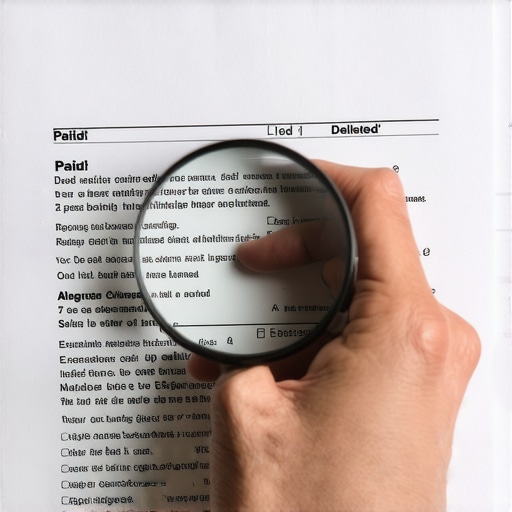
A Paid Status is Just a Decorative Scar
Many credit counselors will tell you to settle everything to ‘clean up’ your file. But here is the nuance: FICO models often don’t care if you paid the collection; they care that the collection existed in the first place. This is where the science of credit repair becomes crucial. You aren’t just aiming for a zero balance; you are aiming for total removal. If you pay a collector without a ‘pay-for-delete’ agreement, you might actually lower your score temporarily by updating the ‘date of last activity,’ making the old debt look brand new to the algorithm.
Don’t Accidentally Reset the Seven-Year Clock
The ‘Oops’ factor here is real. I’ve seen people make a $20 ‘good faith’ payment on a six-year-old debt, thinking it would help. Instead, they accidentally restarted the statute of limitations. You must know how to identify re-aged debt before you pay a cent. Collectors are notorious for ‘re-aging’ accounts to keep them on your report longer than legally allowed. According to a 2021 report by the Consumer Financial Protection Bureau (CFPB), the credit bureaus have been increasingly criticized for failing to investigate these specific types of data inconsistencies, often letting collectors slide with minimal proof.
Can a High Salary Save You From a Low Score?
I often get asked by high-earners why they are still getting rejected for premium cards. The truth is that your income is irrelevant to the credit bureaus. They don’t track your bank balance; they track your behavior. You could make seven figures, but if you have a single late payment on an old car loan, your score will suffer. This is also why you might see why your score dropped after you paid off your auto loan—you closed an active, aging account, which shortened your credit history. It feels counterintuitive, but the system rewards debt management, not the absence of debt. Have you ever fallen into this trap where doing the ‘right’ thing actually hurt your score? Let me know in the comments.After you have successfully scrubbed the errors from your report, the real work begins: holding that ground. I personally treat my credit file like a legal case file. I don’t just ‘check my score’; I audit the data. I use a dedicated high-speed document scanner—specifically a ScanSnap—to digitize every single piece of correspondence from a bureau or collector. Why? Because when you are disputing errors effectively a guide to correct your credit report requires having the original metadata at your fingertips. If a bureau claims they didn’t receive your letter, you need to be able to pull up the certified mail receipt and the specific PDF of that letter in seconds. This isn’t just about being organized; it is about building a digital arsenal that makes the bureaus realize you are not a typical consumer they can ignore. You should find the easiest way to track your fico score for free that provides actual FICO 8 or 9 scores, not the VantageScore ‘educational’ numbers that lenders rarely use. 
How do I maintain my credit score over the long term?
Maintenance is about strategic activity, not just avoiding debt. One of my favorite methods for keeping a score high is how to use small retail cards to anchor your credit history. I have a couple of old store cards that I use once every six months for a $5 purchase, then pay it off immediately. This keeps the ‘Age of Accounts’ metric growing without me paying a single cent in interest. You have to be proactive because the bureaus are looking for any reason to lower your limit or close an inactive line. As the Consumer Data Industry Association (CDIA) outlines in their Metro 2 technical specifications, the reporting of ‘Account Status’ is a precise science; even a single month of ‘No Data’ can sometimes flag an account for closure by automated risk algorithms. Moving forward, I predict we will see a massive shift toward ‘Trended Data’ where the bureaus look at your spending trajectory over 24 months rather than just a snapshot. This means that to unlock your credit score potential expert tips for 2025, you need to focus on consistent behavior. If you want to see immediate results, try this: find your oldest credit card and set one small recurring utility bill to autopay on it, then set the card itself to autopay from your checking account. This creates a perpetual cycle of ‘on-time’ reporting that costs you nothing but builds immense trust with the algorithm.
Everything the Credit Bureaus Hope You Never Discover
After years of fighting these systems, the biggest lightbulb moment I had was realizing that silence from a creditor is actually a win for you. If they can’t respond within 30 days, that item legally must go. I also learned that dispute errors effectively a guide to correct your credit report requires more than just pointing out a wrong name; it requires proving the bureau failed its duty. Persistence isn’t just a virtue; it’s a financial strategy. The bureaus are essentially testing your resolve with every form letter they send. Don’t let a ‘frivolous’ tag stop you—it’s often just an automated gatekeeper. Finally, remember that your credit file is a dynamic story, not a static grade. You have the power to edit that story every single month by applying unlock your credit score potential expert tips for 2025 and staying ahead of algorithm shifts.
The Only Apps and Resources I Still Use Today
If you are serious about this, you need the right toolkit. First, skip the free ‘educational’ apps and go straight to the source. I rely on myFICO because it provides the actual scores lenders see, not a watered-down version. Second, I keep a physical ‘Credit Bible’—a binder with every certified mail receipt and response. To truly master the nuances, I recommend reading the actual text of the Fair Credit Reporting Act; it’s surprisingly readable and gives you the exact language to use in your letters. If you want to dive deeper into the methodology, check out the science of credit repair to understand the data logic behind the scores.
Stop Dreaming About a High Score and Start Building It
There is a unique kind of peace that comes with knowing your financial house is in order. It’s not just about getting a lower interest rate on a truck; it’s about the freedom to walk into any room and know you aren’t being judged by a mistake from five years ago. You now have the blueprint to take back control of your credit score. This process takes time, and there will be moments of frustration, but the results are worth every stamp and every trip to the post office. By using these credit repair secrets proven steps to boost your credit score fast, you are investing in your future self. What was the most frustrating part of your last dispute? Let me know in the comments below!