
Effective Credit Repair & Dispute Strategies to Boost Your Score in 2025
I remember sitting at my kitchen table, staring at my credit report, feeling utterly overwhelmed. Errors, late payments, accounts I didn’t recognize—each one felt like a weight pulling me further down. It hit me hard: if I didn’t take action, my financial future could be in serious jeopardy. That lightbulb moment—realizing that my credit score wasn’t just a number but a key to buying a home, securing better loans, and even dream vacations—changed everything.
Today, I want to share how I turned things around and how you can too. If you’re tired of wandering through the credit maze, not knowing whether your efforts are enough, you’re not alone. Luckily, effective dispute strategies and proven repair techniques can make a real difference. What if I told you that most people overlook simple yet powerful methods to improve their credit quickly? In this post, you’ll discover exactly how to master these techniques to elevate your score in 2025.
Why Fixing Your Credit Now Is More Crucial Than Ever
In our current financial landscape, your credit score wields more influence than ever. From low interest rates to rental approvals, this three-digit number opens or closes doors. But understanding why your credit needs a boost today goes beyond just the immediate perks. Studies show that a good credit score can save you thousands over a lifetime—some estimates suggest up to $300,000 in interest savings over a typical mortgage period source.
Yet, despite its importance, many folks delay addressing inaccuracies or neglect to explore strategic dispute techniques. The root cause? Fear of complex processes or the mistaken belief that credit repair is too slow or ineffective. I made that mistake early on—thinking I needed expensive services to see results, only to find that a lot of what I needed was within my reach, waiting to be leveraged.
Here’s the truth: repairing and disputing credit errors isn’t just for credit experts. With the right approach and some insider tips, you can take control of your credit report, challenge inaccuracies, and boost your score faster than you might expect. Intrigued? Good. Stick around because we’re about to dive into exactly how you can punch through your credit hurdles with confidence.
Is Credit Dispute Strategy Actually Worth the Hype?
When I first heard about dispute strategies, I was skeptical. It sounded too good to be true—like some quick fix promising instant results. But trust me, the difference between the pile of errors lurking on my report and a cleaner, healthier credit profile was a matter of applying proven dispute techniques. The key lies in knowing where to focus your efforts and how to present your case effectively. Want to learn the most effective methods? You can explore detailed guides on mastering credit disputes and start transforming your credit today.
Pinpoint the Errors on Your Credit Report
Start by obtaining a recent copy of your credit report from all three bureaus—Experian, TransUnion, and Equifax. Review every line meticulously. Think of it as an archeologist brushing away dirt to reveal hidden artifacts; your goal is to uncover inaccuracies or outdated information. I once found a closed account listed as open, which was mistakenly lowering my score. This discovery marked the first step in my repair process and proved how critical attention to detail is.
Identify Disputable Items Clearly
Next, categorize each error. Errors like outdated accounts, incorrect personal info, duplicate entries, or accounts that don’t belong to you are prime candidates for disputes. Imagine your credit report as a cluttered toolbox—only some tools are faulty. Your focus should be on the defective ones that can be fixed. Clear identification ensures your disputes are targeted and effective, saving time and increasing success rates. For example, I prioritized disputing a falsely reported late payment, which added several points to my score once corrected.
Gather Supporting Evidence and Documentation
Strong evidence makes your dispute compelling, much like a lawyer building a case. Collect bank statements, payment receipts, or correspondence that counters inaccuracies. Scans or photos of documents can be uploaded when submitting disputes online. I once used a bank statement to prove I had paid off a debt reported as unpaid. Proper documentation empowered me when communicating with the bureaus, significantly improving my chances of quick resolution.
Leverage Official Dispute Channels Effectively
Use the bureaus’ online portals for swift submissions but don’t shy away from certified mail for formal disputes, especially for complex errors. Think of this process as mailing a legal letter—proof of delivery matters. When I sent a dispute via certified mail with return receipt, I had concrete proof of submission, which proved handy when processing delays occurred. Follow each bureau’s specific instructions carefully; ignoring details can delay your progress or lead to incomplete disputes.
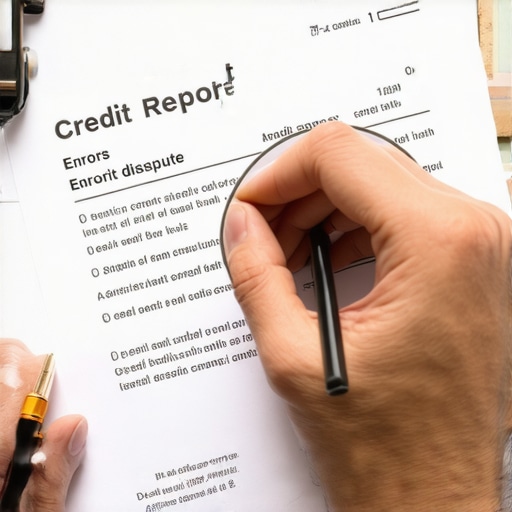
Visual guide showing step-by-step credit report review and dispute process to simplify understanding and execution.
Create a Compelling Dispute Letter
Your dispute letter should be concise, factual, and polite. Clearly specify each item you contest, include supporting evidence, and cite relevant laws (e.g., Fair Credit Reporting Act). Think of this as presenting a legal brief—you want clarity and precision. For example, I listed the incorrect account, explained why it’s wrong, attached proof, and politely requested correction. Well-crafted disputes increase the likelihood of swift action from bureaus and furnish a clear record for future reference.
Follow Up Persistently but Patience
Monitor the progress of your disputes regularly, checking online portals or via mail. If no response within 30 days, escalate or resend your dispute. Remember, like tending a garden, consistent care yields better results. I set reminders to follow up and kept notes of all correspondence, which helped me track responses and expedite corrections. Persistence can often turn an initially sluggish process into a rapid turnaround.
Utilize Credible Repair Resources
Enhance your efforts by consulting proven guides like mastering credit disputes. These resources can unveil nuances and tips that increase your dispute success rate. Remember, educating yourself ensures you’re not just copying a template but understanding the strategic moves needed to optimize your credit health in 2025.
Many believe that correcting a few credit report errors or increasing their credit score is a straightforward process, but in reality, misconceptions and overlooked nuances often hinder progress. A common trap is oversimplifying credit repair as merely disputing errors—while important, this approach ignores deeper, systemic issues that influence your credit health. For instance, some assume that all credit mistakes are easily fixable with a quick dispute; however, complex errors involving identity theft or fraudulent accounts require specialized strategies often underestimated by novices. *Let’s dig deeper:* taking a mere snapshot of your credit report without understanding the underlying factors—like payment history, credit utilization, or account mix—can lead to misguided efforts. According to credit expert, Neil Julius, addressing just inaccurate data without improving your overall credit habits results in short-lived gains.
Another misconception is that credit counseling alone can rapidly improve your score. While credit counseling provides valuable financial guidance, many don’t realize that it’s only part of a comprehensive credit health plan. It’s vital to combine counseling with strategic dispute techniques and behavioral changes to see lasting results. Supplementary resources, such as detailed guides on unlocking your score potential and effective repair techniques, can shed light on advanced pitfalls many overlook.
Beware of the myth that credit disputes should be a slow, tedious process—this can lead to premature abandonment. Actually, many errors can be swiftly corrected if you leverage the right channels and organize your evidence properly, like using certified mail or online dispute portals effectively, as discussed in dispute credit errors swiftly.
Furthermore, consider the Once you’ve laid the groundwork for repairing your credit, maintaining that progress requires strategic tools and disciplined methods. Personally, I rely on a combination of reputable software and consistent routines to monitor and boost my credit health over time. For instance, I use Credit Karma for its real-time alerts on changes to my credit report. Its user-friendly interface and free access make it an invaluable part of my ongoing maintenance. Additionally, I subscribe to a credit monitoring service that offers detailed insights into key factors affecting my score, such as utilization ratios and account age, which align with principles outlined in key credit factors. This proactive approach prevents errors from slipping through and helps track the effectiveness of my credit strategies.
The trend in credit management leans heavily towards automation and data-driven adjustments. Future advancements predict even more sophisticated AI-powered platforms capable of not only monitoring but also recommending personalized actions to optimize your credit profile. Embracing automation now prepares you for a smoother transition into this future. I recommend setting up automated alerts and periodic reviews to stay ahead.
How do I maintain my credit health over time?
To sustain your credit improvements, integrate continuous monitoring with regular dispute checks and financial education. I review my credit report at least once a quarter and scrutinize any unfamiliar entries or sudden score dips. Consistency is key: setting calendar reminders and investing in educational resources ensures you’re not just fixing issues temporarily but building a resilient credit foundation. Remember, maintaining a good score isn’t a one-time effort but an ongoing process.
If you haven’t already, try leveraging tools like Credit Karma paired with disciplined review routines. This dual approach—using technological assistance alongside active management—can dramatically enhance your long-term credit stability. For deeper insights into managing disputes efficiently, explore dispute credit errors swiftly. Taking these steps now sets the stage for a healthier financial future and positions you to adapt seamlessly to emerging credit management innovations.
What I Wish I Knew About Disputing Errors Early on
One of the most profound lessons I learned was that patience and persistence are crucial. Initially, I expected instant results, but I soon realized that meticulous review and consistent follow-up yielded the best outcomes. The value of proper documentation cannot be overstated; having clear proof made my disputes more compelling and faster to resolve.
How Oversimplifying Opportunities Can Hold You Back
I once thought that disputing every minor error would rapidly boost my score. However, I discovered focusing on high-impact inaccuracies—like fraudulent accounts or outdated delinquencies—was more effective. Tackling the wrong issues wastes time and energy, so honing in on what truly moves the needle makes all the difference.
Why Understanding Your Credit Report’s System Is a Game Changer
Learning how credit bureaus operate allowed me to anticipate their responses and streamline my dispute process. Recognizing patterns, such as how certain errors linger, helped me craft smarter strategies. Investing time in understanding key credit factors, like utilization ratios, enabled me to approach improvements holistically, not just through error correction.
My Roadmap for Consistent Credit Health Maintenance
Post-repair, I realized that ongoing monitoring and education are vital. Regularly reviewing my report for new errors and staying informed about credit scoring changes keep me ahead. Tools like credit monitoring services, combined with continuous learning from trusted resources, help sustain the progress I worked so hard to achieve.
Where Your Next Step Should Lead
Now that you’ve learned some of my deep personal insights, it’s time to act. Whether you’re beginning your dispute process or looking to enhance your credit understanding, remember that control is in your hands. Consistent effort, informed strategies, and patience will transform your credit story over time. Ready to take the next step? Explore more at mastering credit disputes or contact us for personalized guidance. Your future with better credit starts today!
Reading through your post really resonated with me, especially the part about understanding the nuances of credit reports beyond just fixing errors. I’ve learned firsthand how critical it is to grasp the underlying factors affecting my score, like credit utilization and payment history, rather than only disputing inaccuracies. I once focused heavily on correcting mistakes but overlooked how my habits impacted my credit health overall. Once I started managing my credit utilization and paying bills on time consistently, I saw more sustainable improvements. It’s also interesting how you emphasized ongoing monitoring — I use tools like Credit Karma regularly, and it’s helped me catch small issues before they become big problems. Do you have tips for people starting to rebuild their credit after financial setbacks? I’d love to hear strategies that work for folks in that situation, especially those who might feel overwhelmed and unsure where to begin.