

I remember sitting in that plastic chair at the local Ford dealership, clutching a lukewarm coffee and feeling pretty good about my life. I had a decent job and had never missed a payment on my cards. I expected a handshake and a low-interest loan. Instead, the finance guy slid a piece of paper across the desk that made my stomach drop. Fifteen percent. That was my interest rate. I almost choked on my coffee. I realized then that my “clean” record wasn’t as clean as I thought. It turns out, my report was littered with “ghost” errors I’d ignored for years. I learned the hard way that tiny errors on your report that cost thousands over the life of a loan. Today, I’m going to show you how to peel back the curtain and fix the mess so you don’t get fleeced like I did. [image placeholder]
The High Price You Pay for a Report You Never Checked
Most people think their interest rate is just some random number pulled out of a hat by a greedy banker. I used to think that too. But the reality is much more clinical—and much more fixable. Your credit report is the only evidence a lender has to judge your character. If that report says you’re a risk, even because of a typo, you pay for it in cold, hard cash every single month. According to the Consumer Financial Protection Bureau (CFPB), millions of Americans have inaccuracies on their reports that could lead to higher borrowing costs. I made the mistake of thinking my score was “fine” until I actually looked at the data. I spent months disputing errors like a pro once I realized that even a 50-point swing could save me $200 a month on a mortgage. Have you ever been shocked by a loan denial or a high rate even though you thought you were doing everything right?
Is it really worth the hassle to fight these tiny errors?
You might think spending hours on the phone or writing letters is a waste of time for a “small” mistake. I thought the same thing when I saw a misreported $40 medical bill. But that one tiny blotch was dragging my score down just enough to kick me into a higher interest bracket. When I finally used some credit score boosters and cleaned up my file, my next loan offer was nearly half the previous rate. It’s not just about the score; it’s about the thousands of dollars you’re currently handing over to the bank for no reason.
Grab Your Reports and Start a Forensic Audit
The first thing I did—and the first thing you must do—is get your hands on all three credit reports. If you only look at one, you’re looking at only a third of the map. I used to think they were all identical, but why your credit score might differ across all three bureaus is usually down to which creditors report to which agency. Treat this like a crime scene. Grab a red pen and circle everything that isn’t 100% accurate. I’m talking about misspellings of your name, addresses where you’ve never lived, or accounts that should have fallen off years ago. 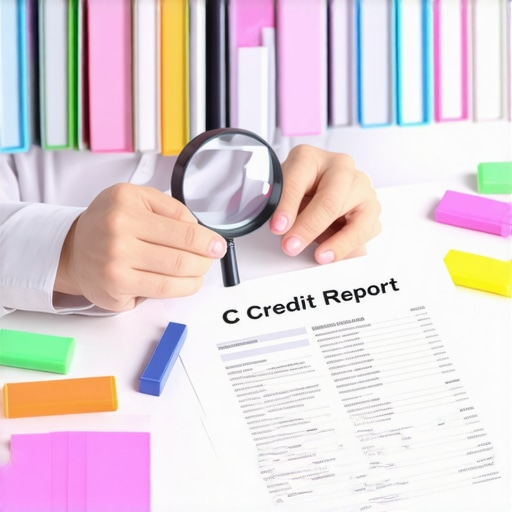
Stop Using the Easy Button Online
It is incredibly tempting to just click “dispute” on a website and call it a day. That is exactly what the bureaus want you to do because it limits your rights. I learned the hard way that why you should never use an online portal to dispute errors is because you often waive your right to a re-investigation. Instead, you need to send a physical letter via certified mail. This creates a paper trail that the legal system actually respects. Think of it as a formal challenge in a courtroom versus a casual complaint to a manager.
Force the Bureaus to Prove Every Single Claim
When I was fighting that $40 medical bill, I didn’t just say “this isn’t mine.” I demanded they show me the signature. The secret is that most debt collectors can’t produce the original paperwork within the 30-day legal window. This is why you should always ask for a method of verification every time. If they can’t prove it, they must remove it. I once had a collection for a gym membership I cancelled in 2018. The bureau kept saying it was “verified” until I demanded to see the specific method they used. It turned out they were just checking a digital box, not looking at a contract. Once I pushed back, the account vanished and my score jumped 30 points overnight.
Check the Tiny Details Like a Professional Auditor
It’s not just the big balances that kill you. Sometimes it’s a name. I once spent three weeks trying to figure out why my mortgage was denied until I realized my file was “merged” with a cousin’s. Learning how to force a manual review of your denied loan saved my house hunt. You have to look at the “Date of Last Activity” and the account status. If a debt is ancient, you might need to find the proof needed to delete a collection that is past the statute of limitations. It’s like cleaning out a garage; you have to touch every single box to see if it’s junk or worth keeping.
Once you start touching those boxes in your financial garage, you might be tempted to just throw everything away by paying off every old collection you find. But here is the contrarian truth: paying it off might actually hurt you first. Everyone tells you that paying your debts is the moral thing to do, but the credit algorithm is a machine, not a priest. Sometimes, the reason your score did not jump after paying off your cards is because you refreshed the ‘date of last activity’ on a debt that was otherwise dormant. By sending a check, you effectively wake up a sleeping giant that was inches away from falling off your report. Instead of blindly paying, you need to understand how to negotiate a pay-for-delete without admitting the debt. If that negative mark stays on the report with a ‘paid’ status, it still screams ‘risk’ to anyone looking at your file. You need that entry purged, not just updated.
Why Non-Profit Labels Can Be Deceptive
I almost fell for the ‘non-profit’ credit counseling trap when I was at my lowest. You see the word ‘non-profit’ and you think ‘charity,’ but the reality is much more corporate. Many of these agencies are largely funded by the very credit card companies you owe money to. While they can help you organize a budget, the risks of using a non-profit credit counseling agency often include having a ‘Debt Management Plan’ notation added to your file. To a sophisticated lender, that notation is a red flag suggesting you couldn’t handle your original obligations. Always check how to spot predatory terms in a debt management plan before you sign away your financial autonomy.
Can the Bureaus Just Use a Computer to Reject My Case?
This is the hidden nuance that separates the pros from the amateurs. You might send a 10-page packet of evidence, but according to reports by the National Consumer Law Center, the bureaus typically use a system called e-OSCAR to boil your complex dispute down to a three-digit code. If you don’t use the method for beating automated dispute scanners at the bureau, your evidence might never even be seen by a human eye. You have to structure your letters to bypass these digital gatekeepers. 
The Verification Trap You Must Avoid
The biggest ‘oops’ factor I see is when people accidentally validate a debt they are trying to fight. If you call a collector and say, ‘I know I owe this, but can we settle?’, you have just legally re-validated the debt and potentially restarted the statute of limitations. This is why why you should ask for a method of verification every time is the most powerful tool in your belt. The law doesn’t care if you actually spent the money; it cares if the collector can legally prove it with a signed contract. Many collectors buy ‘junk debt’ and don’t actually have the original paperwork. Leveraging the science of credit repair means making them do the hard work of proving every single penny. Have you ever fallen into this trap or had a ‘paid’ collection actually lower your score? Let me know in the comments.
Once you’ve successfully scrubbed the errors and seen that score tick upward, you might feel like you’ve won the war. But the credit game is a marathon, not a sprint. I treat my credit report like a garden; if you don’t pull the weeds regularly, they’ll take over the whole yard again. To stay on top of things, I rely on a specific stack of tools. While everyone talks about free apps, I personally pay for a premium subscription to MyFICO. Why? Because most free apps use the VantageScore model, which almost no mortgage lender actually uses. You need to see exactly what the banks see if you want to unlock your credit score potential expert tips for 2025. I also keep a ‘Dispute Bible’—a simple physical folder where I staple every certified mail receipt and every response from the bureaus. This isn’t just about organization; it’s about having immediate ammunition for mastering credit disputes if a deleted item suddenly reappears—a nasty habit bureaus have called ‘re-insertion.’ 
Build a Shield Around Your Restored Score
Don’t just fix the past; protect the future. I’ve started using credit freezes on all three bureaus as my default state. It takes two minutes to ‘thaw’ them when I need a loan, but it prevents 99% of identity theft issues from ever hitting my report. As industry expert John Ulzheimer, a former FICO and Equifax veteran, often emphasizes, your credit score is a ‘living, breathing’ entity that reflects your most recent behavior. This means your credit repair secrets are only as good as your current month’s habits. I expect that by 2026, we will see even more AI-driven monitoring that predicts score drops before they happen based on spending patterns, so getting comfortable with data-tracking now is a massive advantage.
How do I keep my score high without checking it every hour?
The secret is automation and alerts. I set my bank apps to ping my phone for any transaction over $1.00 and my credit monitoring to alert me of any new inquiry. This way, I’m not obsessed with the number, but I am obsessed with the integrity of the data. If you’re ready to take the next step, I challenge you to try this: call one of your current creditors and ask for a ‘soft pull’ credit limit increase. This is one of those credit score boosters that lowers your utilization ratio instantly without the penalty of a hard inquiry. It’s a low-effort, high-reward move that keeps the momentum going while you’re navigating dispute errors with confidence.[image placeholder]
The Hard Lessons I Learned While Fighting the Bureaus
Looking back at my credit journey, the biggest shift wasn’t just the higher number; it was the realization that I am the boss of my own data. For years, I let the bureaus tell me who I was. Once I started how to read your credit report like a professional auditor, I saw that they are just big filing cabinets that sometimes get messy. The hardest lesson was learning that the bureaus are not there to help you; they are there to sell data about you. If you don’t audit that data, no one will. I also discovered that persistence is more valuable than any ‘hack.’ The first dispute is often rejected by a computer, but the third or fourth letter usually finds a human who can actually fix the mess. Finally, I realized that credit repair isn’t a one-time event—it’s a mindset of financial hygiene that you practice every single month.
My Personal Arsenal for Maintaining a Bulletproof Score
I don’t leave my financial reputation to chance, and neither should you. I rely on a few specific resources to keep things clean. First, I always suggest using top credit repair strategies to boost your score faster whenever you see a dip. For real-time monitoring, I stick with MyFICO because it provides the FICO scores that lenders actually use for mortgages and car loans. I also keep a physical ‘Dispute Bible’—a simple folder where I keep every certified mail receipt and every response from the bureaus. This paper trail is your only defense if a deleted item suddenly reappears. I also recommend checking out the method for beating automated dispute scanners at the bureau to ensure your hard-earned evidence doesn’t get tossed by an algorithm.
Take the Reins of Your Financial Reputation Today
Your financial future is far too important to be dictated by typos or lazy data entry from a debt collector. Whether you are just starting to clean up your file or you are looking to unlock your credit score potential expert tips for 2025, the key is to take that first step today. Don’t wait until you’re sitting in a dealership or a mortgage office to find out your report has ‘ghost’ errors. You have the legal right to an accurate report, so go out there and claim it. Your future self—the one with the low interest rate and the keys to a new home—will thank you for the work you did today. Have you ever found an error on your report that was so ridiculous it felt like a prank? Let me know in the comments below.