

Have you ever checked your credit report, only to find mysterious entries that seem to appear out of nowhere? That sinking feeling when you spot an unfamiliar late payment or a debt you don’t recognize? I remember the first time I discovered a questionable charge on my report, and it made me realize how easily ghost errors can sneak past the radar. These aren’t your typical mistakes; they’re the silent culprits that can silently sabotage your credit score, making you think you’re doing everything right but still falling short of your financial goals.
Feeling Overwhelmed by Hidden Errors? You’re Not Alone
Could Ignoring Ghost Errors Be Costing You?
Early in my credit journey, I made the mistake of assuming that all the entries on my report were accurate and that dispute processes were a hassle better left alone. That oversight cost me precious points and delayed my plans for a major loan. It wasn’t until I learned to identify and challenge those elusive ghost errors that I finally gained control over my credit health. Now, I want to share what I’ve discovered along the way—because those hidden errors aren’t just nuisances; they can be gatekeepers blocking your financial progress.
In fact, a study from the Consumer Financial Protection Bureau highlights how outdated or inaccurate information accounts for a significant portion of credit report errors, which can negatively impact scores for millions of Americans. Recognizing and correcting these mistakes is essential, especially when applying for loans or credit cards where every point counts.
Why Spotting Ghost Errors Is a Game-Changer
You might wonder, “Are these errors really affecting my score?” Absolutely. Even a small mistake—like a payment marked late incorrectly—can lower your score by several points. Imagine missing out on a better mortgage rate or higher credit limits simply because of an overlooked mistake. Moreover, these errors can be the result of bureaucratic mix-ups, outdated information, or even identity theft, which is more common than many realize.
One common pitfall is trusting the easiness of online disputes without a thorough review of evidence. Early on, I realized that relying solely on automated portals often led to unresolved issues or rejected disputes. Instead, taking a proactive, evidence-based approach—like sending certified letters and maintaining a detailed paper trail—proved far more effective. To deepen your understanding, check out this guide on mastering credit disputes.
So, if you’re frustrated by unexpected drops in your score or suspect there might be errors lurking in your report, don’t worry—you’re about to learn the exact steps to unmask and remove those ghost errors once and for all. Getting ahead starts with understanding what’s really hiding beneath the surface, and that’s exactly what we’ll dive into next.
Pinpoint the Errors Lurking in Your Report
Start by obtaining your full credit report from the three major bureaus—Equifax, Experian, and TransUnion. Use free services or annualcreditreport.com to download copies. Treat your report like a detective, highlighting entries that seem suspicious or outdated, such as debts you never acknowledged or payments marked late despite being on time. I recall a client who found a collection account listed twice—once with an incorrect balance—leading to a dispute that turned her score around by over 30 points.
Gather Evidence and Build Your Dispute Arsenal
Next, collect supporting documents—bank statements, payment confirmations, or correspondence—that substantiate your claim. Imagine each piece of evidence as a weapon in your dispute toolkit. For instance, a payment receipt can serve as proof that a supposed late payment was actually made on time. Keep copies of everything; digital scans, certified mail receipts, and detailed notes. Think of this as assembling a paper trail that leaves no room for misinterpretation.
Initiate Disputes with Precision and Persistence
Now, formally file your disputes, opting for certified letters or online portals per the bureau’s guidelines. Be clear and concise—point out each error, specify the correct information, and attach your evidence. For example, referencing your bank statement to prove a timely payment can compel the bureau to re-examine the entry. When automated refusal occurs, follow up with a detailed letter emphasizing the need for a human review, using documentation to back your claims. Remember, each dispute is like knocking on a door—persistent, well-documented requests increase your chances of success.
Leverage Evidence to Force a Human Review
If automated systems stall, escalate your case by submitting a manual dispute, invoking resources like the paper dispute process. It’s akin to waving a rally flag at an automation-heavy parade—forcing the bureau to scrutinize your case with human eyes. Document every step meticulously; when you invoke the DIY dispute tactics, you amplify your chances of success. Be relentless—many errors are corrected only after multiple submissions and follow-ups.
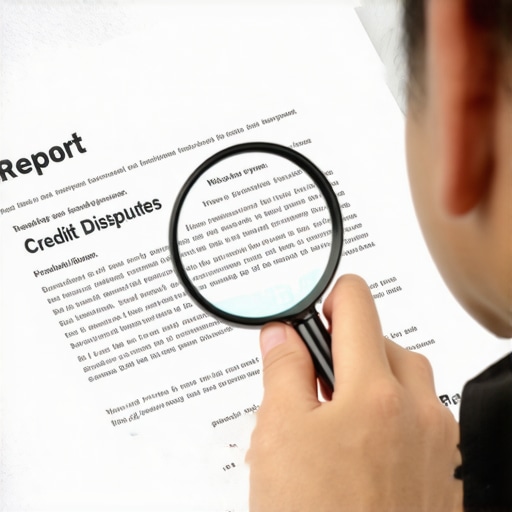
Visualize your dispute process as a strategic battle, with each documented step strengthening your position and increasing the likelihood of error removal.
Many individuals believe that credit repair is simply about disputing negative items or paying off debts, but the truth runs much deeper. A common misconception is that paying off old collections automatically boosts your score, yet in some cases, it can actually cause temporary dips due to changes in your credit mix or utilization ratios. This demonstrates the importance of strategic timing and understanding how different credit factors interact. For example, reducing your overall debt quickly might lower your available credit utilization instantaneously, but if it nudges your credit mix unfavorably—such as closing long-standing accounts—you could unintentionally hinder your score. According to FICO’s latest guidelines, maintaining a diverse credit mix and a healthy length of credit history are among the top factors influencing your score, which many overlook when focusing solely on paying debts.
A particularly insidious myth is that disputes are always worth the effort. While disputing legitimate errors can be effective, disputing accurate but unfavorable items—sometimes called “challenging the score”—can backfire. For instance, aggressively disputing paid-off collections might make the credit bureaus suspicious of your reporting accuracy, leading to more scrutiny and potential score drops. The key lies in knowing which errors are worth disputing and how to present evidence compelling enough to pass automated and human reviews. In fact, a report from the Consumer Financial Protection Bureau highlights that many consumers dispute items without sufficient evidence, delaying corrections or causing unnecessary damage. For advanced strategies, consult this guide on mastering credit disputes.
### Why Most Dispute Attempts Fail or Cost You More
Disputes without proper evidence or targeting the wrong data points are a common pitfall. Many wrongly assume that online portals are enough—yet, proof often requires physical documents like bank statements or legal notices. For instance, manually submitting evidence through certified mail has a higher success rate than online threads, which are often automated and may dismiss valid claims. Moreover, disputing old or inactive accounts using the same approach as recent ones can raise red flags, leading to increased scrutiny. One advanced mistake is disputing a closed account and assuming it will be removed quickly; in reality, you must demonstrate it was paid, closed properly, and not reporting inaccurately. The key is adopting a forensic approach: gather credible evidence before initiating disputes, document every step, and escalate when necessary, such as by forcing bureaus to conduct a human review.
Keep Your Credit Health in Check with Proven Tools
Maintaining your improved credit score over the long term requires more than just dispute success; it demands consistent monitoring, strategic adjustments, and the right technology. One tool I personally rely on is Credit Karma. Not only does it provide free access to your credit scores and reports from TransUnion and Equifax, but its real-time monitoring alerts help me catch unauthorized changes or errors as they happen. Regularly reviewing your report ensures you stay ahead of emerging issues and helps you identify patterns that could impact your score. For enhanced accuracy, I also use a dedicated dispute management system designed for DIYers who want to handle disputes efficiently without the high costs of professional services.
Another essential is a secure document organization app like Evernote or OneNote. I store scanned copies of all correspondence, dispute evidence, and relevant financial documents here. Organized digital records are invaluable when re-disputing errors or verifying past payments. Moreover, I use dispute tracking sheets to keep meticulous logs of statuses, responses, and deadlines—crucial for maintaining control over complex cases.
How do I maintain my credit over time?
Stay vigilant by setting regular calendar alerts for annual report checks and monitoring updates from tools like Credit Karma. Keep your debt levels low, especially utilization ratios, by spreading out payments or making mid-cycle payments before reporting dates. And most importantly, educate yourself about evolving credit scoring models—FICO’s algorithms, for example, are constantly updated, influencing the impact of your activities over time. For the latest insights, visit this resource on key credit score factors.
Looking ahead, I predict that AI-driven credit monitoring tools will become even more intelligent, providing personalized advice based on your financial data. To prepare, I recommend experimenting with a smart dispute app that uses machine learning to flag potential errors before they impact your score.
If you’re serious about long-term credit health, start by implementing a monthly review routine using these tools. For example, set a recurring task to check your report and review recent activity—this proactive habit can prevent small issues from snowballing. As an exercise, try one advanced tip today: set up an automated alert through Credit Karma for any score fluctuations exceeding 5 points. This ensures you stay informed without obsessively checking, empowering you to make timely decisions and sustain your financial momentum.
The Lessons That Didn’t Make the Textbook
One of the most powerful realizations I had was that not every credit error needs to be fought aggressively. Sometimes, a subtle correction—like updating outdated address info—can improve scores more than disputes over old collections. I learned the importance of prioritizing disputes based on their real impact, saving time and frustration. Additionally, I found that maintaining a diverse credit mix and understanding the quirky nuances of FICO scoring can give your credit health an edge—lessons that no generic guide will tell you outright. These insights transformed my approach from reactive to strategic, and now they serve as the backbone of my credit recovery tactics.